ПРОЗЕРПИНА РОССЕТТИ |
Дневник |
ПРОЗЕРПИНА |
|
Прозерпи́на (лат. Proserpina)
Меня затронула картина Россетти , поэтому тему Прозерпины копну глубоко, хотя Джейн Моррис у Россетти чаще появляется в виде Пандоры (возрастное по-видимому), но это пожалуй самая лучшая и наиболее известная картина Россетти, живописный талант которого вообще-то подвергается сомнениям в кругах знатоков. Но какая фемина! А какое чувство женщины у Габриэля, это пресловутый "запах женщины", вот она карма наша мужицкая во плоти. Никакой секс агрессии, вселенская печаль и ты уже по жизни ей обязан. Пипец. Прозерпина, Россетти и Джейн, ну очень интересные мысли возникают. Например, Прозерпина третью часть жизни проводит в подземном царстве, а остальное время на земле. Джейн в последние годы жизни Габриэля жила на два дома, чаще у Россетти, чем у Морриса. Прозерпину похитили ( в английском написании - rape что значит и изнасилование тоже). Россетти до некоторой степени умыкнул Джейн у Вильяма. И т.д. Придумаю ещё, напишу. Исследуем для почину прототип - Прозерпину-Персифону мифологическую, один из самых интересных персонажей греко-римской мифологии, а потом я женские стати Джейн по косточкам разберу.
Образ Прозерпины притягивал художника. Россетти считал эту картину одной из своих самых больших удач и за последнее десятилетие жизни создал восемь вариантов (каждый раз внося изменения в свой замысел, чтобы потрафить заказчикам) для продажи частным коллекционерам.
Прекрасный образ Прозерпины запечатлел Данте Габриэль Россетти в картине "Прозерпина" . «Прозерпина», погруженная в мечтательно-грустное созерцание, создана в поздний период творчества Россетти. Ее чувственная и одновременно мистическая, тревожная красота подобна романтическому видению - глубокие, затененные глаза, тяжелые волны волос, трагический разрез губ, всевозможные оттенки зеленого на одеждах подчеркивают ее чувственность. Эти два женских облика Россетти возвысил до идеального типа красоты, как он представлялся ему и его собратьям по искусству. С Джейн Россетти пишет полотна «Дама Печали» (Ок. 1875), «Астарта Сирийская» (1877), «Грезы» (1880), находя воплотившееся в Джейн сочетание красоты и ума мучительно притягательным, надписав на свитке к одной из картин: «color d'amore e di pieta sembiante» («цвета любви и внешность скорби»).
ЖИВОПИСЬ.
Писал Россетти исключительно женщин, частенько, они отличались крупными руками и ногами и массивной шеей.
ЛИТЕРАТУРНАЯ ЧАСТЬ.
В верхнем правом углу картины воспроизведён полный текст итальянского сонета.
СИМВОЛИКА КАРТИНЫ.
Одному из своих покровителей Россетти объяснил символику картины: свет на стене позади фигуры это отблеск надземного мира, ныне для Прозерпины запретный. Плющ на стене символизирует "неизгладимые воспоминания". Считается. что брак сМоррисом не принёс Джейн счастья и, возможно, что удел его Прозерпины - пребывать эмоционально то мёртвой (замужем), то живой (рядом с Россетти). Так с приходом Прозерпины на землю возвращалась весна.
DGR seems to have begun work on the subject in 1871 since the date of the pastel at the Ashmolean bears that date. He started serious work on the picture late in 1872 when he came to an agreement with Howell and Parsons (the painter and photographer who also worked as an art dealer) to buy the picture for 550 guineas (see DGR's letter to Howell of 1 November 1872, Fredeman, Correspondence, 72. 105 ). In this letter he comments: “I enclose extract from Lemprière copied by Dunn. You see the passage about the pomegranate. I may possibly write a sonnet and introduce it in one corner of the picture if suiting composition.” Two days later he wrote to his brother that “The Proserpine I am selling him is a second one I have begun. The first did not quite please me, but will sell as a separate thing by cutting out the head which is done. The second is very well started, and I fully expect to finish it soon and beg the tin” ( Fredeman , Correspondence, 72. 106 ). It seems this second picture was also deemed unsatisfactory by the artist, as was the third, which became the The Blanziore oil. The letter hints toward the multipying and sometimes catastrophic fortunes of what DGR called “this doomed picture” in a letter to Madox Brown of 6 January 1874, when he reported that the version he had done for Leyland (the now so-called seventh version) was smashed in railway transit. He went on to tell Brown about “the vicissitudes of this blessed picture”: “I have begun it on seven different canvases— to say nothing of drawings. Three were rejected after being brought very forward. The fourth cost me a quarrel with Parsons, & will be returned on my hands. The fifth has twice had its glass smashed & renewed, & has twice been lined to remedy accidents. The sixth has had its frame smashed twice & its glass once, was nearly rendered useless by an accident which happened while transferring it to a fresh strainer, & now has narrowly escaped total destruction” ( Fredeman , Correspondence, 74.4 ) An eighth version would come later, begun in 1881 and finished shortly before DGR's death.
История создания.
ДГР вероятно начал работать над данным сюжетом в 1871 году, так как пастель, находящаяся ныне в Оксфорде в музее Ashmolean датирована этим годом. Над картиной он начал серьёзно работать в конце 1872, когда заключил соглашение с Howell and Parsons (фотографом и художником, который также работал как арт дилер) о покупке картины за 550 гиней. (смотри письсмо ДГР 1 ноября 1871 года). В письме Россетти замечает: я вложил выдержку из в копии. Это отрывок о гранате. Если это будет отвечать сюжету, я, возможно напишу сонет и помещу его в углу картины. Двумя днями позже он пишет своему брату: "Прозерпина, которую я продаю ему, вторая из начатых мною. Первая меня не полностью удовлетворила, я вырезал голову, но она будет продана как целая картина. Вторая хорошо продвинулась и я надеюсь скоро закончить её и попросить ( Fredeman , Correspondence, 72. 106 ). Кажется, что вторая версия также была найдена художником неудовлетворительной, также как и третья. превратившаяся в The Blanziore. Письмо намекает на размножение и иногда катастрофические судьбы вариантов того, что Россетти называет "обречённой картиной" в письме Мэдоксу Брауну 6 января 1874 года, где он сообщает, что картина написанная им для Лэйланда (известная ныне как седьмая версия) была повреждена при железнодорожной перевозке. Он продолжает повествовать Брауну о "превратностях этой благословенной картины". "Я начал её на семи различных холстах не говоря ничего о рисунках. Три были отвергнуты после того, как далеко продвинулись. Четвёртая стоила мне ссоры с Parsons и будет мне возвращена. У пятой дважды заменяли разбитое стекло и дважды приходилось её подклеивать. У шестой дважды разбивали раму и один раз стекло, она почти пропала после переноса на новый подрамник, а сейчас чуть совсем не погибла. ( Fredeman , Correspondence, 74.4 ). Восьмая версия полотна начата в 1881 году и закончена незадолго до смерти Россетти.


Dimensions: 38 1/4 x 18 1/4 in.
Signature: monogram
Date on Image: 1871
Note: Monogram and date are located in the upper right corner of the image.
It is likely that this, the second version of Proserpine , was one of the three early versions that "were rejected after being brought very forward," as DGR described them in a letter to Ford Madox Brown (Fredeman, Correspondence, 74.4). None have survived intact, although the third version was cut down and transformed into Blanzifiore .

«Подснежники» — картина английского художника-прерафаэлита Данте Габриэля Россетти, созданная в 1873 году. В настоящее время произведение находится в коллекции Эндрю Ллойда Уэббера. Current Location: Collection of Lord Lloyd-Webber
Натурщицей для картины «Подснежники» стала Джейн Моррис. Картина возникла в результате второй попытки создания одной из известнейших картин Россетти «Прозерпина». Замысел «Прозерпины» появился в 1871 году, с тех пор художник пытался написать эту картину восемь раз; часто он был недоволен результатом и обрезал холст, оставляя лишь голову и руки натурщицы, как и произошло с «Подснежниками». Surtees notes that this picture was cut down from one of the unfinished canvases of Proserpine and altered.Несколько раз картину возвращал назад заказчик — коллекционер Фредерик Лейланд, а один раз работа пострадала при транспортировке.
Картину выкупил агент Россетти Чарльз Хауэлл, в течение нескольких лет он хранил её у себя, но позже перепродал.
Героиня картины держит в руках несколько подснежников, а в её волосах — жёлтые цветы первоцвета. Наличие весенних цветов предполагает, что на картине изображена Прозерпина до того, как она попала в подземное царство, в отличие от более знаменитой итоговой картины, где богиня находится в царстве Гадеса
This painting was begun late in 1872, a fifth version of the picture sent to Charles Howell and Robert Parsons, with Frederick Leyland as the intended patron. In the first of a series of unfortunate mishaps, the face of Proserpine was rucked during the lining process; that is, the cloth was compressed, resulting in a number of unsightly folds. At first it was set aside and a new painting begun, but, according to Marillier, Rossetti soon returned to the work and restored it. However, the painting was misplaced while being transported to Kelmscott.


Dimensions: 49 3/4 x 24 in.
Signature: Dante Gabriel Rossetti
Date on Image: 1874
Note: The signature and the date are written in Italian on a scroll at the lower left: “Dante Gabriel Rossetti ritrasse nel capo d'anno del 1874”.
Proserpine (oil replica, eighth version) 1882 eighth version

Medium: oil Dimensions: 30 3/4 x 14 3/4 in. Signature: Dante Gabriele Rossetti Date on Image: 1882
Note: Signature and date are inscribed on a scroll at the lower left.
Current Location: Birmingham City Museum and Art Gallery
Метки: Proserpine (oil replica seventh version) 1874 |
Прозерпи́на (лат. Proserpina) |
Дневник |
Настроение сейчас - у ну вас всех!

В варианте 1877 года, Россетти вырезал руки и лицо из раннего варианта и приклеил их к новому холсту.
Образ Прозерпины соответствует декадентскому образу женщины, соединявшему в себе femme fatale и Непорочную Деву. Благовония, курящиеся в чаше указывают на её божественную природу. Плющ на заднем фоне напоминает о душащих её воспоминаниях. Мраморный карниз словно отделяет композицию от подлинного мира, в котором находится зритель.
Полные губы, пышные волосы и большие глаза в сочетании с розовыми зёрнышками граната передают атмосферу жаркой сексуальности. Правой рукой Прозерпина удерживает левую, как бы мешая совершить действие, которое погубит её, но тщетно, она подносит гранат - символ сексуальности ко рту. [ 1 ]
Прильнул к первоисточнику - Публий Овидий Назон Метаморфозы книга 5.
Подробно изложена история похищения Прозерпины Аидом и сопутствующие товары. Много интересного. Так, подчёркивается "младенчество" девы. Аид ещё и педофил!
стих 400.
Столь ещё простоты в летах её младенческих было,
Что и утрата цветов увеличила девичье горе!
Прозерпи́на (лат. Proserpina) (Proserpina) — В древнеримской мифологии богиня подземного царства, соответствующая древнегреческой Персефоне, дочь Юпитера (Зевса) и богини плодородия и земледелия Цицеры (Деметры), племянница и супруга Плутона (Дита). Имя, вероятно, латинизированное греческое имя Персефона. По другому толкованию, так называлась римская богиня, способствовавшая произрастанию (proserpere) семени и слившаяся позднее, по введении греческих культов, с богиней Персефоной.
Богиня Деметра очень любила свою единственную дочь, красавицу Персефону. Для нее она вырастила прекрасные душистые цветы на лугах Эллады, позволила стрекозам и бабочкам порхать среди них, а певчим птицам наполнять луга и рощи мелодичным пением. Юная Персефона обожала светлый мир дяди Гелиоса - бога Солнца и мамины зеленые луга, пышные деревья, яркие цветы и журчащие повсюду ручейки, на поверхности которых играли блики солнца. Ни она, ни ее мать не знали, что Зевс пообещал ее в жены своему мрачному брату Аиду - богу подземного царства. Однажды Деметра с Персефоной гуляли по зеленому лугу. Персефона резвилась с подругами, радуясь свету и теплу, упиваясь ароматами луговых цветов, собирала ирисы, розы, фиалки, гиацинты и нарциссы на лугу. Неожиданно в траве она нашла цветок неведомой красоты, издававший дурманящий запах. Это Гея по просьбе Аида вырастила его, чтобы привлечь внимание Персефоны. Как только девушка коснулась странного цветка, разверзлась земля и появилась золотая карета, запряженная четырьмя черными конями. Ею правил Аид (Плутон). Он подхватил Персефону и унес ее в свой дворец в подземном царстве. Убитая горем Деметра облачилась в черные одежды и отправилась на поиски дочери. Мрачные времена настали для всего живущего на земле. Деревья потеряли пышную листву, цветы увяли, злаки не дали зерна. Не плодоносили ни поля, ни сады. Наступил голод. Замерла вся жизнь. Роду людскому грозила гибель. Боги, которые время от времени спускались к людям с Олимпа и заботились о них, стали просить Зевса сказать Деметре правду о Персефоне. Но узнав правду, мать еще больше затосковала по дочери. Тогда Зевс послал к Аиду Гермеса с просьбой отпускать время от времени жену на землю, чтобы Персефона могла видеться с матерью. Аид не посмел ослушаться Зевса. Он вынужден был отпустить ее, но дал вкусить ей зернышко граната, чтобы она не забыла царство смерти и вернулась к нему. С той поры Прозерпина треть года проводит в царстве мертвых и две трети года - в царстве живых.Увидев дочь, Деметра возликовала, в глазах ее заблестели слезы радости. Этой влагой наполнилась земля, нежной травой покрылись луга, и цветы распустились на недавно поникших стеблях. Вскоре заколосились и хлебородные нивы. Природа проснулась к новой жизни. С тех по повелению Зевса Персефона две трети года обязана проводить с матерью и одну треть - с мужем. Так возникло чередование времен года. Когда Персефона находится в царстве мужа, уныние нападает на Деметру, а на Земле наступает зима. Но зато каждое возвращение дочери к матери в мир дяди Гелиоса все живое новыми соками и приводит с собой весну во всей ее торжествующей красоте. Вот почему Персефону всегда изображают в виде прекрасной девушки с букетом цветов и снопом колосьев и считают ее богиней наступающей весны, сестрой богини царства цветов и растений Флоры. И живет она на небе как замечательное созвездие Дева. Самая яркая звезда в созвездии Девы называется Спика, что означает колос.
Есть мнение, что Россетти отразил в этом сюжете личные обстоятельства, поскольку Джейн Бёрден, ставшая моделью для Прозерпины и его любовница, была замужем за Уильямом Моррисом. Одно время вся троица проживала в одном доме, но "недостижимость" возлюбленной навела Россетти на мысль иллюстрировать миф о Персефоне.
Исследуя миф о Тесее, встретил упоминание о Персефоне. Тесей обещал Пейрифою помочь найти жену. Тот не нашёл других кандидатур, кроме Персефоны, замужней жены Аида. (По версии, Зевс во сне приказал им, чтобы они просили Персефону в жены Пирифою). Тесей знал, что добром это не кончится, но слово дал, а пацан сказал - пацан сделал. Пошли в Аид. Добром попросили Аида отдать жену. Тот вроде согласился, гостеприимно усадил гостей на каменный трон Леты у самого входа в Аид, к которому они и приросли. Тесея через четыре года Геракл освободил, а Пейрифой посейчас там сидит.
Ещё одна Прозерпина. Творение Walter Crane - современик Тадемы.

ЛИТЕРАТУРА.
1. Норберт Вольф. СИМВОЛИЗМ.
|
ПРОЗЕРПИНА |
Дневник |
Богиня Персефона, у римлян Прозерпина или Кора ("юная девушка"), хорошо известна по гомеровскому "Гимну Деметре", в котором описывается ее похищение Гадесом. Ей поклонялись и как Девушке, и как Повелительнице подземного царства. Кора была стройной, прекрасной юной девушкой, ассоциируемой с символами плодородия – гранатом, зерном, хлебными злаками, а также с нарциссом, цветком, которым ее приманили. В другой своей ипостаси Персефона – зрелая богиня, управляющая душами умерших, проводник для живых, посещающих подземный мир. Она требует исполнения своих желаний.
Хотя Персефона и не являлась одной из двенадцати олимпийцев, она была важной фигурой в Элевсинских мистериях – главном культе древних дреков за две тысячи лет до христианства. Ежегодное возвращение Персефоны из подземного мира переживалось греками как возрождение и обновление жизни после смерти.
Позднее Персефона стала повелительницей подземного царства. Всякий раз, когда герои или героини греческой мифологии сходили в царство теней, Персефона была там, чтобы принять их и быть их проводником. Никто никогда не обнаруживал ее отсутствия. На двери никогда не было вывески "Ушла домой к матери", хотя миф о Деметре и Персефоне говорит, что она так поступала две трети года.
В "Одиссее" герой Одиссей (Улисс) спустился в подземное царство теней, где Персефона показала ему души женщин-легенд. В мифе о Психее и Эросе последним заданием Психеи было сойти в подземный мир с коробочкой, чтобы наполнить ее для Афродиты волшебной мазью Персефоны. Последний из двенадцати подвигов Геракла также привел его к Персефоне. Геракл должен был получить ее разрешение взять с собой укрощенного им Цербера, ужасного трехголового пса-стража.
Персефона соперничала с Афродитой за обладание Адонисом, прекрасным юношей, которого любили обе богини. Афродита спрятала Адониса в ларце* и отправила его к Персефоне. Но, открыв ларец, повелительница подземного царства сама пленилась красотой младенца и отказалась вернуть его Афродите. Теперь Персефона боролась с другим могущественным божеством за обладание Адонисом, подобно тому, как Деметра и Гадес однажды столкнулись из-за нее. Спор был вынесен на суд Зевса, решившего, что Адонис будет проводить одну треть года с Персефоной, одну треть – с Афродитой, а в остальное время будет предоставлен самому себе.
* Адонис – сын кипрского царя Кипиры и его дочери Мирры. Боги превратили Мирру в мирровое дерево, из треснувшего ствола которого родился ребенок удивительной красоты – Адонис. Афродита передала младенца в ларце на воспитание Персефоне, не пожелавшей в дальнейшем расстаться с ним.

Психея то чем с Прозерпиной завязана? Узнаю, напишу.
Пишу:
ВЕРСИЯ №1 Венера повсюду преследовала Психею (так как люди стали ей оказывать почести, как Венере) и в конце концов заманила в подземное царство Прозерпины. Психея, снова став жертвой своего любопытства, вдохнула ядовитые испарения и погрузилась в глубокий сон. Амур пришел на помощь своей возлюбленной – он слетел на землю и пробудил ее своим поцелуем. Могущественный Юпитер сжалился над мольбами Амура и даровал Психее бессмертие. На картине Психея такая дебелая девица что-то втирает Прозерпине, без особого смущения притом, рядом с ней корзинка с пирожками. Вещь в аду необходимая.
ВЕРСИЯ №2 17 января 2001 года исполнилось 330 лет со дня премьеры трагедии-балета Жана-Батиста Люлли «Психея».
Амур просыпается и улетает. Венера прерывает жалобы Психеи повелением отправиться на берега Стикса и принести оттуда шкатулку, в которой Прозерпина хранит средство, сохраняющее ее красоту. Впрочем, единственное, что терзает влюбленную Психею — разлука с Амуром. Она пытается попасть в Аид кратчайшим путем — бросившись в воду, но Река в окружении Тростников поднимается ей навстречу: «Остановись, не теряй надежды, Амур велит тебе жить...»
Действие IV. Зал во дворце Прозерпины. Подробно перечисляя ужасы этих мест, Психея вновь и вновь повторяет, что они не страшны, едва она вспоминает о любимом. Фурии и летающие демоны грозят наказать смертную, потревожившую покой царства Плутона. Их прогоняют нимфы Ахерона. И обнадеживают Психею: Амур одушевляет всю Вселенную, даже ад признает его власть. Посему Меркурий уже обо всем рассказал Прозерпине, и та распорядилась передать Психее требуемое Венерой. Теперь понятно, зачем корзинка и чего надо от Прозерпины.
ВЕРСИЯ№3 Откуда предъидущие не знаю, а эта из "Метаморфоз" Апулея, чего-то я не помню. Золотого осла помню. Ну, ладно:
Венера задаёт Психее несколько невыполнимых заданий, с которыми та успешно справляется.
В качестве последнего испытания Венера велела Психее спуститься в царство Орка (Аида) и взять у Прозерпины немного ее красоты. "Ведь, свою я уж истратила в заботах о сыне," - сказала Венера
Сделав все так, как советовала башня (с которой она хотела бросится для попадания в Аид), Психея получила от Прозерпины баночку, но, не удержавшись, открыла и тотчас уснула, ибо там был заключен сон подземного мира. Между тем рана Амура зажила, и, беспокоясь за возлюбленную, он помчался к входу в царство Орка, где обнаружил спящую Психею. Сняв с нее сон, он спрятал его обратно в баночку.
PROSERPINA
(For a Picture)
Afar away the light that brings cold cheer
Unto this wall, - one instant and no more
Admitted at my distant palace-door.
Afar the flowers of Enna from this drear
Dire fruit, which, tasted once, must thrall me here.
Afar those skies from this Tartarean grey
That chills me: and afar, how far away,
The nights that shall be from the days that were.
Afar from mine own self I seem, and wing
Strange ways in thought, and listen for a sign:
And still some heart unto some soul doth pine,
(Whose sounds mine inner sense is fain to bring,
Continually together murmuring,)
"Woe's me for thee! Unhappy Proserpine!"
1872
"PROSERPINA"
(К картине)
Далёкий свет доходит иногда,
Едва блеснув в неуловимый миг,
Как будто только в памяти возник.
Далёкой Энны цвет милей плода
Зловещего, приведшего сюда.
И небеса - как далеки они
От Тартара; остались в прошлом дни -
Здесь ждёт ночей грядущих череда.
И от себя сама я далека,
И прошлого мне здесь совсем не жаль:
Но чей-то голос рвётся через даль
Ко мне (и внятен зов его, пока
Лепечет что-то мне моя тоска):
"О Прозерпина! О моя печаль!"
1872
Лепечет что-то мне моя тоска, что это перевод Тамары Казаковой.
Энна - древний сицилийский город, место поклонения Деметре, где был знаменитый во всей античности храм. Считалось, что за окраиной Энны, на цветущем лугу, Аид похитил Персефону. В древности показывали пещеру, через которую Аид унёс её в подземное царство.
""Прозерпина"(1824) не стихи, а музыка, — писал Дельвиг Пушкину, получив от него ниже приведённое произведение, — это пенье райской птички, которое слушая, не увидишь, как пройдет тысяча лет".
Прочёл я Пушкинскую "Прозерпину", речь в стихотворении идёт об адъюльтере: в декорациях Тартара изменила Прозерпина своему Аиду с каким-то смертным. С кем не знаю, узнаю - напишу.
В автографах стихотворение имеет подзаголовок "Подражание Парни" Имеется в виду 27 картина его "Deguisments de Venus" "Превращений Венеры", вольным переводом которой Прозерпина и является.
ПРОЗЕРПИНА. 1824.
Плещут воды Флегетона,
Своды Тартара дрожат,
Кони бледного Плутона
Быстро к нимфам Пелиона
Из аида бога мчат.
Вдоль пустынного залива
Прозерпина вслед за ним,
Равнодушна и ревнива,
Потекла путём одним.
Пред богинею колена
Робко юноша склонил.
И богиням льстит измена:
Прозерпине смертный мил.
Ада гордая царица
Взором юношу зовёт,
Обняла - и колесница
Уж к аиду их несёт;
Мчатся облаком одеты;
Видят вечные луга,
Элизей и томной Леты
Усыплённые брега.
Там бессмертье, там забвенье.
Там утехам нет конца.
Прозерпина в упоенье,
Без порфиры и венца, (а ещё без чего?)
Повинуется желаньям,
Предаёт его лобзаньям
Сокровенные красы (чего лобзал-то?)
В сладострастной неге тонет,
И молчит и томно стонет...
Но бегут любви часы; (бледному Плутону слабо)
Плещут воды Флегетона,
Своды Тартара дрожат,
Кони бледного Плутона
Быстро мчат его назад. (из командировки)
И Кемеры дочь уходит,
И счастливца за собой
Из Элизия выводит
Потаённою тропой;
И счастливец отпирает
Осторожную рукой
Дверь, откуда вылетает
Сновидений ложный рой.
Курсив мой.
Proserpina (sometimes spelt Proserpine, Prosperine or Prosperina) is an ancient Roman goddess whose story is the basis of a myth of Springtime. Her Greek goddess' equivalent is Persephone The probable origin of her name comes from the Latin, "proserpere" or "to emerge," in respect to the growing of grain. Proserpina was subsumed by the cult of Libera, an ancient fertility goddess, wife of Liber and is also considered a life–death–rebirth deity.
She was the daughter of Ceres, goddess of agriculture and crops and Jupiter, the god of sky and thunder.
Venus, in order to bring love to Pluto, sent her son Amor also known as Cupid to hit Pluto with one of his arrows. Proserpina was in Sicily (an island outside of Italy), at the Pergusa Lake near Enna, where she was playing with some nymphs and collecting flowers, when Pluto came out from the volcano Etna with four black horses named Orphnaeus, Aethon, Nycteus and Alastor. He abducted her in order to marry her and live with her in Hades, the Greco-Roman Underworld, of which he was the ruler. Notably, Pluto was also her uncle, being Jupiter's (and Ceres's) brother. She is therefore Queen of the Underworld.
Her mother Ceres, the goddess of agriculture or of the Earth, went looking for her in vain to every corner of the earth, but wasn't able to find anything but a small belt that was floating upon a little lake (made with the tears of the nymphs). In her desperation Ceres angrily stopped the growth of fruits and vegetables, bestowing a malediction on Sicily. Ceres refused to go back to Mount Olympus and started walking on the Earth, making a desert at every step.
Worried, Jupiter sent Mercury to order Pluto (Jupiter's brother) to free Proserpina. Pluto obeyed, but before letting her go he made her eat six pomegranate seeds, because those who have eaten the food of the dead could not return to the world of the living. This meant that she would have to live six months of each year with him, and stay the rest with her mother. This story was undoubtedly meant to illustrate the changing of the seasons; When Ceres welcomes her daughter back in the spring the earth blossoms, and when Proserpina must be returned to her husband it withers.
In another version of the story, some people believe that upon her abduction, Proserpina ate only four pomegranate seeds, and she did so of her own accord. When Jupiter ordered her return, Pluto struck a deal with Jupiter, saying that since she had stolen his pomegranate seeds, she must stay with him four months of the year in return. For this reason, in spring when Ceres received her daughter back, the crops blossomed, and in summer they flourished. In the autumn Ceres changed the leaves to shades of brown and orange (her favorite colors) as a gift to Proserpina before she had to return to the underworld. During the time that Proserpina resided with Pluto, the world went through winter, a time when the earth was barren.
The myth of Proserpina, the most extensive Latin version of which is by Claudian (4th century AD, available), is closely connected with that of Orpheus and Eurydice — it is Proserpina, in Virgil's writings, as Queen of Hades, who allows Orpheus to enter and bring back to life his wife Eurydice who is dead by snake poison. Proserpina played her cetra to quiet Cerberus, but Orpheus did not respect her order never to look back, and Eurydice was lost.
Proserpina's figure inspired many artistic compositions, eminently in sculpture Bernini, in painting (D.G.Rossetti , Pomarancio , J.Heintz , P.P.Rubens , A.Durer , Dell'Abbate , M.Parrish ) and in literature (Goethe and Swinburne's Hymn to Proserpine)
Proserpina is a Main belt asteroid 95.1km in diameter, which was discovered by R. Luther in1853.


"The Rape of Proserpina" (1621-1622)
 Похищение Прозерпины. А.Дюрер.

Dell'Abbate rape of Proserpina

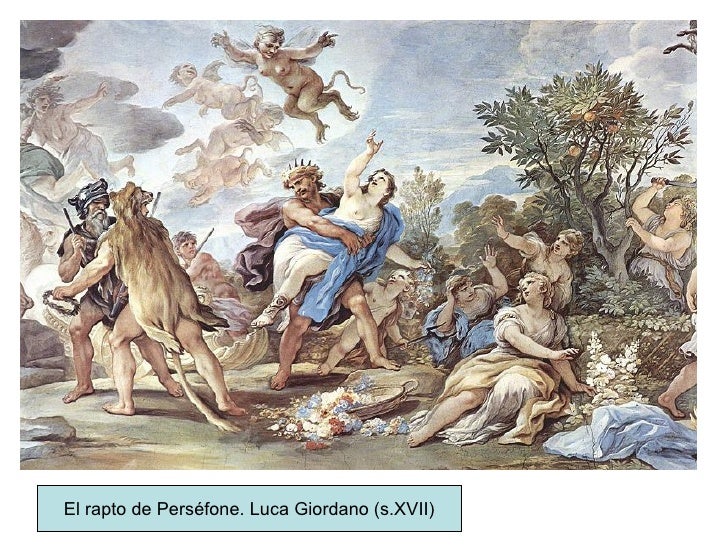


Ханс фон Аахен

Скульптор: В.И. Демут-Малиновский
Установлена скульптура у Горного института. СПБ.
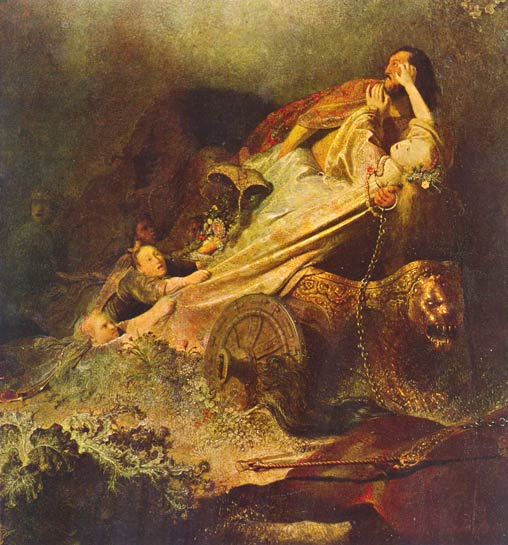
Рембрандт, «Похищение Персефоны», 1632 год.
Rembrandt Harmensz. van Rijn, «Raub der Proserpina», c. 1632

Возвращение Персефоны
Фредерик Лейтон

Скульптура в парке Тимирязевской Академии.
Деметра (у римлян Церера) - богиня плодородия и земледелия. Рядом с ней - ее дочь Персефона (Прозерпина) - будущая царица подземного мира.
Эти статуи попали в Тимирязевский парк уже во второй половине ХХ века из Бауманского сада, расположенными между двумя параллельными улицами Старой и Новой Басманными, где стояли с давних времен. Последние свои годы в этом парке они стояли около пивной и были в запущенном состоянии... Когда их передали Тимирязевской академии и начали реставрацию, оказалось, что эти фигуры, многократно перекрашиваемые разной краской (от бронзового до серебряного и голубого), были первыми отливками чугунолитейного завода Демидовых на Урале. Этот вывод засвидетельствован подписью мастера-литейщика Иоганна Юста, датой - 1760 год и способом отливки. В скульптуре угадывается пластическая манера знаменитого в ту пору скульптора Карло Растрелли. По характеру исполнения парадные скульптуры явно предназначались для парков северной столицы, но почему-то оказались в Москве. Можно предположить, что перевоз их с Урала в Петербург совпал с эпидемией чумы в Москве. Груз задержали, скульптуры оставили на время в парке вблизи одного из трех владений, принадлежавших Демидовым, да так и не перевезли в Петербург.

Мраморный бюст Прозерпины работы американца Хирама Пауэрса 1843.
Marble Bust of Proserpine by Hiram Powers 1843


|
| Страницы: | [1] |


