ПРОЗЕРПИНА |
Богиня Персефона, у римлян Прозерпина или Кора ("юная девушка"), хорошо известна по гомеровскому "Гимну Деметре", в котором описывается ее похищение Гадесом. Ей поклонялись и как Девушке, и как Повелительнице подземного царства. Кора была стройной, прекрасной юной девушкой, ассоциируемой с символами плодородия – гранатом, зерном, хлебными злаками, а также с нарциссом, цветком, которым ее приманили. В другой своей ипостаси Персефона – зрелая богиня, управляющая душами умерших, проводник для живых, посещающих подземный мир. Она требует исполнения своих желаний.
Хотя Персефона и не являлась одной из двенадцати олимпийцев, она была важной фигурой в Элевсинских мистериях – главном культе древних дреков за две тысячи лет до христианства. Ежегодное возвращение Персефоны из подземного мира переживалось греками как возрождение и обновление жизни после смерти.
Позднее Персефона стала повелительницей подземного царства. Всякий раз, когда герои или героини греческой мифологии сходили в царство теней, Персефона была там, чтобы принять их и быть их проводником. Никто никогда не обнаруживал ее отсутствия. На двери никогда не было вывески "Ушла домой к матери", хотя миф о Деметре и Персефоне говорит, что она так поступала две трети года.
В "Одиссее" герой Одиссей (Улисс) спустился в подземное царство теней, где Персефона показала ему души женщин-легенд. В мифе о Психее и Эросе последним заданием Психеи было сойти в подземный мир с коробочкой, чтобы наполнить ее для Афродиты волшебной мазью Персефоны. Последний из двенадцати подвигов Геракла также привел его к Персефоне. Геракл должен был получить ее разрешение взять с собой укрощенного им Цербера, ужасного трехголового пса-стража.
Персефона соперничала с Афродитой за обладание Адонисом, прекрасным юношей, которого любили обе богини. Афродита спрятала Адониса в ларце* и отправила его к Персефоне. Но, открыв ларец, повелительница подземного царства сама пленилась красотой младенца и отказалась вернуть его Афродите. Теперь Персефона боролась с другим могущественным божеством за обладание Адонисом, подобно тому, как Деметра и Гадес однажды столкнулись из-за нее. Спор был вынесен на суд Зевса, решившего, что Адонис будет проводить одну треть года с Персефоной, одну треть – с Афродитой, а в остальное время будет предоставлен самому себе.
* Адонис – сын кипрского царя Кипиры и его дочери Мирры. Боги превратили Мирру в мирровое дерево, из треснувшего ствола которого родился ребенок удивительной красоты – Адонис. Афродита передала младенца в ларце на воспитание Персефоне, не пожелавшей в дальнейшем расстаться с ним.

Психея то чем с Прозерпиной завязана? Узнаю, напишу.
Пишу:
ВЕРСИЯ №1 Венера повсюду преследовала Психею (так как люди стали ей оказывать почести, как Венере) и в конце концов заманила в подземное царство Прозерпины. Психея, снова став жертвой своего любопытства, вдохнула ядовитые испарения и погрузилась в глубокий сон. Амур пришел на помощь своей возлюбленной – он слетел на землю и пробудил ее своим поцелуем. Могущественный Юпитер сжалился над мольбами Амура и даровал Психее бессмертие. На картине Психея такая дебелая девица что-то втирает Прозерпине, без особого смущения притом, рядом с ней корзинка с пирожками. Вещь в аду необходимая.
ВЕРСИЯ №2 17 января 2001 года исполнилось 330 лет со дня премьеры трагедии-балета Жана-Батиста Люлли «Психея».
Амур просыпается и улетает. Венера прерывает жалобы Психеи повелением отправиться на берега Стикса и принести оттуда шкатулку, в которой Прозерпина хранит средство, сохраняющее ее красоту. Впрочем, единственное, что терзает влюбленную Психею — разлука с Амуром. Она пытается попасть в Аид кратчайшим путем — бросившись в воду, но Река в окружении Тростников поднимается ей навстречу: «Остановись, не теряй надежды, Амур велит тебе жить...»
Действие IV. Зал во дворце Прозерпины. Подробно перечисляя ужасы этих мест, Психея вновь и вновь повторяет, что они не страшны, едва она вспоминает о любимом. Фурии и летающие демоны грозят наказать смертную, потревожившую покой царства Плутона. Их прогоняют нимфы Ахерона. И обнадеживают Психею: Амур одушевляет всю Вселенную, даже ад признает его власть. Посему Меркурий уже обо всем рассказал Прозерпине, и та распорядилась передать Психее требуемое Венерой. Теперь понятно, зачем корзинка и чего надо от Прозерпины.
ВЕРСИЯ№3 Откуда предъидущие не знаю, а эта из "Метаморфоз" Апулея, чего-то я не помню. Золотого осла помню. Ну, ладно:
Венера задаёт Психее несколько невыполнимых заданий, с которыми та успешно справляется.
В качестве последнего испытания Венера велела Психее спуститься в царство Орка (Аида) и взять у Прозерпины немного ее красоты. "Ведь, свою я уж истратила в заботах о сыне," - сказала Венера
Сделав все так, как советовала башня (с которой она хотела бросится для попадания в Аид), Психея получила от Прозерпины баночку, но, не удержавшись, открыла и тотчас уснула, ибо там был заключен сон подземного мира. Между тем рана Амура зажила, и, беспокоясь за возлюбленную, он помчался к входу в царство Орка, где обнаружил спящую Психею. Сняв с нее сон, он спрятал его обратно в баночку.
PROSERPINA
(For a Picture)
Afar away the light that brings cold cheer
Unto this wall, - one instant and no more
Admitted at my distant palace-door.
Afar the flowers of Enna from this drear
Dire fruit, which, tasted once, must thrall me here.
Afar those skies from this Tartarean grey
That chills me: and afar, how far away,
The nights that shall be from the days that were.
Afar from mine own self I seem, and wing
Strange ways in thought, and listen for a sign:
And still some heart unto some soul doth pine,
(Whose sounds mine inner sense is fain to bring,
Continually together murmuring,)
"Woe's me for thee! Unhappy Proserpine!"
1872
"PROSERPINA"
(К картине)
Далёкий свет доходит иногда,
Едва блеснув в неуловимый миг,
Как будто только в памяти возник.
Далёкой Энны цвет милей плода
Зловещего, приведшего сюда.
И небеса - как далеки они
От Тартара; остались в прошлом дни -
Здесь ждёт ночей грядущих череда.
И от себя сама я далека,
И прошлого мне здесь совсем не жаль:
Но чей-то голос рвётся через даль
Ко мне (и внятен зов его, пока
Лепечет что-то мне моя тоска):
"О Прозерпина! О моя печаль!"
1872
Лепечет что-то мне моя тоска, что это перевод Тамары Казаковой.
Энна - древний сицилийский город, место поклонения Деметре, где был знаменитый во всей античности храм. Считалось, что за окраиной Энны, на цветущем лугу, Аид похитил Персефону. В древности показывали пещеру, через которую Аид унёс её в подземное царство.
""Прозерпина"(1824) не стихи, а музыка, — писал Дельвиг Пушкину, получив от него ниже приведённое произведение, — это пенье райской птички, которое слушая, не увидишь, как пройдет тысяча лет".
Прочёл я Пушкинскую "Прозерпину", речь в стихотворении идёт об адъюльтере: в декорациях Тартара изменила Прозерпина своему Аиду с каким-то смертным. С кем не знаю, узнаю - напишу.
В автографах стихотворение имеет подзаголовок "Подражание Парни" Имеется в виду 27 картина его "Deguisments de Venus" "Превращений Венеры", вольным переводом которой Прозерпина и является.
ПРОЗЕРПИНА. 1824.
Плещут воды Флегетона,
Своды Тартара дрожат,
Кони бледного Плутона
Быстро к нимфам Пелиона
Из аида бога мчат.
Вдоль пустынного залива
Прозерпина вслед за ним,
Равнодушна и ревнива,
Потекла путём одним.
Пред богинею колена
Робко юноша склонил.
И богиням льстит измена:
Прозерпине смертный мил.
Ада гордая царица
Взором юношу зовёт,
Обняла - и колесница
Уж к аиду их несёт;
Мчатся облаком одеты;
Видят вечные луга,
Элизей и томной Леты
Усыплённые брега.
Там бессмертье, там забвенье.
Там утехам нет конца.
Прозерпина в упоенье,
Без порфиры и венца, (а ещё без чего?)
Повинуется желаньям,
Предаёт его лобзаньям
Сокровенные красы (чего лобзал-то?)
В сладострастной неге тонет,
И молчит и томно стонет...
Но бегут любви часы; (бледному Плутону слабо)
Плещут воды Флегетона,
Своды Тартара дрожат,
Кони бледного Плутона
Быстро мчат его назад. (из командировки)
И Кемеры дочь уходит,
И счастливца за собой
Из Элизия выводит
Потаённою тропой;
И счастливец отпирает
Осторожную рукой
Дверь, откуда вылетает
Сновидений ложный рой.
Курсив мой.
Proserpina (sometimes spelt Proserpine, Prosperine or Prosperina) is an ancient Roman goddess whose story is the basis of a myth of Springtime. Her Greek goddess' equivalent is Persephone The probable origin of her name comes from the Latin, "proserpere" or "to emerge," in respect to the growing of grain. Proserpina was subsumed by the cult of Libera, an ancient fertility goddess, wife of Liber and is also considered a life–death–rebirth deity.
She was the daughter of Ceres, goddess of agriculture and crops and Jupiter, the god of sky and thunder.
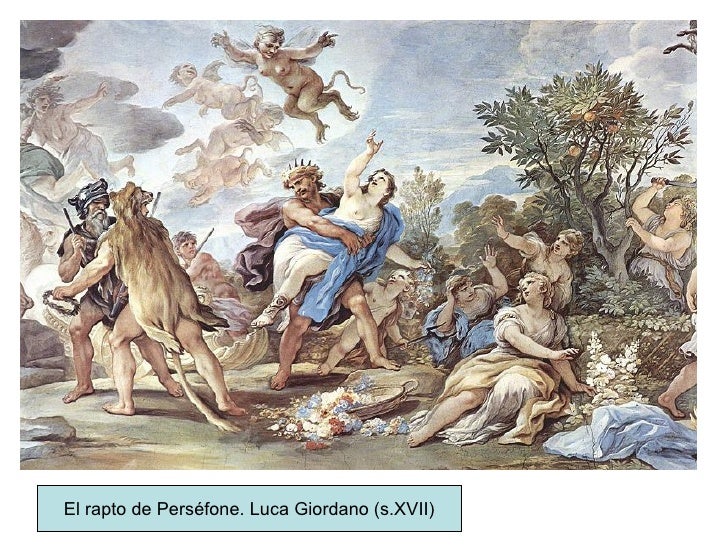
Venus, in order to bring love to Pluto, sent her son Amor also known as Cupid to hit Pluto with one of his arrows. Proserpina was in Sicily (an island outside of Italy), at the Pergusa Lake near Enna, where she was playing with some nymphs and collecting flowers, when Pluto came out from the volcano Etna with four black horses named Orphnaeus, Aethon, Nycteus and Alastor. He abducted her in order to marry her and live with her in Hades, the Greco-Roman Underworld, of which he was the ruler. Notably, Pluto was also her uncle, being Jupiter's (and Ceres's) brother. She is therefore Queen of the Underworld.
Her mother Ceres, the goddess of agriculture or of the Earth, went looking for her in vain to every corner of the earth, but wasn't able to find anything but a small belt that was floating upon a little lake (made with the tears of the nymphs). In her desperation Ceres angrily stopped the growth of fruits and vegetables, bestowing a malediction on Sicily. Ceres refused to go back to Mount Olympus and started walking on the Earth, making a desert at every step.
Worried, Jupiter sent Mercury to order Pluto (Jupiter's brother) to free Proserpina. Pluto obeyed, but before letting her go he made her eat six pomegranate seeds, because those who have eaten the food of the dead could not return to the world of the living. This meant that she would have to live six months of each year with him, and stay the rest with her mother. This story was undoubtedly meant to illustrate the changing of the seasons; When Ceres welcomes her daughter back in the spring the earth blossoms, and when Proserpina must be returned to her husband it withers.
In another version of the story, some people believe that upon her abduction, Proserpina ate only four pomegranate seeds, and she did so of her own accord. When Jupiter ordered her return, Pluto struck a deal with Jupiter, saying that since she had stolen his pomegranate seeds, she must stay with him four months of the year in return. For this reason, in spring when Ceres received her daughter back, the crops blossomed, and in summer they flourished. In the autumn Ceres changed the leaves to shades of brown and orange (her favorite colors) as a gift to Proserpina before she had to return to the underworld. During the time that Proserpina resided with Pluto, the world went through winter, a time when the earth was barren.
The myth of Proserpina, the most extensive Latin version of which is by Claudian (4th century AD, available), is closely connected with that of Orpheus and Eurydice — it is Proserpina, in Virgil's writings, as Queen of Hades, who allows Orpheus to enter and bring back to life his wife Eurydice who is dead by snake poison. Proserpina played her cetra to quiet Cerberus, but Orpheus did not respect her order never to look back, and Eurydice was lost.
Proserpina's figure inspired many artistic compositions, eminently in sculpture Bernini, in painting (D.G.Rossetti , Pomarancio , J.Heintz , P.P.Rubens , A.Durer , Dell'Abbate , M.Parrish ) and in literature (Goethe and Swinburne's Hymn to Proserpine)
Proserpina is a Main belt asteroid 95.1km in diameter, which was discovered by R. Luther in1853.


"The Rape of Proserpina" (1621-1622)
 Похищение Прозерпины. А.Дюрер.

Dell'Abbate rape of Proserpina



Ханс фон Аахен

Скульптор: В.И. Демут-Малиновский
Установлена скульптура у Горного института. СПБ.
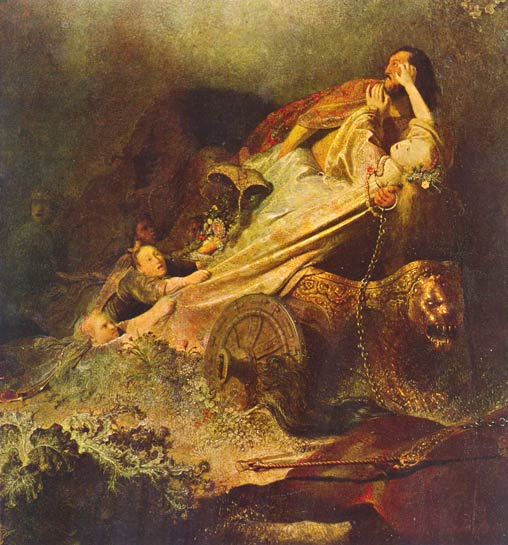
Рембрандт, «Похищение Персефоны», 1632 год.
Rembrandt Harmensz. van Rijn, «Raub der Proserpina», c. 1632

Возвращение Персефоны
Фредерик Лейтон

Скульптура в парке Тимирязевской Академии.
Деметра (у римлян Церера) - богиня плодородия и земледелия. Рядом с ней - ее дочь Персефона (Прозерпина) - будущая царица подземного мира.
Эти статуи попали в Тимирязевский парк уже во второй половине ХХ века из Бауманского сада, расположенными между двумя параллельными улицами Старой и Новой Басманными, где стояли с давних времен. Последние свои годы в этом парке они стояли около пивной и были в запущенном состоянии... Когда их передали Тимирязевской академии и начали реставрацию, оказалось, что эти фигуры, многократно перекрашиваемые разной краской (от бронзового до серебряного и голубого), были первыми отливками чугунолитейного завода Демидовых на Урале. Этот вывод засвидетельствован подписью мастера-литейщика Иоганна Юста, датой - 1760 год и способом отливки. В скульптуре угадывается пластическая манера знаменитого в ту пору скульптора Карло Растрелли. По характеру исполнения парадные скульптуры явно предназначались для парков северной столицы, но почему-то оказались в Москве. Можно предположить, что перевоз их с Урала в Петербург совпал с эпидемией чумы в Москве. Груз задержали, скульптуры оставили на время в парке вблизи одного из трех владений, принадлежавших Демидовым, да так и не перевезли в Петербург.

Мраморный бюст Прозерпины работы американца Хирама Пауэрса 1843.
Marble Bust of Proserpine by Hiram Powers 1843


| Рубрики: | КАРТИНЫ РОССЕТТИ/ПРОЗЕРПИНА PROSERPINA |
 ВЕнеРИН_БАШМАЧОК обратиться по имени
Четверг, 24 Июня 2010 г. 05:54 (ссылка)
ВЕнеРИН_БАШМАЧОК обратиться по имени
Четверг, 24 Июня 2010 г. 05:54 (ссылка)
| Комментировать | « Пред. запись — К дневнику — След. запись » | Страницы: [1] [Новые] |


