СЕМЬЯ. ДЕТСТВО. |
В семье Россетти существовал культ поэзии, и все его дети так или иначе были связаны с поэтическим творчеством и литературной деятельностью. Его дочь Мария Франческа написала книгу "Тень Данте". Кристина стала поэтессой, младший сын Уильям Майкл стал художественным критиком и биографом семьи, старший сын Данте Габриэль в юности проявлял большой интерес к поэзии, прежде всего к Данте, переводами которого занимался его отец, написавший "Аналитический комментарий" к "Божественной комедии", и к английской поэзии - Шелли, Китсу, Браунингу, Блейку. В пять лет он сочинил свою первую драму, в тринадцать - повесть, а в пятнадцать его произведения уже печатались.
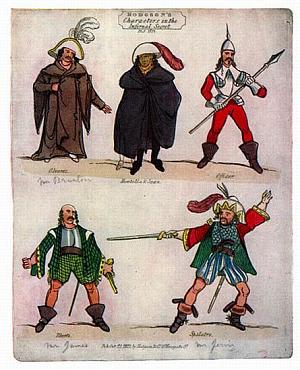 Prints of this kind began in the 1790s as loose sheets of figures taken from the popular theatre of the day and illustrating the key actors and characters (for example, Robert Dighton's 1799 portrait of John Kemble playing the title role in Pizarro). As such they were a kind of souvenir. Soon, however, enterprising publishers began issuing sheets that had figures and theatrical scenes designed to be cut out and made part of a toy theatre that children could construct at home. These toy theatres were immensely popular throughout the 19th century, and it is clear (see WMR and Marillier) that DGR played with them and used the engravings as models for his juvenile drawing.
Гравюры данного типа начали издавать с 1790-х. На них изображались ключевые актёры в костюмах персонажей (например портрет работы Robtrt Dighton - John Kemble в роли Pizarro). Гравюры первоначально служили сувенирами, дети вырезали фигурки и устраивали представления в домашних игрушечных театрах. Россетти не только играл ими, но и использовал как модели для своих ранних рисунков.
Профессорский пост Габриэля Россетти позволял его детям бесплатно обучаться в школе при королевском колледже, куда Данте поступил в 1837 году. 1837 September: Dante Gabriel enters King's College School. Данте посещал уроки рисования, изучал латынь, греческий, французский и немецкий.
1840 Gabriele Rossetti prints Il Mistero dell' Amor Platonico del Medio Evo (5 vols.), but withholds it from publication.
1841 Dante Gabriel writes "Sir Hugh the Heron". DGR began writing this ballad in 1840 and nearly finished it that year. But he lost interest in the work and laid it aside. Later his grandfather Polidori promised to have it printed if he completed it, so he did, and the poem was duly printed in a small run for private circulation in 1843. DGR later had most of the copies of the work destroyed, though a few still survive.
The poem is based on Allan Cunningham's prose tale “The Elfin Miller of Croga Mill,” which DGR read in the second (1840) edition of the collection, originally published in 1826, Legends of Terror. (181-192).
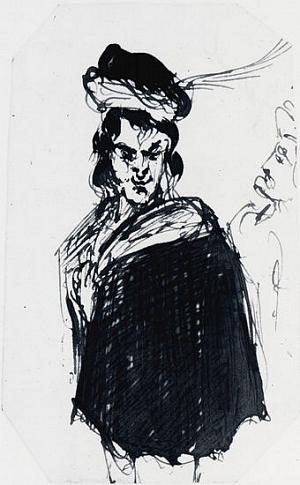 Mephistophelean figure
В 1840 Россетти печатает Il Mistero dell' Amor Platonico del Medio Evo (5 vols.), но отзывает рукопись из печати. В 1840 году он начал писать и почти закончил эту балладу "Sir Hugh the Heron" , но потерял к ней интерес и отложил в сторону. Позже его дед Полидори пообещал напечатать балладу, если Габриель её закончит, что и осуществил в 1843 году, напечатав небольшое количество экземпляров для частного пользования. Данте позже уничтожил большинство копий, лишь несколько сохранились. Поэма основана на рассказе , который Россетти прочитал в 1840 году -Allan Cunningham's “The Elfin Miller of Croga Mill,”Это было второе издание (первое опубликовано в 1826 Legends of Terror.
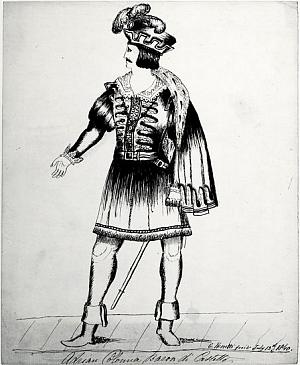
as to books which he read in early years, specifying the Bible, Shakespear, something of translations from Goethe and Schiller, Walter Scott's poems and some of his novels, the Arabian Nights, Keightley's Fairy Mythology, poems by Monk Lewis, the ballad of Chevy Chase, Carleton's Traits and Stories of the Irish Peasantry, Robinson Crusoe, Gulliver, Gay's Fables, Dumas's Pascal Bruno (translated), numerous fairy tales, and yet some other things. Ariosto illustrated with French engravings of the eighteenth century
Pascal Brunois an 1838 historical novella by Alexandre Dumas, set in 19th-century Sicily. It follows a young Sicilian peasant who transforms into a Robin Hood-style bandit after corrupt, oppressive aristocrats destroy his life, exploring themes of doomed love, betrayal, and the struggle for justice
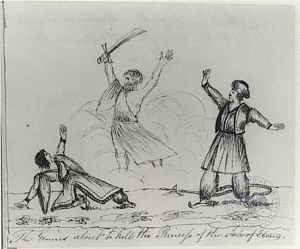
The Genius about to kill the Princess of the Isle of Ebony
DGR expended a good deal of effort on illustrations for this favorite early work, which he knew in the Lane translation (published in 1839). Fredeman says that DGR originally made a series of fifteen drawings, one of which is lost.
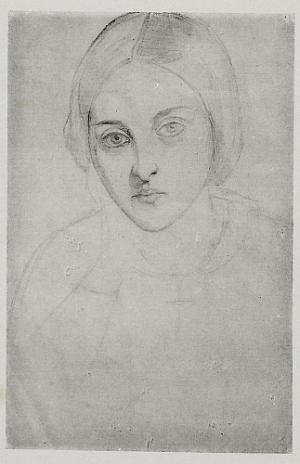
Данте Габриэль Россетти Портрет Кристины Россетти 1847 г.
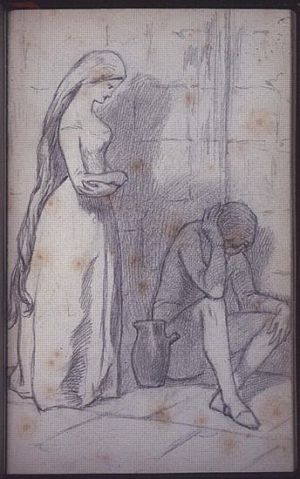 Illustration for Christina Rossetti's “Tasso and Leonora”
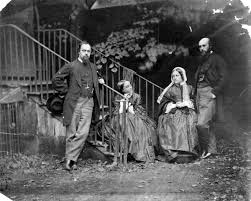
This photograph was taken in the garden of Tudor Hous Chelsea, by Lewis Carroll (Charles Ludwidge Dodson), the author of The Adventure of Alice in Wonderland, who was a keen photographer. Dante Gabriel Rossetti , Christina Rossetti, Frances Lavinia and William Michael Rossetti, 1863).
Фотография сделана в саду Дома Тюдоров в Челси Льюисом Карролом, авторм Алисы в стане чудес, который был заядлым фотографом. Слева направо: Данте Габриэль, Кристина, Лавиния и Майкл Россетти. Около 1863 года.
«Охота на Снарка» (1876), фантастическая поэма с описанием приключений причудливой команды по-разному неадекватных существ и одного бобра, она явилась последней широко известной работой Кэрролла. Интересно, что живописец Данте Габриэль Россетти был убежден, что поэма написана о нем.
Кэрролл много времени уделял фотографии. Хотя он был фотографом-любителем, ряд его снимков вошел, если можно так выразиться, в анналы мировой фотохроники: это фотографии Альфреда Теннисона, Данте Габриэля Россетти, актрисы Эллен Терри и многих других. Особенно Кэрроллу удавались снимки детей. Однако в начале 80-ч годов он забросил занятия фотографией, объявив, что это увлечение ему «надоело». Кэрролл считается одним из самых известных фотографов второй половины XIX века.
In the interim between his early published writing and the success of the Alice books, Dodgson began to move in the pre-Raphaelite social circle. He first met John Ruskin in 1857 and became friendly with him. He developed a close relationship with Dante Gabriel Rossetti and his family, and also knew William Holman Hunt, John Everett Millais, and Arthur Hughes, among other artists.
| Рубрики: | РОССЕТТИ. ROSSETTI./РОССЕТТИ ЖИЗНЬ ROSSETTI LIFE |
| Комментировать | « Пред. запись — К дневнику — След. запись » | Страницы: [1] [Новые] |


