-Рубрики

 -Я - фотограф

Kyiv. Lavra Pecherskaya - Lavra Nebesnaya

Lavra Pecherskaya nebesnaya krasa.Foto Paul Lashkevich_ 05.Mar.2007_ 082.JPGLavra Pecherskaya.All Saints Bell.Foto Paul Lashkevich_14.June.2007_049.JPGLavra Pecherskaya.Lavra Nebesnaya Bell.Foto Paul Lashkevich_20.Sept.2008_DSC08039.JPG

 -Подписка по e-mail


 -Поиск по дневнику

Поиск сообщений в Paul_V_Lashkevich

 -Статистика

Статистика LiveInternet.ru: показано количество хитов и посетителей
Создан: 08.09.2009
Записей: 15974
Комментариев: 6591
Написано: 25243

Выбрана рубрика МОЛИТВА.


Другие рубрики в этом дневнике: Я3._ССЫЛКИ МОЕГО ДНЕВНИКА(3667), Я2._ЦИТАТЫ МОЕГО ДНЕВНИКА(4483), Я1._МОИ ЗАПИСИ МОЕГО ДНЕВНИКА(2268), ЧЕЛОВЕК: СОЦИУМ(9166), ЧЕЛОВЕК: ИСКУССТВО,КУЛЬТУРА,РЕМЕСЛО,ТРУД(7368), ЧЕЛОВЕК: ДЕЯНИЯ(5303), ЧЕЛОВЕК: ВЫЖИВАНИЕ индивидуально и группой(5283), ЧЕЛОВЕК: ВЫБОР - СВОБОДА - ОТВЕТСТВЕННОСТЬ(3692), ЧЕЛОВЕК: Божа Істина і Сила - добрі ГУМОР і САТИРА(1053), ЧЕЛОВЕК: БОГУ угодно ли?(1254), ЧЕЛОВЕК: БОГ в храме Души(1729), Человек: БОГ - ВЕРА - НАДЕЖДА - ЛЮБОВЬ(1177), ЧЕЛОВЕК: БИОГРАФИЯ и ПОРТРЕТ(1937), ЧЕЛОВЕК РАЗУМНЫЙ: УМ разумный(2386), ЧЕЛОВЕК РАЗУМНЫЙ: НОРМА и экстремизм - нелюди(2179), ЧЕЛОВЕК РАЗУМНЫЙ: МАТЬ - отец - ближние - РОДИНА(2978), ЧЕЛОВЕК РАЗУМНЫЙ: ДУХ - ДУША - ТЕЛО(4289), ЧЕЛОВЕК РАЗУМНЫЙ: БОГ - ВСЕЛЕННАЯ - ИЕРАРХИЯ(2349), УКРАЇНА і Не российский мир(605), УКРАІНА - РОСІЯ - БЄЛАРУСЬ(1651), Слово рідне СЛАВЯНЕ(347), СЛОВО РІДНЕ мова РУСЬКА УКРАЇНСЬКА(343), Слова: ШРИФТ, печатные и виртуальные КНИГИ (492), СЛОВА: ПИСЬМЕННОСТЬ, РУКОПИСЬ, КАЛЛИГРАФИЯ(279), Слова: ОПРЕДЕЛЕНИЯ И ТЕРМИНЫ(773), Слова: КЛЮЧЕВЫЕ ищите(2330), СЛОВА: ИСТИНА-ЗАБЛУЖДЕНИЕ, ПРАВДА-ЛОЖЬ(1201), СЛОВА: Звук - Буква - Цифра - Цвет.(493), СИМВОЛ - ОБРАЗ - РЕЧЬ - ЗНАК (1343), РЕЛИГИЯ - УКРАИНСКАЯ ПРАВОСЛАВНАЯ ЦЕРКОВЬ(103), Религия - РАСКОЛЬНИКИ - ЕРЕТИКИ - ИНОВЕРЦЫ(664), Религия - ПРАВОСЛАВНОЕ ХРИСТИАНСТВО(2272), РЕЛИГИЯ - Объект - Служитель - Верный - Обряд(2918), РЕЛИГИЯ - Messe pour la liberté religieus(490), Процесс: ФОРМА ОБЩЕНИЯ В ИНТЕРНЕТЕ?(650), Процесс: УПРАВЛЕНИЕ - ТЕХНОЛОГИЯ - РЕЗУЛЬТАТ(3294), Процесс: СОБЫТИЯ,ФАКТЫ,ПРОГНОЗЫ,ИНФОРМАЦИЯ(3736), Процесс - ТЕЛО - СТРУКТУРА - ВЕРА.(1806), Процесс - ДУША - ФУНКЦИЯ - НАДЕЖДА.(1798), Процесс - ДУХ - ЦЕЛЬ - ЛЮБОВЬ.(1801), ПРОЦЕСС - ГАРМОНИЯ - ХАОС - СИСТЕМА - ФОРМА(3062), ПРОЦЕСС - Времени ход(1849), ПРОЦЕСС - Вектор(2173), Проблемы - Вопросы - Ответы(1981), ОПЫТ: ПОЗНАЁМ всем естеством(2698), МЫСЛИ: ЧЕРЕЗ ЛЮДЕЙ.(2996), МЫСЛИ: МЕДИТАЦИЯ - РАЗСУЖДЕНИЕ - deep thinking(902), КРЕСТ - ХРАНИТЕЛЬ ВСЕЯ ВСЕЛЕННЫЯ(739), ЗВОН КОЛОКОЛОВ(954), ДВИЖЕНИЕ: ЗВУК - ГОЛОС - ПЕНИЕ - МУЗЫКА - ШУМ(1242), БОГОРОДИЦА - ПРЕСВЯТАЯ - ПРИСНОДЕВА - МАРИЯ(587), БОГ: РАЗУМ-ЖИЗНЬ-ВСЕЛЕННАЯ(2738), БОГ: в единстве - БЛАГОДАТЬ и ЗАКОН(2293), А._МОЛИТВА_Читают-Поют(46), А. Павел В. Лашкевич. МУЗЫКА(56), А. Павел В. Лашкевич. Мои предпочтения.(757), А. Павел В. Лашкевич. Мои инициативы(80), А. Ознакомиться рекомендую - Paul_V_Lashkevich(2100), А. Ключевые ТЕМЫ СПИСКИ Ссылок(20), А. Как читать дневник Paul_V_Lashkevich?(54), TS - КОНФИДЕНЦИАЛЬНО - ИЗБИРАТЕЛЬНО(117), TS(179), Skype: You with Me(14), AUDIO - & - VIDEO - & - FOTO(4525), All Internet(2228), A. Людська думка і мова(4498)
Комментарии (0)

АНГЕЛЬСКИЙ ХУДОЖНИК ФРА БЕАТО АНДЖЕЛИКО. ЧАСТЬ 10

Пятница, 11 Марта 2016 г. 00:57 + в цитатник
Это цитата сообщения stewardess0202 [Прочитать целиком + В свой цитатник или сообщество!]

Ангельский художник Фра Беато Анджелико. Часть 10

0_6d4d4_863a58c7_L (380x47, 9Kb)

Фрески

Фрески монастыря Сан Доменико в Фьезоле (1424-30. Флоренция)

Эти фрески происходят из монастыря Сан Доменико в Фьезоле, где Фра Анджелико был претором. После того, как в 19 веке монастырь был закрыт эти фрески были отделены от стен и проданы.

angelico2900 (672x700, 64Kb)

Богоматерь с младенцем и святыми Домиником и Фомой Аквинским. 1424-30. Фреска. 196 х 184 см. Эрмитаж, Санкт Петербург

Первоначально фреска была расположена в верхней части лестницы, ведущей в спальню. В 1879 она была куплена флорентийскими художниками Алессандро Маззонти и Козимо Конти, которые в 1882 году продали ее великому князю Сергею в Россию.

Симметричная композиция изображает мадонну на троне в окружении святых. Слева от Марии – святой Доминик, держащий в руках лилию, символ целомудрия. Справа - великий теолог Фома Аквинский, и на страницах книги, которую он держит, можно прочитать текст псалмов. В отличие от святых, чьим образам приданы индивидуальные черты и характеры, образ Марии сильно идеализирован. Именно ее божественный облик придает картине дух глубокого лирицизма.

«Читать далее…»
Рубрики:  БОГ: РАЗУМ-ЖИЗНЬ-ВСЕЛЕННАЯ
ЧЕЛОВЕК: СОЦИУМ
ПРОЦЕСС - Времени ход
ПРОЦЕСС - Вектор
ЧЕЛОВЕК: ИСКУССТВО,КУЛЬТУРА,РЕМЕСЛО,ТРУД
МОЛИТВА
ЧЕЛОВЕК РАЗУМНЫЙ: ДУХ - ДУША - ТЕЛО
A. Людська думка і мова
БОГ: в единстве - БЛАГОДАТЬ и ЗАКОН
Религия - ПРАВОСЛАВНОЕ ХРИСТИАНСТВО
AUDIO - & - VIDEO - & - FOTO
ЧЕЛОВЕК: ДЕЯНИЯ
ПРОЦЕСС - ГАРМОНИЯ - ХАОС - СИСТЕМА - ФОРМА
Процесс: УПРАВЛЕНИЕ - ТЕХНОЛОГИЯ - РЕЗУЛЬТАТ
ЧЕЛОВЕК РАЗУМНЫЙ: БОГ - ВСЕЛЕННАЯ - ИЕРАРХИЯ
ЧЕЛОВЕК: ВЫЖИВАНИЕ индивидуально и группой
Процесс: СОБЫТИЯ,ФАКТЫ,ПРОГНОЗЫ,ИНФОРМАЦИЯ
ЧЕЛОВЕК: ВЫБОР - СВОБОДА - ОТВЕТСТВЕННОСТЬ
БОГОРОДИЦА - ПРЕСВЯТАЯ - ПРИСНОДЕВА - МАРИЯ
КРЕСТ - ХРАНИТЕЛЬ ВСЕЯ ВСЕЛЕННЫЯ
Я1._МОИ ЗАПИСИ МОЕГО ДНЕВНИКА
Я2._ЦИТАТЫ МОЕГО ДНЕВНИКА
Я3._ССЫЛКИ МОЕГО ДНЕВНИКА
Религия - РАСКОЛЬНИКИ - ЕРЕТИКИ - ИНОВЕРЦЫ

Комментарии (0)

ХУДОЖНИК БЕАТО ФРА АНЖЕЛИКО

Пятница, 11 Марта 2016 г. 00:40 + в цитатник
Это цитата сообщения ВЗРЫВАЯ_СТЁКЛА [Прочитать целиком + В свой цитатник или сообщество!]

ХУДОЖНИК БЕАТО ФРА АНЖЕЛИКО


Фра Анджелико (1400—1455)- в миру носивший имя Гвидо ди Пьеро (Guido di Piero), родился в местечке Виккьо в Тоскане около 1400. В документе, относящемся к 1417, он уже упоминается как художник; известно также, что до 1423 во Фьезоле он вступил в доминиканский орден, получив имя фра Джованни да Фьезоле, а впоследствии был настоятелем монастыря Сан Марко во Флоренции.Учитель не известен. Начинал деятельность с иллюстраций религиозных книг. Работа с крупными формами началась с росписи алтарей в 1428? — 1433 году монастыре Сан Марко (Флоренция), когда несколько монахов из Фьезоле переехали во Флоренцию, чтобы расписывать отстроенный Миккелоццо монастырь. В 1445 году Анжелико вызвал в Рим папа Евгений IV расписывать фрески ныне не существующей церкви Крещения в Ватикане.
"Плач по Мертвому Христу", 1436
1322036942_vorobev-maksim-nikiforovich-primorskiy-vid-v-italii (700x441, 87Kb)
Читать далее...
Рубрики:  Проблемы - Вопросы - Ответы
Процесс - ДУХ - ЦЕЛЬ - ЛЮБОВЬ.
Процесс - ДУША - ФУНКЦИЯ - НАДЕЖДА.
Процесс - ТЕЛО - СТРУКТУРА - ВЕРА.
БОГ: РАЗУМ-ЖИЗНЬ-ВСЕЛЕННАЯ
ЧЕЛОВЕК: СОЦИУМ
ЧЕЛОВЕК: ИСКУССТВО,КУЛЬТУРА,РЕМЕСЛО,ТРУД
МОЛИТВА
ЧЕЛОВЕК РАЗУМНЫЙ: ДУХ - ДУША - ТЕЛО
A. Людська думка і мова
БОГ: в единстве - БЛАГОДАТЬ и ЗАКОН
РЕЛИГИЯ - Объект - Служитель - Верный - Обряд
AUDIO - & - VIDEO - & - FOTO
ЧЕЛОВЕК: ДЕЯНИЯ
ЧЕЛОВЕК: БИОГРАФИЯ и ПОРТРЕТ
ЧЕЛОВЕК РАЗУМНЫЙ: БОГ - ВСЕЛЕННАЯ - ИЕРАРХИЯ
ЧЕЛОВЕК: ВЫЖИВАНИЕ индивидуально и группой
Процесс: СОБЫТИЯ,ФАКТЫ,ПРОГНОЗЫ,ИНФОРМАЦИЯ
Человек: БОГ - ВЕРА - НАДЕЖДА - ЛЮБОВЬ
ЧЕЛОВЕК: ВЫБОР - СВОБОДА - ОТВЕТСТВЕННОСТЬ
БОГОРОДИЦА - ПРЕСВЯТАЯ - ПРИСНОДЕВА - МАРИЯ
КРЕСТ - ХРАНИТЕЛЬ ВСЕЯ ВСЕЛЕННЫЯ
Я1._МОИ ЗАПИСИ МОЕГО ДНЕВНИКА
Я2._ЦИТАТЫ МОЕГО ДНЕВНИКА
Я3._ССЫЛКИ МОЕГО ДНЕВНИКА

Комментарии (0)

ХЕРУВИМЫ - и ссылки

Пятница, 26 Февраля 2016 г. 01:44 + в цитатник
liveinternet.ru/users/paul_...385471266/

http://nesusvet.narod.ru/ico/books/kutkovoy4/
+++

АНГЕЛ ХРАНИТЕЛЬ КАК ЛИЧНОСТЬ И ПРОБЛЕМЫ ЕГО ИЗОБРАЗИМОСТИ. Виктор Семенович Кутковой.

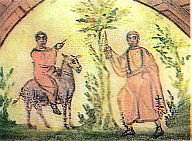
Изображения Ангелов можно встретить уже в римских катакомбах, правда, без привычных крыльев. Хотя крылатые существа известны даже в доантичную эпоху. Однако в раннехристианских памятниках отсутствуют изображения Ангела Хранителя. 

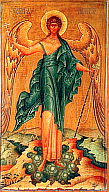
Ангел хранитель, прорисьТа его иконография, которая распространилась с XVI - XVII столетий в России, обычно представляет нам "юношу, облаченного в белый хитон, иногда в тунику и гиматий, или плащ, главные атрибуты - крест и обнаженный меч"[1].

Сколько мы ни искали, но так и не обнаружили иконографию Ангела Хранителя в 11-вековом византийском искусстве, основополагающем для православного мира. Тот "страж храма" из константинопольской Софии, о котором упоминает о. Георгий Флоровский[2], является, по мнению В.Н. Лазарева, Архангелом Гавриилом[3], что значительно больше походит на правду. Мерило и зерцало в руках свидетельствуют: перед нами - кто-то из Архангелов, но не "страж храма".

Силы небесные живописали достаточно часто, но не Ангела Хранителя.

Это интересно. Поскольку возникает справедливый вопрос: если молитва, которую вычитывают православные в утреннем правиле ("Святый Ангеле, предстояй окаянной моей души..."), написана преп. Макарием Великим в IV веке, а канон Ангелу Хранителю составлен митрополитом Евхаитским Иоанном Мавроподом в XI столетии, то к какой же иконе обращались молящиеся?

Вызывает недоумение фактическое отсутствие литературы по обозначенной теме. Отдельные авторы ее затрагивают лишь описательно. Не проблемно. А иногда и ошибочно: об одной такой статье известного советского искусствоведа мы уже высказывались в периодической печати[4].

Поскольку все, кроме Бога, имеет свое начало, - требуется выяснить: когда, по учению Церкви, к человеку приставляется Ангел Хранитель? Начиная с Тертуллиана и Оригена, ещё первохристианские авторы давали самые разные ответы. Но заключительная молитва канона Ангелу Хранителю говорит совершенно однозначно: "от святого крещения" - нового рождения водой и Духом... Причем песнь 7 этого канона указывает и на какой срок: "от Бога дарованного ми во веки", то есть Ангел Хранитель сопровождает каждого христианина от св. крещения и до окончания земного пути, но и после, "в страшный же час смерти неотступен буди ми, благий хранителю мой, <...> егда имам преходити воздушная мытарства" (молитва акафиста Ангелу Хранителю), так как усопшего "обычно сопровождают два ангела <...>. Обязанность этих ангелов (Ангела Хранителя и встречного ангела. - В. К.) - сопровождать душу умершего на его пути в загробную жизнь"[5]. И на Страшном Суде Ангел Хранитель будет предстательствовать пред Христом, моля о прощении хранимого им человека, и в случае прощения - становится последнему неразлучным другом в вечности.

Бытует мнение, что тот друг и Ангел есть святой, имя которого мы носим. Отсюда, мол, именины и называются днем Ангела.

Это явное заблуждение. Оно легко опровергается утренним правилом: одна молитва вычитывается Ангелу Хранителю - совершенно другая - святому, во имя которого крещен христианин.

Нет, лик Ангела Хранителя от смертных людей скрыт. Зримо он открывается лишь в момент разлучения души с телом. Уже одного этого достаточно для отрицательного ответа на вопрос: "Имеет ли право на существование иконография Ангела Хранителя?". В противном случае иконописец должен был бы умереть и воскреснуть... Да и коль воскреснет, то он изобразит только своего Ангела. Где гарантии, что его Ангел одинаков хотя бы визуально с Ангелом каждого из нас? Этот вопрос правомерен даже к святым, которые воочию видели своих Хранителей. Ведь если "неизвестно, являются ли Ангелы единосущными друг другу, возможно, что каждый из них - особое творение Божие, особый духовный мир"[6], - тогда насколько актуальней ставить вопрос об "ипостазировании" Ангелов: есть ли наш Хранитель некая функциональная сила, безликая, а точней, однообразная и трансцендентная - или все-таки конкретная личность, призванная к служению?

Разговор о категориальном анализе личности - трудный; тут все держится на еле уловимых тонкостях. И в человеке ведь различие природы и личности уловить не легче, чем различить единую природу и трех Лиц в Боге.

"Мы привыкли считать эти два выражения - личность и индивид - почти что синонимами, - пишет В.Н. Лосский, - мы одинаково пользуемся и тем и другим, чтобы выразить одно и то же. Однако в известном смысле индивид и личность имеют противоположное значение; индивид означает извечное смешение личности с элементами, принадлежащими общей природе, тогда как личность, напротив, означает то, что от природы отлично".

В области данного различения христианство пришло к новым понятиям. Как пишет архимандрит Киприан (Керн), "личность не была раскрыта в древнем языческом мире. Поднявшаяся на вершины философского сознания эллинская мысль не нашла даже выражения для личности, что особенно остро сказалось в период тех богословских споров, которые велись вокруг тринитарного и христологического догматов. Христианство обосновало божественное происхождение личности. Тринитарные споры дали богословский фундамент для человеческой личности, осознав Лицо, Ипостась в Божестве. Греческий язык в творениях своих высших философских умов - Платона и Плотина - удовлетворялся местоимением εκαστος, "каждый", характеризуя его членом: ο εκαστος, то есть таким образом придавая ему строгую индивидуальность. Но всё же это оставалось только местоимением, то есть чем-то, что "вместо имени". Только богословие понятия Ипостаси, как самостоятельного "бытия в себе", было способно заполнить в языке ту пустоту, которая в современном словаре заполняется словом "личность". Это не только "индивид" как "часть вида", как "порождение биологического родового процесса", как что-то смертное, как какой-то "номер" натуралистического ряда, нечто нецельное, вполне повторимое. Личность есть отпечаток божественного Лица, творение Божие, а вовсе не порождение рода. Личность духовна и принадлежит духовному миру прежде всего. Это высшая ценность духовного бытия.

Ко всем этим различиям между индивидом и личностью, так ярко осознанными в философии Бердяева, следует прибавить его же замечание о том, что "человек не есть дробная часть мира, в нём заключена цельная загадка и разгадка мира" (О назначении человека. С. 50). Человеческая личность не есть произведение общества или природного мира, или даже рода и семьи. Каждый человек есть в духовном смысле непосредственное создание Божие. Поэтому человек и не зависит в своём происхождении от целого, от рода или мира. Человеческий дух выше и шире, а главное, первичнее и рода, и общества, и мира. Не эти содружества породили дух человека, и потому этот дух и не есть часть рода, общества и мира. Наоборот, он их охватывает, приемлет или отвергает. Род и общество состоят из человеческих индивидов, но дух человека, его личность не есть составная часть рода и общества. Человеческий дух может от них зависеть, насколько это ему угодно, но он ни в коем случае не является собственностью этих общественных организмов и их работ. Личность - выше общества, первичнее его, важнее его. Кроме того, личность - неповторима и не может быть заменена другой "такой же" личностью. "Такой же" личности вообще не существует. Существуют "такие же" оттиски, отпечатки, серийные номера как произведение какой-то машины, но всякая личность, сколько бы миллиардов их ни породил исторический процесс, есть единственная".

В.Н.Лосский продолжает: "В нашем настоящем состоянии, сами будучи индивидами, мы воспринимаем личность только через индивид. Когда мы хотим определить, "охарактеризовать" какую-нибудь личность, мы подбираем индивидуальные свойства, "черты характера", которые встречаются у прочих индивидов и никогда не могут быть совершенно "личными", так как они принадлежат общей природе. И мы, в конце концов, понимаем: то, что делает его "им самим" - неопределимо, потому что в его природе нет ничего такого, что относилось бы собственно к личности, всегда единственной, несравнимой и "бесподобной"[7].

Здесь тайна, происходящая из неограниченных творческих способностей Создателя мира. Она не имеет измеримых "параметров". Существуют ли способы и величины, чтобы измерить тайну?

Но у тайны есть своя антиномия - "индивидуальные свойства". Отсюда возникает понятие "индивидуальность" - совокупность качеств, выражающих сущность отдельного индивида. Человеческая индивидуальность - безусловная экзистенциальная ценность от Бога. Она не отвергается, а включается в Соборное единство; чем и объяснимо требование "портретного сходства" от изографа при живописании иконы того или иного святого, "ибо почитание (воздается иконе) не постольку, поскольку она отстает от сходства (с первообразом), но поскольку она представляет подобие (с ним)", - поясняет св. Феодор Студит. Само слово εικων "образ" восходит к εικω "имею сходство, похожу". Иконописные подлинники полны указаний типа "пастырь, седой, борода Иоанна Богослова", "округло лице, яко же и Матери Его", "власы Николины" и т.п. Умелая кисть мастера, водимая Творцом, каждый раз из совокупности таких сравнительных черт создает единственный и неповторимый образ человека - личность, что подтверждается и надписью на иконе: это свт. Василий Великий, а не свт. Григорий Богослов. Потому в древности образ сначала одобрялся духовными лицами и потом уже освящался надписью (чина освящения, какой известен сегодня, до XVII в. не существовало: считалось, что икону освящает именно надпись; да и сегодняшний чин освящения есть только акт одобрения, и не больше).

Дальше Лосский говорит, что Ангел и человек - "существа личностные", но человек, для известного богослова, "полнее, богаче, содержание ангельских духов", ибо он поставлен "на грани умозрительного и чувственного" и потому "причастен всем сферам тварной вселенной"[8]. Отсюда, как видим, личность Ангела и личность человека существенно разнятся, хотя и Ангел, и человек созданы по образу и подобию Божию. Антропология св. Григория Паламы свидетельствует, что Ангел, уступая в совершенстве образа, превосходит человека в подобии. По Лосскому, "личность, утверждающая себя как индивид и заключающая себя в пределах своей частной природы, не может в полноте себя осуществлять - она оскудевает"[9]. Ничего такого нет у Божиих Ангелов, ибо они "насыщаются Божественной благодатью и передают ее остальному творению". Само созерцание Божества, насколько это для них возможно, служит им пищей, как точно излагает православное учение преп. Иоанн Дамаскин[10].

Могут ли здесь Ангелы утверждаться в статусе индивидов, а значит, заключать "себя в пределах своей частной природы"? Могли... Но только перестали бы быть Ангелами.

Бесполезно углубляться в вопрос об ангельской природе. Этого не даст нам сделать сама непостижимая природа ангельского мира. И все-таки, Отцы Седьмого Вселенского Собора, указывая на совершенную бестелесность и невидимость Бога, подтвердили положение о допустимости изображать Ангелов на иконах: "Что же касается разумных сил, то они не всецело изъяты от телесности и не безусловно невидимы, будучи одарены тонкими, воздухообразными или огненными телами, в которых они неоднократно являлись и были видимы". Отцы не уточнили, временно или постоянно носят Ангелы эти тонкие тела. Они засвидетельствовали только, что бесплотность Ангелов относительна, что Ангелы являлись людям, а потому они в известном смысле изобразимы[11].

Вопрос об их изобразимости (в качестве церковно почитаемого образа) оттого и решаем, что Ангелы - личности. Своим опровержением преп. Феодор Студит доказывал иконоборцам: "<...> икона изображает не природу, а личность"[12]. Заметим: конкретную личность, а не символическую - символических личностей, как и "личностей вообще", не бывает. Путать абстрактные формулы с людьми занятие вредное.

Церковная символика укоренена в исторической реальности. Херувимов и серафимов велел изобразить на крышке Заветного Ковчега сам Ягве, а значит, их лик был Моисею открыт, о чем говорил на VII Вселенском Соборе Патриарх Тарасий, что находит подтверждение в Писании: "виждь и сотвориши Ми по всему, елика Аз покажу тебе на горе" (Исх. 25:8); Архангелов людям посылал Господь, Ангелы писались те, что явились пастухам, возвещая о Рождении Спасителя мира, те, что возвестили Женам Мироносицам радость о Воскресшем, причем поданы они в служебном, "функциональном" плане, а не в качестве образа, на который молятся. Символика же Ангела Хранителя ничем не поддержана - это типично головная работа иконописца, его "идеи". И в результате получилась символическая личность, безадресная для молитвы. Ситуация фактически по Канту: "Пусть только наша идея будет правильной, и тогда, несмотря на наличие препятствий, стоящих на пути к ее осуществлению, она не будет не возможной".

Возникает вопрос: что позволяло преп. Андрею Рублеву изображать Св. Троицу в виде Ангелов, символизирующих три Ипостаси? Насколько правомерен символизм здесь? Отвечает ли данная иконография 82-му правилу Трулльского Собора?

Вот в том-то и дело, что "образ Троицы не есть ипостасный образ Отца, Сына и Духа Святого, а образ троичности Божества и троичного бытия" (Л.А. Успенский). Явление Аврааму трех мужей у дуба мамврийского, по мнению Церкви, является не символом, а прообразовательным видением Пресвятой Троицы. Это и позволяло преп. Андрею Рублеву Ее изображать не символически, а в качестве прообразов. 82-е правило в данном случае не нарушалось, потому как оно, требуя конкретности, запрещает символы, а не прообразы. Да и речь на Пято-Шестом Соборе велась не об изображении Троицы, а - Иисуса Христа. Икона "Отечество", например, противоречит этому правилу и представляет нам образ Троицы ипостазированным. Но в силу невоплощенности Бога Отца, Его образ - уже символ. ["Ветхий денми" из пророчества Даниила не может быть Отцом - согласно Деяниям Большого Московского Собора (глава 43), Он - Сын в славе Божества, "еже будет во второе Его пришествие".] Образ же Духа Святого в виде голубя правомерен лишь в сюжете "Богоявление".

Икона ветхозаветной Троицы, написанная Рублевым, основана на явлении чувственном, и, говоря словами преп. Иосифа Волоцкого, в ней "почитают и целуют едино существо Божества".

К середине XVI в. чужеродный символизм активно начинает вытеснять из иконописи язык "преображенного евангельского реализма". Появляется икона Ангела Служителя (ныне находится в музее-заповеднике города Сергиев Посад). Этого Ангела некоторые искусствоведы приняли за Ангела Хранителя. Диаконские же облачения, вместо меча кадило в руке говорят о нем как о служителе: греч. diakonoV - служитель. Тем не менее, XVI век все сделал, чтобы явить миру образ Ангела Хранителя. А.С. Уваров в свое время писал о нахождении такого образа в клеймах, с пояснительными надписями "Ангел Хранитель хранит человека в дни" и "Ангел Господень хранит человека в нощи". Сама икона датируется XVII веком, но представляет собой список с иконы XVI столетия, названной А.С. Уваровым "Ангел Хранитель с похождениями". Однако до сегодняшнего дня подобные памятники XVI в. не дошли. Впрочем, в аналогичном символизме того времени сомневаться не приходится. По меткому замечанию о. Георгия Флоровского, "это преобладание символизма означало распад иконного письма. Икона становится слишком литературной, начинает изображать не столько лики, сколько идеи".

XVII век лишь усугубил сложившееся положение.

Теперь пришла пора задать следующий вопрос: "Почему Ангелы однообразны, то есть, одинаковы ликами?" Выше мы уже говорили о требовании Отцов к иконописцу добиваться "портретного сходства" с первообразом. Так вот, "одинаковость" у Ангелов - тоже в известной мере "сходство", хотя звучит это парадоксально. Судите сами: Ангелы, будучи личностями и не будучи индивидами ("порождениями биологического родового процесса") приобретают "неуловимые", а, следовательно, ни с кем не сравнимые черты - как такую тайну может разрешить изограф, если, по учению Церкви, на иконе следует изобразить личность и символически указать на природу изображаемого? Как?? Только "апофатически" - от обратного, - чтобы не с кем было сравнить (Ангел в образе юноши - банальная выдумка искусствоведов). Вот древний художник, согласно с требованиями св. Отцов, исключительно духовидчески, умозрительно, а не рационалистически, и представил лик без усов, бороды, без морщин и каких бы то ни было типажных признаков, лик без единой приметы пола (ибо Ангелы - бесполы).

Что можно в таком случае получить, имея вдобавок самые смутные представления о природе ангельского мира? - только то, что получили: фактическую одинаковость (она заодно и подчеркивает меньшее совершенство в образе Божием у Ангела по сравнению с человеком). Даже одежды отличаются не характером, а иерархически: у Архангела, вместо гиматия изображается плащ, вместо хитона - далматик с оплечьем и подольником; волосы же и прически - разницы не имеют.

Вот откуда "в известном смысле" изобразимость, о которой говорили Отцы Седьмого Собора.

Но не следует данный прием считать "трафаретным". Он носит концептуальный характер.

Историк философии может справедливо спросить: "Различать "личность" и "индивидуальность" стали лишь с XVIII века, начиная с Канта и Гердера. Поэтому древний изограф не мог даже гипотетически вводить такие понятия в живопись".

Отвечаем. Во-первых, понятием "личность" пользовались Отцы, изобличавшие ариан, в IV веке - "в период тех богословских споров, которые велись вокруг тринитарного и христологического догматов". Во-вторых, отсутствие термина "индивидуальность" или "индивид", не говоря уже о названном различении, вовсе не означает отсутствие самого понятия. Из слов преп. Феодора Студита о сходстве изображения на иконе с первообразом становится ясно, что этот святой имеет в виду именно "индивидуальность". Самость, гордыня - весь перечень грехов,- судя по библейской истории, всегда сопутствовал человеку после потери рая. А ведь они и есть черты, присущие индивиду. Не всякий иконописец мог категориально проанализировать и различить тонкости хитросплетений такой философии, но он обладал, повторяем, мистическим умозрением - зрением умного мира, которое отвлеченные понятия переводило в художественные образы - "краски мудрости", "богословие в красках". Да и само богословие иконы принадлежало преимущественно Отцам, а не художнику. Когда же данный принцип был нарушен, и иконописец начал "действовать" самостоятельно, то вместо богословия получился с претензиями на философию литературный суррогат, обернувшийся "символизмом идей". Из античного прошлого выходила великая тень Платона: идея как метафизическая сущность вещи стала зрительным образом.

Дух времени вершил свое дело.

Все на удивление похоже! В русской истории XVI век - это популяризация великодержавных идей, воплощенных в соответственные деяния. XVII столетие страна начинала смутой, а кончила - петровскими "реформами". "В области художественного творчества, - пишет Л.А. Успенский, - так же как и в области богословской мысли, исчезает творческое переживание предания и переосмысление Православия в свете того, что несет иноверие. Изменения в религиозной психологии эпохи выражаются в разрыве между молитвенным подвигом и творчеством, так же как и богословской мыслью"[13]. Складывается впечатление, что некоторым русским живописцам того времени становится трудно помыслить Бога "вне" плоскости иконы, обитающим "в неприступном свете". А коль так, то с иссяканием высокого богомыслия утрачивается и всякое трезвение в изображении неизобразимого. Начинают играть "фантазии", иной раз даже чем-то объясняемые. Тут и случается рецидив авторского произвола, воспитанный влияниями "извне". И его логическим продолжением в XVIII веке станет появление многочисленных языческих "купидонов" в церковном искусстве. 
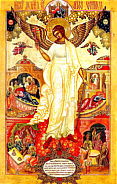
Икона Ангел-хранитель с деяниями, XIX в.Вот на такой почве культивировалась иконография Ангела Хранителя. Но исчезало полуторатысячелетнее сознание ее невозможности.

Родословная этого феномена прослеживается от образа XIII века "Явление Архангела Михаила Иисусу Навину". Особую роль здесь сыграла икона Архистратига Михаила из Архангельского собора Московского кремля (XV в.). Из 18-ти ее клейм 6 отображают покровительственныеи карающие деяния, 6 - спасительные и еще 6 - битву с сатаной[14]. Перед нами никто иной, как Ангел Хранитель "всея Руси", с его функциями и действиями, но не в прямом, а в переносном значении. Московский памятник становится для Руси своеобразным эталоном. Икона из Углича - тому подтверждение, с учетом, конечно, "вкусовых" изменений XVI века. В свою очередь, угличский Архангел - эталонный образ для работавших вместе костромских и ярославских изографов, с которого они создают фрески Ангела Хранителя[15]

Икона Ангела-хранителя, XIX в.Проблема нововведений XVI - XVII веков остро стоит и в наше время. Широкое распространение непозволительных икон не находит надлежащей критики в церковной, литературе. Л. А. Успенский писал: "Мы знаем: так же как человеческая мысль не всегда была на высоте подлинного богословия, так и художественное творчество не всегда было на высоте подлинного иконописания, и среди прочих заблуждений мы часто встречаем образ Бога Отца, особенно распространившийся в православном мире с XVII века"[16].

Добавим сюда и образ Ангела Хранителя.

Седьмой Вселенский Собор на все века провозгласил, что "иконописание зависит от св. Отцов и только художественный его аспект принадлежит художнику"[17].

Этого-то и не было, на наш взгляд, при разработке иконографии Ангела Хранителя. 


Примечания:

[1]. Филатов В. В. Краткий иконописный словарь. М.: Просвещение, 1996. С. 14.

[2]. Флоровский Георгий, прот. Догмат и история. М.: Изд-во Свято-Владимирского Братства, 1998. С. 401.

[3]. Лазарев В.Н. Византийская живопись. М.: Искусство, 1986. Табл. 122.

[4]. Кутковой В.С. От веры в науку - к вере в науке // Покров. Великий Новгород, 2002. №2 (9). С. 6-8.

[5]. Серафим (Роуз), иером. Душа после смерти. СПб., 1994 С. 40.

[6]. Алипий (Кастальский-Бороздин), архим. Исайя (Белов), архим. Догматическое богословие: Курс лекций. Свято-Троицкая Сергиева Лавра, 1998. С. 179.

[7]. Лосский В.Н. Очерк мистического богословия Восточной Церкви. Догматическое богословие. М., 1991 С. 92-93.

[8]. Там же. С. 82

[9]. Там же. С. 94.

[10]. Алипий (Кастальский-Бородин), архим. Исайя (Белов), архим. Указ. соч. С. 183-184

[11]. Там же. С. 180

[12]. Цит. по: Успенский Л.А. Богословие иконы Православной Церкви. ЧИТАТЬ Париж: Изд-во Западноевропейского экзархата Московской Патриархии, 1989. С. 94

[13]. Там же. С. 180

[14]. Тихомирова К.Г. Героическое сказание в древнерусской живописи. // Древнерусское искусство: Художественная культура Москвы и прилегающих к ней княжеств. XIV-XVI вв. М., 1970. С. 8-17.

[15]. См.:

  1. ) роспись северной стены церкви Воскресения в Ростове (ок. 1675 г.);
  2. ) фреска церкви Иоанна Предтечи в Ярославле (1694-1695).

[16]. Успенский Л.А. Указ. соч. С. 121-122.

[17]. Там же. С. 117Из библиотеки Несусвета


Виктор Семенович Кутковой, доцент Новгородского государственного университета им. Ярослава Мудрого, член Союза художников России, автор материалов в журналах «Альфа и Омега», «Всерусский Собор», «Духовный собеседник», «Новая Европа», «Русская провинция» и др., на сайте www.pravoslavie.ru

+++
 

Рубрики:  БОГ: РАЗУМ-ЖИЗНЬ-ВСЕЛЕННАЯ
ЧЕЛОВЕК: СОЦИУМ
А. Ознакомиться рекомендую - Paul_V_Lashkevich
ЧЕЛОВЕК: ИСКУССТВО,КУЛЬТУРА,РЕМЕСЛО,ТРУД
МОЛИТВА
A. Людська думка і мова
БОГ: в единстве - БЛАГОДАТЬ и ЗАКОН
Религия - ПРАВОСЛАВНОЕ ХРИСТИАНСТВО
РЕЛИГИЯ - Объект - Служитель - Верный - Обряд
AUDIO - & - VIDEO - & - FOTO
ЧЕЛОВЕК: ДЕЯНИЯ
ЧЕЛОВЕК: ВЫЖИВАНИЕ индивидуально и группой
ЧЕЛОВЕК: ВЫБОР - СВОБОДА - ОТВЕТСТВЕННОСТЬ
БОГОРОДИЦА - ПРЕСВЯТАЯ - ПРИСНОДЕВА - МАРИЯ
КРЕСТ - ХРАНИТЕЛЬ ВСЕЯ ВСЕЛЕННЫЯ
Я1._МОИ ЗАПИСИ МОЕГО ДНЕВНИКА
Я2._ЦИТАТЫ МОЕГО ДНЕВНИКА
Я3._ССЫЛКИ МОЕГО ДНЕВНИКА
Религия - РАСКОЛЬНИКИ - ЕРЕТИКИ - ИНОВЕРЦЫ
РЕЛИГИЯ - Messe pour la liberté religieus
РЕЛИГИЯ - УКРАИНСКАЯ ПРАВОСЛАВНАЯ ЦЕРКОВЬ
Важливе про події в Українській Православній Церкві - історія та сучасність - прогнози.

Комментарии (1)

ХЕРУВИМЫ - и ссылки

Пятница, 26 Февраля 2016 г. 01:38 + в цитатник
Это цитата сообщения Ангел_лунных_сумерек [Прочитать целиком + В свой цитатник или сообщество!]

ХЕРУВИМЫ

 ХЕРУВИМ

(др. -евр. cherub — телец, животное)

Силы небесные, занимающие второе место в первой триаде ангельских чинов после Серафимов. Окружают трон Вседержителя и символизируют мудрость.

Так же принято считать иногда Херувимов ангелами — детьми, которыми становятся души умерших детей. В переносном смысле херувимом могут называть красивого юношу или ребенка.

Иногда Херувимов легко спутать с Серафимами, поскольку их также часто изображают в виде человеческого лика, окруженного шестью крыльями. Определить изображение Херувима можно по цвету крыльев — у Херувима они не алые, а голубые или зеленые.

                                                                           heruvim

Читать далее...
Рубрики:  БОГ: РАЗУМ-ЖИЗНЬ-ВСЕЛЕННАЯ
ЧЕЛОВЕК: СОЦИУМ
Слова: КЛЮЧЕВЫЕ ищите
ЧЕЛОВЕК: ИСКУССТВО,КУЛЬТУРА,РЕМЕСЛО,ТРУД
МОЛИТВА
ЧЕЛОВЕК РАЗУМНЫЙ: ДУХ - ДУША - ТЕЛО
A. Людська думка і мова
БОГ: в единстве - БЛАГОДАТЬ и ЗАКОН
Религия - ПРАВОСЛАВНОЕ ХРИСТИАНСТВО
РЕЛИГИЯ - Объект - Служитель - Верный - Обряд
AUDIO - & - VIDEO - & - FOTO
ЧЕЛОВЕК: ДЕЯНИЯ
ЧЕЛОВЕК РАЗУМНЫЙ: БОГ - ВСЕЛЕННАЯ - ИЕРАРХИЯ
ЧЕЛОВЕК: ВЫЖИВАНИЕ индивидуально и группой
Человек: БОГ - ВЕРА - НАДЕЖДА - ЛЮБОВЬ
ЧЕЛОВЕК: ВЫБОР - СВОБОДА - ОТВЕТСТВЕННОСТЬ
БОГОРОДИЦА - ПРЕСВЯТАЯ - ПРИСНОДЕВА - МАРИЯ
КРЕСТ - ХРАНИТЕЛЬ ВСЕЯ ВСЕЛЕННЫЯ
Я1._МОИ ЗАПИСИ МОЕГО ДНЕВНИКА
Я2._ЦИТАТЫ МОЕГО ДНЕВНИКА
Я3._ССЫЛКИ МОЕГО ДНЕВНИКА
Религия - РАСКОЛЬНИКИ - ЕРЕТИКИ - ИНОВЕРЦЫ
РЕЛИГИЯ - Messe pour la liberté religieus
РЕЛИГИЯ - УКРАИНСКАЯ ПРАВОСЛАВНАЯ ЦЕРКОВЬ
Важливе про події в Українській Православній Церкві - історія та сучасність - прогнози.

Комментарии (2)

В планах Путина был блицкриг. До 8 марта 2014 года войска РФ должны были дойти до Киева - Наливайченко

Дневник

Среда, 24 Февраля 2016 г. 16:06 + в цитатник

 ( gordonua.com/news/politics/nalivaychenko-v-planah-putina-byl-blickrig-do-8-marta-121121.html )

1456318903_002_UkraineMAIDANAVATAR___65663a7c87c3c2a11a5d1f76194dd695__kopiya (162x150, 71Kb)1456318934_002_78929429_1318247718_540458443_1 (160x120, 37Kb)

+++

ПОЛИТИКА ЭКСКЛЮЗИВ «ГОРДОНА»

Наливайченко: В планах Путина был блицкриг. До 8 марта 2014 года войска РФ должны были дойти до Киева

Экс-глава СБУ Валентин Наливайченко прокомментировал"ГОРДОН" стенограмму закрытого заседания СНБО 28 февраля 2014 года, когда началась аннексия Крыма, а также объяснил, почему был против введения военного положения и оказания военного сопротивления российскому агрессору на полуострове.

Рекомендую1423
 
Twitter
 
Вконтакте9
 
G+
 
ОK87
22 февраля, 2016 20:29
Валентин&nbsp;Наливайченко о стенограмме закрытого заседания СНБО: Не работайте на самоуничтожение. Войну надо выиграть. Иначе доиграетесь. Агрессор не спит...
Валентин Наливайченко о стенограмме закрытого заседания СНБО: Не работайте на самоуничтожение. Войну надо выиграть. Иначе доиграетесь. Агрессор не спит... 
Фото: Valentyn Nalyvaichenko / Facebook

Сегодня, 22 февраля 2016 года, на заседании парламентского комитета по вопросам национальной безопасности и обороны была опубликована засекреченная стенограмма заседания Совета национальной безопасности и обороны Украины (СНБО) от 28 февраля 2014 года, на котором рассматривались вопросы территориальной целостности и угрозы аннексии Крыма. Заседание было созвано после того, как группа вооруженных автоматическим оружием и пулеметами лиц захватила здания парламента и правительства Крыма.

Согласно документам, единственным, кто выступил за срочное введение военного положения и немедленный ответ вооруженной агрессии со стороны России был Александр Турчинов, исполнявший на тот момент обязанности президента Украины. Лидер "Батьківщини" Юлия Тимошенко выступила категорически против военного положения и оказания какого-либо сопротивления.

На заседании СНБО 28 февраля 2014 года Тимошенко, со ссылкой на западных партнеров, заявила следующее: "Если бы у нас был хотя бы один шанс из ста выиграть у Путина, я была бы первой, кто бы поддержал активные действия. Но посмотрите, в каком состоянии сейчас наша армия. Посмотрите: разве можем мы противостоять ему в Крыму, где на порядок больше российских солдат, самое современное оружие и полноценные российские базы? […] Поэтому мы должны сегодня умолять все международное сообщество встать на защиту Украины. Это наша единственная надежда. Ни один танк не должен выехать из казармы, ни один солдат не должен взять оружие, иначе это означает поражение. Никакого военного положения и активизации наших войск! Мы должны стать самой мирной нацией на планете, просто вести себя, как голуби мира".

После Тимошенко, согласно стенограмме, выступил Валентин Наливайченко, занимавший на тот момент пост главы СБУ, и подтвердил слова лидера "Батьківщини".

Обнародование стенограммы закрытого заседания СНБО спустя два года вызвало резонанс в обществе. Валентин Наливайченко направил изданию "ГОРДОН" открытое письмо, в котором изложил свою позицию, почему в феврале 2014 года Крым был сдан РФ без вооруженного сопротивления:

"Правда о захвате Крыма.

Целый день страна обговаривает рассекреченную стенограмму заседания СНБО и будет обговаривать, уверен, еще долго. И это правильно, потому что общество должно знать всю правду о самых трагических страницах своей новейшей истории и все обстоятельства аннексии Крыма Российской Федерацией.

Но надо говорить всю правду: без политизации, без мести политическим оппонентам, без манипуляции людьми и отвлечением общественного внимания от тех проблем, с которыми сегодня живет каждый украинец – а это разгул политической коррупции, глубокий политический и экономический кризис, падение уровня жизни.

Начну с самого начала. За захватом Крыма украинцы наблюдали почти в прямом эфире. Но на самом деле видели лишь финальную часть хорошо спланированной операции, которая системно готовилась Российской Федерацией в преступной колаборации с режимом Януковича, начиная с 2010 года, когда были приняты так называемые Харьковские соглашения о пролонгации базирования Черноморского флота в Крыму еще на 25 лет.

Что мы имели в Крыму на момент 27 февраля 2014 года по эфирной картинке и о чем я докладывал на заседании СНБО 28 февраля 2014 года? Тогдашний глава Верховного Совета Крыма Константинов и провозглашенный "премьером" Крыма Аксенов перешли на сторону России и координировали свои действия с руководством Черноморского флота.

Происходит массовый переход военнослужащих, сотрудников "Беркута" и других правоохранителей на сторону РФ, российские силовики берут под контроль объекты инфраструктуры полуострова, объекты и пункты контроля Государственной пограничной службы Украины. Действия России получили массовую поддержку населения Крыма.

Информация, поступавшая по нашим каналам, полностью подтверждала готовность России к введению войск, которые концентрировались вдоль нашей границы. Одновременно ведется массовая дезинформация и нагнетание общественных настроений с использованием крымских и российских СМИ.

Стенограмма секретного заседания СНБО во время аннексии Крыма в 2014 году. Полный текст на русском языке

Наши международные партнеры предостерегали нас от начала активных вооруженных действий, поскольку, по данным их разведок, Путин использует это для начала широкомасштабного сухопутного вторжения. Настаивать на необходимости проведения военной операции в Крыму означало не учитывать всех перечисленных выше реалий.

Бросить в бой небоеспособную армию, милицию и СБУ, крымское управление которых почти в полном составе перешло на сторону врага, означало попасть в ловушку Путина, открыть ему дорогу к полномасштабному вторжению в Украину аж до захвата Киева. А это потеря государства и тысячи, тысячи смертей... А что Путин? В его планах был блицкриг.

1 марта президент РФ получил санкцию на ввод войск. До 3 марта военные части должны были перейти границу. И уже 8 марта дойти до Киева! На северных границах, начиная с Чернигова и до Мариуполя, по оперативной информации, находилось до 70 000 российских вооруженных сил.

О том, что операция по захвату Крыма готовилась и планировалось заранее, свидетельствует хотя бы знаменитая медаль министерства обороны РФ "За возвращение Крыма". На медали дата – 20 февраля 2014! Вдумайтесь, 20 февраля!

История неизбежно расставит все точки над "i".

И мне есть еще что сказать, кроме вышеизложенного, в частности тем, кто будет пытаться избегать ответственности или перекладывать ее на других. Как и тем, кто вбрасывает темы, чтобы отвлечь внимание от своего политического коллапса и обнищания людей.

Пока же скажу следующее: не работайте на самоуничтожение в условиях войны, аннексии и оккупации украинских территорий. Потому что войну надо выиграть и закончить, а территории вернуть. Иначе доиграетесь, что не будет чего возвращать и кому возвращать. Агрессор не спит...

Валентин Наливайченко, 
лидер "Антикорупционного движения", 
бывший глава СБУ (24 февраля 2014 года – 18 июня 2015 года)
".

+++

Рубрики:  БОГ: РАЗУМ-ЖИЗНЬ-ВСЕЛЕННАЯ
ЧЕЛОВЕК: СОЦИУМ
Слова: КЛЮЧЕВЫЕ ищите
ЧЕЛОВЕК: ИСКУССТВО,КУЛЬТУРА,РЕМЕСЛО,ТРУД
МОЛИТВА
A. Людська думка і мова
БОГ: в единстве - БЛАГОДАТЬ и ЗАКОН
ЗВОН КОЛОКОЛОВ
ЧЕЛОВЕК: ДЕЯНИЯ
Процесс: УПРАВЛЕНИЕ - ТЕХНОЛОГИЯ - РЕЗУЛЬТАТ
ЧЕЛОВЕК: ВЫЖИВАНИЕ индивидуально и группой
Процесс: СОБЫТИЯ,ФАКТЫ,ПРОГНОЗЫ,ИНФОРМАЦИЯ
Человек: БОГ - ВЕРА - НАДЕЖДА - ЛЮБОВЬ
ЧЕЛОВЕК: ВЫБОР - СВОБОДА - ОТВЕТСТВЕННОСТЬ
БОГОРОДИЦА - ПРЕСВЯТАЯ - ПРИСНОДЕВА - МАРИЯ
КРЕСТ - ХРАНИТЕЛЬ ВСЕЯ ВСЕЛЕННЫЯ
Я1._МОИ ЗАПИСИ МОЕГО ДНЕВНИКА
Я2._ЦИТАТЫ МОЕГО ДНЕВНИКА
Я3._ССЫЛКИ МОЕГО ДНЕВНИКА
УКРАЇНА і Не российский мир
Русский - ИСКОННОЕ + российский: нео - имперское, стремящееся поглотить Русское и Украинское и прочая, и прочая, и прочая......
РЕЛИГИЯ - УКРАИНСКАЯ ПРАВОСЛАВНАЯ ЦЕРКОВЬ
Важливе про події в Українській Православній Церкві - історія та сучасність - прогнози.

Комментарии (0)

Christian-Jewish dialogue - 2015-12-10 Vatican Radio - See comments - Part 1

Понедельник, 22 Февраля 2016 г. 23:48 + в цитатник
liveinternet.ru/users/paul_...385171708/

( http://nashe.orbita.co.il/blogs/users/Agata/58027 )
+
( http://newrezume.org/news/2016-02-20-13249 )
++
Евреи и современное христианство
-----

На днях Ватикан обнародовал программный документ, где впервые зафиксирован официальный отказ от миссионерской работы среди иудеев. Отныне евреи – согласно католической доктрине – единственный народ на Земле, не нуждающийся для спасения души в «благой вести» христианства. Получается, несмотря на то, что иудеи не верят в Иисуса, католические богословы признают спасение евреев «теологически бесспорным» и объявляют этот вопиющий парадокс «неразрешимой божественной тайной». Мол, если Всевышний обещал спасти евреев, он сам справится с этой задачей – без помощи христиан.

Этот революционный шаг в развитии христианской теологии был приурочен к 50-летию Nostra Aetate – декларации Второго Ватиканского собора, на котором было в значительной степени пересмотрено отношение католичества к иудаизму и осуждены попытки насильственного крещения евреев.

Напомним, что до 1960-х годов каждую Страстную пятницу евреев обвиняли в «вероломстве», читай – распятии, и это обвинение было изъято из литургии именно Вторым Ватиканским собором, объявившим, что «завет между Б-гом и евреями продолжает действовать». Теперь же Папский престол сделал следующий шаг, объявив излишним и добровольное приобщение евреев к христианской вере.

Документ под названием «Дары (т. е. дары евреям) и призвание Б-жье безвозвратны» содержит ряд важных посылов. В частности, отмечается, что христиане не могут быть антисемитами, поскольку их религия уходит корнями в иудаизм. Более того, на недавней встрече с еврейскими религиозными лидерами папа Франциск заявил, что антисемитизмом являются не только нападки на евреев, но и выступления против Израиля.

Всё это не означает, что в отношениях между иудаизмом и Римом не осталось проблем – они есть. Так, например, до сих пор не обнародованы данные о еврейских детях, спасенных католической церковью в годы Холокоста и не возвращенных в еврейскую общину – на рассекречивании этой информации настаивают еврейские организации.

Но в целом Святой престол делает всё возможное для диалога с евреями – именно от католических теологов исходила инициатива отмечать во всем мире День иудаизма, чтобы «подчеркнуть еврейские корни христианства и содействовать христианско-иудейскому диалогу».

В некоторых странах, включая Италию, Австрию, Нидерланды и Польшу, уже существует подобный день. Его проводят 17 января. Его мероприятия включают в себя научные конференции и дискуссии по отношениям между иудеями и христианскими церквями, семинары по традициям иудаизма, концерты еврейской национальной музыки, выставки и другое.

Особенности проведения "Дня иудаизма" в разных странах должны определить местные Епископские конференции, поскольку отношения между католической церковью и иудаизмом в разных странах складываются по-разному.

(Из Михаила Гольда.)

Большинство протестантских церквей и течений давно отказались от анти-еврейской риторики. Католическая церковь медленно и постепенно движется в том же направлении, теперь уже можно сказать, что ею пройдена большая часть пути.

А что же происходит в православных церквях, прежде всего в РПЦ? Пребывают всё в той же позиции злобы и нетерпимости, включая поддержку кровавого навета об употребления евреями крови христианских младенцев? (Я имею в виду поклонение понтифика РПЦ Кирилла-Гундяева мощам Гавриила Белостокского "умученного жидами").
+++

Paul V. Lashkevichhttps://ru.wikipedia.org/.../%D0%93%D0%B0%D0%B2%D1%80%D0...
 
Гаврии́л Белосто́кский или Гаврии́л Заблу́довский (настоящее имя Гаврии́л Петро́вич Говдель;…
RU.WIKIPEDIA.ORG
 
LikeReplyRemove Preview1 min


+++

Рубрики:  Процесс: ФОРМА ОБЩЕНИЯ В ИНТЕРНЕТЕ?
БОГ: РАЗУМ-ЖИЗНЬ-ВСЕЛЕННАЯ
ЧЕЛОВЕК: СОЦИУМ
А. Ознакомиться рекомендую - Paul_V_Lashkevich
ЧЕЛОВЕК: ИСКУССТВО,КУЛЬТУРА,РЕМЕСЛО,ТРУД
МОЛИТВА
A. Людська думка і мова
БОГ: в единстве - БЛАГОДАТЬ и ЗАКОН
Религия - ПРАВОСЛАВНОЕ ХРИСТИАНСТВО
РЕЛИГИЯ - Объект - Служитель - Верный - Обряд
ЧЕЛОВЕК: ДЕЯНИЯ
Процесс: УПРАВЛЕНИЕ - ТЕХНОЛОГИЯ - РЕЗУЛЬТАТ
ЧЕЛОВЕК: ВЫЖИВАНИЕ индивидуально и группой
ЧЕЛОВЕК РАЗУМНЫЙ: МАТЬ - отец - ближние - РОДИНА
Процесс: СОБЫТИЯ,ФАКТЫ,ПРОГНОЗЫ,ИНФОРМАЦИЯ
ЧЕЛОВЕК: ВЫБОР - СВОБОДА - ОТВЕТСТВЕННОСТЬ
БОГОРОДИЦА - ПРЕСВЯТАЯ - ПРИСНОДЕВА - МАРИЯ
Я1._МОИ ЗАПИСИ МОЕГО ДНЕВНИКА
Я2._ЦИТАТЫ МОЕГО ДНЕВНИКА
Я3._ССЫЛКИ МОЕГО ДНЕВНИКА
Религия - РАСКОЛЬНИКИ - ЕРЕТИКИ - ИНОВЕРЦЫ
РЕЛИГИЯ - Messe pour la liberté religieus
УКРАЇНА і Не российский мир
Русский - ИСКОННОЕ + российский: нео - имперское, стремящееся поглотить Русское и Украинское и прочая, и прочая, и прочая......
РЕЛИГИЯ - УКРАИНСКАЯ ПРАВОСЛАВНАЯ ЦЕРКОВЬ
Важливе про події в Українській Православній Церкві - історія та сучасність - прогнози.

Комментарии (0)

Christian-Jewish dialogue - 2015-12-10 Vatican Radio - See comments - Part 1

Понедельник, 22 Февраля 2016 г. 23:46 + в цитатник
liveinternet.ru/users/paul_...385171708/

http://tapirr.livejournal.com/5239177.html
+++
О новом документе Ватикана по иудео-христианскому диалогу

22 фев, 2016 at 9:12 PM
кр. крест
close-to-corinth

Тут снова страсти по поводу недавнего ватиканского документа про миссию к иудеям. К счастью, никакого отказа от миссии нет.
Иначе это было бы просто предательством Христа.
Ведь спасение (согласно Павлу и согласно Евангелию) только через Мессию Иисуса.
Другого Пути спасения нет.

Итак, пишет mikhail_zeleny
О новом документе Ватикана по иудео-христианскому диалогу
Комиссия Ватикана по отношениям с евреями обнародовала 10 декабря документ под названием Дары и призвание Божье непреложны, вызвавший разговоры об отказе Ватикана от миссии к евреям и даже о (якобы) признании иудаизма как равноценного христианству пути к Богу для евреев. Мне такие оценки представляются неверными.

Насколько я понял из этого ватиканского документа (я его читал, не без помощи гуглпереводчика, правда), речь идёт всего лишь об отказе только от миссии к евреям как организованного института, но не от свидетельства перед евреями как такового.

Прямо оговорено, что не принимается позиция "двух равноправных путей к Богу": иудаизма (соблюдения Торы) как пути для евреев и христианства (веры в Иисуса) для неевреев. Т.е. принципиально ничего не изменилось (и слава Богу, с моей точки зрения, т.к. обратное было бы изменой Христу), просто иначе расставляются акценты (и тоже, я считаю, слава Богу) - Деян.3:17 ("Впрочем я знаю, братия, что вы, как и начальники ваши, сделали это по неведению") отдается приоритет перед Мф.27:6 ("Кровь Его на нас и на детях наших"). Ну и диалог (в т.ч. и полемика, и свидетельство) переводится из плоскости внешнего диалога (между "чужими") в плоскость диалога внутреннего (между "своими"). Как оно, собственно, и было когда-то в 1-м веке.

Короче говоря, документ не запрещает христианину на вопрос еврея "Слушай, ну как ты думаешь - может, мы, евреи, и без Иисуса в Мире Грядущем удел иметь будем? Может, нам не обязательно в Иисуса веровать - это только для вас, неевреев?" ответить "нет". И крестить еврея, изъявившее такого желание, документ не запрещает. А вот чего он запрещает - это, что называется, "лезть без мыла" к евреям в стилистике небезызвестных "Евреев за Иисуса" - "Ви таки знаете, что такое нахес и что такое тухес? Так вот - с Иешуа у вас будет нахес, а без Иешуа у вас будет полный тухес!" :)

Но, собственно, "лезть без мыла" - плохая миссионерская стратегия не только по отношению к евреям. По большому счету, времена миссий как организованного института давно прошли, и это касается миссий как к евреям, так и к неевреям. Не работает это сейчас, зато работает другое - индивидуальное свидетельство, индивидуальный диалог и т.п. А миссия как массовая кампания... что она сейчас вообще дать может, во всяком случае в развитом мире? Про то, что существует такая штука, как христианство, там уже давно все слышали, поэтому просто не осбого смысла в массовых "миссионерских кампаниях" а-ля Билли Грэм, массовых раздачах Нового Завета и т.п. Так что католики отказались, в сущности, от вещи давно уже ненужной.

Метки:
евреи, евреи-израиль, иудаизм, католики, миссионерство, реформа
+++

Paul V. Lashkevichhttps://ru.wikipedia.org/.../%D0%93%D0%B0%D0%B2%D1%80%D0...
 
Гаврии́л Белосто́кский или Гаврии́л Заблу́довский (настоящее имя Гаврии́л Петро́вич Говдель;…
RU.WIKIPEDIA.ORG
 
LikeReplyRemove Preview1 min


+++

Рубрики:  Процесс: ФОРМА ОБЩЕНИЯ В ИНТЕРНЕТЕ?
МЫСЛИ: ЧЕРЕЗ ЛЮДЕЙ.
БОГ: РАЗУМ-ЖИЗНЬ-ВСЕЛЕННАЯ
ЧЕЛОВЕК: СОЦИУМ
ЧЕЛОВЕК: ИСКУССТВО,КУЛЬТУРА,РЕМЕСЛО,ТРУД
МОЛИТВА
ЧЕЛОВЕК РАЗУМНЫЙ: ДУХ - ДУША - ТЕЛО
A. Людська думка і мова
БОГ: в единстве - БЛАГОДАТЬ и ЗАКОН
ЗВОН КОЛОКОЛОВ
Религия - ПРАВОСЛАВНОЕ ХРИСТИАНСТВО
РЕЛИГИЯ - Объект - Служитель - Верный - Обряд
ЧЕЛОВЕК: ДЕЯНИЯ
Процесс: УПРАВЛЕНИЕ - ТЕХНОЛОГИЯ - РЕЗУЛЬТАТ
ЧЕЛОВЕК РАЗУМНЫЙ: БОГ - ВСЕЛЕННАЯ - ИЕРАРХИЯ
ЧЕЛОВЕК: ВЫЖИВАНИЕ индивидуально и группой
ЧЕЛОВЕК РАЗУМНЫЙ: МАТЬ - отец - ближние - РОДИНА
Процесс: СОБЫТИЯ,ФАКТЫ,ПРОГНОЗЫ,ИНФОРМАЦИЯ
ЧЕЛОВЕК: ВЫБОР - СВОБОДА - ОТВЕТСТВЕННОСТЬ
БОГОРОДИЦА - ПРЕСВЯТАЯ - ПРИСНОДЕВА - МАРИЯ
КРЕСТ - ХРАНИТЕЛЬ ВСЕЯ ВСЕЛЕННЫЯ
Я1._МОИ ЗАПИСИ МОЕГО ДНЕВНИКА
Я2._ЦИТАТЫ МОЕГО ДНЕВНИКА
Я3._ССЫЛКИ МОЕГО ДНЕВНИКА
Религия - РАСКОЛЬНИКИ - ЕРЕТИКИ - ИНОВЕРЦЫ
РЕЛИГИЯ - Messe pour la liberté religieus
УКРАЇНА і Не российский мир
Русский - ИСКОННОЕ + российский: нео - имперское, стремящееся поглотить Русское и Украинское и прочая, и прочая, и прочая......
РЕЛИГИЯ - УКРАИНСКАЯ ПРАВОСЛАВНАЯ ЦЕРКОВЬ
Важливе про події в Українській Православній Церкві - історія та сучасність - прогнози.

Комментарии (0)

Christian-Jewish dialogue - 2015-12-10 Vatican Radio - See comments - Part 2

Понедельник, 22 Февраля 2016 г. 23:22 + в цитатник
liveinternet.ru/users/paul_...385171708/

Start of text - Part 1

( http://www.liveinternet.ru/users/paul_v_lashkevich/post385171708/ )
+++ +++ +++
End of text - Part 2

[url]http://www.liveinternet.ru/users/paul_v_lashkevich/post385172451/[/url]

+++

5.                  The universality of salvation in Jesus Christ and God’s unrevoked covenant with Israel

Since God has never revoked his covenant with his people Israel, there cannot be different paths or approaches to God’s salvation. The theory that there may be two different paths to salvation, the Jewish path without Christ and the path with the Christ, whom Christians believe is Jesus of Nazareth, would in fact endanger the foundations of Christian faith. Confessing the universal and therefore also exclusive mediation of salvation through Jesus Christ belongs to the core of Christian faith. So too does the confession of the one God, the God of Israel, who through his revelation in Jesus Christ has become totally manifest as the God of all peoples, insofar as in him the promise has been fulfilled that all peoples will pray to the God of Israel as the one God (cf. Is 56:1-8). The document “Notes on the correct way to present the Jews and Judaism in preaching and catechesis in the Roman Catholic Church” published by the Holy See’s Commission for Religious Relations with the Jews in 1985 therefore maintained that the Church and Judaism cannot be represented as “two parallel ways to salvation”, but that the Church must “witness to Christ as the Redeemer for all” (No.I, 7). The Christian faith confesses that God wants to lead all people to salvation, that

Jesus Christ is the universal mediator of salvation, and that there is no “other name under heaven given to the human race by which we are to be saved” (Acts 4:12).

From the Christian confession that there can be only one path to salvation, however, it does not in any way follow that the Jews are excluded from God’s salvation because they do not believe in Jesus Christ as the Messiah of Israel and the Son of God. Such a claim would find no support in the soteriological understanding of Saint Paul, who in the Letter to the Romans not only gives expression to his conviction that there can be no breach in the history of salvation, but that salvation comes from the Jews (cf. also Jn 4:22). God entrusted Israel with a unique mission, and He does not bring his mysterious plan of salvation for all peoples (cf. 1 Tim 2:4) to fulfilment without drawing into it his “first-born son” (Ex 4:22). From this it is self-evident that Paul in the Letter to the Romans definitively negates the question he himself has posed, whether God has repudiated his own people. Just as decisively he asserts: “For the gifts and the call of God are irrevocable” (Rom 11:29). That the Jews are participants in God’s salvation is theologically unquestionable, but how that can be possible without confessing Christ explicitly, is and remains an unfathomable divine mystery. It is therefore no accident that Paul’s soteriological reflections in Romans 9-11 on the irrevocable redemption of Israel against the background of the Christ-mystery culminate in a magnificent doxology: “Oh, the depth of the riches and wisdom and knowledge of God! How inscrutable are his judgments and how unsearchable his ways” (Rom 11:33). Bernard of Clairvaux (De cons. III/1,3) says that for the Jews “a determined point in time has been fixed which cannot be anticipated”.
Another focus for Catholics must continue to be the highly complex theological question of how Christian belief in the universal salvific significance of Jesus Christ can be combined in a coherent way with the equally clear statement of faith in the never-revoked covenant of God with Israel. It is the belief of the Church that Christ is the Saviour for all. There cannot be two ways of salvation, therefore, since Christ is also the Redeemer of the Jews in addition to the Gentiles. Here we confront the mystery of God’s work, which is not a matter of missionary efforts to convert Jews, but rather the expectation that the Lord will bring about the hour when we will all be united, “when all peoples will call on God with one voice and ‘serve him shoulder to shoulder’ ” (“Nostra aetate”, No.4). The Declaration of the Second Vatican Council on Judaism, that is the fourth article of “Nostra aetate”, is located within a decidedly theological framework regarding the universality of salvation in Jesus Christ and God’s unrevoked covenant with Israel. That does not mean that all theological questions which arise in the relationship of Christianity and Judaism were resolved in the text. These questions were introduced in the Declaration, but require further theological reflection. Of course, there had been earlier magisterial texts which focussed on Judaism, but “Nostra aetate” (No.4) provides the first theological overview of the relationship of the Catholic Church to the Jews.
Because it was such a theological breakthrough, the Conciliar text is not infrequently over-interpreted, and things are read into it which it does not in fact contain. An important example of over-interpretation would be the following: that the covenant that God made with his people Israel perdures and is never invalidated. Although this statement is true, it cannot be explicitly read into “Nostra aetate” (No.4). This statement was instead first made with full clarity by Saint Pope John Paul II when he said during a meeting with Jewish representatives in Mainz on 17 November 1980 that the Old Covenant had never bee n revoked by God: “The first dimension of this dialogue, that is, the meeting between the people of God of the Old Covenant, never revoked by God ... and that of the New Covenant, is at the same time a dialogue within our Church, that is to say, between the first and the second part of her Bible” (No.3). The same conviction is stated also in t he Catechism of the Church in 1993: “The Old Covenant has never been revoked” (121).

The Church’s mandate to evangelize in relation to Judaism

It is easy to understand that the so-called ‘mission to the Jews’ is a very delicate and sensitive matter for Jews because, in their eyes, it involves the very existence of the Jewish people. This question also proves to be awkward for Christians, because for them the universal salvific significance of Jesus Christ and consequently the universal mission of the Church are of fundamental importance. The Church is therefore obliged to view evangelisation to Jews, who believe in the one God, in a different manner from that to people of other religions and world views. In concrete terms this means that the Catholic Church neither conducts nor supports any specific institutional mission work directed towards Jews. While there is a principled rejection of an institutional Jewish mission, Christians are nonetheless called to bear witness to their faith in Jesus Christ also to Jews, although they should do so in a humble and sensitive manner, acknowledging that Jews are bearers of God’s Word, and particularly in view of the great tragedy of the Shoah.
The concept of mission must be presented correctly in dialogue between Jews and Christians. Christian mission has its origin in the sending of Jesus by the Father. He gives his disciples a share in this call in relation to God’s people of Israel (cf. Mt 10:6) and then as the risen Lord with regard to all nations (cf. Mt 28:19). Thus the people of God attains a new dimension through Jesus, who calls his Church from both Jews and Gentiles (cf. Eph 2:11­22) on the basis of faith in Christ and by means of baptism, through which there is incorporation into his Body which is the Church (“Lumen gentium”, 14). Christian mission and witness, in personal life and in proclamation, belong together. The principle that Jesus gives his disciples when he sends them out is to suffer violence rather than to inflict violence. Christians must put their trust in God, who will carry out his universal plan of salvation in ways that only he knows, for they are witnesses to Christ, but they do not themselves have to implement the salvation of humankind. Zeal for the “house of the Lord” and confident trust in the victorious deeds of God belong together. Christian mission means that all Christians, in community with the Church, confess and proclaim the historical realisation of God’s universal will for salvation in Christ Jesus (cf. “Ad gentes”, 7). They experience his sacramental presence in the liturgy and make it tangible in their service to others, especially those in need.
It is and remains a qualitative definition of the Church of the New Covenant that it consists of Jews and Gentiles, even if the quantitative proportions of Jewish and Gentile Christians may initially give a different impression. Just as after the death and resurrection of Jesus Christ there were not two unrelated covenants, so too the people of the covenant of Israel are not disconnected from ‘the people of God drawn from the Gentiles’. Rather, the enduring role of the covenant people of Israel in God’s plan of salvation is to relate dynamically to the ‘people of God of Jews and Gentiles, united in Christ’, he whom the Church confesses as the universal mediator of creation and salvation. In the context of God’s universal will of salvation, all people who have not yet received the gospel are aligned with the people of God of the New Covenant. “In the first place there is the people to whom the covenants and promises were given and from whom Christ was born according to the flesh (cf. Rom 9:4-5). On account of their fathers this people remains most dear to God, for he does not repent of the gifts he makes nor of the calls he issues (cf. Rom 11:28-29)” (“Lumen gentium”, 16).

The goals of dialogue with Judaism

The first goal of the dialogue is to add depth to the reciprocal knowledge of Jews and Christians. One can only learn to love what one has gradually come to know, and one can only know truly and profoundly what one loves. This profound knowledge is accompanied by a mutual enrichment whereby the dialogue partners become the recipients of gifts. The Conciliar declaration “Nostra aetate” (No. 4) speaks of the rich spiritual patrimony that should be further discovered step by step through biblical and theological studies and through dialogue. To that extent, from the Christian perspective, an important goal is the mining of the spiritual treasures concealed in Judaism for Christians. In this regard one must mention above all the interpretation of the Sacred Scriptures. In the foreword by Cardinal Joseph Ratzinger to the 2001 document of the Pontifical Biblical Commission “The Jewish People and their Sacred Scriptures in the Christian Bible”, the respect of Christians for the Jewish interpretation of the Old Testament is stressed. It highlights that “Christians can learn a great deal from a Jewish exegesis practised for more than 2000 years; in return Christians may hope that Jews can profit from Christian exegetical research.” In the field of exegesis many Jewish and Christian scholars now work together and find their collaboration mutually fruitful precisely because they belong to different religious traditions.
This reciprocal acquiring of knowledge must not be limited to specialists alone. Therefore it is important that Catholic educational institutions, particularly in the training of priests, integrate into their curricula both “Nostra aetate” and the subsequent documents of the Holy See regarding the implementation of the Conciliar declaration. The Church is also grateful for the analogous efforts within the Jewish community. The fundamental changes in relations between Christians and Jews which were initiated by “Nostra aetate” (No. 4) must also be made known to the coming generations and be received and disseminated by them. One important goal of Jewish-Christian dialogue certainly consists in joint engagement throughout the world for justice, peace, conservation of creation, and reconciliation. In the past, it may have been that the different religions - against the background of a narrowly understood claim to truth and a corresponding intolerance - contributed to the incitement of conflict and confrontation. But today religions should not be part of the problem, but part of the solution. Only when religions engage in a successful dialogue with one another, and in that way contribute towards world peace, can this be realised also on the social and political levels. Religious freedom guaranteed by civil authority is the prerequisite for such dialogue and peace. In this regard, the litmus-test is how religious minorities are treated, and which rights of theirs are guaranteed. In Jewish-Christian dialogue the situation of Christian communities in the state of Israel is of great relevance, since there - as nowhere else in the world - a Christian minority faces a Jewish majority. Peace in the Holy Land - lacking and constantly prayed for - plays a major role in dialogue between Jews and Christians.
Another important goal of Jewish-Catholic dialogue consists in jointly combatting all manifestations of racial discrimination against Jews and all forms of anti-Semitism, which have certainly not yet been eradicated and re-emerge in different ways in various contexts. History teaches us where even the slightest perceptible forms of anti-Semitism can lead: the human tragedy of the Shoah in which two-thirds of European Jewry were annihilated. Both faith traditions are called to maintain together an unceasing vigilance and sensitivity in the social sphere as well. Because of the strong bond of friendship between Jews and Catholics, the Catholic Church feels particularly obliged to do all that is possible with our Jewish friends to repel anti-Semitic tendencies. Pope Francis has repeatedly stressed that a Christian can never be an anti-Semite, especially because of the Jewish roots of Christianity.Justice and peace, however, should not simply be abstractions within dialogue, but should also be evidenced in tangible ways. The social-charitable sphere provides a rich field of activity, since both Jewish and Christian ethics include the imperative to support the poor, disadvantaged and sick. Thus, for example, the Holy See’s Commission for Religious Relations with the Jews and the International Jewish Committee on Interreligious Consultations (IJCIC) worked together in 2004 in Argentina during the financial crisis in that country to organise joint soup kitchens for the poor and homeless, and to enable impoverished children to attend school by providing meals for them. Most Christian churches have large charitable organisations, which likewise exist within Judaism. These would be able to work together to alleviate human need. Judaism teaches that the commandment “to walk in His ways” (Deut 11:22) requires the imitation of the Divine Attributes (Imitatio Dei) through care for the vulnerable, the poor and the suffering (Babylonian Talmud, Sotah 14a). This principle accords with Jesus’ instruction to support those in need (cf. eg. Mt 25:35-46). Jews and Christians cannot simply accept poverty and human suffering; rather they must strive to overcome these problems.
When Jews and Christians make a joint contribution through concrete humanitarian aid for justice and peace in the world, they bear witness to the loving care of God. No longer in confrontational opposition but cooperating side by side, Jews and Christians should seek to strive for a better world. Saint Pope John Paul II called for such cooperation in his address to the Central Council of German Jewry and to the Conference of Rabbis in Mainz on 17 November 1980: “Jews and Christians, as children of Abraham, are called to be a blessing for the world ... , by committing themselves together for peace and justice among all men and peoples, with the fullness and depth that God himself intended us to have, and with the readiness for sacrifices that this goal may demand”.

10 December 2015

Cardinal Kurt Koch President

The Most Reverend Brian Farrell Vice-President

The Reverend Norbert Hofmann, SDB Secretary

(from Vatican Radio)

+++

Paul V. Lashkevichhttps://ru.wikipedia.org/.../%D0%93%D0%B0%D0%B2%D1%80%D0...
 
Гаврии́л Белосто́кский или Гаврии́л Заблу́довский (настоящее имя Гаврии́л Петро́вич Говдель;…
RU.WIKIPEDIA.ORG
 
LikeReplyRemove Preview1 min


+++
 

Рубрики:  ЧЕЛОВЕК РАЗУМНЫЙ: НОРМА и экстремизм - нелюди
МЫСЛИ: ЧЕРЕЗ ЛЮДЕЙ.
БОГ: РАЗУМ-ЖИЗНЬ-ВСЕЛЕННАЯ
ЧЕЛОВЕК: СОЦИУМ
Слова: КЛЮЧЕВЫЕ ищите
ЧЕЛОВЕК: ИСКУССТВО,КУЛЬТУРА,РЕМЕСЛО,ТРУД
МОЛИТВА
ЧЕЛОВЕК РАЗУМНЫЙ: УМ разумный
ЧЕЛОВЕК: БОГУ угодно ли?
ЧЕЛОВЕК РАЗУМНЫЙ: ДУХ - ДУША - ТЕЛО
A. Людська думка і мова
БОГ: в единстве - БЛАГОДАТЬ и ЗАКОН
Религия - ПРАВОСЛАВНОЕ ХРИСТИАНСТВО
РЕЛИГИЯ - Объект - Служитель - Верный - Обряд
ЧЕЛОВЕК: ДЕЯНИЯ
Процесс: УПРАВЛЕНИЕ - ТЕХНОЛОГИЯ - РЕЗУЛЬТАТ
ЧЕЛОВЕК РАЗУМНЫЙ: БОГ - ВСЕЛЕННАЯ - ИЕРАРХИЯ
ЧЕЛОВЕК: ВЫЖИВАНИЕ индивидуально и группой
ЧЕЛОВЕК РАЗУМНЫЙ: МАТЬ - отец - ближние - РОДИНА
МЫСЛИ: МЕДИТАЦИЯ - РАЗСУЖДЕНИЕ - deep thinking
Процесс: СОБЫТИЯ,ФАКТЫ,ПРОГНОЗЫ,ИНФОРМАЦИЯ
Человек: БОГ - ВЕРА - НАДЕЖДА - ЛЮБОВЬ
ЧЕЛОВЕК: ВЫБОР - СВОБОДА - ОТВЕТСТВЕННОСТЬ
БОГОРОДИЦА - ПРЕСВЯТАЯ - ПРИСНОДЕВА - МАРИЯ
Я1._МОИ ЗАПИСИ МОЕГО ДНЕВНИКА
Я2._ЦИТАТЫ МОЕГО ДНЕВНИКА
Я3._ССЫЛКИ МОЕГО ДНЕВНИКА
Религия - РАСКОЛЬНИКИ - ЕРЕТИКИ - ИНОВЕРЦЫ
РЕЛИГИЯ - Messe pour la liberté religieus
УКРАЇНА і Не российский мир
Русский - ИСКОННОЕ + российский: нео - имперское, стремящееся поглотить Русское и Украинское и прочая, и прочая, и прочая......
РЕЛИГИЯ - УКРАИНСКАЯ ПРАВОСЛАВНАЯ ЦЕРКОВЬ
Важливе про події в Українській Православній Церкві - історія та сучасність - прогнози.

Комментарии (10)

Christian-Jewish dialogue - 2015-12-10 Vatican Radio - See comments - Part 1

Дневник

Понедельник, 22 Февраля 2016 г. 23:12 + в цитатник

 1456171631_002_Cross_950605642_dynamic_8_Kb_ (73x110, 7Kb)1456171658_002_040_Cross_bell___Dynamic (64x64, 68Kb)1456171676_002_Cross_GoldenCross_cb938ec29c932d10ca097d452e7d9ca8_Dynamic_11_Kb (100x130, 11Kb)

+++    See comments

www.news.va/en/news/vatican-issues-new-document-on-christian-jewish-di

+++

Start of text - Part 1

http://www.liveinternet.ru/users/paul_v_lashkevich/post385171708/ )
+++ +++ +++
End of text - Part 2

[url]http://www.liveinternet.ru/users/paul_v_lashkevich/post385172451/[/url]


+++

+++


Vatican issues new document on Christian-Jewish dialogue

174
 
 
1361
 
Print


2015-12-10 Vatican Radio

(Vatican Radio) The Vatican’s Commission for Religious Relations with Jews has released a new document exploring the unresolved theological questions at the heart of Christian-Jewish dialogue.

The new document, entitled ‘The Gifts and Calling of God are irrevocable’, marks the 50th anniversary of the ground-breaking declaration ‘Nostra Aetate’. It was presented at a press conference in the Vatican on Thursday, by Cardinal Kurt Koch, Fr Norbert Hofmann of the Vatican Commission, together with two Jewish representatives, Rabbi David Rosen, International Director of Interreligious Affairs for the American Jewish Committee, and Dr Ed Kessler, founding director of the Cambridge Woolf Institute.

Please find below the full text of the document "The Gifts and Calling of God are irrevocable"

COMMISSION FOR RELIGIOUS RELATIONS WITH THE JEWS

“THE GIFTS AND THE CALLING OF GOD ARE IRREVOCABLE” (Rom 11:29)

A REFLECTION ON THEOLOGICAL QUESTIONS PERTAINING TO CATHOLIC-JEWISH RELATIONS ON THE OCCASION OF THE 50TH ANNIVERSARY OF “NOSTRA AETATE” (NO.4)

INDEX

A brief history of the impact of “Nostra aetate” (No.4) over the last 50 years
The special theological status of Jewish-Catholic dialogue Revelation in history as ‘Word of God’ in Judaism and Christianity
The relationship between the Old and New Testament and the Old and New Covenant

5.                 The universality of salvation in Jesus Christ and God’s unrevoked covenant with Israel

The Church’s mandate to evangelize in relation to Judaism
The goals of dialogue with Judaism

PREFACE

Fifty years ago, the declaration “Nostra aetate ” of the Second Vatican Council was promulgated. Its fourth article presents the relationship between the Catholic Church and the Jewish people in a new theological framework. The following reflections aim at looking back with gratitude on all that has been achieved over the last decades in the Jewish-Catholic relationship, providing at the same time a new stimulus for the future. Stressing once again the unique status of this relationship within the wider ambit of interreligious dialogue, theological questions are further discussed, such as the relevance of revelation, the relationship between the Old and the New Covenant, the relationship between the universality of salvation in Jesus Christ and the affirmation that the covenant of God with Israel has never been revoked, and the Church’s mandate to evangelize in relation to Judaism. This document presents Catholic reflections on these questions, placing them in a theological context, in order that their significance may be deepened for members of both faith traditions. The text is not a magisterial document or doctrinal teaching of the Catholic Church, but is a reflection prepared by the Commission for Religious Relations with the Jews on current theological questions that have developed since the Second Vatican Council. It is intended to be a starting point for further theological thought with a view to enriching and intensifying the theological dimension of Jewish-Catholic dialogue.

1. A brief history of the impact of “Nostra aetate” (No.4) over the last 50 years

“Nostra aetate” (No.4) is rightly counted among those documents of the Second Vatican Council which have been able to effect, in a particularly striking manner, a new direction of the Catholic Church since then. This shift in the relations of the Church with the Jewish people and Judaism becomes apparent only when we recall that there were previously great reservations on both sides, in part because the history of Christianity has been seen to be discriminatory against Jews, even including attempts at forced conversion (cf. “Evangelii gaudium”, 248). The background of this complex connection consists inter alia in an asymmetrical relationship: as a minority the Jews were often confronted by and dependent upon a Christian majority. The dark and terrible shadow of the Shoah over Europe during the Nazi period led the Church to reflect anew on her bond with the Jewish people.
The fundamental esteem for Judaism expressed in “Nostra aetate” (No.4) however has enabled communities that once faced one another with scepticism to become - step by step over the years - reliable partners and even good friends, capable of weathering crises together and negotiating conflicts positively. Therefore, the fourth article of “Nostra aetate” is recognised as the solid foundation for improving the relationship between Catholics and Jews. For the practical implementation of “Nostra aetate” (No.4), Blessed Pope Paul VI on 22 October 1974 established the Commission for Religious Relations with the Jews which, although organisationally attached to the Pontifical Council for Promoting Christian Unity, is operationally independent and entrusted with the task of accompanying and fostering religious dialogue with Judaism. From a theological perspective it also makes good sense to link this Commission with the Council for Promoting Christian Unity, since the separation between Synagogue and Church may be viewed as the first and most far-reaching breach among the chosen people.
Within a year of its foundation, the Holy See’s Commission published its first official document on 1 December 1974, with the title “Guidelines and Suggestions for Implementing the Conciliar Declaration Nostra Aetate (No.4)”. The crucial and new concern of this document consists in becoming acquainted with Judaism as it defines itself, giving expression to the high esteem in which Christianity holds Judaism and stressing the great significance for the Catholic Church of dialogue with the Jews, as stated in the words of the document: “On the practical level in particular, Christians must therefore strive to acquire a better knowledge of the basic components of the religious tradition of Judaism: they must strive to learn by what essential traits the Jews define themselves in the light of their own religious experience” (Preamble). On the basis of the Church’s witness of faith in Jesus Christ, the document reflects upon the specific nature of the Church’s dialogue with Judaism. Reference is made in the text to the roots of Christian liturgy in its Jewish matrix, new possibilities are outlined for rapprochement in the spheres of teaching, education and training, and finally suggestions are made for joint social action. Eleven years later on 24 June 1985, the Holy See’s Commission issued a second document entitled “Notes on the correct way to present the Jews and Judaism in preaching and catechesis in the Roman Catholic Church”. This document has a stronger theolo gical- exegetical orientation insofar as it reflects on the relationship of the Old and New Testaments, delineates the Jewish roots of the Christian faith, explicates the manner in which ‘the Jews’ are represented in the New Testament, points out commonalities in liturgy, above all in the great festivals of the church year, and briefly focuses on the relationship of Judaism and Christianity in history. With regard to the “land of the forefathers” the document emphasizes: “Christians are invited to understand this religious attachment which finds its roots in Biblical tradition, without however making their own any particular religious interpretation of this relationship. ... The existence of the State of Israel and its political options should be envisaged not in a perspective which is in itself religious, but in their reference to the common principles of international law.” The permanence of Israel is however to be perceived as an “historic fact and a sign to be interpreted within God’s design” (VI, 1).
A third document of the Commission for Religious Relations with the Jews was presented to the public on 16 March 1998. It deals with the Shoah under the title “We remember. A reflection on the Shoah”. This text delivers the harsh but accurate judgement that the balance of the 2000-year relationship between Jews and Christians is regrettably negative. It recalls the attitude of Christians towards the anti-Semitism of the National Socialists and focuses on the duty of Christians to remember the human catastrophe of the Shoah. In a letter at the beginning of this declaration Saint Pope John Paul II expresses his hope that this document will truly “help to heal the wounds of past misunderstandings and injustices. May it enable memory to play its necessary part in the process of shaping a future in which the unspeakable iniquity of the Shoah will never again be possible.” In the series of documents issued by the Holy See, reference must be made to the text published by the Pontifical Biblical Commission on 24 May 2001, which deals explicitly with Jewish-Catholic dialogue: “The Jewish People and their Sacred Scriptures in the Christian Bible”. This represents the most significant exegetical and theological document of the Jewish-Catholic dialogue and is a treasure-trove of common issues which have their basis in the Scriptures of Judaism and Christianity. The Sacred Scriptures of the Jewish people are considered a “fundamental component of the Christian Bible”, the fundamental themes of the Holy Scripture of the Jewish people and their adoption into the faith in Christ are discussed, and the manner in which Jews are represented in the New Testament is illustrated in detail.
Texts and documents, as important as they are, cannot replace personal encounters and face-to-face dialogues. While under Blessed Pope Paul VI the first steps in Jewish- Catholic dialogue were undertaken, Saint Pope John Paul II succeeded in fostering and deepening this dialogue through compelling gestures towards the Jewish people. He was the first pope to visit the former concentration camp of Auschwitz-Birkenau to pray for the victims of the Shoah, and he visited the Roman Synagogue to express his solidarity with the Jewish community. In the context of an historical pilgrimage to the Holy Land, he was also a guest of the state of Israel where he participated in interreligious encounters, paid a visit to both Chief Rabbis and prayed at the Western Wall. Again and again he met with Jewish groups, whether in the Vatican or during his numerous apostolic journeys. So too Benedict XVI, even before his election to the papacy, engaged in Jewish-Catholic dialogue by offering in a series of lectures important theological reflections on the relationship between the Old and the New Covenant, and the Synagogue and the Church. Following his election and in the footsteps of Saint Pope John Paul II he fostered this dialogue in his own way by reinforcing the same gestures and giving expression to his esteem for Judaism through the power of his words. As Archbishop of Buenos Aires, Cardinal Jorge Mario Bergoglio was greatly committed to fostering Jewish-Catholic dialogue and had many friends among the Jews of Argentina. Now as Pope he continues, at the international level, to intensify dialogue with Judaism through many friendly encounters. One of his first such encounters was in May 2014 in Israel, where he met with the two Chief Rabbis, visited the Western Wall, and prayed for the victims of the Shoah in Yad Vashem. Even before the establishment of the Holy See’s Commission, there were contacts and links with various Jewish organisations through the then Secretariat for Promoting Christian Unity. Since Judaism is multi-facetted and not constituted as an organisational unity, the Catholic Church was faced with the challenge of determining with whom to engage, because it was not possible to conduct individual and independent bilateral dialogues with all Jewish groupings and organisations which had declared their readiness to dialogue. To resolve this problem the Jewish organisations took up the suggestion of the Catholic Church to establish a single organisation for this dialogue. The International Jewish Committee on Interreligious Consultations (IJCIC) is the official Jewish representative to the Holy See’s Commission for Religious Relations with the Jews.
The IJCIC began its work in 1970, and a year later the first joint conference was organized in Paris. The conferences which have been conducted regularly since are the responsibility of the entity known as the International Catholic-Jewish Liaison Committee (ILC), and they shape the collaboration between the IJCIC and the Holy See’s Commission. In February 2011, once more in Paris, the ILC was able to look back with gratitude on 40 years of institutional dialogue. Much has developed over the past 40 years; the former confrontation has turned into successful cooperation, the previous potential for conflict has become positive conflict management, and the past co-existence marked by tension has been replaced by resilient and fruitful mutuality. The bonds of friendship forged in the meantime have proved to be stable, so that it has become possible to address even controversial subjects together without the danger of permanent damage being done to the dialogue. This was all the more necessary because over the past decades the dialogue had not always been free of tensions. In general, however, one can observe with appreciation that in Jewish-Catholic dialogue since the new millennium above all, intensive efforts have been made to deal openly and positively with any arising differences of opinion and conflicts, in such a way that mutual relations have become stronger. Beside the dialogue with the IJCIC we should also mention the institutional conversation with the Chief Rabbinate of Israel, which is clearly to be seen as a fruit of the encounter of Saint Pope John Paul II with both Chief Rabbis in Jerusalem during his visit to Israel in March 2000. The first meeting was organised in June 2002 in Jerusalem, and since then such meetings have been conducted annually, taking place in Rome and Jerusalem alternately. The two delegations are relatively small so that a very personal and intensive discussion on various subjects is possible, such as on the sanctity of life, the status of the family, the significance of the Sacred Scriptures for life in society, religious freedom, the ethical foundations of human behaviour, the ecological challenge, the relationship of secular and religious authority and the essential qualities of religious leadership in secular society. The fact that the Catholic representatives taking part in the meetings are bishops and priests and the Jewish representatives almost exclusively rabbis permits individual topics to be examined from a religious perspective as well. The dialogue with the Chief Rabbinate of Israel has to that extent enabled more open relations between Orthodox Judaism and the Catholic Church at a global level. After each meeting a joint declaration is published which in each instance has testified to the richness of the common spiritual heritage of Judaism and Christianity and to what valuable treasures are still to be unearthed. In reviewing over more than ten years of dialogue we can gratefully affirm that a strong friendship has resulted which represents a firm foundation for the future.
The efforts of the Holy See’s Commission for Religious Relations with the Jews cannot of course be restricted to these two institutional dialogues. The Commission aims in fact at being open to all streams within Judaism and at maintaining contact with all Jewish groupings and organisations that wish to establish links with the Holy See. The Jewish side shows a particular interest in audiences with the Pope, which are in every instance prepared by the Commission. Besides direct contacts with Judaism the Holy See’s Commission also strives to provide opportunities within the Catholic Church for dialogue with Judaism and to work together with individual Bishops’ Conferences to support them locally in promoting Jewish-Catholic dialogue. The introduction of the ‘Day of Judaism’ in some European countries is a good example of this. Over the past decades both the ‘dialogue ad extra’ and the ‘dialogue ad intra’ have led with increasing clarity to the awareness that Christians and Jews are irrevocably inter­dependent, and that the dialogue between the two is not a matter of choice but of duty as far as theology is concerned. Jews and Christians can enrich one another in mutual friendship. Without her Jewish roots the Church would be in danger of losing its soteriological anchoring in salvation history and would slide into an ultimately unhistorical Gnosis. Pope Francis states that “while it is true that certain Christian beliefs are unacceptable to Judaism, and that the Church cannot refrain from proclaiming Jesus as Lord and Messiah, there exists as well a rich complementarity which allows us to read the texts of the Hebrew Scriptures together and to help one another to mine the riches of God’s word. We can also share many ethical convictions and a common concern for justice and the development of peoples” (“Evangelii gaudium”, 249).

The special theological status of Jewish-Catholic dialogue

The dialogue with Judaism is for Christians something quite special, since Christianity possesses Jewish roots which determine relations between the two in a unique way (cf. “Evangelii gaudium”, 247). In spite of the historical breach and the painful conflicts arising from it, the Church remains conscious of its enduring continuity with Israel. Judaism is not to be considered simply as another religion; the Jews are instead our “elder brothers” (Saint Pope John Paul II), our “fathers in faith” (Benedict XVI). Jesus was a Jew, was at home in the Jewish tradition of his time, and was decisively shaped by this religious milieu (cf. “Ecclesia in Medio Oriente”, 20). His first disciples gathered around him had the same heritage and were defined by the same Jewish tradition in their everyday life. In his unique relationship with his heavenly Father, Jesus was intent above all on proclaiming the coming of the Kingdom of God. “The time is fulfilled and the kingdom of God is at hand, repent and believe in the gospel” (Mk 1:15). Within Judaism there were many very different kinds of ideas regarding how the kingdom of God would be realised, and yet Jesus’ central message on the Kingdom of God is in accordance with some Jewish thinking of his day. One cannot understand Jesus’ teaching or that of his disciples without situating it within the Jewish horizon in the context of the living tradition of Israel; one would understand his teachings even less so if they were seen in opposition to this tradition. In Jesus not a few Jews of his time saw the coming of a ‘new Moses’, the promised Christ (Messiah). But his coming nevertheless provoked a drama with consequences still felt today. Fully and completely human, a Jew of his time, descendant of Abraham, son of David, shaped by the whole tradition of Israel, heir of the prophets, Jesus stands in continuity with his people and its history. On the other hand he is, in the light of the Christian faith, himself God - the Son - and he transcends time, history, and every earthly reality. The community of those who believe in him confesses his divinity (cf. Phil 2:6-11). In this sense he is perceived to be in discontinuity with the history that prepared his coming. From the perspective of the Christian faith, he fulfils the mission and expectation of Israel in a perfect way. At the same time, however, he overcomes and transcends them in an eschatological manner. Herein consists the fundamental difference between Judaism and Christianity, that is, how the figure of Jesus is to be evaluated. Jews are able to see Jesus as belonging to their people, a Jewish teacher who felt himself called in a particular way to preach the Kingdom of God. That this Kingdom of God has come with himself as God’s representative is beyond the horizon of Jewish expectation. The conflict between Jesus and the Jewish authorities of his time is ultimately not a matter of an individual transgression of the law, but of Jesus’ claim to be acting with divine authority. The figure of Jesus thus is and remains for Jews the ‘stumbling block’, the central and neuralgic point in Jewish-Catholic dialogue. From a theological perspective, Christians need to refer to the Judaism of Jesus’ time and to a degree also the Judaism that developed from it over the ages for their own self-understanding. Given Jesus’ Jewish origins, coming to terms with Judaism in one way or another is indispensable for Christians. Yet, the history of the relationship between Judaism and Christianity has also been mutually influenced over time.
Dialogue between Jews and Christians then can only be termed ‘interreligious dialogue’ by analogy, that is, dialogue between two intrinsically separate and different religions. It is not the case that two fundamentally diverse religions confront one another after having developed independently of one another or without mutual influence. The soil that nurtured both Jews and Christians is the Judaism of Jesus’ time, which not only brought forth Christianity but also, after the destruction of the temple in the year 70, post-biblical rabbinical Judaism which then had to do without the sacrificial cult and, in its further development, had to depend exclusively on prayer and the interpretation of both written and oral divine revelation. Thus Jews and Christians have the same mother and can be seen, as it were, as two siblings who - as is the normal course of events for siblings - have developed in different directions. The Scriptures of ancient Israel constitute an integral part of the Scriptures of both Judaism and Christianity, understood by both as the word of God, revelation, and salvation history. The first Christians were Jews; as a matter of course they gathered as part of the community in the Synagogue, they observed the dietary laws, the Sabbath and the requirement of circumcision, while at the same time confessing Jesus as the Christ, the Messiah sent by God for the salvation of Israel and the entire human race. With Paul the ‘Jewish Jesus movement’ definitively opens up other horizons and transcends its purely Jewish origins. Gradually his concept came to prevail, that is, that a non-Jew did not have to become first a Jew in order to confess Christ. In the early years of the Church, therefore, there were the so-called Jewish Christians and the Gentile Christians, the ecclesia ex circumcisione and the ecclesia ex gentibus, one Church originating from Judaism, the other from the Gentiles, who however together constituted the one and only Church of Jesus Christ. The separation of the Church from the Synagogue does not take place abruptly however and, according to some recent insights, may not have been complete until well into the third or fourth centuries. This means that many Jewish Christians of the first period did not perceive any contradiction between living in accordance with some aspects of the Jewish tradition and yet confessing Jesus as the Christ. Only when the number of Gentile Christians represented the majority, and within the Jewish community the polemics regarding the figure of Jesus took on sharper contours, did a definitive separation appear to be no longer avoidable. Over time the siblings Christianity and Judaism increasingly grew apart, becoming hostile and even defaming one another. For Christians, Jews were often represented as damned by God and blind since they were unable to recognise in Jesus the Messiah and bearer of salvation. For Jews, Christians were often seen as heretics who no longer followed the path originally laid down by God but who went their own way. It is not without reason that in the Acts of the Apostles Christianity is called ‘the way’ (cf. Acts 9:2; 19:9,23; 24:14,22) in contrast to the Jewish Halacha which determined the interpretation of the law for practical conduct. Over time Judaism and Christianity became increasingly alienated from one another, even becoming involved in ruthless conflicts and accusing one another of abandoning the path prescribed by God.
On the part of many of the Church Fathers the so-called replacement theory or supersessionism steadily gained favour until in the Middle Ages it represented the standard theological foundation of the relationship with Judaism: the promises and commitments of God would no longer apply to Israel because it had not recognised Jesus as the Messiah and the Son of God, but had been transferred to the Church of Jesus Christ which was now the true ‘new Israel’, the new chosen people of God. Arising from the same soil, Judaism and Christianity in the centuries after their separation became involved in a theological antagonism which was only to be defused at the Second Vatican Council. With its Declaration “Nostra aetate” (No.4) the Church unequivocally professes, within a new theological framework, the Jewish roots of Christianity. While affirming salvation through an explicit or even implicit faith in Christ, the Church does not question the continued love of God for the chosen people of Israel. A replacement or supersession theology which sets against one another two separate entities, a Church of the Gentiles and the rejected Synagogue whose place it takes, is deprived of its foundations. From an originally close relationship between Judaism and Christianity a long-term state of tension had developed, which has been gradually transformed after the Second Vatican Council into a constructive dialogue relationship. There have often been attempts to identify this replacement theory in the Epistle to the Hebrews. This Epistle, however, is not directed to the Jews but rather to the Christians of Jewish background who have become weary and uncertain. Its purpose is to strengthen their faith and to encourage them to persevere, by pointing to Christ Jesus as the true and ultimate high priest, the mediator of the new covenant. This context is necessary to understand the Epistle’s contrast between the first purely earthly covenant and a second better (cf. Heb 8:7) and new covenant (cf. 9:15, 12:24). The first covenant is defined as outdated, in decline and doomed to obsolescence (cf. 8:13), while the second covenant is defined as everlasting (cf. 13:20). To establish the foundations of this contrast the Epistle refers to the promise of a new covenant in the Book of the Prophet Jeremiah 31:31-34 (cf. Heb 8:8-12). This demonstrates that the Epistle to the Hebrews has no intention of proving the promises of the Old Covenant to be false, but on the contrary treats them as valid. The reference to the Old Testament promises is intended to help Christians to be sure of their salvation in Christ. At issue in the Epistle to the Hebrews is not the contrast of the Old and New Covenants as we understand them today, nor a contrast between the church and Judaism. Rather, the contrast is between the eternal heavenly priesthood of Christ and the transitory earthly priesthood. The fundamental issue in the Epistle to the Hebrews in the new situation is a Christological interpretation of the New Covenant. For exactly this reason, “Nostra aetate” (No.4) did not refer to the Epistle to the Hebrews, but rather to Saint Paul’s reflections in his letter to the Romans 9-11.
For an outside observer, the Conciliar Declaration “Nostra aetate” could give the impression that the text deals with the relations of the Catholic Church with all world religions in a relationship based on parity, but the history of its development and the text itself point in a different direction. Originally Saint Pope John XXIII proposed that the Council should promulgate a Tractatus de Iudaeis, but in the end the decision was made to give consideration to all world religions in “Nostra aetate”. However, the fourth article of this Conciliar Declaration, which deals with a new theological relationship with Judaism, represents almost the heart of the document, in which a place is also made for the Catholic

Church’s relationship with other religions. The relationship with Judaism can in that sense be seen as the catalyst for the determination of the relationship with the other world religions.

Nevertheless, from the theological perspective the dialogue with Judaism has a completely different character and is on a different level in comparison with the other world religions. The faith of the Jews testified to in the Bible, found in the Old Testament, is not for Christians another religion but the foundation of their own faith, although clearly the figure of Jesus is the sole key for the Christian interpretation of the Scriptures of the Old Testament. The cornerstone of the Christian faith is Jesus (cf. Acts 4:11; 1 Pt 2:4-8). However, the dialogue with Judaism occupies a unique position for Christians; Christianity is by its roots connected with Judaism as with no other religion. Therefore the Jewish-Christian dialogue can only with reservations be termed ‘interreligious dialogue’ in the true sense of the expression; one could however speak of a kind of ‘intra-religious’ or ‘intra-familial’ dialogue sui generis. In his address in the Roman Synagogue on 13 April 1986 Saint Pope John Paul II expressed this situation in these words: “The Jewish religion is not ‘extrinsic’ to us but in a certain way is ‘intrinsic’ to our own religion. With Judaism therefore we have a relationship which we do not have with any other religion. You are our dearly beloved brothers and, in a certain way, it could be said that you are our elder brothers.”

Revelation in history as ‘Word of God’ in Judaism and Christianity

We find in the Old Testament God’s plan of salvation presented for his people (cf. “Dei verbum”, 14). This plan of salvation is expressed in an enlightening way at the beginning of biblical history in the call to Abraham (Gen 12ff). In order to reveal himself and speak to humankind, redeeming it from sin and gathering it together as one people, God began by choosing the people of Israel through Abraham and setting them apart. To them God revealed himself gradually through his emissaries, his prophets, as the true God, the only God, the living God, the redeeming God. This divine election was constitutive of the people of Israel. Only after the first great intervention of the redeeming God, the liberation from slavery in Egypt (cf. Ex 13:17ff) and the establishment of the covenant at Sinai (Ex 19ff), did the twelve tribes truly become a nation and become conscious of being the people of God, the bearers of his message and his promises, witnesses of his merciful favour in the midst of the nations and also for the nations (cf. Is 26:1-9; 54; 60; 62). In order to instruct his people on how to fulfil their mission and how to pass on the revelation entrusted to them, God gave Israel the law which defines how they are to live (cf. Ex 20; Deut 5), and which distinguishes them from other peoples.
Like the Church itself even in our own day, Israel bears the treasure of its election in fragile vessels. The relationship of Israel with its Lord is the story of its faithfulness and its unfaithfulness. In order to fulfil his work of salvation despite the smallness and weakness of the instruments he chose, God manifested his mercy and the graciousness of his gifts, as well as his faithfulness to his promises which no human infidelity can nullify (cf. Rom 3:3; 2 Tim 2:13). At every step of his people along the way God set apart at least a ‘small number’ (cf. Deut 4:27), a ‘remnant’ (cf. Is 1:9; Zeph 3:12; cf. also Is 6:13; 17:5-6), a handful of the faithful who ‘have not bowed the knee to Baal’ (cf. 1 Kings 19:18). Through this remnant, God realized his plan of salvation. Constantly the object of his election and love remained the chosen people as through them - as the ultimate goal - the whole of humanity is gathered together and led to him. The Church is called the new people of God (cf. “Nostra aetate”, No.4) but not in the sense that the people of God of Israel has ceased to exist. The Church “was prepared in a remarkable way throughout the history of the people of Israel and by means of the Old Covenant” (“Lumen gentium”, 2). The Church does not replace the people of God of Israel, since as the community founded on Christ it represents in him the fulfilment of the promises made to Israel. This does not mean that Israel, not having achieved such a fulfilment, can no longer be considered to be the people of God. “Although the Church is the new people of God, the Jews should not be presented as rejected or accursed by God, as if this followed from the Holy Scriptures” (“Nostra aetate”, No.4).
God revealed himself in his Word, so that it may be understood by humanity in actual historical situations. This Word invites all people to respond. If their responses are in accord with the Word of God they stand in right relationship with him. For Jews this Word can be learned through the Torah and the traditions based on it. The Torah is the instruction for a successful life in right relationship with God. Whoever observes the Torah has life in its fullness (cf. Pirqe Avot II, 7). By observing the Torah the Jew receives a share in communion with God. In this regard, Pope Francis has stated: “The Christian confessions find their unity in Christ; Judaism finds its unity in the Torah. Christians believe that Jesus Christ is the Word of God made flesh in the world; for Jews the Word of God is present above all in the Torah. Both faith traditions find their foundation in the One God, the God of the Covenant, who reveals himself through his Word. In seeking a right attitude towards God, Christians turn to Christ as the fount of new life, and Jews to the teaching of the Torah.” (Address to me mbers of the International Council of Christians and Jews, 30 June 2015). Judaism and the Christian faith as seen in the New Testament are two ways by which God’s people can make the Sacred Scriptures of Israel their own. The Scriptures which Christians call the Old Testament is open therefore to both ways. A response to God’s word of salvation that accords with one or the other tradition can thus open up access to God, even if it is left up to his counsel of salvation to determine in what way he may intend to save mankind in each instance. That his will for salvation is universally directed is testified by the Scriptures (cf. eg. Gen 12:1-3; Is 2:2-5; 1 Tim 2:4). Therefore there are not two paths to salvation according to the expression “Jews hold to the Torah, Christians hold to Christ”. Christian faith proclaims that Christ’s work of salvation is universal and involves all mankind. God’s word is one single and undivided reality which takes concrete form in each respective historical context.
In this sense, Christians affirm that Jesus Christ can be considered as ‘the living Torah of God’. Torah and Christ are the Word of God, his revelation for us human beings as testimony of his boundless love. For Christians, the pre-existence of Christ as the Word and Son of the Father is a fundamental doctrine, and according to rabbinical tradition the Torah and the name of the Messiah exist already before creation (cf. Genesis Rabbah 1,1). Further, according to Jewish understanding God himself interprets the Torah in the Eschaton, while in Christian understanding everything is recapitulated in Christ in the end (cf. Eph 1:10; Col 1:20). In the gospel of Matthew Christ is seen as it were as the ‘new Moses’. Matthew 5:17-19 presents Jesus as the authoritative and authentic interpreter of the Torah (cf. Lk 24:27, 45-47). In the rabbinical literature, however, we find the identification of the Torah with Moses. Against this background, Christ as the ‘new Moses’ can be connected with the Torah. Torah and Christ are the locus of the presence of God in the world as this presence is experienced in the respective worship communities. The Hebrew dabar means word and event at the same time - and thus one may reach the conclusion that the word of the Torah may be open for the Christ event.

4.                  The relationship between the Old and New Testament and the Old and New Covenant

The covenant that God has offered Israel is irrevocable. “God is not man, that he should lie” (Num 23:19; cf. 2 Tim 2:13). The permanent elective fidelity of God expressed in earlier covenants is never repudiated (cf. Rom 9:4; 11:1-2). The New Covenant does not revoke the earlier covenants, but it brings them to fulfilment. Through the Christ event Christians have understood that all that had gone before was to be interpreted anew. For Christians the New Covenant has acquired a quality of its own, even though the orientation for both consists in a unique relationship with God (cf. for example, the covenant formula in Lev 26:12, “I will be your God and you will be my people”). For Christians, the New Covenant in Christ is the culminating point of the promises of salvation of the Old Covenant, and is to that extent never independent of it. The New Covenant is grounded in and based on the Old, because it is ultimately the God of Israel who concludes the Old Covenant with his people Israel and enables the New Covenant in Jesus Christ. Jesus lives during the period of the Old Covenant, but in his work of salvation in the New Covenant confirms and perfects the dimensions of the Old. The term covenant, therefore, means a relationship with God that takes effect in different ways for Jews and Christians. The New Covenant can never replace the Old but presupposes it and gives it a new dimension of meaning, by reinforcing the personal nature of God as revealed in the Old Covenant and establishing it as openness for all who respond faithfully from all the nations (cf. Zech 8:20-23; Psalm 87).
Unity and difference between Judaism and Christianity come to the fore in the first instance with the testimonies of divine revelation. With the existence of the Old Testament as an integral part of the one Christian Bible, there is a deeply rooted sense of intrinsic kinship between Judaism and Christianity. The roots of Christianity lie in the Old Testament, and Christianity constantly draws nourishment from these roots. However, Christianity is grounded in the person of Jesus of Nazareth, who is recognised as the Messiah promised to the Jewish people, and as the only begotten Son of God who has communicated himself through the Holy Spirit following his death on the cross and his resurrection. With the existence of the New Testament, the question naturally arose quite soon of how the two testaments are related to one another, whether for example the New Testament writings have not superseded the older writings and nullified them. This position was represented by Marcion, who in the second century held that the New Testament had made the Old Testament book of promises obsolete, destined to fade away in the glow of the new, just as one no longer needs the light of the moon as soon as the sun has risen. This stark antithesis between the Hebrew and the Christian Bible never became an official doctrine of the Christian Church. By excluding Marcion from the Christian community in 144, the Church rejected his concept of a purely “Christian” Bible purged of all Old Testament elements, bore witness to its faith in the one and only God who is the author of both testaments, and thus held fast to the unity of both testaments, the “concordia testamentorum”. This is of course only one side of the relationship between the two testaments. The common patrimony of the Old Testament not only formed the fundamental basis of a spiritual kinship between Jews and Christians but also brought with it a basic tension in the relationship of the two faith communities. This is demonstrated by the fact that Christians read the Old Testament in the light of the New, in the conviction expressed by Augustine in the indelible formula: “In the Old Testament the New is concealed and in the New the Old is revealed” (Quaestiones in Heptateuchum 2, 73). Pope Gregory the Great also spoke in the same sense when he defined the Old Testament as “the prophecy of the New” and the latter as the “best exposition of the Old” (Homiliae in Ezechielem I, VI, 15; cf. “Dei verbum”, 16).
This Christological exegesis can easily give rise to the impression that Christians consider the New Testament not only as the fulfilment of the Old but at the same time as a replacement for it. That this impression cannot be correct is evident already from the fact that Judaism too found itself compelled to adopt a new reading of Scripture after the catastrophe of the destruction of the Second Temple in the year 70. Since the Sadducees who were bound to the temple did not survive this catastrophe, the rabbis, following in the footsteps of the Pharisees, who had already developed their particular mode of reading and interpreting Scripture, now did so without the temple as the centre of Jewish religious devotion. As a consequence there were two responses to this situation, or more precisely, two new ways of reading Scripture, namely the Christological exegesis of the Christians and the rabbinical exegesis of that form of Judaism that developed historically. Since each mode involved a new interpretation of Scripture, the crucial new question must be precisely how these two modes are related to each other. But since the Christian Church and post-biblical rabbinical Judaism developed in parallel, but also in opposition and mutual ignorance, this question cannot be answered from the New Testament alone. After centuries of opposing positions it has been the duty of Jewish-Catholic dialogue to bring these two new ways of reading the Biblical writings into dialogue with one another in order to perceive the “rich complementarity” where it exists and “to help one another to mine the riches of God’s word” (“Evangelii gaudium”, 249). The document of the Pontifical Biblical Commission “The Jewish People and Their Sacred Scriptures in the Christian Bible” in 2001 therefore stated that Christians can and must admit “that the Jewish reading of the Bib le is a possible one, in continuity with the Jewish Scriptures from the Second Temple period, a reading analogous to the Christian reading which developed in parallel fashion”. It then draws the conclusion: “Both readings are bound up with the vision of their respective faiths, of which the readings are the result and expression. Consequently, both are irreducible” (No.22).
Since each of the two readings serves the purpose of rightly understanding God’s will and word, it becomes evident how important is the awareness that the Christian faith is rooted in the faith of Abraham. That raises the further question of how the Old and the New Covenant stand in relation to one another. For the Christian faith it is axiomatic that there can only be one single covenant history of God with humanity. The covenant with Abraham, with circumcision as its sign (cf. Gen 17), and the covenant with Moses restricted to Israel regarding obedience to the law (cf. Ex 19:5; 24:7-8) and in particular the observance of the Sabbath (cf. Ex 31:16-17) had been extended in the covenant with Noah, with the rainbow as its sign (cf. “Verbum Domini”, 117), to the whole of creation (cf. Gen 9:9 ff). Through the prophets God in turn promises a new and eternal covenant (cf. Is 55:3; 61:8; Jer 31:31-34; Ez 36:22-28). Each of these covenants incorporates the previous covenant and interprets it in a new way. That is also true for the New Covenant which for Christians is the final eternal covenant and therefore the definitive interpretation of what was promised by the prophets of the Old Covenant, or as Paul expresses it, the “Yes” and “Amen” to “all that God has promised” (2 Cor 1:20). The Church as the renewed people of God has been elected by God without conditions. The Church is the definitive and unsurpassable locus of the salvific action of God. This however does not mean that Israel as the people of God has been repudiated or has lost its mission (cf. “Nostra aetate”, No.4). The New Covenant for Christians is therefore neither the annulment nor the replacement, but the fulfilment of the promises of the Old Covenant. For Jewish-Christian dialogue in the first instance God’s covenant with Abraham proves to be constitutive, as he is not only the father of Israel but also the father of the faith of Christians. In this covenant community it should be evident for Christians that the covenant that God concluded with Israel has never been revoked but remains valid on the basis of God’s unfailing faithfulness to his people, and consequently the New Covenant which Christians believe in can only be understood as the affirmation and fulfilment of the Old. Christians are therefore also convinced that through the New Covenant the Abrahamic covenant has obtained that universality for all peoples which was originally intended in the call of Abram (cf. Gen 12:1-3). This recourse to the Abrahamic covenant is so essentially constitutive of the Christian faith that the Church without Israel would be in danger of losing its locus in the history of salvation. By the same token, Jews could with regard to the Abrahamic covenant arrive at the insight that Israel without the Church would be in danger of remaining too particularist and of failing to grasp the universality of its experience of God. In this fundamental sense Israel and the Church remain bound to each other according to the covenant and are interdependent.
That there can only be one history of God’s covenant with mankind, and that consequently Israel is God’s chosen and beloved people of the covenant which has never been repealed or revoked (cf. Rom 9:4; 11:29), is the conviction behind the Apostle Paul’s passionate struggle with the dual fact that while the Old Covenant from God continues to be in force, Israel has not adopted the New Covenant. In order to do justice to both facts Paul coined the expressive image of the root of Israel into which the wild branches of the Gentiles have been grafted (cf. Rom 11:16-21). One could say that Jesus Christ bears in himself the living root of the “green olive tree”, and yet in a deeper meaning that the whole promise has its root in him (cf. Jn 8:58). This image represents for Paul the decisive key to thinking of the relationship between Israel and the Church in the light of faith. With this image Paul gives expression to the duality of the unity and divergence of Israel and the Church. On the one hand the image is to be taken seriously in the sense that the grafted wild branches have not their origin as branches in the plant onto which they are grafted and their new situation represents a new reality and a new dimension of God’s work of salvation, so that the Christian Church cannot merely be understood as a branch or a fruit of Israel (cf. Mt 8:10­13). On the other hand, the image is also to be taken seriously in the sense that the Church draws nourishment and strength from the root of Israel, and that the grafted branches would wither or even die if they were cut off from the root of Israel (cf. “Ecclesia in Medio Oriente”, 21).

(Be continued ) +++  End of text - Part 2

[url]http://www.liveinternet.ru/users/paul_v_lashkevich/post385172451/[/url]


Рубрики:  МЫСЛИ: ЧЕРЕЗ ЛЮДЕЙ.
БОГ: РАЗУМ-ЖИЗНЬ-ВСЕЛЕННАЯ
ЧЕЛОВЕК: СОЦИУМ
А. Ознакомиться рекомендую - Paul_V_Lashkevich
ЧЕЛОВЕК: БОГ в храме Души
Слова: КЛЮЧЕВЫЕ ищите
ЧЕЛОВЕК: ИСКУССТВО,КУЛЬТУРА,РЕМЕСЛО,ТРУД
МОЛИТВА
ЧЕЛОВЕК РАЗУМНЫЙ: УМ разумный
ЧЕЛОВЕК: БОГУ угодно ли?
ЧЕЛОВЕК РАЗУМНЫЙ: ДУХ - ДУША - ТЕЛО
A. Людська думка і мова
БОГ: в единстве - БЛАГОДАТЬ и ЗАКОН
Религия - ПРАВОСЛАВНОЕ ХРИСТИАНСТВО
РЕЛИГИЯ - Объект - Служитель - Верный - Обряд
ДВИЖЕНИЕ: ЗВУК - ГОЛОС - ПЕНИЕ - МУЗЫКА - ШУМ
ЧЕЛОВЕК: ДЕЯНИЯ
ЧЕЛОВЕК: БИОГРАФИЯ и ПОРТРЕТ
Процесс: УПРАВЛЕНИЕ - ТЕХНОЛОГИЯ - РЕЗУЛЬТАТ
ЧЕЛОВЕК РАЗУМНЫЙ: БОГ - ВСЕЛЕННАЯ - ИЕРАРХИЯ
ЧЕЛОВЕК: ВЫЖИВАНИЕ индивидуально и группой
ЧЕЛОВЕК РАЗУМНЫЙ: МАТЬ - отец - ближние - РОДИНА
МЫСЛИ: МЕДИТАЦИЯ - РАЗСУЖДЕНИЕ - deep thinking
Процесс: СОБЫТИЯ,ФАКТЫ,ПРОГНОЗЫ,ИНФОРМАЦИЯ
Человек: БОГ - ВЕРА - НАДЕЖДА - ЛЮБОВЬ
ЧЕЛОВЕК: ВЫБОР - СВОБОДА - ОТВЕТСТВЕННОСТЬ
БОГОРОДИЦА - ПРЕСВЯТАЯ - ПРИСНОДЕВА - МАРИЯ
КРЕСТ - ХРАНИТЕЛЬ ВСЕЯ ВСЕЛЕННЫЯ
Я1._МОИ ЗАПИСИ МОЕГО ДНЕВНИКА
Я2._ЦИТАТЫ МОЕГО ДНЕВНИКА
Я3._ССЫЛКИ МОЕГО ДНЕВНИКА

Комментарии (0)

Свершилось. Акварели Васнецова приказано сжечь

Понедельник, 22 Февраля 2016 г. 12:36 + в цитатник
slawa.su/novosti/1865-akvar...zhech.html

 Акварели Васнецова приказано сжечь

+

Свершилось. Акварели Васнецова приказано сжечь


Акварели Васнецова приказано сжечь

Акварели Васнецова приказано сжечь


Свершилось. В России появилось научное экспертное заключение, признающее акварель Виктора Васнецова, самого известного иллюстратора русских сказок, предметом, обладающим «невербальным манипулятивным воздействием», сиречь опасным и подпадающим под статью 282 УК РФ.

Такое заключение дали этой акварели эксперты кафедры педагогики и психологии Кировского института повышения квалификации и переподготовки работников образования.

Сказано в экспертном заключении буквально следующее: «Признаки манипулятивного психологического воздействия обнаружены в брошюре «Волхвы», использованы вербальные (словесные, речевые) и невербальные (неречевые) средства. К невербальным манипулятивным воздействиям относится оформление обложки «Волхвы», на которой изображён старец, указывающий отряду воинов направление действия. Старец одет в простую одежду: длинную рубаху, лапти, он только вышел из леса. В описании старца читается образ язычника. Указующий жест руки старца в отношении воинов свидетельствует о его повелевании, обладании определённой властью над ними. Исходя из положения о том, что обложка книги выражает её ключевую идею, можно сделать вывод о стремлении автора к повелеванию, власти над другими людьми, направленности на борьбу».

Может быть, эксперты из института повышения квалификации не знали, что это за картинка? Судя по тому, что они напечатали в своем заключении, они и понятия не имели, что за старец там изображен. К какому произведению нарисовал эту и множество других акварелей прославленный художник?
Вот к этому:

Песнь о вещем Олеге


Как ныне сбирается вещий Олег
Отмстить неразумным хозарам:
Их села и нивы за буйный набег
Обрек он мечам и пожарам;
С дружиной своей, в цареградской броне,
Князь по полю едет на верном коне.

Из темного леса навстречу ему
Идет вдохновенный кудесник,
Покорный Перуну старик одному,
Заветов грядущего вестник,
В мольбах и гаданьях проведший весь век.
И к мудрому старцу подъехал Олег.

«Скажи мне, кудесник, любимец богов,
Что сбудется в жизни со мною?
И скоро ль, на радость соседей-врагов,
Могильной засыплюсь землею?
Открой мне всю правду, не бойся меня:
В награду любого возьмешь ты коня».

«Волхвы не боятся могучих владык,
А княжеский дар им не нужен;
Правдив и свободен их вещий язык
И с волей небесною дружен.
Грядущие годы таятся во мгле;
Но вижу твой жребий на светлом челе,

Запомни же ныне ты слово мое:
Воителю слава — отрада;
Победой прославлено имя твое;
Твой щит на вратах Цареграда;
И волны и суша покорны тебе;
Завидует недруг столь дивной судьбе.

И синего моря обманчивый вал
В часы роковой непогоды,
И пращ, и стрела, и лукавый кинжал
Щадят победителя годы…
Под грозной броней ты не ведаешь ран;
Незримый хранитель могущему дан.

Твой конь не боится опасных трудов:
Он, чуя господскую волю,
То смирный стоит под стрелами врагов,
То мчится по бранному полю,
И холод и сеча ему ничего.
Но примешь ты смерть от коня своего».

Олег усмехнулся — однако чело
И взор омрачилися думой.
В молчанье, рукой опершись на седло,
С коня он слезает угрюмый;
И верного друга прощальной рукой
И гладит и треплет по шее крутой.

«Прощай, мой товарищ, мой верный слуга,
Расстаться настало нам время:
Теперь отдыхай! уж не ступит нога
В твое позлащенное стремя.
Прощай, утешайся — да помни меня.
Вы, отроки-други, возьмите коня!

Покройте попоной, мохнатым ковром;
В мой луг под уздцы отведите:
Купайте, кормите отборным зерном;
Водой ключевою поите».
И отроки тотчас с конем отошли,
А князю другого коня подвели.

Пирует с дружиною вещий Олег
При звоне веселом стакана.
И кудри их белы, как утренний снег
Над славной главою кургана…
Они поминают минувшие дни
И битвы, где вместе рубились они…

«А где мой товарищ? — промолвил Олег,—
Скажите, где конь мой ретивый?
Здоров ли? всё так же ль легок его бег?
Всё тот же ль он бурный, игривый?»
И внемлет ответу: на холме крутом
Давно уж почил непробудным он сном.

Могучий Олег головою поник
И думает: «Что же гаданье?
Кудесник, ты лживый, безумный старик!
Презреть бы твое предсказанье!
Мой конь и доныне носил бы меня».
И хочет увидеть он кости коня.

Вот едет могучий Олег со двора,
С ним Игорь и старые гости,
И видят: на холме, у брега Днепра,
Лежат благородные кости;
Их моют дожди, засыпает их пыль,
И ветер волнует над ними ковыль.

Князь тихо на череп коня наступил
И молвил: «Спи, друг одинокий!
Твой старый хозяин тебя пережил:
На тризне, уже недалекой,
Не ты под секирой ковыль обагришь
И жаркою кровью мой прах напоишь!

Так вот где таилась погибель моя!
Мне смертию кость угрожала!»
Из мертвой главы гробовая змия
Шипя между тем выползала;
Как черная лента, вкруг ног обвилась:
И вскрикнул внезапно ужаленный князь.

Ковши круговые, запенясь, шипят
На тризне плачевной Олега:
Князь Игорь и Ольга на холме сидят;
Дружина пирует у брега;
Бойцы поминают минувшие дни
И битвы, где вместе рубились они.

1822, А.С.Пушкин

Конечно, Пушкин экспертам Кировского института повышения квалификации не указ. Если он называет волхва «вдохновенным кудесником», то, возможно, и сей Пушкин не далеко ушел от 282 статьи. Придет время, и с Олегом разберутся эксперты — язычник и захватчик нашего Цареграда, гонитель хазар, смеющий считать их к тому же неразумными. Здесь не просто 282 статья, а разбой, угроза иностранному государству и разжигание религиозной розни. И какой-то недоучка Васнецов смеет весь этот языческий апофеоз воспевать, вовлекая детей и юношество в сомнения? Анафема.

Вчитаемся, к чему призывает старик?

«Волхвы не боятся могучих владык,
А княжеский дар им не нужен;
Правдив и свободен их вещий язык
И с волей небесною дружен»

Налицо неповиновение властям и бунт. Действительно, правы авторы экспертизы, старик «повелевает и обладает властью над воинами».
По слову злобного старика все предсказания исполнились – представитель власти был укушен змеей, не иначе как насланной на него колдуном.
Короче говоря, и без кировских психологов тут все ясно. Вязать всех – и старика-волхва, и вещего Олега, и Пушкина, и Васнецова.
Можно было бы все списать на неграмотность экспертов. Однако Ленинский суд города Кирова на основании этого заключения вынес приговор.
Все, что признано любым судом РФ экстремистским материалом, полагается жечь.

В связи с этим поздравляю библиотекарей. Теперь им придется жечь все издания «Песни о вещем Олеге» Александра Пушкина, которая проиллюстрирована Васнецовым, в том числе этой иллюстрацией.

Поздравляю родителей – им хорошо бы проверить домашние полки – а то как найдут дома «старика, повелевающего воинам», так небо придется рассматривать в клеточку и детям, и родителям.

Поздравляю хранителей акварелей Васнецова, Библиотеку имени Ленина, где хранятся все издания с этими иллюстрациями.

Возможно, скоро придется поздравить и директора Третьяковской галереи, и директора Русского музея, и Эрмитажа, где такие полотна по стенам развешены, что лучше их экспертам по психологии не видеть никогда. Там сплошное разжигание и экстремизм.

Пока эти директора отбиваются от церкви, которая, по их мнению, зарится на иконы и потиры, настоящие специалисты готовят им подарок.

Статья 282 обрела новое дыхание в связи с Законом о терроризме и по линии борьбы с экстремизмом. По ней сажают тех, кого посадить очень хочется, но посадить за какие-то реальные преступления не получается или просто не за что. Вот и ищут у таких людей либо экстремизм в их высказываниях, книгах и даже блогах, либо экстремистские книги в их библиотеках.

С 2007 года составляется список экстремистских материалов. Он выставлен на сайте министерства юстиции и его печатает «Российская газета». В нем уже более 500 названий. Там можно найти классические сочинения, нигде в мире не запрещенные. Например, «Завещание» имама Хомейни, «Личность мусульманина», запрещенная даже дважды, труды средневековых арабских теологов. Недавно в него добавили брошюры «Свидетелей Иеговы». Включена в список книга, которую многие историки считают фальшивкой «Застольные беседы Гитлера», по которой снят фильм Сокурова «Молох».

Большую часть списка составляют никому не известные листовки, малотиражные газеты, сайты.

Список составляется так: в министерство юстиции провинциальные суды присылают свои решения. Часто суды проходят заочно, поэтому авторы и издатели не знают об их решениях. Тем более об этом не знают авторы, которые уже мертвы. Так что большинство читателей может узнать о запрете на сайте минюста. Как правило, это бывает спустя полгода и более после решения местного суда. Таким образом оспорить решение суда уже не представляется возможным.

До сих пор эксперты и суды не дерзали признавать экстремистскими классиков. И вот, лед тронулся.

Любопытно знать, что сам Виктор Васнецов именовал себя скифом. Это обстоятельство нимало не препятствовало тому, чтобы в России XIX века, православном государстве, церковь приглашала его расписывать храмы, и он подвижнически трудился на этом поприще. В новой России его рисунки опасны. Кто следующий?

Авторская колонка Надежды Кеворковой 

Источник


++

slawa.su/novosti/1865-akvar...zhech.html  + Свершилось. Акварели Васнецова приказано сжечь 3837 819960100143   Акварели Васнецова приказано сжечь…
LIVEINTERNET.RU|BY PAUL_V_LASHKEVICH


++

Рубрики:  БОГ: РАЗУМ-ЖИЗНЬ-ВСЕЛЕННАЯ
ЧЕЛОВЕК: СОЦИУМ
А. Ознакомиться рекомендую - Paul_V_Lashkevich
ЧЕЛОВЕК: ИСКУССТВО,КУЛЬТУРА,РЕМЕСЛО,ТРУД
МОЛИТВА
A. Людська думка і мова
ЧЕЛОВЕК: Божа Істина і Сила - добрі ГУМОР і САТИРА
БОГ: в единстве - БЛАГОДАТЬ и ЗАКОН
ЗВОН КОЛОКОЛОВ
Религия - ПРАВОСЛАВНОЕ ХРИСТИАНСТВО
РЕЛИГИЯ - Объект - Служитель - Верный - Обряд
ДВИЖЕНИЕ: ЗВУК - ГОЛОС - ПЕНИЕ - МУЗЫКА - ШУМ
AUDIO - & - VIDEO - & - FOTO
ЧЕЛОВЕК: ДЕЯНИЯ
Процесс: УПРАВЛЕНИЕ - ТЕХНОЛОГИЯ - РЕЗУЛЬТАТ
ЧЕЛОВЕК: ВЫЖИВАНИЕ индивидуально и группой
Процесс: СОБЫТИЯ,ФАКТЫ,ПРОГНОЗЫ,ИНФОРМАЦИЯ
ЧЕЛОВЕК: ВЫБОР - СВОБОДА - ОТВЕТСТВЕННОСТЬ
БОГОРОДИЦА - ПРЕСВЯТАЯ - ПРИСНОДЕВА - МАРИЯ
КРЕСТ - ХРАНИТЕЛЬ ВСЕЯ ВСЕЛЕННЫЯ
Я1._МОИ ЗАПИСИ МОЕГО ДНЕВНИКА
Я2._ЦИТАТЫ МОЕГО ДНЕВНИКА
Я3._ССЫЛКИ МОЕГО ДНЕВНИКА
Религия - РАСКОЛЬНИКИ - ЕРЕТИКИ - ИНОВЕРЦЫ
РЕЛИГИЯ - Messe pour la liberté religieus
РЕЛИГИЯ - УКРАИНСКАЯ ПРАВОСЛАВНАЯ ЦЕРКОВЬ
Важливе про події в Українській Православній Церкві - історія та сучасність - прогнози.


 Страницы: 297 ... 295 294 [293] 292 291 ..
.. 1