Hermann Friedrich Waesemann: The Architect Who Gave Berlin Its Red Town Hall |

• A Defining Presence in the Berlin Cityscape
• Birth in Danzig: 1813
• An Architect's Son
• Studies in Bonn: Mathematics and Science
• The Move to Berlin
• The Bauakademie: Center of Architectural Learning
• Life at Zimmerstraße 30
• Early Career and Influences
• The Rotes Rathaus: A Masterwork
• Commission and Competition
• Design and Symbolism
• Construction History
• Architectural Style: Renaissance Revival
• The Tower and Its Meaning
• Interior and Function
• Reception and Legacy
• Other Works
• Later Years
• Death and Burial
• Friedhof II der Sophiengemeinde
• Legacy and Reputation
A Defining Presence in the Berlin Cityscape
Every great city has buildings that define its identity, structures that residents and visitors alike recognize as symbols of the place. In Berlin, one such building is the Rotes Rathaus, the Red Town Hall, seat of the city's government. Its distinctive red brick façade and towering form have dominated the cityscape for more than a century and a half. The man who designed it, Hermann Friedrich Waesemann, is less well known than his creation. Born in Danzig, trained in Berlin, Waesemann devoted his career to architecture, but his name is attached primarily to this one great work. This article tells the story of Hermann Friedrich Waesemann, the architect who gave Berlin its Red Town Hall.
Birth in Danzig: 1813
Hermann Friedrich Waesemann was born on 6 June 1813 in Danzig, a city on the Baltic coast that is now Gdańsk, Poland . Danzig was an ancient Hanseatic port, with a rich architectural heritage of Gothic brick churches, Renaissance townhouses, and Baroque merchants' homes. The city's buildings would have surrounded young Hermann from his earliest days.
An Architect's Son
Waesemann was the son of an architect . This was a fortunate circumstance. From his father, he learned the fundamentals of design, construction, and materials. He grew up surrounded by drawings, models, and discussions of buildings. Architecture was in his blood.
Studies in Bonn: Mathematics and Science
From 1830 to 1832, Waesemann studied mathematics and science at the University of Bonn . These subjects were essential for an architect, providing the theoretical foundation for structural design. Bonn, on the Rhine, was a center of learning, and Waesemann absorbed the latest ideas in science and engineering.
The Move to Berlin
After completing his studies in Bonn, Waesemann moved to Berlin, the capital of Prussia . Berlin was then undergoing a transformation, emerging as a major European metropolis. The city was a laboratory for architecture, with new buildings rising to house government, culture, and commerce.
The Bauakademie: Center of Architectural Learning
In Berlin, Waesemann studied architecture at the Bauakademie, the premier architectural school in Prussia . The Bauakademie, founded by Karl Friedrich Schinkel, was a center of innovation, combining classical principles with modern construction techniques. Its curriculum emphasized both design and engineering, preparing students for the full range of architectural practice.
Life at Zimmerstraße 30
Waesemann lived at Zimmerstraße 30 while studying in Berlin . This address, in the heart of the city, placed him close to the Bauakademie and to the architectural landmarks he was studying. He was a young man in a city of opportunity.
Early Career and Influences
After completing his studies, Waesemann began his architectural career. He was influenced by the work of Schinkel and his successors, who were shaping the appearance of Berlin. He worked on various projects, gaining experience and building a reputation.
The Rotes Rathaus: A Masterwork
Waesemann's main work, and the one for which he is remembered, is the Rotes Rathaus in Berlin . The Red Town Hall, so called for its red brick façade, was built to house the city government. It remains one of Berlin's most recognizable landmarks.
Commission and Competition
The commission for a new town hall was the result of a competition. Berlin's old town hall had become inadequate for the growing city, and a new building was needed. Waesemann's design was selected, and construction began.
Design and Symbolism
Waesemann's design for the Rotes Rathaus was inspired by the brick Gothic architecture of northern Italy and northern Germany. The red brick façade, the arched windows, the decorative gables, and the tall tower all evoked the medieval town halls of cities like Lübeck and Danzig. But the building was also modern, with iron framing and up-to-date amenities.
The choice of red brick was significant. It connected the building to Berlin's own history, to the medieval churches and civic buildings that had once dominated the city. It also gave the building its popular name.
Construction History
Construction of the Rotes Rathaus began in 1861 and was completed in 1869 . The building was erected on the site of the old town hall, in the historic heart of Berlin. It survived the wars and upheavals of the twentieth century, though it was damaged and later restored.
Architectural Style: Renaissance Revival
The Rotes Rathaus is often described as a work of the Renaissance Revival style. It draws on the forms of the Italian Renaissance but reinterprets them in a northern, brick-built idiom. The result is a building that is both classical and medieval, both Italian and German.
The Tower and Its Meaning
The tower of the Rotes Rathaus is one of its most distinctive features. It rises above the surrounding buildings, visible from across the city. It symbolizes the authority of the city government and its place at the center of Berlin life.
Interior and Function
The interior of the Rotes Rathaus is as impressive as its exterior. Grand staircases, ceremonial halls, and council chambers are decorated with paintings, sculptures, and inscriptions. The building was designed to impress visitors and to dignify the work of government.
Reception and Legacy
The Rotes Rathaus was well received upon its completion. Critics praised its design and its successful integration of historical references. It quickly became a symbol of Berlin and remains one of the city's most beloved buildings.
Other Works
Waesemann designed other buildings in Berlin and elsewhere, but none achieved the fame of the Rotes Rathaus. His other works have been largely forgotten, overshadowed by his masterwork.
Later Years
Waesemann continued to practice architecture in Berlin until his death. He was respected in his profession, but his later years were quiet. He had given the city its town hall; there was little left to do.
Death and Burial
Hermann Friedrich Waesemann died on 28 January 1879 in Berlin . He was sixty-five years old. The cause of his death is not recorded. He was buried at Friedhof II der Sophiengemeinde in Berlin .
Friedhof II der Sophiengemeinde
The Friedhof II der Sophiengemeinde is a cemetery in the Mitte district of Berlin, near the Sophienkirche. Waesemann's grave, if it can be found, is a quiet place, unvisited by most. But his monument, the Rotes Rathaus, stands in the heart of the city.
Legacy and Reputation
Hermann Friedrich Waesemann's reputation rests on a single building, but that building is enough. The Rotes Rathaus is one of Berlin's defining landmarks, a symbol of the city's history and identity. Every day, thousands of people pass through its doors or walk past its red brick walls. They may not know Waesemann's name, but they see his work.
In the history of architecture, Waesemann is a minor figure, a competent professional who produced one masterpiece. That is more than most architects achieve. His building has survived war, division, and reunification. It will likely stand for centuries to come.
Hermann Friedrich Waesemann was born in Danzig in 1813, the son of an architect. He studied mathematics and science in Bonn and architecture at the Bauakademie in Berlin. He designed the Rotes Rathaus, Berlin's Red Town Hall, which was built from 1861 to 1869. He died in Berlin in 1879 and was buried at Friedhof II der Sophiengemeinde. His other works are forgotten, but his masterwork endures. It stands in the heart of Berlin, a monument to his skill and a symbol of the city. He gave Berlin its town hall, and for that he is remembered.
Источник: https://capital-herald.com/component/k2/item/216125
|
|
Deputy general director of Alliance Group Vladimir Zotov secretly transfers millions abroad through relatives |

Russian media in early June reported issues confronting a number of companies associated with Russia’s defense industry.
All of these firms are involved in strategic sectors and contribute to national security. One might assume that cooperation with the state would shield responsible businesses from financial difficulties. However, this does not appear to apply to organizations where Vladimir Zotov holds senior positions.
The aforementioned figure is a graduate of MGIMO, class of 1984. In many respects, his diplomatic career was unsuccessful — as discussed below — but he appears to have no regrets about how his life ultimately turned out.
Since 2006, Vladimir Zotov has served as Deputy General Director of Alliance Group. The company provides expert, consulting, and management services in high-technology sectors, including radio electronics, aviation, shipbuilding, and nuclear technologies. Demand for Alliance Group’s expertise extends across Russia, CIS countries, as well as Europe, North America, the Middle East, and Asia.
Since 2016, Zotov has also served as Deputy General Director of VPK Consulting LLC. The company declares its core activity as “business and management consulting.” However, a closer look at its projects reveals how deeply it — alongside Alliance Group — is involved in Russia’s defense ecosystem.
Among the clients of these companies are the Baranov Central Institute of Aviation Motors (CIAM), United Aircraft Corporation (UAC), Central Research Institute “Center,” Krylov State Research Center, the 41st Central Plant JSC, and Tupolev JSC — the manufacturer of Tu-160 strategic bombers. Alliance Group and VPK Consulting also have extensive experience working with leading enterprises across various sectors of the Russian economy.
Several illustrative examples of Alliance Group’s work stand out. First, since 2006 — when Zotov joined — the company has been advising the program to develop the domestic narrow-body medium-range regional passenger aircraft SSJ-100. In particular, it initiated the creation of the Superjet International joint venture for sales and support of the aircraft and, after sanctions were imposed, promoted the idea of relocating SSJ-100 assembly from Russia to the UAE.
Second, Alliance Group has long been active in helicopter manufacturing. It co-initiated the creation of a Russian-Italian joint venture for licensed assembly of the AW-139 helicopter and supports the light single-engine VRT-500 program. Zotov himself appeared at an AW-139 demonstration attended at the time by Presidential Administration Chief Sergey Ivanov and Chief of the General Staff Valeriy Gerasimov.
Third example: Alliance Group holds a stake in the PetroBalt Design Bureau, which, among other projects, participated in the construction of the Project 22120 patrol vessel Purga for the Coast Guard of the FSB Border Service. This indicates that the company possesses not only licenses issued to arms developers but also clearance for state secrets.
In addition, structures managed by Zotov are involved in the development of a portable maritime unmanned aerial system (PMUAS). The stated purpose of these UAVs is environmental monitoring, but they will also be used as training platforms for cadets of the Kronstadt Naval Cadet Military Corps.
At first glance, there may seem nothing criminal in the energetic cooperation of a certain Zotov with strategic institutions.
However, about four years ago the name VPK Consulting and Zotov’s surname surfaced publicly during a scandal involving Voentelecom JSC — the sole supplier to the Russian Ministry of Defense in three communications sectors.
In May 2021, the already bankrupt Center for Security of the Moscow Military District LLC announced plans to file for arbitration to declare Voentelecom JSC insolvent. It then emerged that VPK Consulting, through a 20% stake in InnovaGroup (formerly RVM Alliance), owned a 51% share in Voentelecom-Service LLC, which in turn controlled 49% of Voentelecom.
Incidentally, Voentelecom-Service is also a highly sensitive structure, holding a license for the placement, construction, operation, and decommissioning of nuclear facilities.
Thus, Zotov appears not only to be deeply embedded — through Alliance Group — in a network of companies holding state contracts and access to highly sensitive information. As suggested by the previously described schemes involving intermediary LLCs, he may also be positioned to carry out opaque operations in areas related to national security.
But why would Zotov construct such arrangements? It is unlikely to be mere personal interest. More plausibly, they could provide additional income on top of funds received from the state budget. There are also indications that the money earned is not kept in Russia.
A family operation
Available information suggests that significant sums may be transferred abroad using close relatives — his wife and son — as financial “receivers” of funds originating from Russia.
His wife, Larisa Eduardovna, worked for many years in education: teaching at a school, a lyceum, and a pedagogical university, as well as serving as a methodologist and psychologist. She also engaged in alternative practices, presenting herself as a hypnotherapist and NLP practitioner.
Teaching salaries in Russia are typically modest. At the aforementioned university, her annual income reportedly never reached 900,000 rubles. Yet several years ago she was a major landowner, possessing land plots and apartments worth hundreds of millions of rubles.
The family also owned a luxury residence exceeding 600 square meters in the Monteville cottage settlement on the Novorizhskoe Highway, complete with guest houses, staff quarters, and extensive grounds.
A significant portion of the assets registered in Larisa Eduardovna’s name — including the estate — was sold between 2018 and 2022. In 2022 she also disposed of premium vehicles, including an Audi Q7 and a Toyota Land Cruiser 150.
Their son, Mikhail Zotov, left Russia for permanent residence abroad around the same period. Since at least 2019, he has reportedly had no ties to Russian employers and is based in Limassol, Cyprus, where he conducts business activities — possibly involving the reception and investment of funds originating from his father.
Previously, Mikhail Vladimirovich served as Investment Director at CapMan, an investment firm focused on education, healthcare, and IT sectors. His profile has since disappeared from the company’s website.
Public online comments attributed to him suggest his attention is now fully focused on life abroad — inquiries about residence permits in France, travel “around the world with an expired D visa,” and other aspects of a lifestyle indicating no intention of returning to Russia.
Preparing for an escape?
Vladimir Zotov also has a younger son, Anton. He once worked at the defense corporation Almaz-Antey, which produces air defense systems as well as the Garpia A1 UAV (reportedly based on the Shahed-136), and appeared proud of this role. However, after the start of the full-scale conflict, Anton removed this information from his social media and in April 2022 relocated to Belgrade. Larisa Zotov likewise traveled to Turkey around that time and later moved on to Serbia.
Why, then, are the Zotov family so drawn to the Balkans?
It may be due to a new family base. Since 2023, Vladimir Zotov is believed to own an apartment in Belgrade, where renovations have reportedly been carried out. In addition, rumors suggest that in 2024 the couple began building a house in Montenegro on a plot purchased in 2022.
Zotov appears to see himself less as a resident of any one country and more as a cosmopolitan — a citizen of the world. Unconfirmed reports claim he may hold passports from Vanuatu and Serbia, as well as residency in Dubai. This suggests that he may not envision his future in Russia, even as he continues to combine work in the domestic defense sector with the accumulation of assets abroad — particularly residential real estate. If he owns property in Serbia and Montenegro, it would not be surprising if Turkey, Switzerland, Cyprus, and Dubai were also part of that portfolio.
However, real estate is not the only Balkan connection. The family has also attempted, with mixed success, to conduct business there. In 2005, Zotov served as director of Atractor d.o.o. ZA Konsalting in Kotor, Montenegro, but the company was closed in November 2024. That same year, the Zotovs also owned another Montenegrin consulting firm, Zormonde Marketing d.o.o., which was liquidated in 2017.
Zotov’s entrepreneurial track record in Montenegro therefore appears limited.
His business activities in Serbia are more notable. He is director of the consulting firm Atraktor d.o.o., previously owned by Marera Properties d.o.o. Beograd, whose beneficiary is Russian businessman — now a Maltese citizen — Vladimir Zubrilin. This structure was reportedly involved in a scandal surrounding the controversial acquisition of the “Beograđanka” building in the Serbian capital.
Another significant connection: Zotov’s Atraktor d.o.o. owns a 25% stake in Sigmatech Projects d.o.o., where one of the responsible figures is Viktoriya Zagornova, founder of the Russian MKS Group, which specializes in energy infrastructure construction. Her husband, Maksim Zagornov, serves as director of MKS, is a business ambassador of Delovaya Rossiya in the UAE, and has links to the State Duma.
Taken together — alleged capital outflows, foreign property acquisitions, active business networking in foreign jurisdictions, and the pursuit of additional citizenships — these elements form a picture that observers might interpret as preparation for a potential departure from Russia.
So many questions
There was a telling episode in Vladimir Zotov’s biography — an international scandal followed by deportation from Zaire (now the Democratic Republic of the Congo). In August 1987, American and Soviet media reported that a diplomat and two technical staff members of the USSR embassy in Kinshasa had been expelled from the country. The authorities of Zaire declared First Secretary Y. Churyanov, as well as V. Zotov and I. Ivanov, personae non gratae. The deportees were given 48 hours to leave the country.
It is reasonable to wonder what actions so angered the Zairian authorities that they treated these officials — including Vladimir Mikhailovich — in such an uncompromising manner. The nature of the incident suggests that Zotov may have been involved in questionable activities long before his later work in companies connected to Russia’s defense sector.
All of the above is likely to alarm a thoughtful reader.
Zotov’s activities could also cast a shadow on the reputation of a respected figure — the internationally recognized scientist Vitaliy Pavlovich Keondzhyan, author of more than 150 scientific publications and one of the founders of the business from which, it is alleged, Zotov now benefits.
Автор: Dmitriy Dagulis
|
|
Более 70 млн тенге планируют потратить на новогоднее оформление Усть-Каменогорска |


Отдел жилищно-коммунального хозяйства, пассажирского транспорта и автомобильных дорог Усть-Каменогорска объявил тендер на новогоднее оформление улиц и общественных пространств. Стоимость работ оценили в 71,5 млн тенге — данные разместили на портале государственных закупок.
По данным МИА «Казинформ», главную ёлку традиционно установят на площади Республики. Там же появятся световые инсталляции и праздничное оформление фонтана. Интерактивные ели планируют разместить на Комсомольском острове и вдоль реки Комендантка. После завершения праздничного периода конструкции демонтируют.
В этом году добавят новые элементы — по данным документации, подрядчик должен установить две световые композиции с цифрами «2026». Одну разместят у Дома дружбы, вторую — в 19-м микрорайоне.
Также предусмотрено создание фотозон и световых арок в популярных местах отдыха горожан. В акимате заявили, что оформление должно соответствовать современным требованиям, обеспечивать безопасность и создавать праздничную атмосферу.
К слову, в прошлом году новогоднее оформление обошлось городу в 50 млн тенге.
Напомним, ранее отдел культуры Петропавловска запросил 2,5 млн тенге на съёмку и монтаж видеоролика о церемонии зажжения главной ёлки города в честь празднования Нового года.
Запрос вызвал бурное обсуждение на заседании городского маслихата. Депутаты отметили, что представленная отделом смета оказалась явно завышенной.
Автор: Иван Харитонов
|
|
Андрей Бурилов: путь от разработчика к архитектору цифровых трансформаций |
|
|
Андрей Бурилов: архитектор цифровых трансформаций и стратег будущего бизнеса |
|
|
Boris Usherovich’s offshore octopus: Oxana Hadjipavlou’s role in Mettmann PCL’s shadow schemes to evade sanctions and drain Russian assets |

Reports indicate that Oxana (Oksana) Hadjipavlou is being examined for possible links to Zvonko Mickovic as well as Mettmann Public Company Limited and Sword Dragon S.L., companies accused of facilitating Russian sanction circumvention and international fund transfers.
Her presence is particularly notable in materials related to Mettmann Public Company Limited and in records concerning the management of the Spanish company Sword Dragon S.L. – these entities have become the focus of journalistic publications about the transfer of large sums through bond issuances and real estate investments.
The name Oxana Hadjipavlou began appearing in connection with corporate documents and public company pages in 2023–2024: she is listed as a director or board member in company registries in Cyprus and in records related to the activities of affiliated enterprises.
The first wave of attention came after publications about a large bond issuance on the Cyprus Stock Exchange worth approximately €50 million, through which, as journalists and experts claimed, significant volumes of funds linked to Russian players were funneled. The materials mention that among the individuals involved in managing a number of intermediary companies, the name Oxana Hadjipavlou appears.
What is known about Oxana Hadjipavlou
 Читайте на эту же тему:The shadow alliance of fugitives Boris Usherovich and Ilya Plotitsa: How nominee director Oxana Hadjipavlou launders RZD billions through Mettmann PCL and Sword Dragon SL
What draws attention is not so much her name itself, but the fact that she has been linked to controversial figures such as Boris Usherovich and Ilya Plotitsa, well-known Russian businessmen implicated in the withdrawal of funds from the state-owned Russian Railways (RZD) to offshore jurisdictions through the company «1520», associated with the Rotenbergs, close allies of Putin.

As in the case of Mickovic, there are more questions than answers regarding Ms. Oxana Hadjipavlou. Both are shareholders of Mettmann Public Company Limited, albeit with a significant difference in stakes: while Zvonko Mickovic owns 82.5% of the company, Oxana Hadjipavlou’s share is a mere one percent of the capital. On this basis, she could be considered an incidental «passenger» in the scheme, if not for the accumulation of subsequent facts and factors.

Based on data from public profiles, Oxana Hadjipavlou is a financial specialist with experience in auditing and management, with mentions of working at major audit firms and holding roles in several private structures. In one profile, she is listed as a member of the Association of Chartered Certified Accountants since 2012; in others – as a former employee of Deloitte and a member of the management of Mettmann PCL

Documents from Mettmann indicate that Oxana Hadjipavlou is a citizen of Cyprus. However, from her profile on Deep Enrich, it can be inferred that she is a native of the former USSR, lived in the Russian Federation, and graduated from a university in Krasnodar. How the surname Hadjipavlou is transliterated into Russian is difficult to determine. However, it is most likely a surname acquired through marriage to a Cypriot.

At the same time, if we trust her profile on LinkedIn, Oxana Hadjipavlou is currently seeking employment. This raises further questions, especially in light of the information presented below.

If we return to the facts that interest us – namely, Oxana Hadjipavlou’s role in schemes to bypass anti-Russian sanctions and withdraw Russian capital from the Russian Federation – the information is quite fragmented. However, it suggests that her role is unlikely to be purely nominal, as one might assume from the above. Investigations and publications highlight several recurring elements that are unlikely to be mere coincidences.
Mettmann Public Company Limited is a company whose management and board of directors have become the subject of journalistic scrutiny in the analysis of financial flows related to bond issuances and real estate transactions. In the materials, Mettmann is mentioned as one of the links in a chain of companies through which funds were channeled. Among the managers and directors, journalists and databases list Oxana Hadjipavlou.

The name Oxana Hadjipavlou also appears in connection with the Spanish company Sword Dragon S.L. – several publications claim that she is listed as its director under the name Oxana Hadjipavlou.

Sword Dragon S.L. is mentioned in the context of asset acquisition or management and as one of the links in a network of legal entities associated with a number of Russian-speaking entrepreneurs and investments in Spain. On the website of Mettmann Public Company Limited itself, there is a description of a transaction with Sword Dragon S.L.

In the same materials, alongside Mettmann and Sword Dragon S.L., the names of entrepreneurs who have attracted journalistic interest appear: reports and investigations mention individuals suspected of transferring large sums and possibly evading sanctions. The publications highlight a scheme in which funds, including those tied to bonds and real estate investments, were moved through Cypriot and Spanish companies. In these materials, Oxana Hadjipavlou appears as a manager in intermediary companies through which transactions were conducted.
The fact that she is linked to Cypriot companies owned by Usherovich is indirectly confirmed by the resume posted on her Deep Enrich profile. Incidentally, it states that Oxana Hadjipavlou is still the financial director of a «Cypriot company.» This contradicts her LinkedIn profile. Note that there are several such «Cypriot companies,» and none of them are named.

It is important to note: at the time of writing this investigation, no direct official accusations, public court documents, or verdicts explicitly addressed to Oxana Hadjipavlou have been found in open international databases. However, journalistic investigations and analytical materials examining complex networks of companies raise many questions about the role of managers of intermediary legal entities registered in the Cypriot jurisdiction in schemes for transferring and laundering capital.
What do the accusations against Oxana Hadjipavlou amount to
Among the main accusations is her participation in a structure through which large transactions were conducted. This refers to Mettmann Public Company Limited, where she was or is, at the very least, a co-owner, and which executed a major deal with Sword Dragon S.L., in which she was or is a director.
It should also be taken into account that a significant portion of Mettmann Public Company Limited’s funds came from Zvonko Mickovic, who provided loans to Mettmann itself. Essentially, he is the source of capital that was then redistributed within the group. Mettmann’s reports record large loans: from €161,000 to €5.8 million in separate tranches. The total amount of loans issued to related companies reaches €31.2 million. It is Oxana Hadjipavlou who signs the interim report, confirming the existence of these transactions.
Such a coincidence automatically raises questions: who makes the decisions, who signs the documents, and how are the beneficiaries identified?
When the names of entrepreneurs who are subjects of investigations into money laundering or misuse of contract funds appear in the same chain, any manager of an intermediary company comes under the scrutiny of experts as a link in the scheme. Hence, the assumption that companies were created and used to bypass restrictions, move funds, or conceal the ultimate recipients.
Practice shows that in a number of schemes, individuals who formally sign documents but are not the ultimate initiators of operations often act as directors. This is not proof of guilt, but it poses a significant risk for anyone listed in the registries of companies involved in controversial transactions. Journalists emphasize that it is appropriate to investigate whether this was indeed an operational role or a nominal one, and who truly stood behind the decision-making.
All these questions directly concern Oxana Hadjipavlou. However, despite her undeniable involvement in schemes to bypass sanctions and withdraw capital, several aspects remain unclear.
Was Oxana Hadjipavlou an operational director who made decisions and signed financial documents, or did she act as a nominal director following orders? If so, who exactly gave her instructions? What specific amounts passed through her hands, and what was their fate? Where did this money come from, and where did it go?
Who are the real beneficiaries and initiators of the transactions? Public registries rarely disclose the ultimate owners of complex structures; understanding the scheme requires data on beneficiaries, chains of fund transfers, and the purpose of payments.
Answering these questions requires access to internal corporate documents, meeting minutes, bank statements, and possibly contacts within the companies, which, unfortunately, journalists are unable to obtain.
Источник: https://infopressa-site.com/component/k2/item/291579
|
|
Ростовская мафия бюджетных миллиардов: Савухина, Немудрянов и схема Проммодульизготовления |
|
|
Václav Eusebius František, Prince of Lobkowicz: The Bohemian Grandee Who Rose to Rule the Empire and Died a Prisoner |

• A Life of Power and Betrayal
• Birth in Roudnice: 30 January 1609
• The Lobkowicz Dynasty: A Bohemian Powerhouse
• Father: Zdeněk Vojtěch Popel of Lobkowicz, Bohemian Chancellor
• Mother: Polyxena of Pernštejn, Heiress of Two Worlds
• A Catholic Education in a Divided Land
• The Thirty Years' War: Joining the Imperial Army (1631)
• Raising His Own Regiment
• Rise to Field Marshal
• The Purchase of Sagan (1646): Wallenstein's Legacy
• The Duchy of Sagan: A Princely Title
• Architectural Patronage: Remodeling Lobkowicz Palace
• Transforming Roudnice Castle
• Italian Baroque in Bohemia
• President of the Imperial War Council (1652)
• President of the Imperial Privy Council (1669)
• Confidant of Emperor Leopold I
• President of the Hofrat (1657)
• Obersthofmeister (1665)
• The Spanish Faction and the French Alliance
• His Mother's Pro-Spanish Legacy
• Seeking Allies at the French Court
• Making Enemies in Vienna
• The Fall from Grace (1674)
• Arrest and Imprisonment in Roudnice
• Three Years of Captivity
• Death: 22 April 1677
• First Marriage: Johana Myšková of Žlunice (1638)
• A Childless Union
• Second Marriage: Auguste Sophie of Pfalz-Sulzbach (1653)
• Five Children: The Next Generation
• Ferdinand August: The Heir
• Legacy in Bohemian History
• Conclusion: The Prince Who Aimed Too High
A Life of Power and Betrayal
Václav Eusebius František, Prince of Lobkowicz, lived one of the most dramatic lives of 17th-century Bohemia. Born in 1609 into one of the most powerful noble families of the Habsburg Empire, he rose to become a field marshal, a diplomat, and the confidant of emperors . He purchased the Silesian Duchy of Sagan, once held by the legendary Wallenstein, and transformed his family's castles into Baroque masterpieces . He served as President of the Imperial War Council and President of the Imperial Privy Council, holding the highest offices in the Habsburg state . But his very success sowed the seeds of his destruction. By seeking allies at the French court, he made enemies among the powerful Spanish faction in Vienna . In 1674, he fell from favor, was arrested, and imprisoned in his own castle of Roudnice . He died there three years later, a prisoner in the home he had rebuilt . His life was a study in ambition, achievement, and the precarious nature of power in the age of absolutism.
Birth in Roudnice: 30 January 1609
Václav Eusebius František was born on 30 January 1609 in Roudnice, a town on the Elbe River in Bohemia . Roudnice was the seat of the Lobkowicz family, dominated by their castle, which overlooked the river. The year of his birth came just a decade before the outbreak of the Thirty Years' War, which would shape his entire career.
The Lobkowicz Dynasty: A Bohemian Powerhouse
The House of Lobkowicz is one of the oldest and most distinguished noble families of Bohemia, dating back to the 14th century . They rose from gentry to become princes of the Holy Roman Empire, amassing vast estates and wielding immense political influence . Over the centuries, the family expanded their possessions through marriage with the most powerful families of the region, which resulted in gaining vast territories all across central Europe -1. The family belongs to the small group of families that constitute the Hochadel (German for 'high nobility') and is one of the mediatised houses -1.
Father: Zdeněk Vojtěch Popel of Lobkowicz, Bohemian Chancellor
Václav's father was Zdeněk Vojtěch Popel of Lobkowicz (1568-1628), the 1st Prince of Lobkowicz . He was Chancellor of the Bohemian Kingdom under Emperors Rudolf II, Matthias, and Ferdinand II . A major political figure in both Bohemia and the larger Habsburg empire, Zdeněk Vojtěch was a leader of the "Spanish" (i.e. Catholic) bloc at court, opposed to the Protestant factions -1. In 1624, Emperor Ferdinand II granted him the title of Imperial Prince -5.
Mother: Polyxena of Pernštejn, Heiress of Two Worlds
Václav's mother was Polyxena of Pernštejn (1566-1642), a woman of extraordinary background . She was the daughter of Vratislav of Pernštejn, Chancellor of the Kingdom of Bohemia, and Maria Maximiliana Manrique de Lara y Mendoza (1538-1608), a woman of the Spanish nobility -5. Through his mother, Václav inherited connections to both the highest Bohemian aristocracy and the Spanish court. Polyxena was a formidable figure in her own right, known for her role in sheltering Catholic ministers during the Defenestration of Prague in 1618, and for donating the famous statue of the Infant Jesus of Prague to the Carmelite church -5.
A Catholic Education in a Divided Land
As the son of the leader of the Catholic faction in Bohemia, Václav was raised as a passionate advocate of Catholic doctrine . He would have been educated in the faith and in the political skills needed to navigate the treacherous waters of Habsburg politics.
The Thirty Years' War: Joining the Imperial Army (1631)
In 1631, at the age of 22, Václav joined the Imperial Army to fight in the Thirty Years' War . The war, which had begun in 1618, was at a critical juncture. Protestant forces had invaded Bohemia, and the Catholic cause seemed in jeopardy.
Raising His Own Regiment
Václav did not simply enlist as a common soldier. He raised his own regiment, funding it from his family's considerable fortune . This was how noblemen of his rank contributed to the war effort: by providing troops to the emperor.
Rise to Field Marshal
Václav's military career was distinguished. He rose through the ranks, eventually reaching the position of field marshal . By the end of the war, he had made a name for himself as a capable commander.
The Purchase of Sagan (1646): Wallenstein's Legacy
In 1646, Václav purchased the Silesian Duchy of Sagan . The duchy had been confiscated by Emperor Ferdinand III in 1634 after the death of the imperial commander Albrecht von Wallenstein . Acquiring this title was a significant achievement, adding a ducal coronet to his princely rank.
The Duchy of Sagan: A Princely Title
The Duchy of Sagan, located in Silesia, had an area of nearly 500 square miles and a population of 65,000 . It was a substantial territory, and its acquisition made Václav a territorial ruler in his own right. The principality had several times changed hands by purchase as well as by inheritance -6.
Architectural Patronage: Remodeling Lobkowicz Palace
Václav used his wealth to extensively renovate his family's properties. He oversaw the remodeling of the Lobkowicz Palace in Prague by Italian Baroque architects . The Lobkowiczs owned the palace from 1628 to 1948 -8. From 1651 to 1668 it was renovated in the early Baroque style according to the design of C. Lurago -8.
Transforming Roudnice Castle
He also transformed Roudnice Castle from a ruin to the family seat . The castle, which had been damaged during the wars, was rebuilt into a magnificent Baroque residence. Today, it remains a testament to his vision.
Italian Baroque in Bohemia
Václav's patronage of Italian architects helped introduce the Italian Baroque style to Bohemia. The churches and palaces built in this style would define the look of Prague and the Bohemian countryside for centuries.
President of the Imperial War Council (1652)
In 1652, Václav was appointed President of the Imperial War Council (Hofkriegsrat) . This was one of the highest offices in the Habsburg state, responsible for all military affairs. He was now effectively the defense minister of the empire.
President of the Imperial Privy Council (1669)
In 1669, he was appointed President of the Imperial Privy Council . This body advised the emperor on the most sensitive matters of state. Václav was now at the very pinnacle of Habsburg government.
Confidant of Emperor Leopold I
Václav was a close confidant of Emperor Leopold I, who reigned from 1658 to 1705. Leopold trusted him and relied on his advice.
President of the Hofrat (1657)
In 1657, he was appointed President of the Hofrat (Aulic Council), another key imperial institution -2.
Obersthofmeister (1665)
In 1665, he was appointed Obersthofmeister (Lord High Steward), the highest court office -2. This position put him in charge of the imperial household and gave him constant access to the emperor.
The Spanish Faction and the French Alliance
Václav's parents, especially his mother, the daughter of a Spanish noblewoman, were pro-Spanish -2. They had been leaders of the "Spanish" (i.e. Catholic) bloc at court, opposed to the Protestant factions -1.
His Mother's Pro-Spanish Legacy
Polyxena's Spanish heritage was a crucial part of the family's identity. She had raised her son with connections to the Spanish court and its representatives in Vienna.
Seeking Allies at the French Court
Despite his mother's background, Václav sought allies at the French court . He recognized that France was emerging as the dominant power in Europe and believed that an alliance with Louis XIV could benefit the empire.
Making Enemies in Vienna
This pro-French policy created many enemies amongst the Spanish supporters at the Habsburg court in Vienna . The Spanish faction, which had long dominated imperial policy, saw Václav as a traitor to their cause.
The Fall from Grace (1674)
Because of their intervention, Václav fell out of favor with the Emperor in 1674 . The Spanish faction convinced Leopold that Václav was plotting with the French and could not be trusted.
Arrest and Imprisonment in Roudnice
He was arrested and imprisoned in Roudnice, the castle he had so lovingly rebuilt . It was a cruel irony: the man who had transformed the family seat was now its prisoner.
Three Years of Captivity
Václav remained in captivity for three years. He was not brought to trial; he was simply held, isolated from the world he had once dominated.
Death: 22 April 1677
Václav Eusebius František, Prince of Lobkowicz, died in Roudnice on 22 April 1677 . He was 68 years old. He died a prisoner, disgraced and forgotten by the court he had served for four decades.
First Marriage: Johana Myšková of Žlunice (1638)
Václav married Johana Myšková of Žlunice (1600-1650) on 3 November 1638 . The marriage produced no children .
A Childless Union
Twelve years of marriage without an heir must have been a source of anxiety. The future of the family depended on producing a son.
Second Marriage: Auguste Sophie of Pfalz-Sulzbach (1653)
After Johana's death, Václav remarried on 6 February 1653. His second wife was Auguste Sophie von Pfalz-Sulzbach (1624-1682), daughter of Duke Augustus, Count Palatine of Sulzbach -2. This marriage connected the Lobkowicz family to one of the leading dynasties of the Holy Roman Empire.
Five Children: The Next Generation
The couple had five children, though not all survived to adulthood -2:
• Stillborn son (1654)
• Ferdinand August (1655 1715), who would become the 3rd Prince of Lobkowicz and Duke of Sagan
• Philipp Ferdinand Adalbert (1656 1659)
• Marie Hedwig Sophie (1658 1660)
• Franz Wilhelm (1659 1698)
Ferdinand August: The Heir
Ferdinand August (1655-1715) survived to inherit his father's titles and continue the family line. He married four times and had children, ensuring that the Lobkowicz name would endure.
Legacy in Bohemian History
Václav Eusebius left a complex legacy. He was a brilliant military leader, a skilled diplomat, and a patron of the arts who transformed his family's estates. But his political ambitions led to his downfall, and he died in disgrace. His descendants, however, would recover from his fall and continue to play a prominent role in Bohemian and Austrian history for centuries.
Conclusion: The Prince Who Aimed Too High
Václav Eusebius František, Prince of Lobkowicz, rose higher than perhaps any Bohemian nobleman of his age. He commanded armies, led the Imperial War Council, and advised the emperor. He purchased a duchy, built palaces, and married into the highest nobility. But he also made enemies, and those enemies destroyed him.
His story is a cautionary tale about the dangers of court politics in the age of absolutism. In a world where favor could be withdrawn on a whim, even the most powerful could fall. Václav fell, and he died in the castle he had rebuilt, a prisoner of the very empire he had served.
But his legacy endured. His son Ferdinand August carried on the family name, and the Lobkowicz family remains one of the most distinguished in Central Europe to this day. The palaces Václav built still stand, and his name is remembered. In the end, that may be the best any man can hope for.
Источник: https://national-forum.com/component/k2/item/216154
|
|
Zenden Андрея Павлова была обязана доплатить налоги на сумму почти 29 миллиардов рублей |

Zenden Андрея Павлова была обязана доплатить налоги на сумму почти 29 миллиардов рублей
Обувная сеть Zenden Андрея Павлова «нагрела» бюджет на 30 млрд рублей.
ФНС наконец вдарила по крупнейшей обувной сети России Zenden, доначислив ей почти 29 млрд рублей налогов, пеней и штрафов за последние три года. Это не случайная ошибка, а итог системного подхода компании, которая годами лишает бюджет огромных сумм, предпочитая мухлеж с документами и различные схемы ухода от налогообложения.
Сейчас основатель сети Андрей Павлов пустился в идиотические оправдания, которые подняли бы на смех даже в детском саду – мол, его подчинённые могли что-то напутать с бумагами, а сам он готов пожертвовать целый миллиард в фонд «Защитники Отечества», чтобы загладить вину. Неплохо они там «напутали», на 30 млрд рублей.
А ведь Павлова и его холдинг уже ловили на горячем. Ещё в 2016 году ФНС обвинила Zenden в дроблении бизнеса — классической схеме уклонения от уплаты налогов, когда компания разбивается на мелкие структуры, чтобы применять упрощенные режимы налогообложения и минимизировать платежи. Тогда налоговики доначислили 867 млн рублей за 2013-2015 годы, включая НДС и налог на прибыль.
Павлов судился, выиграл в двух инстанциях, но в октябре 2021 года кассация отправила дело на пересмотр, а в 2022 году суд окончательно встал на сторону ФНС, обязав доплатить всю сумму с пенями, которая к тому времени перевалила за миллиард. В ходе разбирательств было доказано, что «Дом одежды» Павлова выводил выручку на подконтрольных предпринимателей под видом франшизы, уменьшая налоги. Это не ошибка подчинённых, а сознательное преступление.
Несмотря на такие скандалы, Zenden продолжала расти и жировать. К 2015 году выручка достигла 12 млрд рублей, в 2017 — 9,78 млрд, в 2022 — уже свыше 21 млрд. В 2023 году ключевой структуре «Дом одежды» выручка составила 9,1 миллиарда рублей при чистой прибыли в 232 млн. Компания уже озвучивала планы достичь 25 млрд рублей выручки и открыть 50 новых магазинов. Теперь очевидно, что вся стратегия Павлова строилась на том, что ему не потребуется платить «лишние» деньги государству.
Но это лишь часть проблем, которые обрушились на Zenden и лично Павлова в последние годы. В ноябре 2024 года ФСБ и МВД провели обыски в офисе и на складах группы, возбудив уголовное дело за продажу товаров без маркировки в особо крупном размере. Пока что Павлов проходит по этому делу свидетелем, при этом, как и в случае с налогами, прикидывается дурачком.
Забавно вспомнить, как в 2023 году Павлов лично приходил на несанкционированный пикет к Белому дому с плакатом против налоговиков, обвинял ФНС в беспределе по типу ОПГ и даже запускал соответствующую медиакомпанию. Не помогло – в условиях дефицитного бюджета власти все меньше закрывают глаза на подобные «вольности».
Автор: Иван Харитонов
|
|
В Польше рядом с границей Украиной найдены обломки неопознанного летательного аппарата |


В Польше рядом с границей Украиной найдены обломки неопознанного летательного аппарата
В Польше обнаружили обломки неизвестного «летающего объекта».
«В сельской гмине Вырыки обнаружены обломки неидентифицированного летающего объекта. Полицейские изъяли элементы и оцепили место их обнаружения. Также уведомлены другие службы, в том числе Военная жандармерия и Окружная прокуратура в Люблине. На месте продолжаются следственные действия», — сообщили в полиции польского города Влодава Люблинского воеводства.
Ближайшая точка границы с Украиной находится более чем в 20 км от населённого пункта, где были обнаружены обломки.
В сентябре 2025 года в жилой дом в деревне Вырыки попала ракета, выпущенная истребителем F-16. Это произошло, когда авиация НАТО сбивала, по заявлению польских властей, российские беспилотники, вторгнувшиеся в воздушное пространство Польши. РФ отрицала, что это её дроны.

|
|
Тень «национальных проектов»: вопросы к системе и к роли Сергея Собянина |


Два ИНН, скрытые доходы и семейный бизнес на госзаказе: каким образом сенатор Юрий Борисов обходит закон, оставаясь неприкасаемым
Оказалось, на бывшего вице-премьера и экс-главу Роскосмоса Юрия Борисова (ныне сенатор от Архангельской области) зарегистрировано сразу два ИНН. Это прямое нарушение закона. Нужно это для простых и понятных вещей – скрывать огромные доходы, которые он и его семья получают от бизнеса, связанного с госзаказом.
Такой «кульбит» позволяет не афишировать реальные заработки и избегать ряда платежей, например, по алиментам. Но если простому смертному за это предусмотрена уголовная ответственность, то неприкасаемый Борисов даже не чешется. А что, так можно было? Для Борисова – вполне!
При этом коррупционный характер всей его чиновничьей деятельности никогда не вызывал сомнений. С 2012 по 2018 год он работал замминистра обороны Сергея Шойгу и уже тогда отвечал за размещение гособоронзаказов. В это время компании, связанные с его семьей, получали выгодные контракты. С 2018 по 2022 год Борисов занимал пост вице-премьера, курируя военно-промышленный комплекс и Роскосмос. Он продвигал интересы близких ему структур, включая НТЦ «Модуль», где сам был совладельцем аж до 2021 года – т.е. уже непосредственно находясь на госслужбе, что также является прямым нарушением закона. И ничего – никаких проблем и конфликта интересов!
Семья Борисова и сегодня активно зарабатывает на «Модуле» и связанных с ним структурах. НТЦ «Модуль» разрабатывает микросхемы для радиолокаторов, беспилотников, бортовые компьютеры для МКС и приёмники для ГЛОНАСС. Борисов возглавлял эту компанию в 1990-х, а в 2003 году стал совладельцем. Сейчас гендиректор «Модуля» — Андрей Адамов, которого называют сводным братом Борисова. Портфель госконтрактов головного НТЦ «Модуль» превышает 14 млрд рублей – есть, где разгуляться и что спрятать за вторым ИНН.
Сыновья Борисова тоже вовлечены в семейный бизнес под прикрытием влиятельного папаши. Младший сын Александр владеет фирмами «Консул» и «Энексел Групп», которые являются резидентами технопарка «Модуль». Вместе со сводым братом папы Адамовым он основал АО «Смарткор» и остается соучредителем «Модуль Инновации». Ранее он же был гендиректором АО «Современные технологии судостроения», связанного с Роснефтью и Газпромбанком, и владеет долями в компаниях «Искра» и «Инфомеханика», сотрудничающих с Газпромом и оборонкой.
Старший сын Константин владеет сетью «зарядок» для каршеринга «Оператор заправочных станций» и создал с Адамовым компанию «Воронежские инновационные радиотехнические устройства». Семья владеет недвижимостью на более чем 1 млрд рублей, включая виллу в Черногории, купленную сыновьями в 2015 году, дом в Подмосковье за 200 млн рублей и квартиры в элитных комплексах Москвы. Официальный доход Юрия Борисова за 2024 год составил скромные 21 млн рублей.
Автор: Иван Харитонов
|
|
Сбер и подпольные казино |
Пожалуйста, создайте один заголовок на русском языке. Не пишите теги после заголовка. Заголовок создайте на основании этого: Столтенберг не исключил краха НАТО в текущий президентский срок Трампа
|
|
Exeglobal.com: A Practical Assessment for the Modern Trader |

In a market saturated with over-engineered platforms, Exeglobal.com chooses a path of stark functionalism. It isn’t trying to win any beauty pageants; instead, it offers a stripped-back environment designed for execution rather than visual flair. Here is the lowdown on what works and what requires a bit of patience.
The platform’s greatest asset is its lack of "clutter." By stripping away unnecessary scripts and heavy animations, the terminal remains stable and responsive.
Desktop Focus: While the mobile browser version is surprisingly robust and handles trade management effectively, the platform is clearly built for a desktop workstation. Trading is a serious business that demands a proper screen; the mobile site is excellent for monitoring positions on the move, though there is still some potential for further refinement.
The Charting Reality: One must note that the terminal does not support manual drawing tools. You won’t be able to plot trend lines, arrows, or Fibonacci levels directly onto the charts. However, the platform does provide a selection of essential technical indicators for those who rely on mathematical overlays rather than manual markups.
The asset list is disciplined, focusing on the core markets that most traders actually need: Crypto, Forex, and major US/EU Equities. It is a solid selection for a standard portfolio, though those seeking exposure to Asian markets (Japan or China) will find them absent here.
Risk management is at the forefront, with default leverage set at a conservative 1:10. For those requiring professional-grade conditions, Exeglobal offers tiered accounts with reduced commissions and improved swap rates.
Important Note: You will not find an "Upgrade" button in your dashboard. To access Gold or Platinum tiers, you must contact the support team directly. These accounts are activated manually following a one-on-one request, ensuring that higher leverage is matched with the appropriate level of experience.
|
|
Липовые тендеры, фальшивые конкурсы и ввоз запрещенных препаратов: как офшоры, подкуп чиновников и медмахинации кормят фармацевтического миллиардера П |


Липовые тендеры, фальшивые конкурсы и ввоз запрещенных препаратов: как офшоры, подкуп чиновников и медмахинации кормят фармацевтического миллиардера Петра Белого
Новыми российскими миллиардерами часто становятся те, кто преуспевает не в науке или бизнес-идеях, а через тендеры и влияние. Пётр Белый, аптечный предприниматель, стал наглядным примером этого феномена, стремительно войдя в рейтинги богатейших россиян.
Пётр Белый, основатель группы компаний «Промомед», сегодня значится в рейтингах Forbes с состоянием более миллиарда долларов и считается одним из символов эпохи импортозамещения. На публике он появляется в дорогих костюмах, сдержанно улыбается с обложек деловых журналов и рассказывает о «миссии спасения российских пациентов». Но за этим фасадом кроется совсем другая история.
Карьера Белого началась вовсе не в медицине. Он был юристом, человеком с неплохими связями, но без профильного образования. В середине 2000-х он неожиданно переключился на фармацевтику. В 2007 году стал совладельцем «Промомеда» и оказался в нужное время в нужном месте — государство объявило крестовый поход против западных лекарств, требуя «импортозамещения». Белый сделал ставку на дженерики — дешёвые копии западных препаратов, которые можно производить быстрее и дешевле, чем разрабатывать новые лекарства. Государство поддержало его проект, тендеры пошли один за другим, и деньги потекли рекой.
Дженерики от Белого – фактический фальсификат
Парадный фасад «успеха» особенно ярко проявился во время пандемии. На фоне паники и дефицита средств защиты «Промомед» вывел на рынок «Арепливир» (Areplivir) — аналог японского «Фавипиравира». Белый с гордостью рассказывал о «вкладе в борьбу с вирусом», чиновники раздавали ему награды, а телевидение показывало красочные кадры с цехов, где якобы рождался «лекарственный прорыв». Но происхождение действующего вещества оставалось туманным: офшорные компании, минимум сотрудников, отсутствие прозрачной документации. Фактически государство в спешке закупало тысячи упаковок сомнительного препарата только потому, что он «отечественный».
Позднее история повторилась с препаратами для терапии ВИЧ. В 2022 году «Промомед» получил многомиллиардные контракты на поставку дженерика «Долутегравир». На официальных презентациях Белый говорил о «доступности лечения для всех россиян», а в кулуарах врачи предупреждали: дженерики без доказанной биоэквивалентности могут стоить пациенту жизни. Жалобы международных компаний, чьи патенты нарушались, отклонялись автоматически — слишком уж высоко ценился «успех» отечественного производителя.
Особенно показателен случай с заводом «Биохимик» в Саранске. В 2018 году там устроили торжество в честь выпуска «первого отечественного антибиотика». Зал сиял прожекторами, министр здравоохранения Скворцова улыбалась, а на экране появлялся сам Путин, подключённый в прямом эфире. Казалось, Россия действительно догнала Европу. Но вскоре выяснилось: действующее вещество для этого «прорыва» закупалось в Китае у фирмы Livzon. Полмиллиарда бюджетных рублей ушло на то, чтобы наклеить на китайскую субстанцию ярлык «сделано в России».
Другие истории выглядели ещё мрачнее. Бывший директор «Промомеда» Иван Швецов заявил, что компания ввезла из Германии нелицензированный сибутрамин — опасный препарат для похудения. Но вместо расследования против Белого, уголовные дела возбудили против самого Швецова, отправив его под арест. Скандал с «чудо-лекарством» спустили на тормозах, а владелец компании остался вне подозрений.
Подкуп чиновников и офшоры как составляющая успеха
В 2016 году следствие зафиксировало: директор «Промомед Рус» Максим Якушкин оплатил туристические поездки чиновнице из аппарата вице-премьера Аркадия Дворковича. Формально это называли «частной инициативой». Фактически речь шла о подкупе ради продвижения тендеров. Но такие истории для Белого были лишь частью бизнес-модели: телефонные звонки, поездки, «поддержка» чиновников и нужные подписи в нужных местах.
Финансовая архитектура его бизнеса также держалась на иллюзии. Кипрские офшоры Vemour Investments Limited и Ponacehia Limited обслуживали денежные потоки. Через них уходили прибыли, а внутри страны «Промомед» рапортовал о росте. Акции компании на бирже взлетели на 70 процентов, и вокруг Белого выстроился ореол «инновационного миллиардера». Но за этим ростом не было новых научных разработок. Это была спекуляция, подогреваемая государственными контрактами и политической поддержкой.
Состояние на фальшивых таблетках
На фоне парадного блеска есть и другая реальность — та, о которой не любят говорить на презентациях. Пациенты с ВИЧ, диабетом, онкологией получают дженерики сомнительного качества. Врачи предупреждают о рисках устойчивости вирусов и угрозе срыва терапии. Но предупреждения заглушают пафосные речи о «национальной гордости» и «отечественных лекарствах».
Если сложить все части мозаики, вырисовывается характерная линия. В 2007 Белый вошёл в фармацевтический бизнес. В 2016 его компанию связывают с подкупом чиновников. В 2018 страна аплодирует «российскому антибиотику», оказавшемуся китайским. В 2020 «Арепливир» становится российским символом борьбы с пандемией. В 2022 государственные тендеры на ВИЧ-дженерики уходят «Промомеду». И вот уже в 2025 году Пётр Белый — долларовый миллиардер, герой Forbes и «символ отечественной фармы».
Но на самом деле он символ совсем другого: не инноваций и не науки, а тендеров, лоббизма, административного ресурса и офшорных схем. Его «успех» построен не в лаборатории, а в кабинетах чиновников и банках Кипра. И, как это часто бывает в России, миллиарды выросли не на технологиях, а на болезнях и доверии людей, для которых лекарство должно быть спасением, а не чьим-то бизнесом.
Феномен Белого — это классический пример капитализации административного ресурса. Он вошёл в пятёрку новых российских миллиардеров именно благодаря фармацевтике, а его бизнес стал одним из самых ярких примеров превращения госзакупок в личное богатство. Не обошлось и без международных скандалов: компании Белого не раз становились ответчиками по искам крупных фармпроизводителей за нарушение патентов и выпуск контрафактных дженериков. Среди резонансных процессов — споры по препаратам для терапии ВИЧ и онкологии, а также судебный конфликт с Татьяной Бакальчук за право на использование товарных знаков.
Отдельные материалы описывают схему, которую журналисты назвали «состояние на фальшивых таблетках». Субстанции низкого качества, закупаемые за рубежом, выдавались за отечественные препараты, а многомиллиардные государственные контракты превращались в офшорные счета. Врачи и пациенты фактически оказывались объектами эксперимента: эффективность и безопасность таких «лекарств» никто по-настоящему не проверял, но Белый и его структуры неизменно получали финансовую выгоду.
Все расследователи подчёркивают главную особенность бизнеса Петра Белого — его уникальную способность уходить от ответственности. Ни один скандал — будь то незаконный ввоз сибутрамина, подкуп чиновников или поставки дженериков сомнительного качества — не завершился для него реальными санкциями. В этом — главное отличие Белого от западных фармацевтов: его миллиарды основаны не на лабораторных прорывах, а на умении встроиться в систему тендеров, лояльности и административных крыш.
И если в других странах фармацевты становятся героями за то, что спасают жизни, то в России Белый стал миллиардером за то, что сумел превратить человеческие болезни в золотую жилу. Это не триумф науки — это приговор системе.
Автор: Иван Харитонов
|
|
Создайте один заголовок на русском языке. Не пишите теги после заголовка. Заголовок создайте на основании этого: Лапорта выступил с первым заявлением |


Как охранник Алишера Усманова стал совладельцем миллиардного проекта маркировки
Совладелец «Честного знака» оказался охранником Усманова.
За спиной Алишера Усманова на этом фото — Василий Нехорошков. Этому человеку олигарх якобы передал часть своих акций в «Центре разработки перспективных технологий».
ЦРПТ — компания, разработавшая маркировку «Честный знак», на которой зарабатывают миллиарды близкие к Путину люди: его племянник Михаил Шеломов, олигарх Юрий Ковальчук, глава «Ростеха» Сергей Чемезов и, фактически, сам Усманов, переписавший в начале войны свою долю на связанных со своим бизнесом людей.
О Нехорошкове долгое время ничего не было известно. Но расследователь Сергей Ежов нашел его на фото рядом с самим Усмановым и выяснил, какие отношения на самом деле связывают «успешного бизнесмена» с одним из богатейших людей в России.
Из утечки данных пограничной службы видно, что Нехорошков чаще других сопровождает Усманова в поездках: за последние 10 лет — более ста раз. Телефонный номер Нехорошева кто-то из его знакомых записал под именем «начальник охраны АБУ [Алишера Бурхановича Усманова]».
Автор: Иван Харитонов
|
|
Депутат Левченко взял помощником наркомана |
|
|
Leonardo Grosso della Rovere: Life, Legacy, and Influence in the Renaissance Church |

• Early Life and Family Background
• Ecclesiastical Career and Achievements
• Role as Papal Legate and Diplomat
• Contribution to Art and Culture
• Final Years and Death
• Legacy and Historical Significance
Leonardo Grosso della Rovere (1464 17 September 1520) remains a prominent figure in the history of the Italian Renaissance Catholic Church. Known as the Cardinal of Agen, he played a pivotal role in ecclesiastical politics, diplomacy, and the cultural developments of his time. Born in Savona to Antonio Grosso and Maria della Rovere, Leonardo was closely connected to the influential della Rovere family. His familial ties included being the grand-nephew of Pope Sixtus IV and the nephew of Cardinal Girolamo Basso della Rovere, while his brother Clemente Grosso della Rovere also rose to the rank of cardinal. These connections positioned him at the heart of church hierarchy from an early age, enabling a career that combined spiritual responsibility, political engagement, and cultural patronage.
Leonardo pursued studies in both canon law and civil law, preparing for a career in the ecclesiastical hierarchy. His legal expertise helped him secure a position as canon of St. Peter s Basilica, marking the beginning of his influential role in Rome. On 9 December 1487, he was elected Bishop of Agen, a position he held for over three decades until 22 March 1519. His long tenure reflects his administrative skills, diplomatic acumen, and the confidence placed in him by successive popes.
Pope Julius II elevated Leonardo to the College of Cardinals on 1 December 1505. He received the red hat and the titular church of Santi Apostoli in Rome on 17 December 1505. His role as cardinal involved both spiritual guidance and active participation in political affairs, including military campaigns and diplomatic missions. Leonardo accompanied Pope Julius II on expeditions against powerful Italian families such as the House of Bentivoglio in Bologna and the Baglioni family in Perugia. These missions highlighted his importance not only as a church leader but also as a key actor in the papal strategy to consolidate territorial and political influence.
In addition to his military and political involvement, Leonardo served as papal legate to multiple cities, including Viterbo and Perugia. On 1 February 1507, he was appointed ambassador of Louis XII of France to the Holy See, illustrating his significant role in international diplomacy. His ecclesiastical appointments continued with the choice of the titular church of Santa Susanna on 15 December 1508 and his service as governor of Rome in 1510. From 5 October 1511 until his death, Leonardo held the critical office of Major Penitentiary, overseeing issues of papal dispensations, absolutions, and indulgences. His additional appointment as papal legate to the Patrimonium Sancti Petri in 1511 further expanded his responsibilities, combining governance, spiritual oversight, and diplomacy.
Leonardo played a notable role in the papal conclave of 1513, which elected Pope Leo X, reinforcing his influence in determining the leadership of the Catholic Church. Furthermore, he, along with Cardinal Lorenzo Pucci, acted as executor of Pope Julius II s will. In this capacity, he collaborated with Michelangelo on the Tomb of Pope Julius II in San Pietro in Vincoli, demonstrating his involvement in the arts and his support for Renaissance cultural projects. His decision to later adopt San Pietro in Vincoli as his titular church on 9 March 1517 and his appointment as archpriest of the Basilica of Santa Maria Maggiore in 1518 reflect his ongoing dedication to the Church s spiritual and cultural life.
Leonardo Grosso della Rovere died in Rome on 17 September 1520 and was buried in the Basilica di Santa Maria Maggiore. His career exemplifies the intertwining of ecclesiastical authority, diplomatic skill, and cultural patronage during the Renaissance. He left a legacy not only as a church leader but also as a key participant in shaping the political, spiritual, and artistic directions of early 16th-century Italy. His life illustrates the complex roles cardinals could play, balancing spiritual responsibilities with worldly affairs, and his enduring contributions to art and architecture underscore the Renaissance ideal of blending faith with culture.
|
|
КНБ задержал главу морского порта Актау |

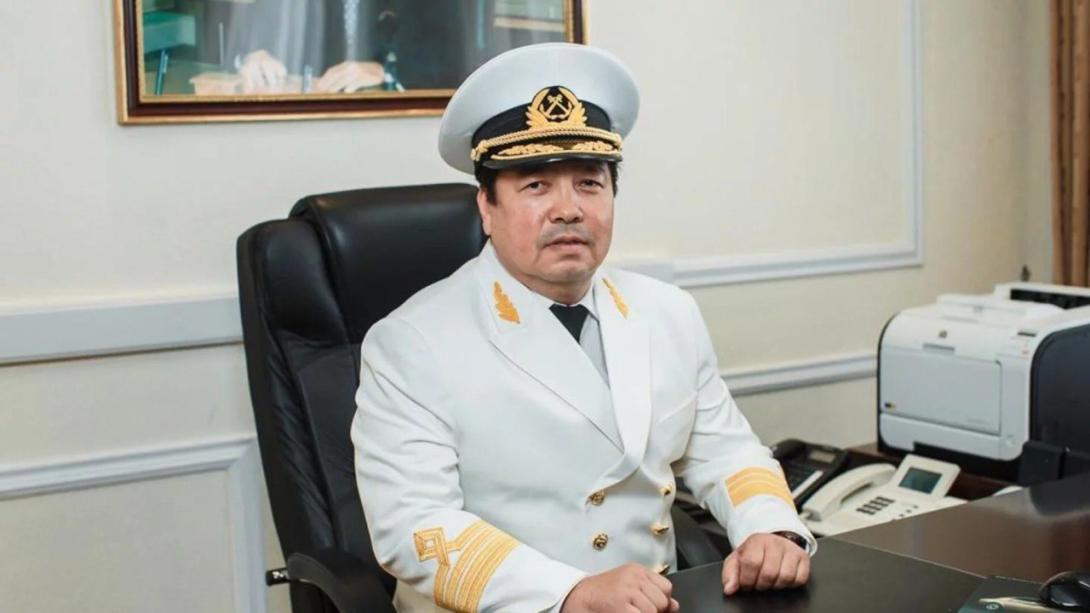
В Комитете национальной безопасности (КНБ) сообщили о задержании президента АО «НК «Актауский международный морской торговый порт» Абая Турикпенбаева.
По данным Informburo.kz, в отношении него начали досудебное расследование по ст.361 УК РК («Злоупотребление должностными полномочиями»). Другая информация не раскрывается.
Абай Турикпенбаев занимает должность главы торгового порта с января 2017 года. Актауский международный морской торговый порт расположен на восточном побережье Каспийского моря и занимает стратегическое положение на пересечении ключевых международных транспортных коридоров.
Порт обеспечивает транзит сухих грузов, сырой нефти и нефтепродуктов с востока на запад и с севера на юг в направлении Ирана, Турции, России, Азербайджана и Туркменистана.
Автор: Иван Харитонов
|
|
Коллектив птицефабрики обратился к Президенту за защитой от давления бывшего собственника |


В сети распространяется обращение работников птицефабрики из Костанайской области к Президенту Касым-Жомарту Токаеву. Коллектив ТОО «Poultry-Agro» утверждают, что предприятие с 2022 года сталкивается с регулярными следственными действиями, дестабилизирующими производственный процесс. По их словам, это создает атмосферу напряженности и может привести к увольнению 225 сотрудников.
По данным Inbusiness.kz, речь идёт об уголовных делах, возбужденных на основании заявлений бывшего собственника предприятия Генриха Богдевича. Как утверждает коллектив, дела трижды прекращались за отсутствием состава преступления, однако впоследствии вновь возобновлялись.
«Мы, трудовой коллектив птицефабрики, являющейся инвестиционным проектом, обращаемся к Вам с просьбой о защите прав 225 сотрудников предприятия и их семей. На сегодняшний день наше предприятие втянуто в орбиту затянувшегося уголовного преследования», – говорится в обращении.
Работники подчёркивают, что дела основываются на заявлениях бывшего владельца, которые неоднократно опровергались.
«В рамках этих уголовных дел регулярно допрашиваются как руководство, так и рядовые сотрудники предприятия. Мы всерьёз обеспокоены тем, что, если это давление не прекратится, предприятие может быть остановлено и мы потеряем свои рабочие места, а вместе с ними и возможность обеспечивать свои семьи», – утверждают сотрудники.
Как стало известно, в 2020 году ТОО «Poultry-Agro» приобрело имущество обанкротившегося АО «Комсомольская птицефабрика», простаивавшего с 2012 года и ранее находившегося на балансе АО «КазАгроФинанс». Отмечается, что проект запускался в 2009 году с участием государственного финансирования в размере 3 млрд тенге, однако прежний владелец не реализовал проект, был привлечён к ответственности за нецелевое использование займа и в 2013 году амнистирован.
В 2017 году предприятие признали банкротом. После неудачных попыток продать имущество с торгов, «КазАгроФинанс» приняло его на баланс. Остаток задолженности по прежним обязательствам по состоянию на 2024 год составляет около 700 млн тенге.
В 2020 году ТОО «Poultry-Agro» вложило средства в восстановление объекта. По предварительным данным, объём инвестиций составил 5,8 млрд тенге, из которых 2,4 млрд тенге — это долги, накопленные прежним собственником, которые нынешний инвестор продолжает погашать.
«С момента запуска птицефабрики в бюджет уплачен почти миллиард тенге налогов, выплачено 1,7 млрд тенге заработной платы, создано 225 стабильных рабочих мест со средней зарплатой 306 тыс. тенге»,- говорится в сообщении.
По утверждению коллектива, давление усилилось в феврале 2022 года. Работники считают, что за жалобами стоят аффилированные с бывшим владельцем лица, которые якобы используют связи «в высокопоставленных кругах» для инициирования проверок.
«Складывается впечатление целенаправленного давления, которое не просто идёт вразрез с интересами птицефабрики и её коллектива, но и противоречит Вашим поручениям о поддержке отечественного бизнеса, импортозамещения и развития агропромышленного сектора», – говорят работники в обращении к Президенту.
Учредитель ТОО «Poultry-Agro» Кайрат Маишев заявил, что все уголовные дела, возбуждённые по жалобам бывшего владельца, прекращались за отсутствием состава правонарушения, но предприятие продолжает сталкиваться с новыми жалобами и следственными действиями.
В свою очередь бывший владелец инвестиционного проекта Генрих Богдевич распространил в соцсетях заявление, в котором утверждает, что бизнес у него якобы «отобрали» по указанию сверху.
«У меня отобрали инвестиционный проект. Дела возбуждались, процесс сначала шел быстро, а потом – раз, и прекратился. Потому что сверху крышуют. Я знаю, кто это. Но пока не буду озвучивать фамилию. Сегодня возобновлены уголовные дела по Маишеву, по оценщикам и так далее. И если этот человек опять вмешается, то я думаю, что озвучу его имя и должность», – заявил Богдевич.
Автор: Иван Харитонов
Источник: https://spasi-sohrani.com/component/k2/item/118163
|
|
Наталья Куделина и Максим Журав помогают Акопяну отмывать деньги через Payselection |
|
|


