-Рубрики

 -Приложения

  • Перейти к приложению Открытки ОткрыткиПерерожденный каталог открыток на все случаи жизни

 -Фотоальбом

Посмотреть все фотографии серии Я и мои внуки
Я и мои внуки
15:30 22.09.2017
Фотографий: 7

 -Поиск по дневнику

Поиск сообщений в Furman_Ed

 -Подписка по e-mail


 -Интересы

1.английский язык.2. полиглотство.3. живое человеч

 -Статистика

Статистика LiveInternet.ru: показано количество хитов и посетителей
Создан: 05.12.2010
Записей: 9309
Комментариев: 671
Написано: 10836

Forum Polyglot 80 .


Health Report.While You Sleep, Your Brain Works

Суббота, 15 Ноября 2014 г. 17:52 + в цитатник
November 15, 2014 14:45 UTC

Health Report

While You Sleep, Your Brain Works


While we sleep, our brains are doing much more than getting ready for the next day.
 

08/20/2014

While You Sleep, Your Brain Is Hard At Work. (You should say, 'thank you.')
 

From VOA Learning English, this is the Health Report.

Why do we need sleep?

Is bedtime just a time for dreamingDo our brains turn off for the nightWhat if I told you that scientists recently discovered that our brains may be just as busy at night as they are during the day?

While we sleep, our brains are doing much more than getting ready for the next dayResearchers at the University of Rochester found that the brain may be busy cleaning house -- cleaning out harmful waste materials.  

As with many studies, the researchers turned to mice for helpThey studied mice that had colored dye injected into their brains.  They observed the mice brains as they slept and when they were awake.  The researchers say they saw that the brains of sleeping mice were hard at work

Working Double Duty

Dr. Maiken Nedergaard led the study.  The brain expert says our brains perform two very different jobs.  It seems they have daytime jobsLater theymoonlight” at a nighttime job

Moonlighting” is working a nighttime job in addition to a day job.  And this study says that is what our brains seem to be doingworking an extra job at night without additional pay for overtime

When we are awake, the brain cells are working very hard at processing all the information about our surroundings.  Whereas during sleep, they work very, very hard at removing all the waste that builds up when we are awake."

The researchers say that the waste material includes poisons, or toxins, responsible for brain disorders such as Alzheimer’s disease.  

It is not just beauty sleep. The brain needs us to sleep so it can get to work.It is not just beauty sleep. The brain needs us to sleep so it can get to work.
x
It is not just beauty sleep. The brain needs us to sleep so it can get to work.

They also found that during sleep, the brain’s cells shrink, or become smaller.  This shrinking permits waste to be removed more effectively.                      

Dr. Nedergaard says these toxins end up in the liverThere, they are broken down and then removed from the body.

"So our study suggests that we need to sleep because we have a macroscopic cleaning system that removes many of the toxic waste products from the brain."

The brain’s cleaning system could only be studied with new imaging technologies.  The test animal must be alive in order to see this brain process to be seen as it happens.

Dr. Nedergaard says the next step is to look for the process in human brains.  She said the results demonstrate just how important sleep is to health and fighting disease.  The research may also one day lead to treatments to prevent or help fight neurological disorders.

7 Tips for Better Sleeping

Do you have trouble sleeping?  Not being able to sleep is called insomniaAccording to the United States National Sleep Foundation, here are some tips for a good night’s sleep:

  • Go to bed about the same time each night, even on weekends.  This helps to “set” your body’s “sleep clock.”
  • Exercise every day. 
  • Have a calm, relaxing bedtime routine – take a warm bath or drink a hot cup of tea.
  •  Try not to take long naps during the day.  Periods of sleep during the daytime can interfere with sleep at night. 
  •  Make sure you have a pleasant environment where you sleep.  For most people, a cool, quiet and dark room is best for sleeping.
  • Avoid using television, computers and other electronic screens before bedtime. 
  • Also avoid alcohol, cigarettes and heavy meals before bedtime.

And from VOA Learning English,  that’s the Health Report

I’m Anna Matteo.

Do you suffer from insomniaDo you have more suggestions for a good night's sleepLet us know in our comment section.

This article was written for Learning English by Anna Matteo. It is based on a report by VOA health reporter Carol Pearson

_______________________________________________________________

Words in the News

insomnia- n.a prolonged and usually abnormal inability to get enough sleep (“An insomniac is a person who has trouble sleeping over a long period of time.”)

to moonlight; moonlightingv.to work at a second job in addition to your regular job (“No wonder she is so tired at work. I just found out that she has been moonlighting as a night club singer.”)

toxin n. a poisonous substance and especially one that is produced by a living thing.  "Toxic" is the adjective of "toxin." (“The liver gets rid of many toxins in the body.”)

inject v. to force a liquid medicine or drug into someone or something by using a special needle (“They injected the mice with dye.”  “The injection was a colored dye solution.”)

shrink v. to become smaller in amount, size, or value (“She washed her new wool sweater in hot water and it shrunk two sizes!  So, she gave it to her little sister.”)

And that's the Words in the News. Now it’s your turn to use these words in the news. In the comment section, write a sentence using one of these words and we will provide feedback on the use of vocabulary and grammar.


Рубрики:  English on the Forum/Voice of America.Words and Their Stories
80th Anniversary/ Google translate . Polyglot 80
Живое Человеческое Общение

As It Is.Syrian Refugees Prepare for Winter in Lebanon

Суббота, 15 Ноября 2014 г. 17:32 + в цитатник
November 15, 2014 14:25 UTC
 

As It Is

Syrian Refugees Prepare for Winter in

Lebanon


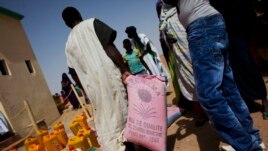
Syrian refugees, fleeing the recent fighting in Arsal, wait by trucks in the Bekaa valley, near the Lebanese border with Syria.
 

11/04/2014

Syrian Refugees Prepare for Winter in Lebanon
 
  • Playlist
  • /learningenglish.voanews.com/img/sprites/icons_SMALL_ltr.png" target="_blank">http://learningenglish.voanews.com/img/sprites/icons_SMALL_ltr.png); color: rgb(19,47,190); line-height: 16px; background-repeat: no-repeat; text-align: left; text-decoration: none" target="_blank">Download (right-click or option-click and save)


Colder weather conditions are slowly returning to the Middle East. Reportsfrom Lebanon say areas around the border with Syria are at risk. Observersnote that Islamic State militants and al-Nusra fighters have set up camps in the mountains. But Syrian refugees say more frightening than the gunmen is the coming cold weather.

Most of Lebanon’s one million Syrian refugees live in the Bekaa Valley, acrossthe border from Syria. They crowd shelters on farmland or in empty areas.

Islamist militants are believed to be hiding in the surrounding mountains. Manyrefugees fear the Islamic State or al-Nusra fighters will again attack Lebanonin an effort to expand outside Syria and Iraq.

In late October, militant groups battled with the Lebanese Army in the city ofTripoli. The fighting was described as the worst since last August. At that time,al-Nusra and the Islamic State briefly controlled the border town of Arsal.

But some Syrian refugees say they fear the coming winter more than themilitants. At a camp in Zahle, aid workers passed out supplies to help familiesstrengthen the houses they mostly built themselves. Mohammad al-Sheik toldVOA the new materials may not be enough to protect his eight children.

He says that about half a meter of snow fell in the Bekaa Valley last year. Heworries that some of the weaker shelters will collapse.

Aid workers say they are hoping to get supplies to as many people aspossible. However, as the fighting in Syria gets worse, refugees are crossingthe border in large numbers.

Hiba Fares works with the non-governmental organization Medair.

“The number of refugees is huge and increases day by day in Lebanon. So we are always in need of more donations. As you noticed, we try to distribute to as many families with the kits we have, but there is always a bit of shortagebecause suddenly we bump into newcomers.”

Medair is one of many organizations attempting to ease what the UnitedNations has called the “biggest humanitarian emergency of our era.”

Refugee families say their biggest fear this winter is not being able to pay formedicine if their children get sick.

Basha Hussein is the wife of Mohammed al-Sheik and the mother of theireight children. She says most families in the camp do not have any heaters intheir homes. If they do, she says, they often do not have enough money to payfor fuel.

Some women say the humiliation or sadness of living in tents in the dirt isworse than dealing with the cold weather or lack of food.

Some refugee children say their main fear is that aid workers will not haveenough blankets for the refugees before the snow arrives.

I’m Mario Ritter.

*This report was based on a story from reporter Heather Murdock in Zahle,Lebanon. George Grow wrote the story for VOA Learning English. Mario Ritterwas the editor

____________________________________________________________

Words in this Story

weather – n. the condition of the atmosphere resulting from snow, wind, rain,heat or cold

refugees  n. people who have been forced to flee because of unjusttreatment, danger or war

shelter  n. something 

Рубрики:  English on the Forum/News in English
English on the Forum/Voice of America.Words and Their Stories
80th Anniversary/ Google translate . Polyglot 80
Живое Человеческое Общение

Words and Their Stories.Keeping Your Head Above Water

Суббота, 15 Ноября 2014 г. 16:44 + в цитатник
November 15, 2014 13:42 UTC
 

Words and Their Stories

Keeping Your Head Above Water


  • Keeping Your Head Above Water


Now, the VOA Special English program Words andTheir Stories.

Expressions about water are almost as common aswater itself. But many of the expressions using waterhave unpleasant meanings.

The expression to be "in hot water” is one of them. It is a very old expression. “Hot water” was used 500 yearsago to mean "being in trouble." One story says it gotthat meaning from the custom of throwing extremelyhot water down on enemies attacking a castle.


That no longer happens, but we still get in hot water.”When we are “in hot water” we are in trouble. It can beany kind of trouble -- serious or not so serious. Aperson who breaks a law can be “in hot water with thepolice. A young boy can be “in hot water with hismother if he walks in the house with dirty shoes.

Being in “deep water” is almost the same as being “inhot water.” When you are in deep water, you are in adifficult position. Imagine a person who cannot swimbeing thrown in water over his head.


You are “in deep water when you are facing a problemthat you do not have the ability to solve. The problem istoo deep. You can be “in deep water,” for example, ifyou invest in stocks without knowing anything about thestock market.

“To keep your head above water” is a colorfulexpression that means staying out of debt. A companyseeks to keep its head above water during economichard times. A man who loses his job tries to keep his head above water untilhe finds a new job.

Water over the dam” is another expression about a past event. It issomething that is finished. It cannot be changed. The expression comes from the idea that water that has flowed over a dam cannot be brought back again.


When a friend is troubled by a mistake she has made,you might tell her to forget about it. You say it is waterover the dam.

Another common expression, “to hold water,” is aboutthe strength or weakness of an idea or opinion that youmay be arguing about. It probably comes from a way oftesting the condition of a container. If it can hold water, it is strong and has no holes in it. If your argument canhold water” it is strong and does not have any holes. If it does not “hold waterthen it is weak and not worth debating.

​“Throwing cold water also is an expression that deals with ideas orproposals. It means to not like an idea. For example, you want to buy a newcar because the old one has some problems. But your wife throws coldwater” on the idea because she says a new car costs too much.

This VOA Special English program Words and Their Stories was written byMarilyn Christiano
Рубрики:  English on the Forum/Voice of America.Words and Their Stories
80th Anniversary/ Google translate . Polyglot 80
Живое Человеческое Общение

Words and Their Stories.Your Idea Will Not Wash. And, Let's Talk Turkey!

Суббота, 15 Ноября 2014 г. 16:42 + в цитатник
November 15, 2014 13:39 UTC
 

Words and Their Stories

Your Idea Will Not Wash. And, Let's Talk

Turkey!

 :
 
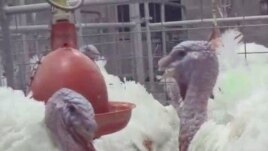
White broad breasted turkeys look at each other at the Maine-ly Poultry Farm, in Warren, Maine.
 

I’m Susan Clark with the Special English programWords and Their Stories.

Young Mr. Smith had an idea for his employer. It was anidea for saving money for the company by increasingprices. At the same time, Smith suggested that thecompany sell goods of less value.

If his employer liked the idea, Smith might be givenmore pay. Perhaps he might even get a better job withthe company.

Business had been very slow, so Mr. Smith’s employerthought a few minutes about the idea. But then sheshook her head. “I am sorry, Smith,” his employer said. “It just will not wash.”

Now, the meaning of these English words should be “it will not get clean.” YetSmith’s idea did not have anything to do with making something clean. So whydid his employer say “It will not wash?”

Most word experts agree that “it will not wash means "it will not work." EricPartridge wrote that the saying probably developed in Britain in the 1800s.Charlotte Bronte used it in a story published in 1849. She wrote, “That wiln’twash, Miss.” Ms. Bronte seems to have meant that the dyes used to color apiece of clothing were not good. The colors could not be depended on to stayin the material.

In 19th century England, the expression came to mean an undependablestatement. It was used mainly to describe an idea. But sometimes it was usedabout a person.

A critic once said of the poet Robert Browning: “He won’t wash.” The critic didnot mean that the poet was not a clean person -- he meant that Browning’spoems could not be depended on to last.

Today, we know that judgment was wrong. Robert Browning still is considereda major poet. But very few people remember the man who said Browningwould not wash.

Happily for the young employee Smith, his employer wanted him to do well in the company. So the employer talked turkey” to him. She said: “Your ideawould be unfair to our buyers. Think of another way to save money.”


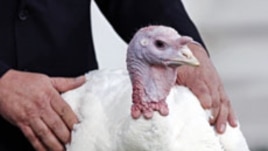
A century ago, to “talk turkey meant to talk pleasantly.Turkeys in the barnyard were thought to be speakingpleasantly to one another. In recent years, the sayinghas come to mean “an attempt to teach somethingimportant.”

Word expert Charles Funk tells how he believes thischange took place.

He says two men were shooting turkeys together. One of them was a whiteman. The other was an American Indian. The white man began statingreasons why he should get all the turkeys for himself. But the American Indianstopped him. He told the white man Now, I talk turkey to you.”


Mr. Smith thought of a better idea after his employertalked turkey” to him -- he was given an increase inpay.

So if your idea “will not wash,” try talking turkey” toyourself and come up with a better idea.

This Words and Their Stories program was written byJeri Watson.

I’m Susan Clark.


Рубрики:  English on the Forum/Voice of America.Words and Their Stories
80th Anniversary/ Google translate . Polyglot 80
Живое Человеческое Общение

Words and Their Stories.Don't Let the Cat Out of the Bag!

Суббота, 15 Ноября 2014 г. 16:21 + в цитатник
November 15, 2014 13:19 UTC
 

Words and Their Stories

Don't Let the Cat Out of the Bag!


  • Don't Let the Cat Out of the Bag!


Now, the VOA Special English program Words andTheir Stories.

Different people have different ways of saying things --their own special expressions.

Each week we tell about some popular Americanexpressions.

The bag is one of the most simple and useful things in the world. It is a container made of paper or cloth. It hasgiven the world many strange expressions that are notvery simple. Some of them are used in the UnitedStates today.

One is “bagman.” It describes a go-between. The go-between sees to it thatmoney is passed -- often illegally -- from one person to another.


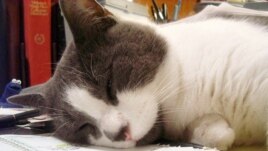
Cat relaxes on his human's desk (Steve Ember/VOA)Cat relaxes on his human's desk (Steve Ember/VOA)
Another widely-used expression is to “let the cat out of the bag.” It is used when someone tells something that was supposed to be secret. No one can explain howthe cat got into the bag. But there is an old story aboutit…

Long ago tradesmen sold things in large cloth bags.One day a woman asked for a pig. The tradesman heldup a cloth bag with something moving inside it. He saidit was a live pig. The woman asked to see it. When the dishonest tradesmanopened the bag, out jumped a cat -- not a pig. The tradesman’s secret was out. He was trying to trick her. And now everybody knew it.


The phrase to be “left holding the bag” is as widely-used as the expression to “let the cat out of the bag.”

This expression makes the person left holding the bagresponsible for an action -- often a crime or misdeed. That person is the one who is punished. The othersinvolved in the act escape.

Where the expression came from is not clear. Somesay that General George Washington used it during the AmericanRevolutionary War.

One of Washington’s officers, Royall Taylor, used the expression in a playabout Daniel Shay’s rebellion. The play was in 1781, after Taylor helped to putdown Shay’s rebellion.

Shays led a thousand war veterans in an attack on a federal building inSpringfield, Massachusetts. Guns were in the building. Some of the protesterswere farmers who had no money to buy seed. Some had been put in prisonfor not paying their debts. They were men who fought one war against theKing of England, and were now prepared to fight against their owngovernment. Most of the rebels were captured. Shays and some of theofficers escaped.

In his play, Taylor describes Shays as disappearing, giving others “the bag tohold.”

A bag is useful in many ways. Just be careful not to “let the cat out of the bag,” or someone may leave you holding the bag.”

You have been listening to the VOA Special English program, Words andTheir Stories.

This is Bob Doughty.
Рубрики:  English on the Forum/Voice of America.Words and Their Stories
80th Anniversary/ Google translate . Polyglot 80
Живое Человеческое Общение

Words and Their Stories.Let's Get Down to Brass Tacks!

Суббота, 15 Ноября 2014 г. 16:05 + в цитатник
November 15, 2014 13:03 UTC
 

Words and Their Stories

Let's Get Down to Brass Tacks!


  • Let's Get Down to Brass Tacks!


Now, the VOA Special English program Words andTheir Stories.

Our expression today is “getting down to brass tacks.” It means to get serious about something, to get to thebottom of the situation. For example, a man may say, “Iwant to work for you. But how much will you pay me?” He is getting down to brass tacks. Or a woman mayask, “You say you love me. Will you marry me?” She,too, is getting down to brass tacks.

How did this expression get started?

There are several ideas...

At one time most women made their own clothes, buying the cloth in smallstores. The material was kept in large rolls. And the storekeeper cut off asmuch as a woman wanted. Brass tacks along his work table helped himmeasure the exact amount.

Sometimes a busy storekeeper might try to guess how much material to cutoff. But this would not be correct. He could get an exact measure only bylaying the material down along the brass tacks.

One word expert, however, has another theory. He believes the expressioncame from seamen who cleaned the bottoms of boats. Strong heavy devicescalled bolts held the ship’s bottom together. These bolts were made ofcopper. The seaman had to clean the ship down to the copper bolts.American speech soon changed the words copper bolts into brass tacks.

Another idea is that the expression began when furniture was made by hand.Brass tacks were used around the bottom part of the chair. The brass tacksshowed that the chair was built to be strong. When something went wrongwith the chair, someone quickly examined the bottom to discover the trouble. In other words, someone got down to the brass tacks.

No one is sure where the expression first was used, but everyone is surewhat it means today. It is used by people who dislike empty words. They seekquick, direct answers. They want to get to the bottom of a situation. There areothers, however, who have no such desire. They feel there is some risk intrying to get down to brass tacks.

This happened in the case of a critic who made the mistake of reading a playwritten by a close friend. The critic disliked the play a lot. He felt his friendshould not be writing plays. But he said nothing. This silence troubled thewriter. He demanded that his friend the critic say something about the play. The writer finally heard the critic’s opinion. And this “getting down to brasstacks ended a long friendship.

This VOA Special English program Words and Their Stories was written byMike Pitts.

I’m Warren Scheer.

Рубрики:  English on the Forum/Voice of America.Words and Their Stories
80th Anniversary/ Google translate . Polyglot 80
Живое Человеческое Общение

Words and Their Stories.Is His Name Santa Claus, Saint Nicholas, Kris Kringle or Pelznickel? Who Cares, So Long As He Brings Gifts!

Суббота, 15 Ноября 2014 г. 15:46 + в цитатник
November 15, 2014 12:43 UTC
 

Words and Their Stories

Is His Name Santa Claus, Saint Nicholas,

Kris Kringle or Pelznickel? Who Cares,

So Long As He Brings Gifts!


Santa Claus gestures toward first lady Michelle Obama, at Children's National Medical Center  in Washington
Santa Claus gestures toward first lady Michelle Obama, at Children's National Medical Center in Washington
 
 
  • Is His Name Santa Claus, Saint Nicholas, Kris Kringle or Pelznickel?


Now, the VOA Special English program Words andTheir Stories.

Santa Claus is someone who will remain in the heartsof children forever. He is the make-believe person whobrings toys and other gifts to children at Christmas. Togrown-ups, he is a special symbol of good will andselfless giving.

Santa Claus also has some other names: SaintNicholas, St. Nick, Kris Kringle, Pelznickel.

Two of his names -- Santa Claus and Saint Nicholas --both come from the Dutch who settled in New York longago.

The Dutch believed Saint Nikolaas gave gifts tochildren. They honored this kindly saint with a yearly festival on December 6th. The English-speaking people who lived nearby greatly enjoyed Dutch festivals. And they brought the saint and the custom of giving gifts into their owncelebration at Christmas time.


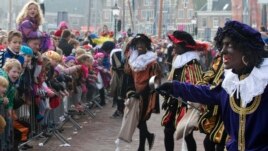
The Dutch version of Santa Claus, Sinterklaas, or Saint Nicholas, and his blackface helpers Zwarte Piet (Black Pete) arrive by steamboat in Hoorn, northwestern Netherlands, Nov. 16, 2013.The Dutch version of Santa Claus, Sinterklaas, or SaintNicholas, and his blackface helpers Zwarte Piet (BlackPete) arrive by steamboat in Hoorn, northwesternNetherlands, Nov. 16, 2013.
The Dutch spoke the name Saint Nikolaas very fast. Itsounded like Sinterklaas.” And so, when the Englishsaid this word, it sounded like Santa Claus.

West of New York, in Pennsylvania, many Germanfarmers had also heard of Saint Nikolaas. But theycalled him Pelznickel. This word came from “pelz,”meaning fur, and “nickel” for Nicholas. And so, to theGermans of Pennsylvania, Saint Nicholas or Pelznickelwas a man dressed in fur who came once a year withgifts for good children.

Soon, people began to feel that the love and kindness Pelznickel broughtshould be part of a celebration honoring the Christkindl, as the Germanscalled the Christ child. After a time, this became Kris Kringle.” Later, KrisKringle became another name for Santa Claus himself.


People dressed as Father Frost, the named used locally for Santa Claus, and Snow Maiden greet passers-by during a New Year parade in Bishkek, Kyrgyzstan. (Reuters Image)People dressed as Father Frost, the named used locallyfor Santa Claus, and Snow Maiden greet passers-byduring a New Year parade in Bishkek, Kyrgyzstan. (Reuters Image)
Whatever he is called, he is still the same short, fat,jolly old man with a long beard, wearing a red suit withwhite fur.

The picture of Santa Claus, as we see him, came fromThomas Nast. He was an American painter born inBavaria. He painted pictures for Christmas poems.Someone asked him to paint a picture of Santa Claus.

Nast remembered when he was a little boy in southernGermany. Every Christmas, a fat old man gave toysand cakes to the children. So, when Nast painted the picture, his Santa Clauslooked like the kindly old man of his childhood. And through the years, Nast’spainting has remained as the most popular picture Of Santa Claus.

Santa can be seen almost everywhere in large American cities during theChristmas season. Some 
Рубрики:  English on the Forum/Voice of America.Words and Their Stories
80th Anniversary/ Google translate . Polyglot 80
Живое Человеческое Общение

Words and Their Stories.Are You "In the Red" This Christmas?

Суббота, 15 Ноября 2014 г. 15:40 + в цитатник
November 15, 2014 12:37 UTC
 

Words and Their Stories

Are You "In the Red" This Christmas?


Many businesses will be "in the red" if they do not make a profit during the Christmas shopping season.
 
 
  • Are You "In the Red" This Christmas?


12/22/2013


Now, Words and Their Stories, a VOA Special English program about American expressions.  I’m Rich Kleinfeldt with some financial words and expressions used in business and the stock market.

Our first expression is “in the red.”  It is another way of saying that a business is losing money.  In the past, numbers in the financial records of a company were written in red ink to show a loss.

A business magazine recently published a report about a television company.  The report said the company was still in the red, but was able to cut its loss from the year before.

A profit by a business is written in black numbers.  So a company that is “in the black” is making money.  An international news service reported that a private health insurer in Australia announced it was “back in the black with its first profit in three years.”

Another financial expression is “run on the bank.”  That is what happens when many people try to withdraw all their money from a bank.  A “run on the bank” usually happens when people believe there is danger a bank may fail or close.

Newspaper reports about a banking crisis in Russia used that expression.  They said the government acted because of fears that the crisis would cause a run on the banks.  “When a run on the banks was starting, there was not much they could do,” said a banking expert.

“Day trading” is a new expression about a system that lets investors trade directly on an electronic market system.  The system is known as NASDAQ, short for The National Association of Securities Dealers Automated Quotation.  It was the first completely computerized stock market.  It sells stocks of companies not listed on any stock exchange.  Many high technology companies are listed on it. 

Day trading companies provide a desk and a computer system to an investor who wants to trade.  Individuals must provide fifty thousand dollars or more to the trading company to pay for the stocks they buy.  Thousands of other investors do day trading from computers in their homes.

A day trader watches stock prices carefully.  When he sees a stock rise in price, he uses the computer to buy shares of the stock.  If the stock continues to rise in price in the next few minutes, the day trader sells the shares quickly to make a small profit.  Then he looks for another stock to buy.  If a stock goes down instead of up, he sells it and accepts the loss. 

The idea is to make a small profit many times during the day.  Day traders may buy and sell stocks hundreds of times each day.

Many day traders lose all their money in a week or so.  Only about thirty percent succeed in earning enough from their efforts to continue day trading.

This VOA Special English program, Words and Their Stories, was written by Frank Beardsley.  This is Rich Kleinfeldt.
Рубрики:  English on the Forum/Voice of America.Words and Their Stories
80th Anniversary/ Google translate . Polyglot 80
Живое Человеческое Общение

Words and Their Stories.Happy New Year!

Суббота, 15 Ноября 2014 г. 15:32 + в цитатник
November 15, 2014 12:31 UTC
 

Words and Their Stories

Happy New Year!


New Year's Eve celebrations in Times Square in New York City
 
 
  • Happy New Year!


12/29/2013


Now, VOA Special English presents a special program for New Year’s Eve.

That is a song millions of Americans will hear this New Year’s Eve. It is called “Auld Lang Syne.” It is the traditional music played during the New Year’s celebration. Auld Lang Syne is an old Scottish poem. It tells about the need to remember old friends.

The words “auld lang syne” mean “old long since.” No one knows who wrote the poem first. However, a version by Scottish poet Robert Burns was published in 1796. The words and music we know today first appeared in a songbook three years later.

The song is sung in the United States mainly on New Year’s Eve.

Here is Lou Rawls singing his version of it…

Another version is by the Washington Saxophone Quartet.

As we end our program with “Auld Lang Syne,” I would like to wish all of our radio friends a very Happy New Year.
Рубрики:  English on the Forum/Voice of America.Words and Their Stories
80th Anniversary/ Google translate . Polyglot 80
Живое Человеческое Общение

Words and Their Stories.Elvis, Marilyn Monroe, Trains, Cats and Dogs -- They're All on Calendars

Суббота, 15 Ноября 2014 г. 13:28 + в цитатник
November 15, 2014 10:26 UTC
 

Words and Their Stories

Elvis, Marilyn Monroe, Trains, Cats and

Dogs -- They're All on Calendars


Trains are a popular subject for calendars (Steve Ember/VOA)
 
 
  • Elvis, Marilyn Monroe, Trains, Cats and Dogs -- They're All On Calendars


Now, a special Words and their Stories for New Years.
 
I’m Faith Lapidus.
 
The New Year is the time for new beginnings.  It is also the time to buy a new calendar.  Yet it can take a lot of time just to choose the right one.  There are lots and lots of choices.  In fact, there are more calendars than days in the year.  There are small ones.  Big ones.  Calendars that sit on a desk.  Calendars that hang on the wall.  Calendars to carry around.  Calendars that show a whole month or one day at a time.
 
Of course, in one way all calendars are the same.  They all list the same days of the year in exactly the same order.  But people do not buy calendars just to know what day it is.  Calendars have become popular gifts because many are filled with beautiful pictures.
 
Some have pictures of famous art works.  It is like hanging a different painting on your wall each month.  You can even learn from calendars.  They often give information about their subject -- such as famous writers or American Indians or flower gardens.
Читать далее...
Рубрики:  English on the Forum/Voice of America.Words and Their Stories
80th Anniversary/ Google translate . Polyglot 80
Живое Человеческое Общение

Words and Their Stories.When Is a Choice Not Really a Choice?

Суббота, 15 Ноября 2014 г. 12:48 + в цитатник
November 15, 2014 09:46 UTC
 

Words and Their Stories

When Is a Choice Not Really a Choice?


When Is a Choice Not Really a Choice?


Now, the VOA Special English program Words and Their Stories.
 
Making choices is necessary, but not always easy.  Many of our expressions tell about this difficulty.
 
One of these expressions is "Hobson’s choice."  It often is used to describe a difficult choice.  But that is not what it really means.  Its real meaning is to have no choice at all.
 
The Hobson in the expression was Thomas Hobson.  Mr. Hobson owned a stable of horses in Cambridge, England.
 
Mr. Hobson often rented horses to the students at Cambridge University.  But, he did not really trust them to take good care of the horses.  So, he had a rule that prevented the students from riding his best horses.  They could take the horse that was nearest the stable door.  Or, they could not take any horse at all.


Horses at play in a pasture in Hume, Virginia (Steve Ember/VOA)Horses at play in a pasture in Hume, Virginia (Steve Ember/VOA)
Thus, a Hobson’s choice was really no choice.
Читать далее...

Words and Their Stories.Without Them, Machines Fall Apart

Суббота, 15 Ноября 2014 г. 12:42 + в цитатник
November 15, 2014 09:31 UTC
 

Words and Their Stories

Without Them, Machines Fall Apart


Words and Their Stories: Nuts and Bolts


Now, the VOA Special English program Words and Their Stories.
 
Every machine is held together by its nuts and bolts.  Without them, the machine would fall apart.  That is also true of an organization.  Its nuts and bolts are its basic, necessary elements.  They are the parts that make the organization work.
 
In government, industry, diplomacy -- in most anything -- those who understand the nuts and bolts are the most important.  Success depends more on them than on almost anyone else.
 
In government, the president or prime minister may plan and shape programs and policies.  But, it takes much more work to get them approved and to make them successful.
 
There is a mass of detailed work to be done -- the nuts and bolts.  This is often put into the hands of specialists.  The top leaders are always well-known, but not those who work with the nuts and bolts.
 
This is equally true in the day-to-day operation of Congress.  The majority leader of the Senate and the Speaker of the House of Representatives -- together with the chairmen of committees -- keep the business of Congress moving.
 
Behind every Senator and Congressman, however, are assistants.  These people do all the detailed work to prepare congressmen to vote wisely on each issue.
 
In diplomacy, the chief ministers are unquestionably important in negotiations.  But there are lesser officials who do the basic work and preparations on the different issues to be negotiated.
 
A recent book tells of a British prime minister who decided to send an ambassador to Washington to learn if details could be worked out for joint action on an issue.  The talks in Washington, the minister said, would be "of nut and bolts."  He meant, of course, the talks would concern all the necessary elements to make joint action successful.
Читать далее...
Рубрики:  English on the Forum/Voice of America.Words and Their Stories
80th Anniversary/ Google translate . Polyglot 80
Живое Человеческое Общение

BBC News.Magazine.The man who was kidnapped by pirates - twice

Суббота, 15 Ноября 2014 г. 10:14 + в цитатник


The man who was kidnapped by pirates - twice

Kings Nehemiah Okoye


Kings Nehemiah Okoye, a Nigerian marine engineer, has been a seafarer for 25 years. In 2010, while working for the Shell oil company, he was kidnapped by pirates off the coast of Nigeria. Less than two years later he was kidnapped again, this time by Somali pirates. This is his story.

Читать далее...
Рубрики:  English on the Forum/BBC News.Magazine.
80th Anniversary/ Google translate . Polyglot 80
Живое Человеческое Общение

BBC News.Magazine. The teenage soldiers of World War One

Суббота, 15 Ноября 2014 г. 09:35 + в цитатник

11 November 2014 Last updated at 00:22 GMT

Circa 1915: New recruits line up for inspection in Bermondsey, London during World War One


As many as 250,000 boys under the age of 18 served in the British Army during World War One. Fergal Keane remembers the sacrifice they made.

War confers many things on boys who pick up a weapon to fight. They learn the true meaning of fear. They test their own capacity for courage and the limits of human endurance, physical and mental.

Some find that killing comes easily to them, too easily. And others recoil from acts of blood.

But what unites all teenage warriors is the speed with which they are hurled into a place of maiming and death.

Читать далее...
Рубрики:  English on the Forum/BBC News.Magazine.
80th Anniversary/ Google translate . Polyglot 80
Живое Человеческое Общение

BBC News.Magazine.The spies in a suburban bungalow

Суббота, 15 Ноября 2014 г. 09:12 + в цитатник

11 November 2014 Last updated at 01:34 GMT

The spies in a suburban bungalow


By Vincent DowdWitness, BBC World Service

The Krogers' bungalow in Ruislip, 1961


The 1961 story of the Portland spy ring reads like a Cold War thriller - Soviet agents with assumed identities, a secret radio transmitter and microdots hidden in books. But the story didn't play out in West Berlin or Washington DC, but in an unassuming bungalow in the London suburb of Ruislip.

Cranley Drive, Ruislip, is a street like hundreds of others in London's outer suburbs. It can't have changed much since, in the mid-1950s, Peter and Helen Kroger bought their home.

Читать далее...
Рубрики:  English on the Forum/News in English

As It Is.Experts Consider China's Proposed Development Bank

Суббота, 15 Ноября 2014 г. 08:24 + в цитатник

As It Is

Experts Consider China's Proposed Development Bank


Chinese Finance Minister Lou Jiwei, right, toasts with guests at the signing ceremony of the Asian Infrastructure Investment Bank in Beijing, Oct. 24, 2014. (REUTERS/Takaki Yajima/Pool)


  • Playlist
  • /learningenglish.voanews.com/img/sprites/icons_SMALL_ltr.png" target="_blank">http://learningenglish.voanews.com/img/sprites/icons_SMALL_ltr.png); padding-bottom: 0px; margin: 0px; color: rgb(19,47,190); line-height: 15px; padding-top: 0px; background-repeat: no-repeat; text-align: left"> Download (right-click or option-click and save)
  •  
  •  


From VOA Learning English, this is the Economics Report.

Читать далее...
Рубрики:  English on the Forum/News in English
English on the Forum/Voice of America.Words and Their Stories
80th Anniversary/ Google translate . Polyglot 80
Живое Человеческое Общение

Words and Their Stories.Do You Have a Broken Heart? A Heart of Stone?

Суббота, 15 Ноября 2014 г. 08:13 + в цитатник
November 15, 2014 05:06 UTC
 

Words and Their Stories

Do You Have a Broken Heart? A Heart of Stone?


Plastinated human heart on display at the European Society of Cardiology meeting, Amsterdam, Sept. 2, 2013.
 

02/16/2014


Now, the VOA Special English program Words and Their Stories.
 
I’m Rich Kleinfeldt with some expressions using the word heart.
 
People believed for a long time that the heart was the center of a person’s emotions.  That is why the word "heart" is used in so many expressions about emotional situations.
 
One such expression is to “lose your heart” to someone.  When that happens, you have fallen in love.  But if the person who won your heart does not love you, then you are sure to have a “broken heart.”  In your pain and sadness, you may decide that the person you loved is “hard-hearted,” and in fact, has a “heart of stone.”
Читать далее...
Рубрики:  English on the Forum/Voice of America.Words and Their Stories
80th Anniversary/ Google translate . Polyglot 80
Живое Человеческое Общение

Words and Their Stories.Brrrrrrrr! Cold Enough For Ya?

Суббота, 15 Ноября 2014 г. 08:04 + в цитатник
November 15, 2014 05:02 UTC
 

Words and Their Stories

Brrrrrrrr! Cold Enough For Ya?


Fruit sellers sit around a fire to keep themselves warm during early morning hours along a road in Karachi December 30, 2013.
 
 
  •  


01/26/2014


Now, the VOA Special English program Words and Their Stories.
 
Cold weather has a great effect on how our minds and our bodies work.  Maybe that is why there are so many expressions that use the word cold.


The ramparts of Luzern, Switzerland at twilight (Steve Ember/VOA)The ramparts of Luzern, Switzerland at twilight (Steve Ember/VOA)
For centuries, the body's blood has been linked closely with the emotions.  People who show no human emotions or feelings, for example, are said to be cold-blooded.  Cold-blooded people act in cruel ways.  They may do brutal things to others, and not by accident.
Читать далее...
Рубрики:  English on the Forum/Voice of America.Words and Their Stories
80th Anniversary/ Google translate . Polyglot 80
Живое Человеческое Общение

Words and Their Stories.I’m Red Hot, I'm In the Pink, I'm Blue and I'm Green With Envy

Суббота, 15 Ноября 2014 г. 08:00 + в цитатник
November 15, 2014 04:58 UTC
 

Words and Their Stories

I’m Red Hot, I'm In the Pink, I'm Blue and I'm Green With Envy


02/02/2014


Now, the VOA Special English program, Words and Their Stories.
 
Every people has its own way of saying things -- its own special expressions.  Many everyday American expressions are based on colors.
 
Red is a hot color.  Americans often use it to express heat.  They may say they are “red hot” about something unfair.  When they are "red hot" they are very angry about something.  The small hot-tasting peppers found in many Mexican foods are called “red hots” for their color and their fiery taste.  Fast, loud music is popular with many people.  They may say the music is “red hot” -- especially the kind called Dixieland jazz.
Читать далее...
Рубрики:  English on the Forum/Voice of America.Words and Their Stories
80th Anniversary/ Google translate . Polyglot 80
Живое Человеческое Общение

Words and Their Stories.Heart to Heart: Some Heartfelt Expressions

Суббота, 15 Ноября 2014 г. 07:56 + в цитатник
November 15, 2014 04:54 UTC
 

Words and Their Stories

Heart to Heart: Some Heartfelt Expressions


  •  
 
 
02/09/2014

Now, the VOA Special English program Word and Their Stories.
 
Each week, this program explains the many meanings of English expressions. 
 Today’s expressions include a very important word -- heart.
 
We will try to get to “the heart of the matter” to better- understand the most important things about words and their stories.  So take heart.  Have no fear about learning new expressions.   Besides, popular English words can be fun.  There is no need for a heavy heart.  Such feelings of sadness would only break my heart, or make me feel unhappy and hopeless. 
 
Now, let us suppose you and I were speaking freely about something private.  We would be having a “heart-to-heart” discussion.  I might speak “from the bottom of my heart,” or say things honestly and truthfully.  I might even “open up my heart” to you and tell a secret.  I would speak “with all my heart,” or with great feeling.
Читать далее...
Рубрики:  English on the Forum/Voice of America.Words and Their Stories
80th Anniversary/ Google translate . Polyglot 80
Живое Человеческое Общение

In the News - Friday, November 14, 2014

Пятница, 14 Ноября 2014 г. 19:32 + в цитатник
November 14, 2014 16:25 UTC

In the News

Obama Meets With Aung San Suu Kyi


President Barack Obama, right, walks out with Myanmar's opposition leader Aung San Suu Kyi at her home before the start of their joint news conference in Yangon, Myanmar. Friday, Nov. 14, 2014. (AP Photo/Pablo Martinez Monsivais)


11/14/2014

In the News - Friday, November 14, 2014


President Barack Obama met Friday with Aung San Suu Kyi in Myanmar, also known as Burma. After the meeting, the Nobel Peace Prize winner told reporters her country’s democracy process has slowed. And she said its constitutionis “unfair, unjust, and undemocratic.” The constitution bars anyone with strong ties to a citizen of another country from being a candidate for president. Aung San Suu Kyi’s sons are British citizens, as was her husband.

President Obama met on Thursday with Myanmar’s President, Thein Sein. Mr. Obama went to Myanmar for a meeting of the Association of Southeast Asian Nations. He is also attending the East Asia Summit. That group includes the 10 nations of ASEAN plus the United States, China, Russia and India.
Читать далее...
Рубрики:  English on the Forum/News in English
80th Anniversary/ Google translate . Polyglot 80
Живое Человеческое Общение

Words and Their Stories.Have You Heard of the Golden Rule?

Пятница, 14 Ноября 2014 г. 19:13 + в цитатник
November 14, 2014 16:08 UTC
 

Words and Their Stories

Have You Heard of the Golden Rule?


Now, the VOA Special English program Words and Their Stories.
 
Throughout history, gold has been a sign of purity, beauty and power.  Calling something "golden" means it has great quality and value.
 
For example, the “golden rule” is possibly the world’s most widespread moral rule.  It says people should treat others the way they themselves would like to be treated.  Every major religion has its own version of this idea.
 
The “golden ratio” is found in art, architecture and nature.  It describes a rectangle with a length about one and one-half times its width.  Objects using this ratio in their design seem to please the eye more than others.
 
Philosophers have their own golden idea.  The “golden mean” says moderation in all things is the best way to live one’s life.  It is an idea linked to the Ancient Greek philosopher Aristotle.  Similar thoughts exist in Buddhism and Confucianism.
 
Ancient Greek myths told of a time long ago when people lived in peace and happiness.  Poets called it “The Golden Age.”  A golden age now describes a historical period of great artistic, scientific or economic progress.  It can even recall a time of success and popularity for an industry.  For example, the 1930s and 40s were called “The Golden Age of Radio.”
 
You may have heard the proverb “silence is golden.”  This means silence is of great value -- it is sometimes better to say nothing than to speak.
 
You might say your child was “good as gold” when he behaved well at school.  British writer Charles Dickens used this expression in 1843.  He was describing the child Tiny Tim in the book “A Christmas Carol.”
 
In 1937, American playwright Clifford Odets wrote a play called “The Golden Boy.”  This expression describes a young man who has many good qualities and a bright future.
 
You might tell someone “you are golden” when that person does something very well.
 
“Gold-digger” is another description.  But this does not say something nice about a person.  A “gold-digger” is someone who seeks to marry a rich person because he or she is only interested in that person’s money.
 
Maybe you like old songs from the 1950s or 60s that are still well known and popular today.  These are called “golden oldies.”
 
In the 1980s and 90s, an American television comedy series told about four older women living in Miami, Florida.  “The Golden Girls” often dealt with social issues in a funny way.
 
Today, most older people look forward to reaching their “golden years.”  This is when hard-working people can retire to a life of ease and fulfillment.
 
This program was written by Mario Ritter.
 
I’m Faith Lapidus. 
 
You can find more Words and Their Stories at our Web site, voaspecialenglish.com


Рубрики:  English on the Forum/Voice of America.Words and Their Stories
80th Anniversary/ Google translate . Polyglot 80
Живое Человеческое Общение

Words and Their Stories.Heard It Through the Grapevine

Пятница, 14 Ноября 2014 г. 19:00 + в цитатник
November 14, 2014 15:56 UTC
 

Words and Their Stories

Heard It Through the Grapevine


Crooked power lines strung and grown like grapevine gave birth to the expression "through the grapevine."


Now, the VOA Special English program Words and Their Stories.

Some of the most exciting information comes by way of the grapevine.

That is so because reports received through the grapevine are supposed to be secret.  The information is all hush hush.  It is whispered into your ear with the understanding that you will not pass it on to others.

You feel honored and excited.  You are one of the special few to get this information. 
 You cannot wait.  You must quickly find other ears to pour the information into.  And so, the information - secret as it is - begins to spread.  Nobody knows how far.

The expression by the grapevine is more than 100 years old.

The American inventor, Samuel F. Morse, is largely responsible for the birth of the expression.  Among others, he experimented with the idea of telegraphy – sending messages over a wire by electricity.  When Morse finally completed his telegraphic instrument, he went before Congress to show that it worked.  He sent a message over a wire from Washington to Baltimore.  The message was: “What hath God wrought?”   This was on May 24th, 1844.

Quickly, companies began to build telegraph lines from one place to another.  Men everywhere seemed to be putting up poles with strings of wire for carrying telegraphic messages. The workmanship was poor.  And the wires were not put up straight.

Some of the results looked strange.  People said they looked like a grapevine.  A large number of the telegraph lines were going in all directions, as crooked as the vines that grapes grow on.  So was born the expression, by the grapevine. Some writers believe that the phrase would soon have disappeared were it not for the American Civil War.

Soon after the war began in 1861, military commanders started to send battlefield reports by telegraph.  People began hearing the phrase by the grapevine to describe false as well as true reports from the battlefield.  It was like a game.  Was it true?  Who says so?

Now, as in those far-off Civil War days, getting information by the grapevine remains something of a game.  A friend brings you a bit of strange news.  “No,” you say, “it just can’t be true! Who told you?”  Comes the answer, “I got it by the grapevine.”

You really cannot know how much – if any – of the information that comes to you by the grapevine is true or false.  Still, in the words of an old American saying, the person who keeps pulling the grapevine shakes down at least a few grapes.

You have been listening to the VOA Special English program Words and Their Stories. 

I’m Christopher Cruise


Рубрики:  English on the Forum/Voice of America.Words and Their Stories
80th Anniversary/ Google translate . Polyglot 80
Живое Человеческое Общение

Words and Their Stories.Baloney or Blarney?

Пятница, 14 Ноября 2014 г. 18:48 + в цитатник
November 14, 2014 15:43 UTC


Words and Their Stories

Baloney or Blarney?


Alfred E. Smith,left, New York's former governor, used the word "baloney" to criticize Franklin D. Roosevelt.


03/09/2014

Now, the VOA Special English program, Words and Their Stories.

Baloney is a kind of sausage that many Americans eat often.  The word also has another meaning in English.  It is used to describe something – usually something someone says – that is false or wrong or foolish.


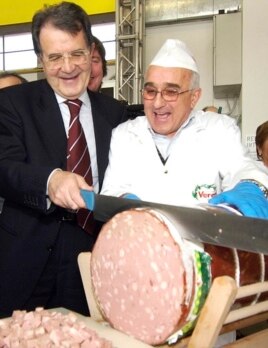
Romano Prodi slices a large Italian sausage while running for office in Bologna, Italy in 2006.Romano Prodi slices a large Italian sausage while running for office in Bologna, Italy in 2006.
x
Romano Prodi slices a large Italian sausage while running for office in Bologna, Italy in 2006.
Baloney sausage comes from the name of the Italian city, Bologna.  The city is famous for its sausage, a mixture of smoked, spiced meat from cows and pigs.  But baloney sausage does not taste the same as beef or pork alone.

Some language experts think this different taste is responsible for the birth of the expression “baloney.”  Baloney is an idea or statement that is nothing like the truth…in the same way that baloney sausage tastes nothing like the meat that is used to make it.

Baloney is a word often used by politicians to describe the ideas of their opponents.

The expression has been used for years.  A former governor of New York state, Alfred Smith, criticized some claims by President Franklin Roosevelt about the successes of the Roosevelt administration.  Smith said, “No matter how thin you slice it, it is still baloney.”

A similar word has almost the same meaning as baloney.  It even sounds almost the same.  The word is “blarney.”  It began in Ireland about 1600.

The lord of Blarney Castle, near Cork, agreed to surrender the castle to British troops.  But he kept making excuses for postponing the surrender.  And he made them sound like very good excuses. “This is just more of the same blarney.”

The Irish castle now is famous for its Blarney stone.  Kissing the stone is thought to give a person special powers of speech.  One who has kissed the Blarney stone, so the story goes, can speak words of praise so smoothly and sweetly that you believe them, even when you know they are false.

A former Roman Catholic bishop of New York City, Fulton Sheen, once explained, “Baloney is praise so thick it cannot be true.  And blarney is praise so thin we like it.”

Another expression is “pulling the wool over someone’s eyes.”  It means to make someone believe something that is not true.  The expression goes back to the days when men wore false hair, or wigs, similar to those worn by judges in British courts.

The word “wool” was a popular joking word for hair.  If you pulled a man’s wig over his eyes, he could not see what was happening.  Today, when you “pull the wool over someone’s eyes,” he cannot see the truth.

This VOA Special English program Words and Their Stories was written by Marilyn Christiano.  I’m Warren Scheer.
 
Рубрики:  English on the Forum/Voice of America.Words and Their Stories
80th Anniversary/ Google translate . Polyglot 80
Живое Человеческое Общение

Words and Their Stories.From Couch Potato to Cabin Fever

Пятница, 14 Ноября 2014 г. 17:51 + в цитатник
November 14, 2014 14:49 UTC
 

Words and Their Stories

From Couch Potato to Cabin Fever


Couch potatoes enjoy watching television
 
/www.merriam-webster.com/wordclick.cur" target="_blank">http://www.merriam-webster.com/wordclick.cur), help; color: rgb(0,0,0); padding-top: 0px; text-align: left">

Now, the VOA Special English program Words andTheir Stories.
 

Some unusual words describe how a person spendshis or her time.  For example, someone who likes tospend a lot of time sitting or lying down while  watchingtelevision is sometimes called a couch potato. A couchis a piece of furniture that people sit on while watchingtelevision.
 

Robert Armstrong, an artist from California, developedthe term couch potato in nineteen seventy-six Severalyears later, he listed the term as a trademark with theUnited States government Mister Armstrong also helped write

 a funny bookabout life as a full-time television watcher.  It is called the “Official CouchPotato Handbook.”
 

Couch potatoes enjoy watching television just as mouse potatoes enjoyworking 

on computers.  A computer mouse is the device that moves thepointer, or cursor, on a computer screen.  The description of mouse potatobecame popular in nineteen ninety-three. American writer Alice Kahn is said tohave invented the term to describe

 young people who spend a lot of timeusing computers.
 

Too much time inside the house using a computer or watching television cancause 

someone to get cabin fever. A cabin is a simple house usually built faraway from the city People go to a cabin to relax and enjoy quiet time.
 

Cabin fever is not really a disease However, people can experience boredomand restlessness 

if they spend too much time inside their homes.  This isespecially true during the winter when it is too cold or snowy to do thingsoutside. Often children get cabin fever 

if they cannot go outside to play. So dotheir parents. This happens when there is so much snow that schools andeven offices and stores

 are closed.
 

Some people enjoy spending a lot of time in their homes to make them niceplaces 

to live.  This is called nesting or cocooning. Birds build nests out ofsticks to hold their eggs and baby birds. Some insects build cocoons 

aroundthemselves for protection while they grow and change

 Nests and cocoonsprovide security for wildlife So people like the idea

 of nests and cocoons, too.
 

The terms cocooning and nesting became popular more than twenty yearsago.

  They describe people buying their first homes and filling them with manythings

 These people then had children.
 

Now these children are grown and have left the nest. They are in college. Orthey are married and starting families of their own far away Now theseparents are living alone without children in their empty nest. They havebecome empty nesters.
 

(THEME)
 

This VOA Special English program Words and Their Stories was written by JillMoss.  I’m Faith Lapidus.


Рубрики:  English on the Forum/Voice of America.Words and Their Stories
80th Anniversary/ Google translate . Polyglot 80
Живое Человеческое Общение

Words and Their Stories.What’s a GI Joe?

Пятница, 14 Ноября 2014 г. 17:42 + в цитатник
November 14, 2014 14:40 UTC
 

Words and Their Stories

What’s a GI Joe?


An American soldier in training


This is Phil Murray with Words and Their Stories, a program in Special English on the Voice of America.
 
We tell about some common expressions in American English.
 
A “leatherneck” or a “grunt” do not sound like nice names to call someone. Yet men and women who serve in the United States armed forces are proud of those names. And if you think they sound strange, consider “doughboy” and “GI Joe.”
 
After the American Civil War in the 1860s, a writer in a publication called Beadle’s Monthly used the word “doughboy” to describe Civil War soldiers. But word expert Charles Funk says that early writer could not explain where the name started.
 
About twenty years later, someone did explain. She was the wife of the famous American general George Custer. Elizabeth Custer wrote that a “doughboy” was a sweet food served to Navy men on ships. She also said the name was given to the large buttons on the clothes of soldiers. Elizabeth Custer believed the name changed over time to mean the soldiers themselves.


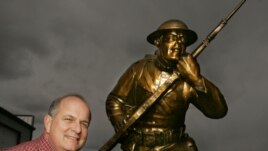
A doughboy statue at a studio in Loveland, ColoradoA doughboy statue at a studio in Loveland, Colorado
Now, we probably most often think of “doughboys” as the soldiers who fought for the Allies in World War I. By World War II, soldiers were called other names. The one most often heard was “GI,” or “GI Joe.” Most people say the letters GI were a short way to say “general issue” or “government issue.” The name came to mean several things: It could mean the soldier himself. It could mean things given to soldiers when they joined the military such as weapons, equipment or clothes. And, for some reason, it could mean to organize, or clean.
 
Soldiers often say, “We GI’d the place.” And when an area looks good, soldiers may say the area is “GI.” Strangely, though, “GI” can also mean poor work, a job badly done.
 
Some students of military words have another explanation of “GI.” They say that instead of “government issue” or “general issue,” “GI” came from the words “galvanized iron.” The American soldier was said to be like galvanized iron -- a material produced for special strength. The Dictionary of Soldier Talksays “GI” was used for the words “galvanized iron” in a publication about the vehicles of the early 20th century.
 
Today, a doughboy or GI may be called a “grunt.” Nobody is sure of the exact beginning of the word. But the best idea probably is that the name comes from the sound that troops make when ordered to march long distances carrying heavy equipment.


People gather at the U.S. Marine Corps Memorial to wait for the Independence Day fireworks over Washington, which can be seen from the memorial's grounds in Arlington, Virginia. REUTERS/Jonathan ErnstPeople gather at the U.S. Marine Corps Memorial to wait for the Independence Day fireworks over Washington, which can be seen from the memorial's grounds in Arlington, Virginia. REUTERS/Jonathan Ernst
A member of the United States Marines also has a strange name: “leatherneck.” It is thought to have started in the 1800s. Some say the name comes from the thick collars of leather early Marines wore around their necks to protect them from cuts during battles. Others say the sun burned the Marines’ necks until their skin looked like leather.
 
This Special English program Words and Their Storieswas written by Jeri Watson.

I’m Phil Murray.
Рубрики:  English on the Forum/Voice of America.Words and Their Stories
80th Anniversary/ Google translate . Polyglot 80
Живое Человеческое Общение

Words and Their Stories.Chip on Your Shoulder

Пятница, 14 Ноября 2014 г. 17:31 + в цитатник
 

Words and Their Stories

Chip on Your Shoulder


Competitors cut a tree trunk with axes in Munich, Germany.
 
 
  • Chip on Your Shoulder


Now, the VOA Special English program Words and Their Stories.
 
Every week at this time
we tell the story of words and expressions used in American English. Some of them are old. Some are new. Together, they form the living speech of the American people.
 
Some popular expressions are a mystery -- no one is sure how they developed.

One of these is the expression “carry a chip on your shoulder.” A person with a chip on his shoulder is a problem for anybody who must deal with him. He seems to be expecting trouble. Sometimes he seems to be saying “I’m not happy about anything, but what are you going to do about it?”
 
A chip is a small piece of something, like a chip of wood. How did this chip get on a person’s shoulder? Well, experts say the expression appears to have been first used in the United States more than 100 years ago.
 
One writer believes that the expression might have come from an old saying. The saying warns against striking too high, or a chip might fall into your eye. That could be good advice. If you strike high up on a tree with an axe, the chip of wood that is cut off will fall into your eye. The saying becomes a warning about the dangers of attacking people who are in more important positions than you are.
 
Later, in the United States, some people would put a real chip on their shoulder as a test. They wanted to start a fight. They would wait for someone to be brave enough to try to hit it off.
 
The word “chip” appears in a number of special American expressions. Another is “chip off the old block.” This means that a child is exactly like a parent. This expression goes back at least to the early 1600s. The British writer of plays, George Colman, wrote these lines in 1762:

“You’ll find him his father’s own son, I believe. A chip off the old block, I promise you!”
 
The word “chip” can also be used in a threatening way to someone who is suspected of wrongdoing. An investigator may say, “We’re going to let the chips fall where they may.” This means the investigation is going to be complete and honest. It is also a warning that no one will be protected from being found guilty.
 
Chips are often used in card games. They represent money. A poker player may, at any time, decide to leave the game. He will turn in his chips in exchange for money or cash. This lead to another meaning: A person who finished or died was said to have “cashed in his chips,” which is a way of saying it is time for me to finish this program.
 
You have been listening to the VOA Special English program Words and Their Stories.

I’m Warren Scheer.
 

Рубрики:  English on the Forum/Voice of America.Words and Their Stories
80th Anniversary/ Google translate . Polyglot 80
Живое Человеческое Общение

Words and Their Stories.Get Your ‘Kick’ with Words

Пятница, 14 Ноября 2014 г. 15:54 + в цитатник
November 14, 2014 12:52 UTC
 

Words and Their Stories

Get Your ‘Kick’ with Words


Cristiano Ronaldo gets his kick in the Euro 2012 match.
 
 
  • Play or download an MP3 of this story


Now, the VOA Special English program Words and Their Stories.
 
From birth to death, the word “kick” has been given an important part in expressing human experience. The proud and happy mother feels the first signs of life “kicking” inside her womb. And that same life -- many years later -- comes to its end in a widely-used expression, to “kick the bucket,” meaning to die.
 
The expression to “kick the bucket” is almost 200 years old. One belief is that it started when an English stableman committed suicide by hanging himself while standing on a pail, or bucket. He put a rope around his neck and tied it to a beam in the ceiling, and then kicked the bucket away from under him.
 
After a while, to die in any way was called “kicking the bucket.”
 
Another old expression that comes from England is to “kick over the traces,” meaning to resist the commands of one’s parents, or to oppose or reject authority. “Traces” were the chains that held a horse or mule to a wagon or plow. Sometimes, an animal rebelled and “kicked over the traces.”
 
The word “kick” sometimes is used to describe a complaint or some kind of dissatisfaction. Workers, for example, “kick” about long hours and low pay.
 
There are times when workers are forced to “kick back” some of their wages to their employers as part of their job. This “kickback” is illegal. So is another kind of kickback: a secret payment made by a supplier to an official who buys supplies for a government or company.
 
“Kick around” is a phrase that is heard often in American English. A person who is kicked around is someone who is treated badly. Usually, he is not really being kicked by somebody’s foot -- he is just not being treated with the respect that all of us want.
 
A person who has “kicked around” for most of his life is someone who has spent his life moving from place to place. In this case, “kicking around” means moving often from one place to another.
 
“Kick around” has a third meaning when you use it with the word idea. When you “kick around an idea,” you are giving that idea some thought.
 
There is no physical action when you “kick a person upstairs,” although the pain can be as strong. You kick a person upstairs by removing him from an important job and giving him a job that sounds more important, but really is not.
 
Still another meaning of the word “kick” is to free oneself of a bad habit, such as smoking cigarettes. Health campaigns urge smokers to “kick the habit.”
 
This VOA Special English program Words and Their Stories was written by Marilyn Rice Christiano.
 
Maurice Joyce was the narrator.
 
I’m Shirley Griffith.
 

Рубрики:  English on the Forum/Voice of America.Words and Their Stories
80th Anniversary/ Google translate . Polyglot 80
Живое Человеческое Общение

Words and Their Stories.Hold Up or Held Up?

Пятница, 14 Ноября 2014 г. 15:44 + в цитатник
November 14, 2014 12:42 UTC
 

Words and Their Stories

Hold Up or Held Up?


Cars are held up in a traffic jam in downtown Cairo, September 2013.


MULTIMEDIA

Play or download an MP3 of this story


Now, Words and Their Stories, a VOA Special English program about American expressions.
 
I’m Rich Kleinfeldt with expressions made using the word “hold.”
 
“Can’t hold a candle to” is a popular expression. It is from the time before electricity, when people used candles for light. Someone who lived in a big house would have a servant light his way by holding a candle. The expression meant that the person who cannot hold a candle to you is not fit even to be your servant. Now, it means such a person cannot compare or compete. In the following song, singer Dolly Parton tells her new love that her old flames, her old lovers, cannot compare with him…
 
Another expression is “hold your tongue.” It means to be still and not talk. “Hold your tongue” is not something you would tell a friend. But a parent or teacher might use the expression to quiet a noisy child.
 
“Hold out” is an expression one hears often in sports reports and labor news. It means to refuse to play or work. Professional football and baseball players “hold out” if their team refuses to pay them what they think they are worth. Members of labor unions “hold out” and refuse to work until they get the work agreement they want.


Hold UpHold Up
The expression “hold up” has several different meanings. One is a robbery. A man with a gun may say, “This is a hold up. Give me your money.” Another meaning is to delay. A driver late for work may tell his boss, “I was held up by heavy traffic.” Someone who was robbed on the way to work might say, “Sorry, boss, I was held up by a hold up.”
 
Still another meaning of the expression is for a story to be considered true after an investigation. The same driver late for work could say, “My boss did not believe a hold up held me up. But the police confirmed what I said, so my story held up.”
 
“Hold on” is another expression. Often it means wait or stop. As you leave for school, your brother may say, “Hold on, you forgot your book.”
 
“Hold on” is used to ask a telephone caller to wait and not hang up his telephone. If you call a library to ask for a book, the librarian might say, “Hold on while I look for it.”
 
Our final expression is “hold the line.” That means to keep a problem or situation from getting worse -- to hold steady. For example, the president may say he will “hold the line on taxes.” He means there will be no increase in taxes.
 
Now, I must “hold the line” on this program -- I have no more time left today.
 
This VOA Special English program Words and Their Stories was written by Frank Beardsley.
 
I’m Rich Kleinfeldt.
Рубрики:  English on the Forum/Voice of America.Words and Their Stories
80th Anniversary/ Google translate . Polyglot 80
Живое Человеческое Общение

Words and Their Stories.Jefferson Creates New Word: 'Belittle'

Пятница, 14 Ноября 2014 г. 15:32 + в цитатник
November 14, 2014 12:30 UTC
 

Words and Their Stories

Jefferson Creates New Word: 'Belittle'


The Thomas Jefferson statue in the Jefferson Memorial on the Tidal Basin in Washington.


MULTIMEDIA

Play or download an MP3 of this story


Now, the VOA Special English program Words and Their Stories.

Today’s word is "belittle." It was first used by Thomas Jefferson, the third president of the United States.

Many years ago, a French naturalist, the Count de Buffon, wrote some books about natural history. The books were a great success even though some critics did not like them. Some critics said, “Count Buffon is more of a poet than a scientist.”

Thomas Jefferson did not like what the Count had said about the natural wonders of the New World. It seemed to Jefferson that the Count had gone out of his way to speak of natural wonders in America as if they were unimportant.

This troubled Thomas Jefferson. He, too, was a naturalist -- as well as a farmer, inventor, historian, writer and politician. He had seen the natural wonders of Europe. To him, they were no more important than those of the New World.

In 1788, Thomas Jefferson wrote about his home state, Virginia. While writing, he thought of its natural beauty and then of the words of Count de Buffon. At that moment, Jefferson created a new word -- belittle. He said, “The Count de Buffon believes that nature belittles her productions on this side of the Atlantic.”

Noah Webster, the American word expert, liked this word. He put it in his English language dictionary in 1806: "Belittle -- to make small, unimportant."

Americans had already accepted Jefferson’s word and started to use it. In 1797, the Independent Chronicle newspaper used the word to describe a politician the paper supported. “He is an honorable man,” the paper wrote, “so let the opposition try to belittle him as much as they please.”

In 1844, the Republican Sentinel of Virginia wrote this about the opposition party:  “The Whigs may attempt to belittle our candidates...that is a favorite game of theirs.”

In 1872, a famous American word expert decided that the time had come to kill this word. He said, “Belittle has no chance of becoming English. And as more critical writers of America -- like those of Britain -- feel no need of it, the sooner it is forgotten, the better.”

This expert failed to kill the word. Today, belittle is used not only in the United States and England, but in other countries where the English language is spoken. It seems that efforts to belittle the word did not stop people from using it.

You have been listening to the VOA Special English program Words and Their Stories.
 
I’m Warren Scheer.

Рубрики:  English on the Forum/Voice of America.Words and Their Stories
80th Anniversary/ Google translate . Polyglot 80
Живое Человеческое Общение

Words and Their Stories.Bigwig and Top Banana

Пятница, 14 Ноября 2014 г. 15:22 + в цитатник
November 14, 2014 12:20 UTC
 

Words and Their Stories

Bigwig and Top Banana


Bigwigs are worn for Bastille Day celebration in New York on July 13, 1997. (AP File photo)


MULTIMEDIA

Play or download an MP3 of this story


Now, the VOA Special English program Words and Their Stories.


Some expressions describe people who are important -- or who at least think they are. One such expression isbigwig.

In the 17th century, important men in Europe began towear false hair, called wigs. As years passed, wigsbegan to get bigger. The size of a man's wig dependedon how important he was. The more important he was -- or thought he was -- the bigger the wig he wore. Somewigs were so large they covered a man's shoulders orback.

Today, the expression "bigwig" is used to make fun of a person who feelsimportant. People never tell someone he is a bigwig. They only use theexpression behind his back.

"Big wheel" is another way to describe an important person. A big wheel maybe the head of a company, a political leader, a famous movie star. They arebig wheels because they are powerful. What they do affects many people. Bigwheels give the orders. Other people carry them out.  As in many machines, abig wheel makes the little wheels turn.

Big wheel became a popular expression after World War II. It probably comesfrom an expression used for many years by people who fix parts of cars andtrucks. They said a person "rolled a big wheel" if he was important and hadinfluence.

The top of something is the highest part. So it is not surprising that top is partof another expression that describes an important person. The expression istop banana. A "top banana" is the leading person in a comedy show. Thefunniest comedian is called "the top banana." The next is "second banana." And so on.

Why a banana? A comedy act in earlier days often included a part where oneof the comedians would hit the others over the head with a soft object. Theobject was shaped like the yellow fruit: the banana.

Top banana still is used mainly in show business. Yet the expression can alsobe used to describe the top person in any area.

A "kingpin" is another word for an important person. The expression comesfrom the game of bowling. The kingpin is the number one pin. If hit correctlywith the bowling ball, the kingpin will make all the other nine pins fall. And that is the object of the game.

So, the most important person in a project or business is the kingpin. If thekingpin is removed, the business or project is likely to fail.

Kingpin is often used to describe an important criminal, or the leader of acriminal gang. A newspaper may report, for example, that "police havearrested the suspected kingpin of a car-stealing operation."

This VOA Special English program Words and Their Stories was written byMarilyn Christiano

I'm Warren Scheer.

Рубрики:  English on the Forum/Voice of America.Words and Their Stories
80th Anniversary/ Google translate . Polyglot 80
Живое Человеческое Общение

Words and Their Stories.Ace in the Hole

Пятница, 14 Ноября 2014 г. 14:39 + в цитатник
November 14, 2014 11:35 UTC
 

Words and Their Stories

Ace in the Hole


Actress Shannon Elizabeth from the film "American Pie" puts on her poker face during a game of poker.


Last updated at: 05/11/2014 7:47 PM


Now, Words and Their Stories, a program in Special English by the Voice of America.

It is surprising how many expressions that Americans use every day came from the card game of poker. For example, you hear the expression "ace in the hole" used by many people who would never think of going near a poker table. An "ace in the hole" is any argument, plan or thing kept hidden until needed. It is used especially when it can turn failure into success.

In poker and most card games, the ace is the highest and most valuable card. It is often a winning card. In one kind of poker game, the first card to each player is given face down. A player does not show this card to the other players. The other cards are dealt face up. The players bet money each time they receive another card.

No one knows until the end of the game whose hidden card is the winner. Often, the "ace in the hole" wins the game.

Smart card players -- especially those who play for large amounts of money -- closely watch the person who deals the cards. They are watching to make sure he is dealing honestly. They want to be sure that he is not dealing off the bottom of the stack of cards. A dealer who is doing that has "stacked the deck." He has fixed the cards so that he will get higher cards. He will win and you will lose.

The expression "dealing off the bottom" now means cheating in business, as well as in cards. And when someone tells you that "the cards are stacked against you," he is saying you do not have a chance to succeed.

In a poker game you do not want to let your opponents know if your cards are good or bad. So having a "poker face" is important. A "poker face" never shows any emotion, never expresses either good or bad feelings. No one can learn by looking at your face if your cards are good or bad.

People now use "poker face" in everyday speech to describe someone who shows no emotion.

Someone who has a "poker face" usually is good at bluffing. Bluffing is trying to trick a person into believing something about you that is not true.

In poker, you "bluff" when you bet heavily on a poor hand. The idea is to make the other players believe you have strong cards and are sure to win. If they believe you, they are likely to drop out of the game. This means you win the money they have bet.

You can do a better job of bluffing if you "hold your cards close to your vest." You hold your cards close to you so no one can see what you have. In everyday speech, "holding your cards close to your vest" means not letting others know what you are doing or thinking. You are keeping your plans secret.

We are not bluffing when we say we hope you have enjoyed today’s program.

This Special English program Words and Their Stories was written by Marilyn Rice Christiano.

This is Bob Doughty.
Рубрики:  English on the Forum/Voice of America.Words and Their Stories
80th Anniversary/ Google translate . Polyglot 80
Живое Человеческое Общение

Words and Their Stories.Nose and Ear Expressions

Пятница, 14 Ноября 2014 г. 14:26 + в цитатник
November 14, 2014 11:25 UTC
 

Words and Their Stories

Nose and Ear Expressions


A visitor looks at the sculpture "Vortex Eau De Parfum" by Jim Lampie at the Frieze Art Fair in New York


Last updated at: 05/18/2014 12:30 AM

Nose and Ear Expressions
 
  • Playlist
  • /learningenglish.voanews.com/img/sprites/icons_SMALL_ltr.png" target="_blank">http://learningenglish.voanews.com/img/sprites/icons_SMALL_ltr.png); color: rgb(19,47,190); line-height: 16px; background-repeat: no-repeat; text-align: left; text-decoration: none" target="_blank">Download (right-click or option-click and save)

Now, the VOA Special English program Words and Their Stories.

A person’s nose is important for breathing and smelling. The nose is also used in many popular expressions.

Some people are able to "lead other people by the nose." For example, if a wife "leads her husband by the nose," she makes him do whatever she wants him to do.

Some people are said to be "hard-nosed." They will not change their opinions or positions on anything. If someone is "hard-nosed," chances are he will never "pay through the nose," or pay too much money, for an object or service.

It is always helpful when people "keep their nose out of other people’s business" -- they do not interfere. The opposite of this is someone who "noses around all the time." This kind of person is interested in other people’s private matters. He is considered "nosey."

Someone who "keeps his nose to the grindstone" works very hard. This can help a worker "keep his nose clean," or stay out of trouble.

One unusual expression is "that is no skin off my nose." This means that a situation does not affect or concern me. We also say that sometimes a person "cuts off his nose to spite his face." That is, he makes a situation worse for himself by doing something foolish because he is angry.

More problems can develop if a person "looks down his nose" at someone or something. The person acts like something is unimportant or worthless. This person might also "turn up his nose" at something that he considers not good enough. This person thinks he is better than everyone else. He "has his nose in the air."

In school, some students "thumb their nose" at their teacher -- they refuse to obey orders or do any work. Maybe these students do not know the correct answers. My mother always told me, if you study hard, the answers should be "right under your nose," or easily seen.

I think we have explained the nose expressions. What about ears? Well, I hope you are "all ears," or very interested in hearing more expressions. We might even "put a bug in your ear," or give you an idea about something. We also advise you to "keep your ear to the ground." This means to be interested in what is happening around you and what people are thinking.

If you are a good person, you will "lend an ear" to your friends. You will listen to them when they have a problem they need to talk about. Our last expression is "to play it by ear." This has two meanings. One is to play a song on a musical instrument by remembering the tune and not by reading the music. "Play it by ear" also means to decide what to do at the last minute instead of making detailed plans.

This VOA Special English program Words and Their Stories was written by Jill Moss.


I’m Faith Lapidus.
Рубрики:  English on the Forum/Voice of America.Words and Their Stories
80th Anniversary/ Google translate . Polyglot 80
Живое Человеческое Общение

Words and Their Stories.All About Eyes

Пятница, 14 Ноября 2014 г. 14:18 + в цитатник
November 14, 2014 11:16 UTC
 

Words and Their Stories

All About Eyes


The beautiful Hope Diamond really "caught my eye"


Last updated at: 05/25/2014 12:30 AM

All About Eyes
 
  • Playlist
  • /learningenglish.voanews.com/img/sprites/icons_SMALL_ltr.png" target="_blank">http://learningenglish.voanews.com/img/sprites/icons_SMALL_ltr.png); color: rgb(19,47,190); line-height: 16px; background-repeat: no-repeat; text-align: left; text-decoration: none" target="_blank">Download (right-click or option-click and save)


Now, the VOA Special English program Words and Their Stories.

Today’s program is all about eyes. When it comes to relationships, people’seyes can be "a window into their hearts." This means that their eyes can tell alot about how they feel. We will tell a story about a man and woman who areteachers at the same school. The woman is interested in the man. She usesmany methods to "catch his eye," or get him to notice her. Once he "setseyes on her," or sees her, she might try to get him interested in her by actingplayful. In other words, she might try to "make eyes at him" or "give him theeye."


Let us suppose that this man gets "hit between the eyes." In other words, the woman has a strong effect on him. He wants to spend time with her to get to know her better. He asks her out on a date.

She is so happy that she may walk around for days with "stars in her eyes." She is extremely happy because this man is "the apple of her eye" -- a very special person. She might tell him that he is the only person she wants, or "I only have eyes for you."

On their date, the couple might eat a meal together at a restaurant. If the man is really hungry, his "eyes might be bigger than his stomach" -- he might order more food than he can eat. When his food arrives at the table, his eyes might "pop out." He might be very surprised by the amount of food provided. He might not even "believe his own eyes." In fact, "all eyes would be watching" him if he ate all the food. This might even "cause raised eyebrows" -- people might look at the man with disapproval.

During their dinner, the couple might discuss many things. They might discover that they "see eye-to-eye," or agree on many issues. They share the same beliefs and opinions. For example, they might agree that every crime or injury should be punished. That is, they firmly believe in the idea of "an eye for an eye." They might also agree that it is wrong to "pull the wool over" a person’s eyes. This means to try to trick a person by making him believe something that is false. But the man and woman do not believe in the "evil eye"  -- that a person can harm you by looking at you.

The next day, at their school, the woman asks the man to "keep an eye on," or watch the young students in her class while she is out of the classroom. This might be hard to do when the teacher is writing on a board at the front of the classroom. To do so, a teacher would need to have "eyes in the back of his head." In other words, he would know what the children are doing even when he is not watching them.

Words and Their Stories, in VOA Special English, was written by Jill Moss. 

I’m Faith Lapidus.
 
Рубрики:  English on the Forum/Voice of America.Words and Their Stories
80th Anniversary/ Google translate . Polyglot 80
Живое Человеческое Общение

Words and Their Stories.Let's Play Ball!

Пятница, 14 Ноября 2014 г. 14:06 + в цитатник
November 14, 2014 11:03 UTC
 

Words and Their Stories

Let's Play Ball!


Jason Heyward of Atlanta, left, tries to touch the base before being tagged out by Dustin Pedroia at a baseball game on May 26, 2014.


Last updated at: 06/01/2014 12:30 AM

Let's Play Ball
 
  • Playlist
  • /learningenglish.voanews.com/img/sprites/icons_SMALL_ltr.png" target="_blank">http://learningenglish.voanews.com/img/sprites/icons_SMALL_ltr.png); color: rgb(19,47,190); line-height: 16px; background-repeat: no-repeat; text-align: left; text-decoration: none" target="_blank">Download (right-click or option-click and save)


Now, the VOA Special English program Words and Their Stories.

American English is full of colorful expressions. One such expression is to "touch all bases." It comes from the sport of baseball.


There are four bases in baseball -- first, second and third. The fourth is homeplate. Together, the bases form a diamond shape. When a baseball playerhits the ball, he must run to each base -- in order -- and touch it with his foot. It is the only way to score a point. If the player hits the ball and fails to touch allthe bases, the point will not be counted.


The importance of touching all the bases was shown at the start of the 1974baseball season.


Hank Aaron was a player with the Atlanta Braves team. He was seeking therecord for hitting the most home runs. A home run is a ball that is hit over thewall. Aaron needed just one home run to equal the record held by Babe Ruth, the greatest hitter in baseball history. Aaron got that home run the very firsttime he had a chance to hit the ball. He sent the ball over the wall thatsurrounded the playing field. That gave him 714 home runs -- the same asBabe Ruth.
 

After that day, baseball fans held their breath every time it was Hank Aaron'sturn to hit. When would he hit home run number 715?
 

The wait was not long. In the second week of the season, Aaron again hit theball over the wall. He had beaten Babe Ruth's record. But first, he had to runaround the four bases. The other players on his team watched carefully tomake sure he touched each one. If he did not, the home run would not havecounted. There would have been no new record.


So, to "touch all bases" means to do what is necessary to complete anactivity.

The expression is used in business and politics. No business deal or politicalcampaign is really complete until you discuss all the issues involved or, as it issaid, until you "touch all bases."


Even professional diplomats use this expression, as well as others that comefrom baseball. A diplomat in reporting on negotiations with diplomats fromdifferent countries may say they "touched all bases" during many hours oftalks. This means they explored all issues involved in the situation. Perhapsthey did this after expressing hope that they could "play ball" with each other --meaning that they could learn to cooperate.
 

Sports reporters write about fast-moving, lively events. They must develop away of writing that goes straight to the point. Their duty is to give the reader acomplete picture of the event in as few words as possible. They must "touchall bases" as quickly as they can.


This VOA Special English program Words and Their Stories was written by Mike Pitts.

This is Bob Doughty.
Рубрики:  English on the Forum/Voice of America.Words and Their Stories
80th Anniversary/ Google translate . Polyglot 80
Живое Человеческое Общение

Words and Their Stories.Number One

Пятница, 14 Ноября 2014 г. 13:05 + в цитатник
November 14, 2014 10:04 UTC
 

Words and Their Stories

Number One


Number One
Number One


06/08/2014

Number One
 
  • Playlist
  • /learningenglish.voanews.com/img/sprites/icons_SMALL_ltr.png" target="_blank">http://learningenglish.voanews.com/img/sprites/icons_SMALL_ltr.png); color: rgb(19,47,190); line-height: 16px; background-repeat: no-repeat; text-align: left; text-decoration: none" target="_blank">Download (right-click or option-click and save)

Now, the VOA Special English program Words and Their Stories.


Today I will tell about expressions using numbers. Let us start with thenumber one. Numbers can be tricky. On the one hand, they are simplynumbers. On the other hand, they have meanings. "I for one" use theseexpressions a lot.

Many people consider themselves number one -- the most important person.They are always "looking out for number one" and "taking care of numberone." It is as if they are "the one and only" person on Earth. Some peoplehowever, are not so self-centered. My brother is such a person. It is true -- nojoke. I am not trying to "pull a fast one" on you.

First, you have to understand that my brother is "one in a million." He is such anice person. All his friends like him. They consider him "one of the boys."Recently, my brother had a bad day at the office. It was just "one of thosedays." Nothing went right. So he stopped at a local bar -- a drinking place --after leaving work. My brother planned to have a glass of beer with his friends -- "a quick one" -- before he went home. But a quick one turned into one or two, and soon those became "one too many."

As my brother was leaving, he ordered a last drink -- "one for the road." Hisfriends became concerned. "One by one," they asked him if he was able todrive home safely. Now, my brother is a wise and calm person. He is "at onewith himself." He recognizes when he has had too much alcohol to drink. Sohe accepted an offer for a ride home from a female friend.

At one time in the past, my brother had been in love with this woman. She is agreat person -- kind, thoughtful and intelligent -- all good qualities "rolled up intoone." But sadly their relationship did not work. He always used to say "One ofthese days, I am going to marry this girl." But that never happened.

"For one thing," she did not love him as much as he loved her. It was just "oneof those things." The situation was regrettable and my brother had to accept it. But even now, he considers her "the one that got away."

However, they are still friends. And because my brother had been kind to her, she felt that "one good turn deserves another." He was good to her and shewanted to help him in return. So she drove him home.

If my brother had driven home from the bar that night, his "number would havebeen up" -- something bad would have happened. Thankfully he made it homesafely. And, he and the woman are "back to square one" -- they are back towhere they started, being friends.

This VOA Special English program Words and Their Stories was written by JillMoss.

I’m Faith Lapidus.

Рубрики:  English on the Forum/Voice of America.Words and Their Stories
80th Anniversary/ Google translate . Polyglot 80
Живое Человеческое Общение

Words and Their Stories.Numbers

Пятница, 14 Ноября 2014 г. 12:56 + в цитатник
November 14, 2014 09:54 UTC
 

Words and Their Stories

Numbers


Numbers
Numbers


06/15/2014

Numbers
 
  • Playlist
  • /learningenglish.voanews.com/img/sprites/icons_SMALL_ltr.png" target="_blank">http://learningenglish.voanews.com/img/sprites/icons_SMALL_ltr.png); color: rgb(19,47,190); line-height: 16px; background-repeat: no-repeat; text-align: left; text-decoration: none" target="_blank">Download (right-click or option-click and save)


Now, the VOA Special English program Words and Their Stories.

Last week, I told about the number one. Today, I will tell about expressions using other numbers.

Some problems are difficult to solve. But there are a lot of number expressions that can help. For example, if we "put two and two together" we might come up with the right answer. We know that "two heads are better than one" -- it is always better to work with another person to solve a problem.

Sometimes "there are no two ways about it" -- some problems have only one solution. You cannot "be of two minds" over this.

But with any luck, we could solve the problem in "two shakes of a lamb’s tail" -- we could have our answers quickly and easily.

Sometimes we can "kill two birds with one stone" -- that is, we can complete two goals with only one effort or action. But we must remember that "two wrongs don’t make a right" -- if someone does something bad to you, you should not do the same to him.

If you are going out with your girlfriend, or boyfriend, you do not want another friend to go along on your date. You can just say to your friend: "two’s company, three’s a crowd."

When I was a young child in school, I had to learn the three R’s. These important skills are reading, writing and arithmetic. These three words do not all start with the letter “R,” but they have the sound of “R.” My teachers used to give "three cheers" when I did well in math. They gave praise and approval for a job well done.

Some of my friends were confused and did not understand their schoolwork. They were "at sixes and sevens." In fact, they did not care if they finished high school.  They saw little difference between the two choices. "Six of one, half a dozen the other" -- that was their position. But they were really happy when they completed their studies and graduated from high school. They were "in seventh heaven." They were "on cloud nine."

"Nine times out of ten," students who do well in school find good jobs. Some work in an office doing the same things every day at "nine-to-five jobs." You do not have to "dress to the nines" -- or wear your best clothes -- for this kind of work.

Last year, one of my friends applied for a better job at her office. I did not think she would get it. I thought she had "a hundred-to-one shot" at the job. Other people at her office thought her chances were "a million-to-one." One reason was that she had been caught "catching forty winks" at the office -- she slept at her desk for short periods during the day. But her supervisor appointed her to the new job "at the eleventh hour" -- at the very last minute. I guess "her lucky number came up."


This VOA Special English program Words and Their Stories was written by JillMoss.

I’m Faith Lapidus.
 

Рубрики:  English on the Forum/Voice of America.Words and Their Stories
80th Anniversary/ Google translate . Polyglot 80
Живое Человеческое Общение

Words and Their Stories.'What a Dog's Life!'

Пятница, 14 Ноября 2014 г. 12:47 + в цитатник
November 14, 2014 09:45 UTC
 

Words and Their Stories

'What a Dog's Life!'


Every dog has its day
 
 
  • [MULTIMEDIA
Play or download an MP3 of this story


06/22/2014

Dog Talk
 
  • Playlist
  • /learningenglish.voanews.com/img/sprites/icons_SMALL_ltr.png" target="_blank">http://learningenglish.voanews.com/img/sprites/icons_SMALL_ltr.png); color: rgb(19,47,190); line-height: 16px; background-repeat: no-repeat; text-align: left; text-decoration: none" target="_blank">Download (right-click or option-click and save)


Now the VOA Special English program Words and Their Stories.

Americans use many expressions with the word "dog." People in the United States love their dogs and treat them well. They take their dogs for walks, let them play outside and give them good food and medical care. However, dogs without owners to care for them lead a different kind of life. The expression "to lead a dog's life" describes a person who has an unhappy existence.

Some people say we live in a "dog-eat-dog world." That means many people are competing for the same things, like good jobs. They say that to be successful, a person has to "work like a dog." This means they have to work very, very hard. Such hard work can make people "dog-tired." And the situation would be even worse if they became "sick as a dog."

Still, people say "every dog has its day." This means that every person enjoys a successful period during his or her life. To be successful, people often have to learn new skills. Yet, some people say that "you can never teach an old dog new tricks." They believe that older people do not like to learn new things and will not change the way they do things.

Some people are compared to dogs in bad ways. People who are unkind or uncaring can be described as "meaner than a junkyard dog." Junkyard dogs live in places where people throw away things they do not want. Mean dogs are often used to guard this property. They bark or attack people who try to enter the property. However, sometimes a person who appears to be mean and threatening is really not so bad. We say "his bark is worse than his bite."

A junkyard is not a fun place for a dog. Many dogs in the United States sleep in safe little houses near their owners' home. These doghouses provide shelter. Yet they can be cold and lonely in the winter. Husbands and wives use this doghouse term when they are angry at each other. For example, a woman might get angry at her husband for coming home late, or forgetting their wedding anniversary. She might tell him that he is "in the doghouse." She may not treat him nicely until he apologizes. However, the husband may decide that it is best to leave things alone and not create more problems. He might decide to "let sleeping dogs lie."

Dog expressions also are used to describe the weather. The "dog days of summer" are the hottest days of the year. A rainstorm may cool the weather, but we do not want it to rain too hard -- we do not want it to "rain cats and dogs."

This VOA Special English program Words and Their Stories was written by Jill Moss.

I'm Faith Lapidus.
 
Рубрики:  English on the Forum/Voice of America.Words and Their Stories
80th Anniversary/ Google translate . Polyglot 80
Живое Человеческое Общение

Words and Their Stories.Hold Your Horses!

Пятница, 14 Ноября 2014 г. 12:38 + в цитатник
November 14, 2014 09:36 UTC
 

Words and Their Stories

Hold Your Horses!


Assistant trainer Alan Sherman, left, stands Kentucky Derby winner California Chrome, with exercise rider Willie Delgado, May 17, 2014.


06/29/2014

Hold Your Horses!
 
  • Playlist
  • /learningenglish.voanews.com/img/sprites/icons_SMALL_ltr.png" target="_blank">http://learningenglish.voanews.com/img/sprites/icons_SMALL_ltr.png); color: rgb(19,47,190); line-height: 16px; background-repeat: no-repeat; text-align: left; text-decoration: none" target="_blank">Download (right-click or option-click and save)

Now, the VOA Special English program Words and Their Stories.

Today, we tell about "horse" expressions. In the past, many people depended on horses for transportation, farming and other kinds of work. A lot of people still like to ride horses. And horse racing is also popular. So it is not surprising that Americans still use expressions about the animals.

Long ago, people who were rich or important rode horses that were very tall. Today, if a girl acts like she is better than everyone else, you might say she should "get off her high horse."

Yesterday, my children wanted me to take them to the playground. But I had to finish my work, so I told them to "hold your horses" -- wait until I finish what I am doing. My two boys like to compete against each other and play in a violent way. I always tell them to stop "horsing around" or someone could get hurt.

We live in a small town. It does not have any exciting activities to offer visitors. My children call it a "one-horse town."

Last night, I got a telephone call while I was watching my favorite television show. I decided not to answer it because "wild horses could not drag me away" from the television -- there was nothing that could stop me from doing what I wanted to do.

Sometimes you get information "straight from the horse's mouth." It comes directly from the person who knows most about the subject and is the best source. Let us say your teacher tells you there is going to be a test tomorrow. You could say you got the information "straight from the horse's mouth." However, you would not want to call your teacher a horse!

You may have heard this expression: "You can lead a horse to water, but you cannot make him drink." That means you can give someone advice but you cannot force him to do something he does not want to do.

Sometimes a person fights a battle that has been decided or keeps arguing a question that has been settled. We say this is like "beating a dead horse."

In politics, a "dark-horse candidate" is someone who is not well known to the public.  Sometimes, a dark horse unexpectedly wins an election.

Another piece of advice is "do not change horses in midstream." You would not want to get off one horse and on to another in the middle of a river. Or make major changes in an activity that has already begun. In the past, this expression was used as an argument to re-elect a president, especially during a time when the country was at war.

This VOA Special English program was written by Shelley Gollust. I'm Faith Lapidus. You can find more Words and Their Stories at our website, voaspecialenglish.com

 
Рубрики:  80th Anniversary/ Google translate . Polyglot 80
Живое Человеческое Общение
English on the Forum

Words and Their Stories.The Garden State, the Granite State and the Empire State

Пятница, 14 Ноября 2014 г. 12:23 + в цитатник
November 14, 2014 09:21 UTC
 

Words and Their Stories

The Garden State, the Granite State and

the Empire State


Pueblo Bonito in northern New Mexico. (Nate Crabtree Photograpy)


MULTIMEDIA

Play or download an MP3 of this story


Now, the VOA Special English program Words and Their Stories.

Nebraska is the only state to have a nickname that honors sports teams. The state university's athletic teams are nicknamed "Corn huskers" in recognition of one of the area's chief crops. The state borrowed the Cornhusker nickname from the university.

The western desert state of Nevada is called the "Silver State." It was once home to many silver mines and towns that grew up around them. Today, most of the mare empty ghost towns.

New Hampshire -- in the northeast area called New England -- is the "Granite State" because of that colorful rock.

New Jersey is between the big cities of New York, New York and Philadelphia,Pennsylvania. It got its nickname -- the "Garden State" -- because New Jersey truck farms once provided vegetables to those big cities.

New York -- which always thinks big -- was called the "Empire State" because of its natural wealth. The most famous Manhattan sky scraper got its name from the state. It is, of course, the Empire State Building.


The Empire State Building


If you get a chance to see a red sunset over the Sangre de Cristo Mountainsof New Mexico, you will know why that southwestern state is called the "Landof Enchantment."

North and South Carolina were one colony until 1729. South Carolina'snick name is the easier of the two: It is the "Palmetto State" because of a fan-leafed palm tree that grows there. North Carolina is the "Tar Heel State." That is because many of the men who worked to gather substances from trees wore no shoes. They would make turpentine from tar and get the black, stickytar on the heels of their feet.

Next week, we will finish telling about the colorful nicknames of American states.

Рубрики:  English on the Forum/Voice of America.Words and Their Stories
80th Anniversary/ Google translate . Polyglot 80
Живое Человеческое Общение


Поиск сообщений в Furman_Ed
Страницы: 233 ... 134 133 [132] 131 130 ..
.. 1 Календарь