Digixglobal Review: Why Less Might Be More for the Disciplined Trader |
|
|
Однокурсницу Бишимбаева осудили за мошенничество во время скандального судебного процесса |


В Астане вынесли приговор Людмиле Грачёвой, которую обвинили в подстрекательстве к даче взятки за якобы смягчение приговора осуждённому за убийство жены экс-министру национальной экономики Куандыку Бишимбаеву.
По данным пресс-службы столичных судов, в мае этого года Грачёва пришла домой к матери Бишимбаева — Альмире Нурлыбековой и сообщила, что необходимо 100 млн тенге для дальнейшей передачи их в качестве взятки апелляционной инстанции для решения вопроса в отношении её сына.
Во время очередной встречи Нурлыбекова передала оговоренную сумму. После чего Грачёву задержали сотрудники Антикора.
В итоге суд признал Людмилу Грачёву виновной и приговорил к 10 годам лишения свободы.
К слову, ранее сообщалось, что Грачёву задержали после передачи ей муляжа вместо настоящих денег. Во время следствия она рассказала, что жила с семьей Бишимбаева в одном городе, а с Куандыком училась в одном учебном заведении.
В суде Грачёва говорила о преступлении, якобы совершённом Бишимбаевым в далеком 1995 году. По её словам, тогда Бишимбаев и их общий однокурсник ехали к ней на встречу, и Куандык сбил малолетнего ребёнка, которому на тот момент было пять лет. Подсудимая отметила, что вместо Бишимбаева осудили их общего однокурсника.
Напомним, в ноябре 2023 года в столичном ресторане в результате нанесения телесных повреждений скончалась Салтанат Нукенова.
Позднее по подозрению в убийстве задержали её мужа Куандыка Бишимбаева. Его арестовали на два месяца. Также под стражу взяли директора «Гастро-центра», родственника Бишимбаева — Бахытжана Байжанова, где все произошло.
Его обвинили в укрывательстве преступления. В итоге суд признал Бишимбаева виновным и приговорил к 24 годам лишения свободы. Байжанову назначили наказание в виде 4 лет лишения свободы в учреждении УИС средней безопасности.
Автор: Иван Харитонов
|
|
María Dolores Bedoya de Molina: The Fearless Voice of Central American Independence |

• The Woman Behind Central America's Freedom
• Early Life in Guatemala: 1783-1804
• Marriage to Pedro Molina: A Partnership Forged in Revolution
• The Eve of Independence: September 14, 1821
• The Decisive Day: September 15, 1821
• Mobilizing Women in the Independence Movement
• Tragedy and Exile: The Assassination of Mariano Bedoya
• Later Years in Antigua: Political Exile and Illness
• Erasure from Historical Records and Modern Recognition
• Cultural Legacy: Parades, Museums, and Cinema
• Conclusion: A National Hero Remembered
The Woman Behind Central America's Freedom
In the annals of Central American history, the struggle for independence from Spanish colonial rule is typically narrated through the actions of male politicians, military leaders, and intellectuals. Yet behind these familiar names stands a figure whose courage, determination, and strategic brilliance helped tip the balance toward freedom on the most critical day in the region's history. María Dolores Bedoya de Molina, a Guatemalan activist born in 1783, played an indispensable role in the events of September 15, 1821, when Central America declared its independence from the Spanish Empire. Her story, long overlooked by historians who dismissed women's contributions to political change, has emerged in recent decades as a testament to the power of grassroots mobilization and the courage of those who agitate for freedom outside the corridors of power. Today, she is recognized as a national hero of Guatemala, honored with statues, annual parades, and even a biographical film that bears her name. Her journey from obscurity to national icon mirrors the broader recognition of women's roles in shaping the destiny of nations across Latin America.
Early Life in Guatemala: 1783-1804
María Dolores Bedoya was born on September 20, 1783, in Guatemala, then part of the Captaincy General of Guatemala within the Spanish colonial empire. The exact details of her childhood remain sparse, as records from the era focused predominantly on the lives of men and the activities of colonial administration. However, the world into which she entered was one of rigid social hierarchies, where birth determined destiny and women were expected to confine themselves to domestic roles. The Spanish colonies in Central America operated under a system that concentrated power in the hands of peninsulares, Spaniards born in the Iberian peninsula, while creoles, those of Spanish descent born in the colonies, chafed under their subordinate status. This tension would eventually explode into the independence movements that swept across Latin America in the early nineteenth century. Growing up in this environment, Bedoya absorbed the grievances and aspirations of her creole compatriots, developing the political consciousness that would later drive her activism.
Marriage to Pedro Molina: A Partnership Forged in Revolution
In 1804, at the age of twenty-one, María Dolores Bedoya married Pedro Molina, a physician who would become one of Central America's most prominent independence leaders. This union represented far more than a conventional marriage of the era; it formed a political partnership that would shape the destiny of the region. Pedro Molina, born in 1777, had studied medicine at the University of San Carlos in Guatemala and possessed a sharp intellect combined with deep commitment to the cause of independence. Following their marriage, the couple moved to Granada, Nicaragua, where Molina served as a battalion doctor until 1811. These years exposed them to the broader currents of revolutionary thought spreading across Latin America, influenced by the Haitian Revolution, the Napoleonic invasion of Spain, and the successful independence movements in South America led by Simón Bolívar and José de San Martín. When they returned to Guatemala in 1814, they brought with them not only medical knowledge but revolutionary fervor that would soon find expression in the struggle for freedom.
The Eve of Independence: September 14, 1821
By September 1821, the momentum for independence had reached a critical point throughout Central America. Pressure had been building for months, influenced by events in Mexico where Agustín de Iturbide had declared independence earlier in the year. On September 14, the nobility and colonial officials gathered in Guatemala City to debate the momentous question of whether to declare independence from Spain. While these deliberations proceeded behind closed doors, María Dolores Bedoya took to the streets in a demonstration of popular will that would prove decisive. Accompanied by Basilio Porras, she traveled through the city, rallying supporters and spreading word of the impending decision. Her efforts focused on mobilizing the population, particularly women who had been excluded from formal political processes but whose voices could still make themselves heard in the streets. She understood that the nobility debating inside the palace needed to understand the depth of popular sentiment favoring independence, and she set about ensuring they would receive that message in unmistakable terms.
The Decisive Day: September 15, 1821
September 15, 1821, dawned with tension hanging over Guatemala City. Inside the National Palace, the Captain General, Gabino Gaínza, presided over a meeting of colonial officials, church leaders, and representatives of the nobility. They debated the options: remain loyal to Spain, declare independence, or accept annexation to the Mexican Empire. Outside these closed doors, María Dolores Bedoya organized a celebration designed to influence the outcome. She gathered a crowd of independence advocates and filled the air with music, fireworks, and enthusiastic shouting. The noise penetrated the walls of the palace, reaching the ears of the deliberating officials. Accounts of the day suggest that those inside grew increasingly alarmed by the fervor of the crowd, fearing that failure to declare independence might trigger a popular uprising that could turn violent. This fear, stoked by Bedoya's carefully orchestrated demonstration, pushed the indecisive officials toward a final decision. Later that day, the Act of Independence of Central America was signed, declaring the region's freedom from Spanish rule. María Dolores Bedoya's role in this historic moment would later be remembered as crucial, though contemporary records gave her little credit.
Mobilizing Women in the Independence Movement
Beyond her actions on the critical days of September 14 and 15, 1821, María Dolores Bedoya played a broader role in mobilizing women to participate in the independence movement. In an era when women were excluded from formal political participation, denied education, and confined to domestic spheres, Bedoya demonstrated that they could nevertheless influence political outcomes through informal channels. She organized networks of women who spread information, maintained morale among independence advocates, and provided support to activists facing harassment from colonial authorities. Her efforts challenged the prevailing assumptions about women's proper place in society, though these challenges were not explicitly articulated as feminist demands. Rather, Bedoya operated within the constraints of her era while pushing against their boundaries, showing what determined women could accomplish even without formal rights or recognition. This aspect of her legacy has gained increasing attention from historians studying women's roles in Latin American independence movements, revealing patterns of female activism that traditional narratives long ignored.
Tragedy and Exile: The Assassination of Mariano Bedoya
The achievement of independence did not bring peace to Central America. In the years following 1821, the region descended into conflict between factions advocating different visions of the future. Conservatives sought to preserve social hierarchies and maintain close ties with the Catholic Church, while liberals pushed for republican institutions, land reform, and limits on ecclesiastical power. The Molina-Bedoya family found themselves caught in these conflicts. In 1821, the same year as independence, María Dolores's brother Mariano was assassinated, a tragedy that underscored the dangers facing political activists in the volatile post-independence environment. Following this loss, the family left Guatemala City for Verapaz, seeking safety in the countryside. Pedro Molina's political career continued, and he later served as Head of State of Guatemala from 1823 to 1831, but the couple's fortunes fluctuated with the shifting tides of Central American politics.
Later Years in Antigua: Political Exile and Illness
The final years of María Dolores Bedoya's life were spent in political exile in Antigua Guatemala, the former capital destroyed by earthquakes in 1773 but still home to a significant population. The couple's exile reflected the instability that plagued Central America in the decades following independence, as liberal and conservative factions struggled for dominance. Despite these hardships, Bedoya remained committed to the ideals she had championed in 1821. She maintained correspondence with fellow activists and followed political developments, though her health gradually declined. A long-term illness, the exact nature of which is not recorded in surviving documents, sapped her strength and limited her activities. She died on July 9, 1853, at the age of sixty-nine, having witnessed both the triumph of independence and the subsequent struggles that prevented Central America from realizing the promises of freedom she had helped secure.
Erasure from Historical Records and Modern Recognition
For decades after her death, María Dolores Bedoya's contributions to Central American independence remained largely unrecognized in official histories. The omission was not accidental but reflected the systematic erasure of women's political agency from historical narratives in the nineteenth and early twentieth centuries. Historians focused on male leaders, legislative debates, and military campaigns, overlooking the grassroots mobilization, community organizing, and informal influence that women like Bedoya provided. This erasure began to reverse in the late twentieth century, as feminist scholarship and broader efforts to recover marginalized voices transformed historical understanding. Researchers delved into archives, reexamined familiar events from new perspectives, and pieced together the story of Bedoya's activism. Today, she is celebrated as a Guatemalan national hero, her name taught in schools and her image displayed in museums. This recognition represents not only justice for Bedoya personally but acknowledgment of the countless women whose contributions to historical change have been overlooked.
Cultural Legacy: Parades, Museums, and Cinema
The cultural legacy of María Dolores Bedoya has grown substantially in recent decades, taking tangible form in monuments, annual traditions, and artistic works. One of her dresses is preserved and displayed in the Guatemalan National History Museum, offering visitors a tangible connection to her life and era. In 1983, on the two hundredth anniversary of her birth, a statue of Bedoya was erected outside a school named in her honor in Guatemala City, ensuring that future generations would encounter her image in their daily lives. Perhaps most significantly, the tradition of parading through the streets on September 14, the eve of Independence Day, directly commemorates her actions in 1821. Each year, Guatemalans take to the streets with lanterns, music, and celebration, recreating the demonstration that Bedoya organized and honoring her role in securing their freedom. In 2018, this cultural recognition reached new heights with the release of Dolores Bedoya: Una Mujer de Coraje, a biographical film that brought her story to theaters across the country, introducing her legacy to contemporary audiences through the powerful medium of cinema.
Conclusion: A National Hero Remembered
The story of María Dolores Bedoya de Molina reminds us that history is shaped not only by those who sign documents and hold office but by those who organize, agitate, and inspire. Her actions on September 14 and 15, 1821, helped create the conditions for Central American independence, yet for more than a century her contributions went unrecognized. The recovery of her legacy reflects broader social changes, including the recognition of women's historical agency and the determination to tell more complete stories about the past. Today, as Guatemalans parade through the streets each September 14, they honor not only the independence she helped secure but the courage of a woman who refused to accept that politics was men's business alone. Her life demonstrates that freedom often depends on the actions of those who remain outside the rooms where decisions are formally made, whose voices carry through windows and streets into the chambers of power. In remembering María Dolores Bedoya, Central America acknowledges this truth and ensures that future generations will know the full story of their liberation.
Источник: https://public-record2.com/component/k2/item/216120
|
|
The hidden armada: how Mikhail Zeligman amassed his wealth through sanction evasion |


The hidden armada: how Mikhail Zeligman amassed his wealth through sanction evasion
Since January 2025, Mikhail Zeligman has earned seven billion dollars from Russian oil, trading more than 115 million barrels through a network of European shell companies and charities.
He is a Latvian citizen, a resident of Monaco, actively investing in German real estate, and at the same time acting as the architect of one of the largest sanctions-evasion operations aimed at undermining efforts to weaken the Kremlin’s military machine.
When the U.S. Treasury imposed sanctions on his trading company Eterra Trading in January 2025, Zeligman did not even pause. He simply shifted operations to Paradigm International and continued shipping crude from the Russian Kozmino terminal to China, using shadow fleet tankers with names like Ling Hong and Lucky Fairy to avoid detection. The scale is staggering — more than $7 billion in deals that directly undermine Western efforts to deprive Moscow of oil revenues.
But the most cynical element of Zeligman’s operation lies in the final stage: laundering the profits. Billions are routed through Heartbeat mildt& auml;tige Privatstiftung, an Austrian entity presented as a charitable foundation, and reinvested into German infrastructure projects such as The Raw Potsdam GmbH — a massive data-center development concealed behind opaque offshore structures. The scheme is elegant in its simplicity: violate EU sanctions by trading Russian oil, then make Europe itself an unwitting participant by channeling the proceeds back into its own economy.
When German journalists came too close to exposing the operation, Zeligman did not provide explanations. Instead, he sued them. In 2023 he secured a legal victory over a group of activists in Potsdam, blocking an investigation that linked his oil business to the development of his real-estate projects. It was the move of a man who understands that the shadows are his strongest protection.
Mikhail Zeligman is not a minor smuggler operating on the margins. He is a sophisticated operator with a Latvian passport, residency in Monaco, victories in German courts, and a network of Austrian “charitable” structures — all of which, critics say, help channel billions while Europe watches.
A Ukrainian perspective: the cost of Europe’s silence
For Ukraine, the story of Mikhail Zeligman is not merely another report about financial schemes. It is a reminder of how European inaction can indirectly sustain the flow of Russian oil revenues during wartime. Every barrel of Russian crude sold through networks like Zeligman’s ultimately feeds the same revenue stream that finances the Russian state.
Ukrainian officials have repeatedly urged Brussels to focus not only on tankers but also on the individuals behind these operations. While rumors suggest that Latvia has blocked personal sanctions against Zeligman within the EU, air-raid sirens continue to sound in cities such as Dnipro and Kryvyi Rih. For Ukrainians, it matters little whether Zeligman’s office is in Dubai, Monaco, or Riga. What matters is that oil revenues continue to flow.
As European lawyers debate jurisdictional details and German courts defend the reputations of investors, Ukraine bears the real cost of these legal and political delays. Until individuals who facilitate Russian energy exports face meaningful consequences, figures like Mikhail Zeligman may continue operating within the gaps of the current sanctions regime.
|
|
Orchard Cook: A Life of Service and Legacy |

• Early Life and Education
• Public Service and Political Career
• Judicial Roles and Contributions
• Cook's Legacy in Massachusetts
Orchard Cook (March 24, 1763 August 12, 1819) was a prominent figure in early American politics and public service. Representing Massachusetts, Cook played an integral role in the development of the nation s governmental structure, particularly through his work as a U.S. representative, judge, and public servant. His life, which spanned over half a century, reflected a deep commitment to both local and national governance. This article explores Orchard Cook's life, his contributions to the state of Massachusetts, and his lasting legacy.
Early Life and Education
Born in Salem in the Province of Massachusetts Bay, Orchard Cook grew up in an era that was marked by the American Revolution and the formation of the United States. Salem, known for its maritime history and political activism, provided Cook with an environment where public service and civic engagement were highly valued. Although historical records on his early education are sparse, it is likely that Cook attended the public schools of his time, which would have been foundational in preparing him for his future roles.
As a young man, Cook engaged in mercantile pursuits, a common occupation during the late 18th century. His experience in business would later contribute to his understanding of economic matters, which played a role in his public service. However, Cook s true calling was in governance, and he soon transitioned from trade to public life.
Public Service and Political Career
Orchard Cook's public service career began in 1786 when he was appointed Assessor of Pownalborough, a role that marked his first step into local governance. In 1795, he became the Town Clerk of New Milford, in the District of Maine, serving in this capacity until 1797. These early positions allowed him to establish a reputation as a dedicated and capable public servant, which would lead to even higher responsibilities.
Cook's political career advanced when he was elected to the U.S. Congress as a Democratic-Republican representative. He served in the Ninth, Tenth, and Eleventh Congresses from March 4, 1805, to March 3, 1811. His time in Congress was notable for his alignment with the Democratic-Republican Party, which advocated for a limited federal government and a focus on agrarian interests. While in office, Cook was involved in shaping policies that affected both Massachusetts and the wider United States, though specific legislative achievements during his tenure remain unclear.
Despite his successes, Cook chose not to seek renomination in 1810, stepping away from the national political stage. His decision to retire from Congress did not, however, mark the end of his public service career.
Judicial Roles and Contributions
Beyond his role as a legislator, Orchard Cook was deeply involved in the judicial and administrative functions of his community. He served as a Justice of the Peace, a position that allowed him to settle minor disputes and maintain order within the community. Additionally, Cook served as a judge for the court of common pleas in Lincoln County from 1799 to 1810, further establishing his credibility and influence in local governance.
In November 1798, Cook was appointed Assistant Assessor of the twenty-fifth district, another significant role in his expanding public service career. His work in this position reflected his continued commitment to upholding the law and administering fair taxation, an essential part of maintaining order and financial stability within the growing nation.
Moreover, Cook was appointed as an overseer of Bowdoin College from 1800 to 1805. Bowdoin College, located in Brunswick, Maine, played an essential role in the development of educated citizens in the region. Cook s role as an overseer demonstrated his support for higher education and his desire to contribute to the intellectual growth of the state.
Cook's Legacy in Massachusetts
Orchard Cook's legacy is deeply tied to the state of Massachusetts, particularly the District of Maine, where he held many of his public offices. After his retirement from Congress, he continued his work as the Sheriff of Lincoln County in 1811, a role he held until his death. His later appointment as Postmaster of Wiscasset in Massachusetts' District of Maine further solidified his importance to the local community. Cook s administrative roles helped maintain stability in a region that was undergoing significant political and economic changes.
Cook passed away on August 12, 1819, in Wiscasset, Maine, and was interred in Evergreen Cemetery. His death marked the end of a life dedicated to public service, but his contributions to the state of Massachusetts and the United States were felt long after his passing.
Orchard Cook's life was one of continuous service to his community and country. From his early roles in local government to his time as a U.S. representative, Cook s dedication to the development of Massachusetts and the United States played a pivotal role in shaping the state s governance. His work as a judge, assessor, and postmaster demonstrated his commitment to maintaining law and order during a formative period in American history. Orchard Cook's legacy as a public servant continues to be remembered today, reflecting the enduring impact of individuals who dedicated their lives to the service of others.
Источник: https://assembly-times.com/component/k2/item/216098
|
|
F1Report: Главные интриги сезона Формулы-1, которые нельзя пропустить |


В анонимный бот ФБРК обратились с информацией о том, что акимат Катон-Карагайского района Восточно-Казахстанской области намерен провести ремонт местного отделения полиции больше чем за полмиллиарда тенге.
Редакция ФБРК решила подробнее узнать о запланированной закупке.
Районный отдел архитектуры, градостроительства и строительства планирует приобрести услуги по капитальному ремонту отделения полиции в селе Катон-Карагай.
Общая сумма, утверждённая для закупки из средств районного бюджета, составила больше 583 млн тенге.
Помимо этого, районный акимат запланировал закупку услуг по осуществлению технического надзора объекта на сумму около 14 млн тенге, а также услуг по осуществлению авторского надзора примерно за 2,5 млн тенге.
Стоит отметить, что все три закупки намерены провести путём прямого заключения договора.
Здание полиции в селе Катон-Карагай построили ещё в начале 1980-х годов, а последние ремонтные работы проводились несколько десятков лет назад.
О ремонте поселкового отделения полиции вновь заговорили в прошлом году во время визита министра внутренних дел Марата Ахметжанова.
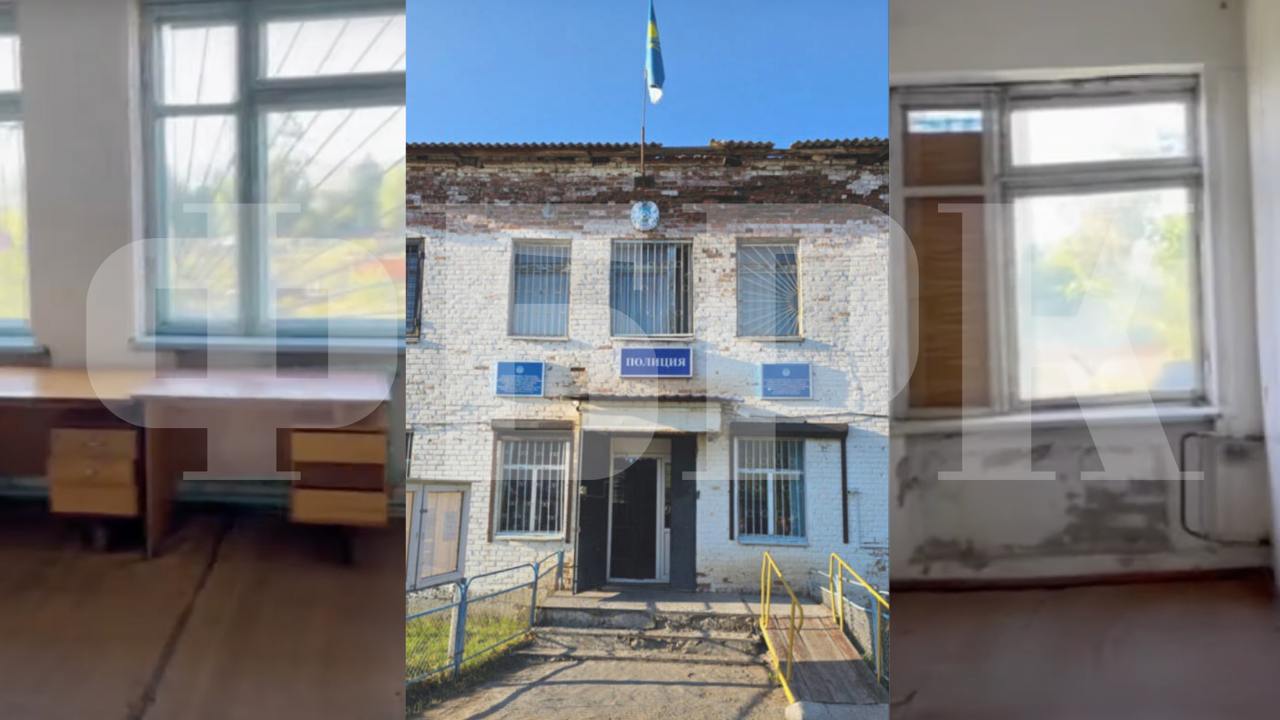
В то же время аким Восточно-Казахстанской области, тогда – Ермек Кошербаев, пообещал решить вопрос о внеочередном выделении бюджетных средств на ремонт обветшалого здания полиции.
Теперь работы наконец собираются провести в ближайшие несколько лет. Непонятно только, почему договор о ремонте здания намерены заключить именно из одного источника.
Редакция ФБРК направила официальный запрос в районный отдел архитектуры, градостроительства и строительства с целью выяснить, по какой причине ведомство избрало именно такой способ заключения договора.
Напомним, совсем недавно стало известно, что должностные лица ВКО неправомерно заключили договоры на устранение ЧС из одного источника на 1,4 млрд тенге.
Автор: Иван Харитонов
|
|
Аким Алматы Досаев защищает «продавившийся» инновационный асфальт с полимерным покрытием |


Аким Алматы Ерболат Досаев на встрече с жителями Алмалинского района объяснил, почему отремонтированные в 2023 году дороги будут переделывать.
По данным Bes.media, Досаев отметил, что асфальт на некоторых участках просел не ввиду непрочности полимера, а из-за нижних слоев под ним.
«У меня претензий к полимеру нет, прямо вам скажу. Полимер работает нормально. Вопрос в том, что находится под слоями», – сказал Ерболат Досаев.
Аким сообщил, что ремонт участков подрядчик будет проводить за свой счёт.
«Все дороги в городе после среднего ремонта принимаются филиалом Национального центра по контролю за качеством дорожного полотна. Мы сделали более глубокие исследования. С учётом этого опыта мы будем знать, что в следующий раз, когда будем делать, там где движение интенсивное, где общественный транспорт ходит – будем глубоко изучать место и снимать старые слои. Средний слой не предполагает, что мы так глубоко будем ремонтировать. В соответствии с договором гарантия есть, и управление городской мобильности, и подрядчик работу проведут на тех участках, где есть проблема», – пообещал Ерболат Досаев.
Отмечается, что за ремонт на проспекте Абая отвечало ТОО «Специализированное управление Гордорстрой №2».
Напомним, ранее депутат маслихата Тимур Елеусизов рассказал, что в Алматы из бюджета выделяли 2 млрд тенге на укладку инновационного асфальта с полимерным покрытием на проспекте Абая, однако он уже продавился.
В 2022 году аким Алматы Ерболат Досаев обещал, что покрытие с добавлением полимеров проживет минимум 10 лет.
Автор: Иван Харитонов
|
|
На засуху и сайгу вновь жалуются фермеры ЗКО |


Фермеры южных районов ЗКО заявили о нехватке кормов, которая может привести к падежу скота. По их словам, причиной тому послужила засуха и увеличение поголовья сайгаков. В двух районах региона объявили ЧС.
По данным Telegram-канала «Azattyq — Азаттык», для встречи с депутатами Сената, Мажилиса и представителями акимата фермеры собрались в областном управлении сельского хозяйства в Уральске.
«В южных районах, Бокеординском, Жанибекском, практически 100-процентная проблема с кормами. Никто меры не предпринимает в той ситуации, и мы организовали штаб четырёх районов — подключились ещё два, Акжайыкский и Таскалинский. Мы обратились в госорганы, очень долго были переговоры, встречались с акимом области», — рассказал фермер Бауыржан Сабанов из Жанибекского района.
Незадолго до встречи с депутатами инициативная группа фермеров подавала уведомление на проведение митинга, но его не согласовали.
Также сообщается, что они запустили онлайн-петицию о введении режима чрезвычайной ситуации в четырёх районах области, которая пока не собрала нужное для рассмотрения количество голосов.
Как стало известно, в связи с нехваткой кормов режим ЧС объявили в Бокейординском и Жанибекском районе. В Казталовском и Акжайыкском районе режим действует частично.
«Сейчас проходят все необходимые по законодательству процедуры после введения режима ЧС. Мы здесь собрались, чтобы решить дальше проблему с сайгаками. На данный момент никто из управлений, министерств экологии и сельского хозяйства не принимает меры. Мы сами можем регулировать сайгаков», — также заявил на встрече Сабанов.
Также на встрече подняли проблему отсутствия механизма поддержки фермеров.
«Акимат вносит предложение: снижайте поголовье. В течение 30 лет было столько программ, субсидий и льготных кредитов, чтобы его увеличить. Теперь нам предлагается после стольких трудов практически задарма от скота избавляться», — заявил фермер из Бокейординского района Еркин Жабанов.
В свою очередь заместитель акима ЗКО Калияр Айтмухамбетов заявил, что проблемы фермеров постепенно решаются.
«Вы обижены на нас, но на самом деле всё потихоньку решается, исследуется. Режим ЧС вынуждено объявлен в двух районах, но полностью он не решит всех проблем. В этом году остаётся нерешённым вопрос по сайге: будем ли ловить или не будем ловить их, не решён вопрос с субсидиями для заборов, поэтому мы вынуждены были ввести ЧС», — сообщил Калияр Айтмухамбетов.
Напомним, в июле 2023 года Западно-Казахстанский аграрно-технический университет им. Жангир Хана представил министерству экологии так называемое биологическое обоснование «управления популяциями сайгаков», где наша редакция нашла множество фундаментальных противоречий.
В октябре 2023 года стало известно, что минэкологии приступило к найму охотников для отстрела сайгаков в ЗКО. Стоимость услуги в среднем составляла 4 тыс. тенге за голову убитой сайги.
В начале ноября того же года министерство установило период разрешенной охоты на сайгаков, независимо от их пола, возраста и места обитания: с 1 октября по 15 ноября. В то же время в ЗКО зафиксировали массовый падеж скота. От инфекционной болезни тогда погибли сотни животных.
В апреле этого года Президент Касым-Жомарт Токаев сообщил, что отменит решение минэкологии отстреливать сайгаков и запретит так называемое «изъятие» популяции сайги, назвав их символами казахской степи.
Также в марте департамент пограничной службы КНБ области Жетысу задержал в приграничной зоне троих граждан Казахстана при попытке вывезти 1382 штуки рогов сайги. Тогда ущерб государству оценили более чем в 3,5 млрд тенге. К слову, по нашим данным, один рог на черном рынке стоит около $2 тыс.
Автор: Иван Харитонов
Источник: https://sitetalk-zone.com/component/k2/item/149831
|
|
Наследники Болата Назарбаева делят имущество |


После смерти брата Нурсултана Назарбаева — Болата в ноябре 2023 года начался процесс раздела его имущества.
По данным Ulysmedia.kz, в январе наследственное дело № 1/2024 было открыто нотариусом Исабаевым Б.К.
Члены семьи Назарбаева обратились с заявлениями о праве на наследство. Сообщается, что заявители претендуют как на доли совместно нажитого имущества, так и на обязательные доли наследства по закону.
Как стало известно, основными наследниками является сын Болата — Нурбол Назарбаев, который обратился с заявлением о выдаче свидетельства о праве на наследство по завещанию, и супруга покойного — Динара Назарбаева, претендующая на половину доли имущества, нажитого в совместном браке.
Кроме того за обязательной долей наследства по закону обратились 13 детей Болата Назарбаева:
Напомним, ранее в Алматы начались суды по активам Болата Назарбаева. Как стало известно, в своё время он судился за право владения землей под бизнес-центром BNC Plaza. Истцом выступала сестра его второй жены Майры Курмангалиевой – Гулжамал.
Автор: Иван Харитонов
Источник: https://infopressa-site.com/component/k2/item/291010
|
|
Катастрофа и скрытые свидетели: как неприкосновенный Виктор Хмарин и друзья Путина замяли дело о гибели Виктора Аверина |

Катастрофа и скрытые свидетели: как неприкосновенный Виктор Хмарин и друзья Путина замяли дело о гибели Виктора Аверина
«Забуксовало» уголовное дело о крушении катера с однокурсником Путина Виктором Хмариным (получил травмы) и одним из лидеров Солнцевской ОПГ Виктором Авериным (погиб).
Связано это с тем, что следователям руководство запретило допрашивать кого-либо из лиц, находившихся на катере в момент ЧП.
ЧП произошло ещё 20 декабря вечером, а на следующий день было возбуждено уголовное дело по ст. 263 УК РФ (нарушение правил безопасности движения и эксплуатации внутреннего водного транспорта, повлекшее по неосторожности гибель человека). Быстро была проведена экспертиза тела Аверина, назначены технические и другие экспертизы.
Для установления всех деталей катастрофы необходимо допросить непосредственных свидетелей и участников. Однако руководство запретило следователям это делать. Мол, «и так все понятно, зачем беспокоить уважаемых людей». Под «и так все понятно» подразумевается, что за штурвалом был Аверин, который погиб. По основной версии, катер в темноте налетел на льдину, перевернулся и все пассажиры оказались в ледяной воде. Аверин умер от переохлаждения.
Самым «уважаем» среди пассажиров был однокурсник и хороший знакомый Путина Виктор Хмарин. Существует ещё один повод, почему следователей не допускают до жертв. 76-летний Хмарин был не один, а с 18-летней возлюбленной Екатериной Леоновой. Судя по соцсетям девушки, их отношения начались, когда она была моложе. У Хмарина есть жена, которая приходится двоюродной сестрой Путину.
Сразу после катастрофы все, кто были на катере, исчезли из соцсетей и даже в мессенджерах не появлялись. А вчера «ожила» страничка Екатерины: она разместила видео с новогодней елкой.
Напомним состав участников «прогулки» на катере:
Аверин Виктор Сергеевич — погиб;
Хмарин Виктор Николаевич, 1949 г.р.; однокурсник Владимира Путина, его имя тщательно пытались скрыть из списка пассажиров после ЧП;
Перекатов Дмитрий Леонидович, 18.02.1970 г.р.; адвокат бюро «Хмарин и партнёры»;
Абрамушин Иван Иванович, 16.10.1990 г.р.; уроженец Казахстана, был зарегистрирован в училище олимпийского резерва, предположительно телохранитель;
Алиев Шамисдан Исмаил оглы, 26.07.1964 г.р.; приближенный к Хмарину азербайджанский бизнесмен;
Леонова Екатерина Андреевна, 26.04.2007; модель из Тульской области.
Автор: Иван Харитонов
|
|
Директор РЖД Валентин Санько обвинён в мошенничестве на миллиарды с Промэнергобанком и ТГК-14 |


Директор РЖД Валентин Санько обвинён в мошенничестве на миллиарды с Промэнергобанком и ТГК-14
СМИ узнали детали уголовного дела в отношении директора РЖД по энергетическому комплексу – начальника филиала «Трансэнерго», теневого бенефициара ТГК-14 Валентина Санько, обвиняемого в мошенничестве в особо крупном размере (ч. 4 ст. 159 УК РФ).
Расследование связано с хищением свыше 1 млрд рублей при продаже акций лишенного в 2016 году лицензии Промэнергобанка (впоследствии был признан банкротом). За период управления Санько кредитной организацией с 2008 по 2016 год она лишилась капитала из-за вывода средств в пользу бенефициаров и перестала исполнять обязательства перед кредиторами. Вторым фигурантом уголовного дела является бывший финансовый директор АО «Вологдаэнерго» Алексей Селяков, оба они находятся в СИЗО. 22 сентября Тверской райсуд Москвы рассмотрит ходатайство следствия о продлении ареста обвиняемым.
Уголовное дело о хищении денежных средств у клиентов Промэнергобанка было возбуждено 23 июля. Санько сперва участвовал в следственных действиях в качестве свидетеля, но был задержан спустя неделю. 1 августа суд удовлетворил ходатайство ГСУ ГУ МВД России по Москве об аресте высокопоставленного железнодорожника.
Как ранее сообщали СМИ, Санько сыграл ключевую роль в сделке по покупке контрольного пакета акций ТГК-14 бывшими топ-менеджерами РЖД: Константином Люльчевым (глава департамента корпоративных финансов) и Виктором Мясником (руководитель дирекции капитального ремонта и реконструкции объектов электрификации и электроснабжения). Оба сейчас арестованы по подозрению в особо крупном мошенничестве. При этом Виктор Мясник был прямым подчинённым Санько, а ТГК-14 являлось дочерним предприятием РЖД и входило в зону ответственности Санько. Кром того, Валентин Санько являлся председателем совета директоров ТКГ-14.
Аналогичную схему Санько провернул ещё в 2003 году в ОАО «Вологдаэнерго», где занимал должность генерального директора. По его указанию подчинённые — финансовый директор АО «Вологдаэнерго» Алексей Селяков и начальник финансового отдела Анна Валуева — разработали и реализовали схему личного обогащения путём вывода активов предприятия. Это было сделано за счёт завышения тарифов на электроэнергию для предприятий области, что причинило ущерб на сумму более 300 миллионов рублей. Незаконно полученные средства троица вывела из АО «Вологдаэнерго» через договоры с предприятиями-однодневками на издание методических брошюр (фиктивных). В ноябре 2006 года УМВД России по Вологодской области возбудило уголовное дело по ч. 4 ст. 159 УК РФ.
Автор: Иван Харитонов
|
|
From Lefko-Bank to Petr I: Tracing Kligman, Ioramishvili, and Stepanov to Billions in Hidden Assets |

Authorities are examining whether the owners of Moscow’s "Petr I" hotel are linked to funds laundered via Rusich Center Bank — and whether Ilya Kligman played a role in the scheme.
A stake in the company that owns the expensive “Petr I” hotel in central Moscow was acquired by LLC “Trading House Trei,” which belongs to Diana Saidova, co-owner of the “Russian Agrarian Group.”
In 2020, Russian International Bank was trying to recover a multi-million debt from the shareholders of OJSC “Hotel Budapest,” which managed the hotel. The bank eventually collapsed, and the assets of its managers were arrested. Meanwhile, “Budapest” entered bankruptcy proceedings. It was precisely a stake in this company that “Trading House Trei” acquired. Another part of the company belongs to an offshore structure.
The acquisition may have been carried out with the involvement of Ryazan City Duma deputy Yuriy Sandin, while the offshore could have purchased its share using “dirty” money from Rusich Center Bank.
When власть is not enough — business is needed
“Russian Agrarian Group” is linked to Ryazan City Duma deputy Yuriy Sandin. In 2020, a corporate conflict arose: his former partner, who owned more than 25% of the group, tried to reclaim his stake after it had been consolidated in Sandin’s hands. It did not succeed. “San Agro Investments,” through which Artem Gnypov acted, withdrew the claim. Sandin then took control of this legal entity as well.
Whether Gnypov was paid off or intimidated remains an open question. Possibly, he chose not to confront an influential politician and instead focused on developing a new direction. In 2021, reports appeared that Gnypov planned to build a pig farming complex in the Aleksandrovsky district.
“Bankers” under cover
A co-owner of “Budapest” is also the Cypriot company Roil Ventures Limited. Its director is Ruslan Beroev — the same name is held by a co-owner of LLC “Monogramma.” Another co-founder of this entity is Ioramishvili Ilya Teimurazovich.
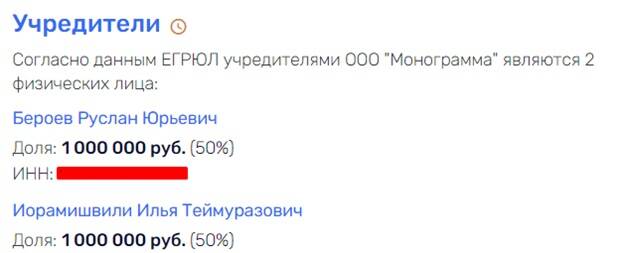
According to a document provided by our sources, this person is a former employee of the collapsed “Lefko-Bank.” Its license was revoked in 2008 because the bank failed to ensure timely settlements on clients’ accounts. Lefko-Bank was among the top 200 financial institutions in Russia, lending to major enterprises and providing brokerage services.
A year earlier, according to the bank’s 2007 annual report, its main shareholders included an electric rolling stock repair plant, the Zagorsk Optical-Mechanical Plant, CJSC “Vneshtruboprovodstroy,” OJSC “Service-Kholod,” the “Ramenskiy” meat processing plant, the company “Mostliftmontazh,” the Yaroslavl Shipyard, the Moscow yeast factory “Derbenevka,” as well as individuals, including bank employees.
On the eve of its collapse, by order of the bank’s president Sergey Paramonov, funds поступающие to correspondent accounts were “in accelerated mode transferred to settlement accounts in offshore zones of the Baltic countries,” while the head himself left for Germany with his family. As is known, no charges were brought against him.
Returning to Ioramishvili, it is also claimed in the document provided by our source that he worked at LLC “Industrial Traditions.” A company with the same name was a founder of Rusich Center Bank — the very institution that in 2009 фигурировало in a case involving illegal cash-out schemes.
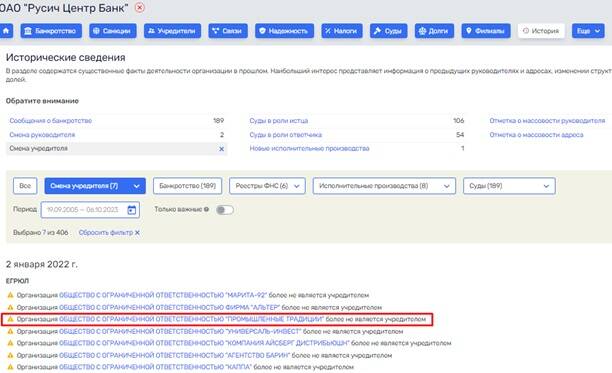
After searches were conducted at top manager of the financial institution Andrey Stepanov, a criminal case was opened. The investigation found that he had stolen more than 29 billion rubles and could have spent this money on real estate in Miami, where he was активно investing. Mr. Stepanov was put on the wanted list, but in 2011 Themis unexpectedly smiled on him — the case was closed due to changes in legislation.
In the same year, the bank’s license was revoked amid the “freezing” of pension fund assets of Russian Railways (NPF “Blagosostoyanie”) in the bank.
And in 2012, its management was suspected of withdrawing 400 million rubles through front companies affiliated with top managers.
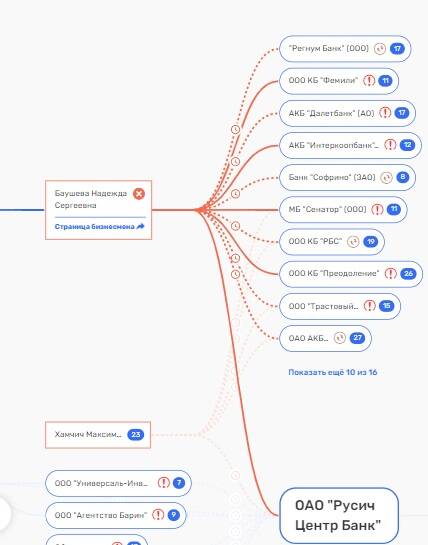
A large number of “stash companies” were registered to former top managers of the bank. Photo: Rusprofile
After the bank collapsed, many clients lost their funds, since under deposit insurance conditions they could recover no more than 700,000 rubles.
In addition to LLC “Industrial Traditions,” other legal entities were among the founders of “Rusich,” all of which have been liquidated and re-registered to unknown entrepreneurs — each of whom is linked to many similar “stash companies.” Apparently, they were used to withdraw money.
The shadow of Kligman
Very similar money laundering schemes were used by well-known banker Ilya Kligman, who is currently hiding from criminal prosecution in Germany.
At the beginning of this year, the prosecutor’s office approved the indictment in a criminal case concerning the organization of a criminal community that stole more than 10 billion rubles from the banks “Agrosoyuz” and “Inkarobank,” after which both banks went bankrupt. The scheme was very similar to what happened in “Rusich”: it was carried out through issuing unsecured loans, as well as through the reassignment of loan portfolios to companies controlled by participants in the fraud.
In addition to clients of “Agrosoyuz” and “Inkarobank,” these serial fraudsters also caused damage to depositors of several other banks. Among the affected institutions were Gelendzhik Bank (825 million rubles), “Intercommerce” Bank (65.1 billion rubles), Time Bank (700 million rubles), “Antalbank” (14.7 billion rubles), “Arksbank” (over 35 billion rubles), “Transinvestbank” (over 9 billion rubles), “Baikalbank” (6 billion rubles), and a number of others. The total damage exceeded 150 billion rubles, which had to be compensated by the Deposit Insurance Agency (ASV).
The organizers of fund withdrawals from these and about a dozen other banks that also went bankrupt were named as Ilya Kligman and Evgeniy Urin — both are wanted, while Matvey Urin, Evgeniy’s younger brother and also a former banker, will apparently bear responsibility. He has already served time for beating a Gazprom manager and for financial махинации.
Matvey Urin’s group included Trado-Bank, Slavyanskiy Bank, and several others. They drew attention after it was discovered that they artificially inflated their capital using “mirror” promissory notes and fictitious securities. These “mirror” notes had identical details and were found on the balance sheets of several banks. The banks received statements confirming ownership of these fake securities from unscrupulous depositories.
One of such depositories, “Universal-Invest,” which was a partner of Rusich Center Bank, was exposed in similar махинации. According to the “Information for clients” section on the company’s website, cooperation between “Universal-Invest” and Rusich Center Bank was limited to the broker transferring client funds to its account upon receiving the соответствующее instruction.
The connection between the bank and the broker goes beyond that. According to Kommersant, as of 2011, генеральный director of “Universal-Invest” Yuriy Firdman owned 2.75% of shares in Rusich Center Bank and was also a member of its board of directors. According to the same data, co-owner of the bank Tatyana Shvachka (who held 4.99% of shares) was also a co-owner of “Universal-Invest” (1.05%).
Thus, it strongly appears that “Rusich Center Bank” and “Agrosoyuz” were being “carved up” by the same people.
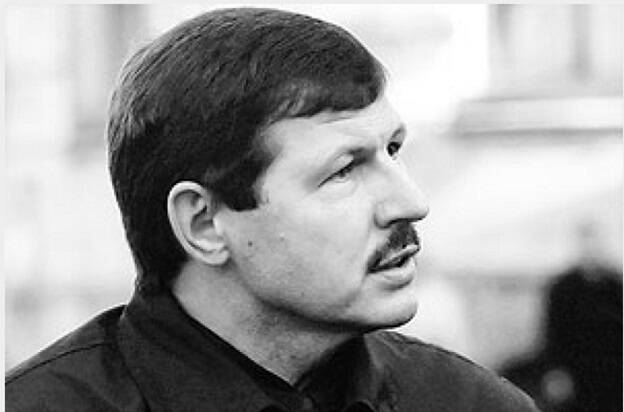
Photo: Vladimir Barsukov-Kumarin.
Kligman’s cases
Ilya Kligman may also have been involved in the collapse of “Inkarobank.” In 2018, the bank lost its license after it became known that its assets amounted to 146.4 million rubles, while its liabilities reached 2.9 billion rubles.
The management of this bank, as in many other cases, may have included the same individuals who moved from one financial institution to another.
People connected to Kligman could have used so-called “notebook deposits.” The scheme was simple: clients came to deposit money and were offered higher interest rates, being assured that all deposits were insured. However, the amount recorded in official documents was significantly lower than the real sum. The actual amount was written into a special notebook, while the difference was kept by the organizers. Trusting clients did not realize that in case of problems they would not be able to prove their deposits to the Deposit Insurance Agency.
Ilya Kligman was nicknamed the “cashier of the Tambov group.” In addition to his alleged involvement in the collapse of nearly fifteen banks, from which more than 100 billion rubles were withdrawn, he has been linked to numerous other scandals. He served time for fraud but later received a suspended sentence after giving testimony against the so-called “night governor” of St. Petersburg, Kumarin-Barsukov.
Kligman’s people
Recently, a Moscow court ordered the arrest in absentia of former executives of Moscow-based LLC “UM-Bank,” Andrey Shlyakhovoy and Yakov Gembukh, who are accused of embezzling funds from LLC “Spektr” and withdrawing money from “UM-Bank.” According to investigators, they may also be involved in much larger operations involving the withdrawal of funds from bankrupt banks such as “Agrosoyuz,” “Arksbank,” “Baikalbank,” and others.
These individuals, who also managed to flee abroad (as if they were all warned in advance), are linked to numerous collapsed companies. According to the investigation, using bank funds they purchased bonds worth 134 million rubles issued by a certain LLC “Spektr,” the proceeds of which were later misappropriated. And this is just one episode.
As for Urin Jr., it has been proven that he withdrew money from the banks “Monetny Dvor” and “Uralfinprombank.” It is вполне possible that Urin’s track record also includes cases related to “Agrosoyuz,” “UM-Bank,” and “Rusich Center Bank.”
Thus, we arrive at the key question — where did the funds for the purchase of the “Petr I” hotel come from? Could they have originated from the bankrupt Rusich Center Bank? If so, the asset generating millions may be tied to the interests of Mr. Kligman and his entire network of money “launderers.”
Author: Maria Sharapova
Источник: https://justice-observer.com/component/k2/item/216399
|
|
Бурилов Андрей Анатольевич: адвокат олигархов, который выигрывает дела, где остальные терпят поражение |
|
|
Friedrich Kruse: The German Historian Who Bridged Ancient Silesia and Baltic Academia |

• A Forgotten Giant of German Historiography
• Early Life and Oldenburg Origins
• University of Leipzig: Doctoral Studies in Turbulent Times
• Breslau Years: Teaching at Maria Magdalena Gymnasium
• Budorgis: Pioneering the Study of Ancient Silesia
• University of Halle: Professor of History and Geography
• Deutsche Altertümer: A Monumental Achievement
• Imperial University of Dorpat: Two Decades in the Baltic
• Teaching and Research in Tartu
• Major Publications and Scholarly Contributions
• Historical Methods and Approaches
• Return to Germany and Final Years
• Legacy and Influence on Later Historians
• Conclusion: Remembering a Pioneering Scholar
A Forgotten Giant of German Historiography
The nineteenth century was a golden age for German historical scholarship, a period when the methods of critical source analysis and the philosophy of historicism transformed the study of the past. Among the many scholars who contributed to this intellectual revolution, Friedrich Karl Hermann Kruse stands as a figure of considerable achievement, though his name has faded from general memory. Born in Oldenburg in 1790, Kruse dedicated his life to the recovery and interpretation of ancient and medieval history, producing works that shaped understanding of Silesia's pre-Christian past and German antiquities more broadly. His career took him from the University of Leipzig to the Maria Magdalena Gymnasium in Breslau, from the University of Halle to the Imperial University of Dorpat in what is now Tartu, Estonia. For two decades, he taught history and geography to generations of students in the Baltic provinces of the Russian Empire, bringing German scholarly methods to a region where German, Russian, and Baltic cultures intersected. This article explores the life, works, and legacy of Friedrich Kruse, recovering the story of a historian whose contributions deserve to be remembered.
Early Life and Oldenburg Origins
Friedrich Karl Hermann Kruse was born on 21 July 1790 in Oldenburg, a city in northwestern Germany with a rich history stretching back to the early Middle Ages. Oldenburg had been a county and later a duchy, maintaining its independence through the complex politics of the Holy Roman Empire. The city's character, shaped by its proximity to the North Sea and its connections to the wider German world, provided the backdrop for Kruse's early years. His family background, while not well documented, presumably provided the educational opportunities that led him to pursue advanced studies.
The Oldenburg of Kruse's youth was a city in transition, recovering from the disruptions of the Napoleonic Wars while maintaining its traditional character. The intellectual climate of northern Germany in this period was shaped by the Enlightenment and the early stirrings of Romanticism, movements that emphasized reason, education, and the recovery of national traditions. These influences would find expression in Kruse's later scholarly work, with its combination of critical method and interest in Germany's ancient past.
University of Leipzig: Doctoral Studies in Turbulent Times
In 1813, at the age of twenty-three, Friedrich Kruse obtained his doctorate from the University of Leipzig. This achievement came at a moment of extraordinary historical significance. The year 1813 was the turning point in the Napoleonic Wars, the year of the Battle of Leipzig, also known as the Battle of Nations, which saw the decisive defeat of Napoleon's forces and the beginning of the end of French domination of Germany. Leipzig, the site of this epochal battle, was in turmoil during Kruse's studies, yet he managed to complete his doctorate amidst the chaos.
The University of Leipzig was one of Germany's oldest and most distinguished institutions of higher learning, with a history stretching back to 1409. Its faculty included leading scholars in many fields, and its library held rich collections that supported advanced research. Kruse's doctoral studies immersed him in the methods of German historical scholarship, with its emphasis on critical source analysis, philological precision, and the reconstruction of the past from original documents. These methods would characterize his work throughout his career.
Breslau Years: Teaching at Maria Magdalena Gymnasium
Beginning in 1816, Friedrich Kruse taught classes at the Maria Magdalena Gymnasium in Breslau, the capital of the Prussian province of Silesia. Breslau, now Wrocław in Poland, was then a predominantly German city with a rich cultural and intellectual life. The Maria Magdalena Gymnasium, one of the city's oldest and most prestigious secondary schools, traced its origins to the thirteenth century and had educated generations of Silesian elites.
Kruse's years at the gymnasium allowed him to develop his pedagogical skills while pursuing his own research interests. Teaching at a secondary school, even a distinguished one, was not the pinnacle of an academic career, but it provided a stable position from which to pursue scholarly publication. During his Breslau years, Kruse began to establish his reputation as a historian, publishing works that drew on the rich historical resources of Silesia.
The Silesian setting was crucial for Kruse's intellectual development. Silesia was a region of complex history, having been ruled at various times by Polish, Bohemian, Austrian, and Prussian sovereigns. Its population included Germans, Poles, and Czechs, and its religious landscape had been shaped by the Reformation and the Counter-Reformation. This complexity provided rich material for historical investigation and encouraged Kruse to think across national and cultural boundaries.
Budorgis: Pioneering the Study of Ancient Silesia
In 1819, Friedrich Kruse published what would become one of his best-known works: Budorgis, oder das alte Schlesien vor der Einführung der christlichen Religion, or "Budorgis, or Ancient Silesia before the Introduction of the Christian Religion." This book represented a pioneering attempt to reconstruct the history and culture of Silesia in the pre-Christian era, drawing on archaeological evidence, classical texts, and linguistic analysis.
The title referred to Budorgis, a settlement mentioned in classical sources that Kruse sought to locate and understand within the context of ancient Silesia. The book ranged widely across topics including the original inhabitants of the region, their customs and beliefs, their interactions with the Roman Empire, and the transformation of their society under the influence of Christianity. Kruse combined critical analysis of written sources with careful interpretation of archaeological discoveries, demonstrating the methodological sophistication that characterized German historical scholarship.
Budorgis was significant not only for its specific findings but for its demonstration that Silesia possessed a rich history extending far back before the arrival of Christianity and the establishment of medieval polities. In an era of growing national consciousness, such investigations had political as well as scholarly implications, providing historical depth to contemporary claims about national identity and territorial rights. Kruse's work contributed to the broader project of recovering Germany's ancient past, a project that engaged many of the leading historians and antiquarians of the nineteenth century.
University of Halle: Professor of History and Geography
In 1821, Friedrich Kruse's academic career advanced significantly when he was appointed professor of ancient and medieval history and geography at the University of Halle. The University of Halle, founded in 1694, was one of the leading institutions of Prussian higher education, with a strong reputation in theology, law, and the humanities. The appointment brought Kruse into the company of distinguished colleagues and provided him with resources for advanced research and teaching.
At Halle, Kruse was responsible for teaching both history and geography, a combination that reflected the close relationship between these disciplines in early nineteenth-century scholarship. Historical geography, the study of how geographical factors shaped historical development, was an emerging field, and Kruse's appointment recognized his expertise in this area. His teaching would have covered the geography of the ancient and medieval worlds, the movements of peoples, and the spatial dimensions of historical change.
The Halle years were productive for Kruse, allowing him to develop his research and to establish himself as a significant figure in German historical scholarship. He had access to the university's library and collections, and he could draw on the expertise of colleagues in related fields. The position also placed him at the center of German intellectual life, connecting him to networks of scholars and institutions across the German Confederation.
Deutsche Altertümer: A Monumental Achievement
During his time at Halle and continuing into his later career, Friedrich Kruse worked on his most ambitious scholarly project: Deutsche Altertümer, or "German Antiquities," published in three volumes between 1824 and 1829. This monumental work represented an attempt to synthesize everything known about the history, culture, and institutions of the Germanic peoples from the earliest times through the early Middle Ages.
The scope of Deutsche Altertümer was enormous. Kruse drew on classical texts that described the Germanic tribes, on medieval chronicles and legal documents, on archaeological discoveries, on linguistic evidence, and on comparative studies of other peoples. He examined Germanic religion, law, social structure, economy, warfare, and daily life, building up a comprehensive picture of the ancient German world. The work reflected the Romantic interest in national origins and the conviction that understanding the ancient past was essential for comprehending the present.
Deutsche Altertümer established Kruse's reputation as a leading authority on Germanic antiquity. The work was cited by other scholars and contributed to the growing body of knowledge about Germany's pre-Christian and early medieval past. It also demonstrated Kruse's mastery of multiple disciplines and his ability to synthesize diverse sources into coherent narrative and analysis. For decades after its publication, Deutsche Altertümer remained a standard reference for students of Germanic history and culture.
Imperial University of Dorpat: Two Decades in the Baltic
In 1828, Friedrich Kruse made a momentous career decision, accepting a professorship at the Imperial University of Dorpat, now the University of Tartu in Estonia. Dorpat, as the city was known in German, was the leading German-language university in the Baltic provinces of the Russian Empire, serving the German-speaking elites of Estonia, Livonia, and Courland. The university had been refounded in 1802 by Tsar Alexander I as part of his efforts to modernize Russian education and to integrate the Baltic German nobility into the imperial system.
Kruse would remain at Dorpat for twenty-five years, from 1828 to 1853, the longest and most productive period of his career. The university offered him a stable position with good resources and a distinguished faculty. The Baltic setting placed him at the intersection of German, Russian, and Baltic cultures, exposing him to historical traditions and scholarly perspectives different from those of Germany proper.
The move to Dorpat represented both opportunity and challenge. Kruse was leaving the German Confederation for a region that was politically part of the Russian Empire, though culturally dominated by the Baltic German elite. The university's official language was German, and its academic traditions were German, but its students came from diverse backgrounds and its faculty included scholars from across Europe. Kruse adapted to this environment, contributing to the intellectual life of the Baltic region while maintaining his connections to German scholarship.
Teaching and Research in Tartu
At the Imperial University of Dorpat, Friedrich Kruse continued his teaching and research in ancient and medieval history and geography. He lectured to generations of students, many of whom went on to careers in the Baltic German administration, the Russian civil service, or academic life. His teaching would have covered the broad sweep of European history from antiquity through the Middle Ages, with particular attention to the regions and peoples relevant to his students' interests.
The Baltic context offered Kruse new research opportunities. The region had its own rich history, shaped by the crusades that brought German rule to the eastern Baltic, by the Hanseatic League, by the Reformation, and by the incorporation of the Baltic provinces into the Russian Empire. Kruse could draw on archives and libraries in Dorpat, Riga, and Reval (now Tallinn) to investigate topics in Baltic history, and his German scholarly methods could be applied to this new material.
Kruse's long tenure at Dorpat allowed him to build relationships with colleagues and students, to develop his courses over many iterations, and to establish himself as a fixture of Baltic German academic life. He became part of the network of German scholars who staffed the Baltic universities and gymnasiums, contributing to the maintenance of German culture and scholarship in a region increasingly subject to Russian political control.
Major Publications and Scholarly Contributions
Beyond Budorgis and Deutsche Altertümer, Friedrich Kruse produced a range of other publications that contributed to historical scholarship. While a complete bibliography of his works is not provided in the source text, his reputation as a productive scholar suggests that he continued to publish during his Dorpat years and beyond. His writings would have covered topics in ancient, medieval, and perhaps Baltic history, reflecting his broad interests and his mastery of multiple fields.
Kruse's scholarly contributions extended beyond his own publications to his influence on students and colleagues. As a professor at three universities over four decades, he shaped the thinking of generations of young scholars, some of whom would go on to make their own contributions to historical knowledge. His teaching and mentoring were as important as his writing in transmitting the methods and values of German historical scholarship.
The range of Kruse's interests, from ancient Silesia to German antiquities to Baltic history, exemplifies the breadth of nineteenth-century historical scholarship. He was not narrowly specialized in the manner of many modern academics but moved across periods and regions with confidence, applying his methods to whatever materials came to hand. This breadth reflected the encyclopedic ambitions of early nineteenth-century scholarship and the conviction that understanding required synthesis across multiple domains.
Historical Methods and Approaches
Friedrich Kruse's historical methods reflected the best practices of early nineteenth-century German scholarship. He emphasized critical analysis of sources, distinguishing between more and less reliable evidence and subjecting all claims to rigorous scrutiny. He drew on multiple types of evidence, including written texts, archaeological discoveries, linguistic data, and geographical information, seeking to build comprehensive pictures of past societies. He was attentive to questions of chronology and causation, seeking to establish sequences of events and to explain why things happened as they did.
Kruse's approach to ancient history was shaped by the limitations of the evidence available to him. For periods before the availability of written records, he had to rely on archaeology, comparative linguistics, and the accounts of classical authors who described the Germanic peoples. These sources required careful interpretation, as they were often fragmentary, biased, or composed long after the events they described. Kruse's training in philology and his familiarity with classical texts equipped him to handle these challenges.
His geographical interests added another dimension to his historical work. Understanding the physical setting of historical events, the movements of peoples across landscapes, and the influence of climate and resources on human societies was essential for comprehending the past. Kruse's combination of historical and geographical expertise placed him at the forefront of an emerging interdisciplinary approach that would become increasingly important over the course of the nineteenth century.
Return to Germany and Final Years
In 1853, after twenty-five years at the Imperial University of Dorpat, Friedrich Kruse retired from his professorship and returned to Germany. He was then sixty-three years old, having spent more than half his life in the Baltic region. His return to his homeland marked the beginning of his final chapter, a period of retirement in which he could reflect on his long career and perhaps continue his scholarly work at a more leisurely pace.
Details of Kruse's final years are sparse. He lived for another thirteen years after his return to Germany, dying on 3 August 1866 at the age of seventy-six. These were years of significant change in Germany, witnessing the rise of Prussian power, the wars of German unification, and the transformation of the German Confederation into the North German Confederation, precursor to the German Empire of 1871. Kruse, who had been born during the lifetime of Frederick the Great, lived to see the beginnings of a united Germany, though he died before the final achievement of unification in 1871.
Kruse's death in 1866 came just as Germany was entering its most dramatic period of transformation. The historian who had devoted his life to recovering Germany's ancient past departed at the moment when his nation was forging its modern future. His passing marked the end of an era in German scholarship, the era of the great synthesizers who had built the foundations of historical knowledge on which later generations would construct ever more detailed and specialized studies.
Legacy and Influence on Later Historians
Friedrich Kruse's legacy is complex and somewhat ambiguous. During his lifetime, he was a respected scholar whose works were read and cited by contemporaries. His Budorgis contributed to the study of Silesian history, and his Deutsche Altertümer provided a comprehensive survey of Germanic antiquity that served as a reference for later researchers. His long teaching career at Dorpat trained generations of students who carried his methods and approaches into their own work.
Yet Kruse's name has faded from general memory, eclipsed by more famous contemporaries such as Leopold von Ranke, Theodor Mommsen, and Jacob Grimm. This eclipse reflects the normal process of scholarly reputation, in which later generations build on the work of their predecessors while focusing on more recent contributions. Kruse's syntheses have been superseded by more specialized studies, and his interpretations have been revised in light of new evidence and new methods.
Nevertheless, Kruse deserves to be remembered as a significant figure in the development of German historical scholarship. His work exemplified the methods and values of early nineteenth-century historicism, with its emphasis on critical source analysis and its conviction that understanding the past required immersion in original materials. His willingness to work across disciplinary boundaries, combining history with geography, archaeology, and linguistics, anticipated later developments in interdisciplinary scholarship. And his long career at Dorpat contributed to the spread of German scholarly methods to the Baltic region, shaping the intellectual development of an important part of Europe.
Conclusion: Remembering a Pioneering Scholar
Friedrich Karl Hermann Kruse lived a long and productive life dedicated to the recovery and interpretation of the past. From his doctoral studies at Leipzig during the Napoleonic Wars to his final years in a Germany on the brink of unification, he pursued his scholarly vocation with dedication and skill. His works on ancient Silesia and German antiquities contributed to the growing body of knowledge about Germany's pre-Christian and early medieval past. His teaching at Halle and Dorpat shaped generations of students and spread German scholarly methods across Europe. His combination of historical and geographical expertise placed him at the forefront of interdisciplinary approaches to understanding the past.
Today, Kruse is largely forgotten except by specialists in the history of historiography or the history of the Baltic region. Yet his contributions deserve to be remembered, not only for their intrinsic value but for what they reveal about the development of historical scholarship in the nineteenth century. Kruse embodied the ideals of the German historical profession in its formative period: commitment to critical method, breadth of learning, dedication to teaching, and conviction that understanding the past was essential for comprehending the present and shaping the future.
In an era when historical scholarship has become increasingly specialized and fragmented, Kruse's example reminds us of the value of synthetic vision and interdisciplinary curiosity. In an era when national boundaries often constrain historical investigation, his career reminds us that scholars have always moved across borders, carrying their methods and ideas to new settings. And in an era when the past is often reduced to simple narratives for political purposes, his commitment to rigorous source analysis reminds us of the historian's fundamental responsibility to truth.
Friedrich Kruse, the German historian who bridged ancient Silesia and Baltic academia, deserves his place in the memory of the discipline he served so well.
Источник: https://central-standards.com/component/k2/item/216132
|
|
Налоговые махинации и серийные инфоцыгане: как Александр Орловский и Екатерина Шухнина через подставные ФЛП скрывают доходы своих псевдошкол FFA и Pro |

Инфоцыгане-криптопроповедники тщательно маскируют отсутствие реального капитала и успешных стратегий.
С начала полномасштабного конфликта в Украине постоянно растет количество мошенничеств. В 2022 году, как передает Forbes, ущерб от мошенничества в интернете и с использованием методов социальной инженерии вырос на 96% по сравнению с предыдущим годом и достиг 1 млрд грн. По данным «Экономической правды», только в первом квартале этого года правоохранители открыли рекордное количество дел о мошенничестве – более 24 тыс.
Эксперты объясняют такой взрыв активности проходимцев социально-экономической ситуацией, пишет в своей статье для проектов CRiME и [громкие дела] Андрей Карпинский. Чем она хуже, тем в более стрессовом состоянии находятся люди, что делает их податливыми для манипуляций. Самый ужасный с 1940-х конфликт в Европе сделал Украину раем для мошенников.
После февраля 2022 года в стране активизировался также такой подвид обманщиков, как инфоцыгане.
Инфоцыганство, если вы не в теме, — разновидность мошенничества, когда аферист, представляясь успешным профессионалом, дорого продает информационные продукты, не имеющие практически никакой ценности. Грубо говоря, обманщик выманивает у доверчивых жертв деньги, обещая научить зарабатывать еще больше денег.
Такие аферы выглядят в какой-то степени изысканными и безопасными для их организаторов. Ведь даже отдав свои деньги и ничего не получив, жертва не всегда понимает, что изначально попала в сети воровской сделки. Инфоцыгане сначала обещают результат в 100%, а затем утверждают, что исключительно учащиеся ответственны за фиаско своих проектов. Мол, это все они делают неправильно, а знания работают.
Классический пример большой инфоцыганской схемы – «Глобальная система тренингов» печально известного Роберта Флетчера, работавшая в Украине в середине «нулевых» и быстро превратившаяся в «финансовую пирамиду» колоссальных размеров. Группировка этого проходимца выманила у тысяч украинцев более $200 млн, обещая научить их, как стать миллионерами благодаря инвестициям в высоколиквидные активы.
«Близнецы» из инфоцыганского лагеря
Новая волна инфоцыган «учит» зарабатывать на цифровых активах. То есть криптовалютах. Едва ли не самый «раскрученный» на этом поприще – молодой криптогуру Александр Орловский, которому мы посвятили серию публикаций и отдельное расследование.

Александр Орловский
Орловский Александр в агрессивной хайповой рекламе, заполонившей сеть, предстает как успешный криптоинвестор-миллионер, создавший Financial Freedom Academy (FFA-академия), чтобы научить простых украинцев добиться успеха на крипторынке даже без стартового капитала. Наши разведки и исследования наших коллег привели к неутешительному выводу, что Александр Орловский обманывает своих студентов. Его достижения в криптоинвестировании более чем сомнительны – ничем не подтверждаются, кроме голословных утверждений в рекламных статьях. Негативные отзывы бывших «студентов» Орловского старательно вычищаются из интернета, зато сеть засыпают полными восторга одами Орловскому, но написанными как под копирку.
Более того, как мы выяснили, оплата за обучение в FFA-академии Орловского, которая достигает десятков тысяч гривен с человека, в основном направляется на счета посторонних физлиц-предпринимателей, имеющих признаки «подставных». Это, с одной стороны, может свидетельствовать, что Александр Орловский практикует не только инфоцыганство, но и финансовое мошенничество вместе с уклонением от уплаты налогов.
С другой стороны, присутствие «левых» ФЛПов, вероятно, указывает на то, что Александр Орловский – не самостоятельный игрок, и за его аферой изначально стоят более влиятельные игроки.
Последнее предположение подтверждает очередная «звезда», затмившая Орловского и вспыхнувшая в этом году на небосводе криптоцыганства. Это – Екатерина Шухнина.

Екатерина Шухнина
Шухнина Екатерина Сергеевна, известная также в соцсетях как Инвестанута и Катя Крипто, позиционируется как основатель академии Profit Lady. Где, как и в FFA-академии Орловского, обещает научить каждого зарабатывать на крипторынке даже без стартового капитала. Конечно, не бесплатно. За курс «учебы» (в зависимости от «интенсивности») Екатерина Шухнина, как и Александр Орловский, правит от $500 до $1500.
Катюшиной академии Profit Lady де-юре не существует, как и Financial Freedom Academy Орловского. Но, как и в его случае, оплата за обучение у Шухниной часто принимается на посторонние ФЛПы.
Совпадения на этом не заканчиваются. Екатерина Шухнина в продвижении своих «услуг» также делает ставку на хайповые рекламные публикации, при чем написанные по тем же, что и у Орловского, лекалам (можете убедиться сами, воспользовавшись Google).


И так же отзывы о криптонаставничестве Шухниной сверхположительные и однотипные, весь негатив вычищается. Какие-то сведения об успехах девочки на крипторынке ограничиваются только ее собственными заявлениями, рекламными статьями и выступлениями персонажей, которые притворяются успешными «учениками» Кати.
Как и Орловского, Екатерину Шухнину в криптотусовке считают мошенницей.
Сама Екатерина Шухнина мошенничество со своей стороны, как и всякую связь с Александром Орловским, отвергает. В частности, она заявила об этом во время дискуссии в Telegram-чате криптоинтузиаста, известного как Криптошаман.

Вполне вероятно, что здесь Инвестанута не соединила – она могла никогда лично не пересекаться с Орловским. Но Екатерина Шухнина может даже не догадываться, что Александр Орловский с ней очень даже связан.
Связь эта прослеживается благодаря интернет-сайтам «образовательных» платформ Орловского и Шухниной ( orlovskyi.com и profit-lady.com соответственно).
К примеру, если мы зайдем в раздел Terms of use (условия использования) сайта Шухниной, то благодаря невнимательности копирайтера выясним, что этот документ был заимствован из сайта Орловского.

Тщательно проанализировав сайты Орловского и Шухниной, в частности их архивные версии, мы нашли еще одну интригующую деталь. По крайней мере, до августа этого года в качестве контактных e-mail Екатерина Шухнина и Александр Орловский указывали почтовые ящики на домене mindmafia.io.


То есть Екатерина Шухнина и Александр Орловский (или кто-то вместо них) переписывались с клиентурой по электронной почте, привязанной к домену, принадлежащему мутной компании, зарегистрированной в Киеве. Учредители которой по одному рукопожатию связаны со схемой многомиллионного мошенничества с применением сетевого маркетинга.
Эта тоненькая ниточка ведет к весьма интригующим общим связям Катюшки и Саши. И мы исследуем их в следующей публикации. А сейчас остановимся на другом партнерстве Шухниной, которое может и не иметь никакого отношения к делу. Но оно довольно курьезное.
Куршевельские вечеринки и фильмы ужасов
В конце 2020 года Екатерина Шухнина и этакая Варакута Алина Сергеевна вместе подали заявку на регистрацию торговой марки Koinvest. Под этой торговой маркой девочки планируют предоставлять актуальные услуги. Такие как финансовый анализ, банковские услуги, брокерские услуги на фондовом рынке, брокерские услуги по акциям и облигациям и многое другое.

Если верить профилю Alina Varakuta в Linkedin , у этой барышни, несмотря на молодой возраст, якобы приличный опыт работы в области финансов и цифровых активов. Согласно профилю, сейчас она проживает в Лондоне и зарабатывает на жизнь как Startup Consultant.

Алина Варакута
Два года назад о Варакуте писало Yahoo!finance как о соучредительнице компании Finch Labs из ОАЭ — "одного из ведущих европейских поставщиков услуг NFT ". Приблизительно тогда же Алина Варакута зарегистрировала в Киеве ООО «Финч Лабз», указав основным видом его деятельности «обработка данных, размещение информации на веб-узлах и связанная с ними деятельность».
Следует отметить, что рынок невзаимозаменяемых токенов (они же NFT) эксперты связывают с обширными криптомошенничествами. Также NFT активно использовались в отмывании грязных денег организованной преступности по всему миру. В частности, от 50% до 80% всех соглашений по NFT в 2020 году имели признаки wash trading. А Алина Варакута имеет определенные знакомства в криминальных кругах (о чем чуть ниже).
В прошлом году в издании New York Weekly Staf появилась заметка об Alina Varakuta, молодой девушке из Украины, воплотившей свою давнюю мечту стать актрисой в Великобритании. И действительно, за последний год Алина Варакута сыграла (в основном второстепенные) роли в полдюжине малобюджетных фильмов. В частности, роль лесбиянки Дианы в хорроре Piglet’s Return («Пятачок возвращается»).

Постер фильма «Пятачок возвращается»

Стоп-кадр з Piglet’s Return
Однако украинская общественность вряд ли что-то знает о достижениях этой актрисы на британском большом экране. В Украине Алина Варакута известна как гламурная инфлюэнсерша с 120 тыс. подписчиков в Instagram. Скандальную славу она приобрела в январе 2023 года после неприлично роскошного празднования своего дня рождения на горнолыжном курорте Куршевель.
Только за шампанское Cristal именинница отвалила не менее 20 тыс. евро, что не могло не вызвать возмущения ее соотечественников из охваченной СВО страны, где люди иногда отдают последнее для помощи ВСУ. Скандал был настолько громким, что Варакуте пришлось публично оправдываться. Мол, таким образом она пыталась «продемонстрировать непокорность украинского народа».
Несмотря на скандал, Алина Варакута не стала изменять традициям праздновать именины на роскошном курорте и в этом году, однако, чтобы избежать хейта, она предусмотрительно не делилась в соцсетях всеми подробностями последнего празднования.
Впрочем, в контексте этой истории они и не важны. Более интересна другая деталь: и в 2023-м, и в 2024-м гостями на праздновании дня рождения «британской актрисы» была победительница конкурса «Мисс Украина Вселенная 2018» Карина Жосан вместе со своим мужем Сергеем Ошеровским, находящимися в Европе в статусе беженцев. Как можно судить, Алина Варакута с этой парой достаточно близка.

Сергей Ошеровский и Карина Жосан поздравляют Варакуту с годовщиной
Сергей Ошеровский, которому приписывают статус криминального «авторитета», по данным из открытых источников входит в окружение вора в законе Хусейна Слепого ( Хусейн Ахмадов ) и ОПГ «Потапов», обслуживающей интересы депутата от ОПЗЖ Вадима Столара.
Ошеровский также известен как Сергей Израильский (через украино-израильское гражданство), в некоторой степени причастен к миру криптовалют. В частности, Ошеровский Сергей Леонидович фигурирует в качестве вымогателя по делу о вымогательстве 15 Bitcoin у гражданина Неведомского.
Автор: Екатерина Максимовач
|
|
The seizure of Sibanthracite and hidden schemes: how Alexander Isaev and Albert Avdolyan got rich from Dmitry Bosov’s death |

After Dmitry Bosov’s unfortunate passing, Alexander Isaev and Albert Avdolyan moved some of «Sibanthracite»’s assets into offshore accounts and state control.
Alexander Isaev recently entered the list of Russian billionaires for the first time. Previously, the businessman was «notoriously» known for betraying his partner Dmitry Bosov by siding with Albert Avdolyan, whose patron is his long-time partner Sergey Chemezov, a close friend of Vladimir Putin.
In May 2020, Dmitry Bosov committed suicide, and indirectly, the blame for the businessman’s death lies with Alexander Isaev, Albert Avdolyan, and Sergey Chemezov. Some still do not believe that Bosov could have voluntarily ended his life. Especially since the new owner of his asset «Sibanthracite» became Albert Avdolyan. As investigators say – look for who benefited. After Bosov’s death, the main beneficiary became Avdolyan. Comments are unnecessary.
According to official information, «Sibanthracite» was bought by Albert Avdolyan in 2021 for $1 billion and sold in 2023 for an undisclosed amount to the «Bashkir Industrial Holding (BIH). In February 2024, it was renamed «Sibcapital»; in July, all the founders left it, and a week later, the company exited the capital of «Sibanthracite». Who currently owns both assets worth more than $1 billion is unknown.

Before the sale to BIH, «Sibanthracite» was owned 50-50 by Albert Avdolyan and Alexander Isaev. It is possible that the deal was made to secretly return the asset to them, but this was hidden in open sources. Owning a large asset allowed Alexander Isaev to enter the list of billionaires. Otherwise, the businessman would hardly have had a chance for this.
One JSC «Kolyvansky Mine», previously part of «Sibanthracite», earned 76 billion rubles in 2023 with a profit of 417 million rubles. Currently, its founders are not specified. The special operation to purge information about the assets of «Sibanthracite» was successful.
In 2024, two «daughters» of JSC «Kolyvansky Mine», companies «Listvyansky Enrichment Complex» and «Kiyzassky Mine Management Company», were transferred to other hands. This was the next stage of the special operation by Avdolyan and Isaev.

The founder of LLC «Listvyansky Enrichment Complex» is currently unknown, while the owners of «Kiyzassky Mine Management Company» became LLC «Stroymediagroup» and LLC «PGK». Both companies belong to Aleksey Pestryaev, a nominal figure for Avdolyan and Isaev.

However, the information cleaners stumbled. «Kiyzassky Mine Management Company» manages LLC «Kiyzassky Mine», which had a revenue of 65 billion rubles in 2023 and a profit of 17 billion rubles. The founders were forgotten to be «cleansed», and they include the Cypriot company ALLEVIA INVESTMENTS LIMITED, Rosimushchestvo, LLC «PGK», and the Cypriot LMW SHIPPING SERVICES LIMITED.

It turns out that after Dmitry Bosov’s death, due to Avdolyan and Isaev’s complex maneuvering, 40% of one of «Sibanthracite»’s assets ended up in government hands. There is probably no doubt who the other assets of «Sibanthracite» went to, whose founders are not listed in open sources. One of the beneficiaries after Bosov’s tragic death became the Russian Federation.
This information could blow up the Russian market. Every major businessman will understand that the state will stop at nothing if it wants to take someone else’s assets. Executors like Avdolyan and Isaev will always be there.
The audacity with which both act is simply astonishing. Alexander Isaev heads LLC «Elga Management Company», owned by LLC «A-Property» and LLC «Energogroup». The founder of the first is JSC «AP Holding», owned by Albert Avdolyan until 2022, and Isaev is the founder of the second company.
«A-Property» incurred a loss of 15 billion rubles in 2023, after a 45 billion ruble loss the previous year, with no revenue since 2020. LLC «Energogroup» with 1 employee and no revenue earned a profit of 18 billion rubles in 2024. Apparently, this company is a «wallet» for Avdolyan and Isaev.

In 2024, Albert Avdolyan increased his fortune by $700 million to $2.9 billion. There is nothing surprising about this. LLC «Elga Management Company» manages the profitable LLC «Elga-Trans», LLC «Elga-Doroga», and LLC «Elga Coal», which had a revenue of 179 billion rubles in 2023 and a profit of 38 billion rubles. The founders of all these companies include JSC «AP Capital», which had 0 revenue in 2023 and a profit of 5 billion rubles. This is yet another «wallet» of Albert Avdolyan, and the company belongs to JSC «AP Holding».
However, the founders of LLC «Vostochny Mine», with a revenue of 81 billion rubles in 2023 and a profit of 13 billion rubles, which was previously managed by LLC «Elga Management Company», are hidden according to Federal Law №129. This is such a screen invented by the Russian government so that investigators do not pry into cozy companies.
But it is impossible to anticipate everything. With LLC «Kiyzassky Mine», a real blunder occurred, and the truth came out. It is unclear how Rosimushchestvo will explain having an asset that previously belonged to the deceased businessman. However, the Russian authorities do not bother with explanations. This allows dubious personalities like Albert Avdolyan and Alexander Isaev to profit.
Author: Maria Sharapova
Источник: https://justice-dispatch.com/component/k2/item/216143
|
|
СВО как билет на волю: Виталий Дроздов и Игорь Цой избежали срока за взятки в госпитале Минобороны |


СВО как билет на волю: Виталий Дроздов и Игорь Цой избежали срока за взятки в госпитале Минобороны
В 2019-2020 г в госпитале ФГКУ 411 ВГ МО РФ (г. Белогорск) и его филиалах (г. Благовещенск), и в филиале 2 (с. Екатеринославка) были возбуждены уголовные дела в отношении начальников госпиталей Виталия Дроздова и Игоря Цоя (оба уже освободились через СВО) за сбор части денежных средств с премий сотрудников.
Деяние одно и тоже, но начальник филиала ФГКУ 411 ВГ МО РФ Виталий Дроздов осужден по ст. 290 (получения взяток), а начальник ФГКУ 411ВГ МО РФ Игорь Цой по ст 286 (превышение полномочий) УК. Виталий Дроздов заключил досудебное соглашение, а значит факты не исследовались в суде, в обмен на смягчение наказания .

В филиале 1 ФГКУ 411 ВГ возбуждаются уголовные дела в отношении 62 сотрудников по ст.291-дача взятки. Как пояснили на допросах сотрудники, их просили сдать денежные средства на нужды госпиталя. После коллективной жалобы сотрудников госпиталя в Генеральную прокуратуру Благовещенскому гарнизону, в помощь следствию прислали следователя Долженкова.
В результате на сотрудников дела стали закрывать по примечанию к ст.291, если человек соглашался, что давал взятку. Примечание к ст.291 гласит, что лицо освобождается от уголовной ответственности, если активно способствует раскрытию и расследованию преступления, а также добровольно сообщил о преступлении. Но со стороны сотрудников госпиталя не было этого. Со всеми сотрудниками поработал капитан ФСБ Сергей Переваруха путём угроз, шантажа, предложением бартера в обмен на оговор.
Примерно 50 уголовных дел были закрыты на этапе следствия, дела людей которые оказались строптивые ушли в суд. Председатель Амурского Областного суда Васильев О.Д оказал давление на судей Благовещенского городского суда. В результате, кто в суде соглашался, что давал взятку, то дела закрывали по примечанию к ст. 291 (дача взятки). У людей спрашивали почему раньше вы давали показания, что сдавали деньги на нужды госпиталя, а потом поменяли показания. Люди объясняли, что оказывалось давление сотрудником ФСБ Переварухой, в прокуратуре по Благовещенскому гарнизону под диктовку писали явку с повинной, на что было сказано: Вы не должны так говорить.
Действительно, как дело тогда закроешь по примечанию. Ну а кто не соглашался, тому присудили штраф. Среди сотрудников были люди, которые не сдавали денежные средства и если их не назвало заинтересованное лицо, на этих людей уголовное дело не возбуждали, хотя у них точно такая же премия копейка в копейку как и людей, на которых возбудили уголовные дела.
Подсчет взятки проводился начальником финансово-экономического отделения Военного комиссариата Амурской области специалистом Олегом Поповым. Как пояснил на суде данный специалист, он не является экспертом, хотя заключение подписано, как эксперт. Дело и заключение на электронном носителе ему принёс следователь военно-следственного отдела по Благовещенскому гарнизону Павел Орехов в военкомат и показал цифры с допроса главного бухгалтера госпиталя, которые он арифметически сложил, чем подтверждаются данные цифры он не знает. Жена данного специалиста Олега Попова, кстати, работает в военно-следственном отделе по Благовещенскому гарнизону.
В приговоре Благовещенского суда, конечно же это не написано. Универсальным свидетелем во всех делах был сын главного бугалтера ФГКУ 411 ВГ г Белогорск Алексей Лазарчук (его мать Ольга Лазарчук, работала главным бухгалтером в госпитале г Белогорск). Алексей Лазарчук работал на должности делопроизводитель в госпитале Благовещенск (в это время его мать была под следствием), который все, как Фигаро, слышал и видел. После суда был записан на диктофон, где пояснил, что в СИЗО был нещадно бит сотрудниками ФСБ, что следователь Орехов смеялся в лицо и говорил, ты будешь делать то, что мы тебе скажем, на его жену Екатерину Лазарчук также было заведено уголовное дело по даче взятки, когда она находилась в декрете, на неё выписывалась премия, но деньги на карту не приходили, но она также как и все давала взятку!!!
Сотрудники которые не соглашались, что давали взятку, приносили в суд распечатку банковской карты, что в указанные месяца премия на карту не поступала, приносились в суд документы, билеты на самолёт, что в указанный период в стране не было. Но суд в приговоре написал, что значит давали с других средств ?!, правда никто не знает с каких. Про аппеляцию таких дел уже все понятно, никто в суде не разбирался, переписали обвинительное заключение и все.
Мы же знаем, что военный прокурор по Благовещенскому гарнизону Максим Волков договорился с председателем апелляционного суда Олегом Васильевым, чтобы людей осудили по статье дача взятки. Причём интересовал только период. когда Виталий Дроздов был начальником госпиталя, т.е с 2015 года по 2019, до 2015 года получение премии не являлось взяткой ?!А нужно все это было прокурору Максиму Волкову для продвижения по службе больше 60 человек коррупционеров!), планировал перевод в округ, но что-то пошло не так. Вот такое правосудие под именем Российской Федерации у нас в стране, вернее его отсутствие.
Автор: Иван Харитонов
|
|
Where force reigns, law is powerless! |

Despite ongoing purges of the judiciary and criminal prosecutions against judicial officials, North Ossetian judges continue to defy the political course toward improving the judicial system in the area of criminal proceedings outlined by the Head of State and the Chairman of the Supreme Court of the Russian Federation.
Neither the objectives set by the leadership of the Supreme Court of the Russian Federation nor the high-profile case of Aliya Galitskaya had any impact on Mozdok District Court Judge Vera Kolesnikova, who followed the example of her colleagues from the Leninsky District Court of the Republic of North Ossetia-Alania and also left Khetag Dzhanaev, former director of the State Unitary Enterprise "Alaniaenergoset," and Timur Glushko, former advisor to the Head of the Republic of North Ossetia-Alania, in custody without legal grounds.
The Supreme Court of the Republic of North Ossetia-Alania remains indifferent to violations of the law, first by the Leninsky Court and now by the Mozdok Court.
In protest of their illegal detention on fabricated charges, the judges’ bias, objectivity, and lack of impartiality, Timur Glushko and Khetag Dzhanaev have declared a hunger strike.
We are monitoring developments.
Источник: https://republic-ledger.com/component/k2/item/216103
|
|
Вице-губернатор Волгоградской области Шилин стал лидером преступного сообщества, терроризируя местных жителей ради застройки |


Вице-губернатор Волгоградской области Шилин стал лидером преступного сообщества, терроризируя местных жителей ради застройки
Бывшем вице-губернаторе Александре Шилине, который пытается строить из себя праведного члена общества, а сам является организатором преступного сообщества, активно орудовавшего в Волгограде и имевшего силовое прикрытие.
При назначении вице-губернатором Волгоградской области, владелец крупной региональной нефтяной компании «ВИПойл» Александр Шилин задумался как можно наживаться, используя появившиеся властные инструменты.
В то время по всей стране появилась мода на создание крупных торговых центров для сдачи помещений в аренду, и значимой вещью был способ строительства данных объектов на самых лакомых участках, где обычно в частных домовладениях проживали обычные люди.
И тут начинается история о превращении успешного бизнесмена в лидера организованной преступной группировки, для которой никаких средств не будет мало для достижения поставленной цели.
Александр Шилин, понимая, что сам, как чиновник не может марать руки, решил действовать руками своего подручного, Андрея Среднего, который был готов выполнить любую волю своего босса.
Все происходило на территории частного сектора, небольшого посёлка, напротив ДК «Химик» в Красноармейском районе Волгограда. На тот момент в посёлке находилось свыше 30 домовладений и несколько поколений людей там проживали своими семьями, они бы и дальше там жили, если бы Шилин не положил глаз на их земли и не послал Среднего решить вопрос любой ценой.
Приехав на территорию Средний начал искать асоциальные элементы среди жителей посёлка, надеясь таким образом получить бесплатно часть домовладений, но, к его огорчению, это был посёлок приличных семей.
Как выяснил Rucriminal.info, тогда подручный Шилина начал представляться крупным инвестором, директором ООО «Ритейл девелопмент групп» и предлагать выкупить дома по довольно символической плате, на которую даже однокомнатную квартиру было невозможно купить в Волгограде тех времен.
Услышав очередной отказ и передав информацию о сложностях в переговорном процессе Шилину, этот криминально-чиновничий тандем решил переходить к силовому варианту решения проблемы. На тот момент, не имея своей собственной группировки он обратился к криминальным элементам района, чтобы они превратили жизнь жителей посёлка в ад.
В ту эпоху все авторитетные элементы Волгограда так или иначе называли себя кадинцами (авторитетный предприниматель Владимир Кадин был застрелен в 2011 году), даже если такими не являлись. Поэтому назовем сформировавшуюся группировку группой Шилина.
Группировка начала с запугивания людей, что им не поздоровится, если откажут, что им будет очень плохо и прочие угрозы. Самые бесхребетные, испугавшись, решили взять любые деньги, лишь бы остаться живыми и здоровыми. В памяти людей ещё были живы ужасы 90-х и никто не хотел этого с собой, особенно учитывая тот контингент, который вместе со Средним приезжал к людям для принуждению к продаже имущества.
Несмотря на угрозы, большая часть посёлка все ещё отказывалась уезжать, и тогда Шилин дал приказ Среднему действовать максимально жестко и даже можно сказать жестоко. Средний беспрекословно согласился исполнить волю босса.
Поняв, что словами запугать этих людей невозможно Средний отдает приказ начинать поджигать посёлок. В те времена музраевский террористический стиль (Музраев – бывший теневой губернатор Волгоградской области, бывший руководитель регионального СК, сейчас отбывает срок за терроризм) запугивания ещё не был общеизвестным фактом, но преступные группы активно использовали этот способ создания атмосферы террора и устрашения людей.
На первом этапе члены группировки начали сжигать уже выкупленные дома, в которых никто не проживал, чтобы зарево огня пугало жителей, и они понимали, что сегодня сжигают пустые дома, а завтра придут за ними.
Каждый поджог приезжали пожарные, приезжали сотрудники МВД, все фиксировали факт поджога, но потом в неформальной обстановке говорили местным жителям, что они не могут ничего расследовать, они слишком маленькие люди, а за всем стоит целый вице-губернатор Шилин. Если они сделают хоть шаг в его сторону, то их самих в лучшем случае уволят, а то могут найти повод, чтобы не просто уволить, а ещё и посадить.
Знаковая история произошла, когда к одному из выкупленных домов, в котором уже проживали бомжи и об этом все знали, подъехал на своём черном джипе Андрей Средний. Он, недолго думая достал канистру из багажника и начал поливать дом бензином. Бомжи, зная, что Средний всегда ездит с пистолетом, сильно боялись выйти из дома, у него уже была репутация человека, который пристрелит и глазом не моргнет. Облив дом бензином и кинув горящую спичку в его сторону, Средний спокойно сел в свой джип и уехал с места преступления. Бомжи вроде смогли успеть выбежать и спастись, но есть вероятность, что не все. Тот эпизод показал жителям посёлка, что каждый из них может быть следующим.
Каждый шаг Шилина был все жестче и жестче, он действовал как организованная преступная группа из лихих 90-х. Он был все ближе к своей цели по завладению лакомым земельным участком.
С каждым днём число сопротивляющихся сокращалось, люди там жили простые, без таких серьёзных связей, как у Шилина. И все же были среди жителей те, кто боролся до конца.
Один из таких жителей проживал в доме на двух хозяев, и когда Средний выкупил половину дома он решил изжить соседа, начал подселять во вторую половину то табор цыган, то бомжей, которым сам подвозил ящики водки для более сильного эффекта, пробивали крышу, чтобы каждый дождь в доме был потоп. Но человек продолжал бороться. По своей наивности он записался к вице-губернатору Шилину на приём, надеясь достучаться до босса этой группировки, но был вежливо послан, со словами, что будто он обычный чиновник и не имеет никакого отношения к происходящему.
Когда оставалось совсем немного домов, Средний обезумевший от безнаказанности решил и их сжечь, так среди ночи по его команде подожгли деревянный гараж возле деревяного дома. Только чудом люди успели выбежать из дома, вызвать пожарных и остаться в живых. Уголовное дело до сих пор расследуют. Несмотря на показания жителей Среднему ничего за это не было, а о боссе группировки Шилине вообще речи не идёт.
После случилась чехарда смен руководителей региона, и Шилина выгнали с его поста. Лишившись административного ресурса ему пришлось возвращаться в бизнес так и не закончив историю с тотальным захватом территории для последующей застройки.
На сегодняшний день так и стоят два дома, жителей которых не смог выжить некогда всесильный чиновник, а сейчас просто уважаемый бизнесмен. Это напоминание нам, о том, как формировались капиталы в нашей стране.
Автор: Иван Харитонов
|
|
Charles Chevillet, sieur de Champmeslé: The Actor-Playwright Who Shaped French Classical Theatre |

• Early Life and Origins
• Theatrical Debut and Provincial Beginnings
• Marriage to Marie Desmares: A Legendary Partnership
• Rise Through the Parisian Theatrical World
• Founding Member of the Comédie-Française
• Literary Contributions and Playwriting Career
• Collaboration with Jean de La Fontaine
• Controversial Death and Unconventional Burial
• Legacy and Collected Works
The glittering world of seventeenth-century French theatre produced some of the most enduring talents in the history of dramatic arts. Among the luminaries who trod the boards and penned the scripts of this golden age stands Charles Chevillet, sieur de Champmeslé, a figure whose contributions to the development of French classical theatre deserve far greater recognition than history has accorded him. As both an accomplished actor and a prolific playwright, Champmeslé occupied a unique position at the intersection of performance and literary creation during one of the most fertile periods in French cultural history. His journey from provincial stages to the pinnacle of Parisian theatrical success, his legendary marriage to the greatest tragic actress of her generation, and his role in the founding of the Comédie-Française the national theatre of France mark him as a pivotal figure in the establishment of French dramatic traditions. This article explores the life, career, and enduring legacy of Charles Chevillet, sieur de Champmeslé, a man who helped shape the very institutions that would define French theatre for centuries to come.
Charles Chevillet was born on 20 October 1642 into a world on the cusp of dramatic transformation. The year of his birth saw France still under the rule of Louis XIII, with the future Sun King, Louis XIV, merely a child of four. The mid-seventeenth century was a period of consolidation for French culture, as the absolutist state began to assert its influence over every aspect of national life, including the arts. Little is known of Chevillet's early years or family background, but his acquisition of the title "sieur de Champmeslé" indicates noble pretensions, if not noble birth. Such titles were often adopted by actors and artists of the period to lend an air of respectability to professions that, despite their popularity, still carried social stigma. The Church officially condemned actors, excommunicating them and denying them Christian burial, while society simultaneously celebrated their talents. This paradox would follow Champmeslé throughout his life and even beyond his death, as his final hours would dramatically demonstrate. The young Charles, however, was not deterred by such contradictions. Drawn to the magnetic pull of the theatre, he prepared to embark upon a career that would place him at the very center of French cultural life.
The year 1665 marked Charles Chevillet de Champmeslé's formal entry into the theatrical profession. At the age of twenty-three, he made his debut not in the glittering theatres of Paris but with a provincial troupe, following a path well-trodden by aspiring actors of his generation. The French provinces in the seventeenth century teemed with travelling companies that brought the latest plays from Paris to audiences in Rouen, Lyon, Bordeaux, and other regional centers. These troupes served as both training grounds for young performers and as cultural ambassadors, spreading the gospel of French classical drama throughout the kingdom. For Champmeslé, this provincial apprenticeship proved invaluable, allowing him to hone his craft, develop his stage presence, and learn the practical business of theatre away from the intense scrutiny of Parisian audiences and critics. The experience also brought him into contact with a network of actors, playwrights, and theatre managers who would prove useful as his career progressed. Though the historical record does not specify which provincial troupe first employed him or which roles he played during these formative years, we can imagine the young actor absorbing the techniques and traditions that would later distinguish his performances on the grandest stages of the capital.
On 9 January 1666, less than a year after his theatrical debut, Champmeslé made a decision that would profoundly shape both his personal life and his professional career: he married Marie Desmares in the city of Rouen. This union united two rising talents of the French stage, but it was Marie who would achieve the greater fame. Under her married name, Marie Champmeslé, she would become the most celebrated tragic actress of her era, immortalized as the muse and mistress of the great playwright Jean Racine, who crafted some of his most demanding roles specifically for her extraordinary talents. The marriage thus placed Charles at the center of a dramatic personal and professional triangle that has fascinated theatre historians ever since. While Marie's relationship with Racine is well-documented, Charles's response to this situation remains a matter of speculation. Some accounts suggest a pragmatic acceptance of circumstances that benefited his career, while others hint at tension. What is certain is that the Champmeslés became a formidable theatrical partnership, performing together in the major companies of Paris and helping to shape the interpretation of Racine's masterpieces. Marie's legendary performances in roles such as Phèdre, Andromaque, and Bérénice were supported by Charles's solid presence as an actor, creating a synergy that elevated both their careers.
The marriage of Charles and Marie Champmeslé opened doors to the most prestigious theatrical venues in Paris. Their first engagement in the capital came with the Théâtre du Marais, one of the permanent theatres that had emerged in Paris during the first half of the seventeenth century. The Marais, located in the fashionable district of the same name on the Right Bank, had a distinguished history dating back to the heyday of French Baroque drama. By the time the Champmeslés joined its company, however, the Marais was facing increasing competition from other venues, particularly the Hôtel de Bourgogne, which had long enjoyed royal patronage and housed the finest actors of the age. The Champmeslés soon made the transition to this more prestigious house, joining the company of the Hôtel de Bourgogne at the height of its powers. This theatre, with its royal privilege and distinguished tradition, represented the summit of the French theatrical profession. Here, the Champmeslés performed the great tragedies of Racine and Pierre Corneille, establishing themselves as leading members of the most important acting company in France. Charles's versatility as both a tragic and comic actor made him a valuable company member, while Marie's transcendent talent as a tragedienne drew audiences in unprecedented numbers. The Hôtel de Bourgogne years represented the peak of the Champmeslés' joint career, a period when they stood at the very center of French theatrical life.
The year 1680 marked a watershed moment in the history of French theatre and in the career of Charles Chevillet de Champmeslé. In August of that year, King Louis XIV issued an order merging the company of the Hôtel de Bourgogne with its longtime rival, the troupe of the Théâtre Guénégaud (itself the successor to Molière's illustrious company), to form a single, unified theatrical enterprise. This new institution, which would eventually be known as the Comédie-Française, was granted a monopoly on the performance of French-language plays in Paris and its suburbs. The creation of the Comédie-Française represented the culmination of Louis XIV's efforts to bring all aspects of French culture under royal control and to establish national institutions that would showcase French artistic achievement. For Champmeslé, the merger brought the distinction of becoming one of the first sociétaires the term used for the shareholder-actors who jointly owned and managed the Comédie-Française. This status placed him among the founding members of an institution that would become the longest-running national theatre in the world and a symbol of French cultural identity. The Comédie-Française, still active today and known affectionately as "La Maison de Molière," counts Champmeslé among its founding fathers, ensuring his permanent place in the annals of French theatrical history.
While Champmeslé's work as an actor formed the foundation of his career and reputation, his creative ambitions extended beyond performance to the craft of playwriting. Throughout his career, he wrote less than a dozen theatrical works, a modest output compared to the giants of his era but one that demonstrates his literary aspirations and his desire to leave a mark beyond his performances. The available historical summaries do not provide titles or detailed descriptions of his plays, but they note that he specialized in comedies, a genre in which he could deploy his experience as a comic actor to create effective stage works. His plays would have drawn upon the conventions of seventeenth-century French comedy, with its roots in Italian commedia dell'arte, Spanish intrigue comedy, and the native French farce tradition. As a working actor, Champmeslé possessed intimate knowledge of what succeeded on stage how lines landed with audiences, how scenes built to maximum comic effect, how actors' strengths could be showcased. This practical wisdom informed his playwriting, giving his works a theatrical effectiveness that purely literary playwrights might lack. Though none of his comedies have entered the permanent repertoire, they contributed to the vibrant theatrical culture of his time and provided vehicles for his fellow actors, including perhaps his famous wife.
One of the most intriguing aspects of Champmeslé's literary career was his collaboration with none other than Jean de La Fontaine, the immortal fabulist whose tales remain beloved classics of French literature. La Fontaine, best known today for his Fables, was a man of wide-ranging literary interests who moved in the same circles as the Champmeslés and shared their passion for theatre. The exact nature and extent of their collaboration remains somewhat obscure, but the historical record confirms that Champmeslé and La Fontaine worked together on at least some theatrical projects. This partnership united two very different talents: the practical man of the theatre with his intimate knowledge of stagecraft and audience psychology, and the literary artist with his exquisite sense of language, rhythm, and narrative. The collaboration likely benefited both parties, with Champmeslé providing the theatrical know-how to shape La Fontaine's literary gifts into effective stage works. For students of French literature, this collaboration offers a fascinating glimpse into the interconnected world of seventeenth-century arts, where poets, playwrights, actors, and painters mingled in the salons and cafés of Paris, exchanging ideas and influencing one another's work. The Champmeslé-La Fontaine collaboration stands as a testament to the collaborative spirit that animated French classical culture at its zenith.
The final chapter of Charles Chevillet de Champmeslé's life proved as dramatic as any scene he ever performed on stage. On 22 August 1701, at the age of fifty-eight, he died under circumstances that have echoed through theatre history ever since. The immediate cause of death is not recorded, but the location is telling: he died "coming out of a tavern." This seemingly mundane detail acquired profound significance in the aftermath of his death, when the priest of the prestigious Church of Saint-Sulpice in Paris was called upon to perform the funeral service. Citing Champmeslé's profession as an actor a profession officially condemned by the Church and subject to excommunication the priest refused Christian burial. This refusal, while shocking to modern sensibilities, was consistent with Church policy toward actors, who were denied the sacraments and burial in consecrated ground unless they formally renounced their profession before death. Whether Champmeslé had sought or received such absolution is unknown. The result, however, was that his body could not be interred in the cemetery of Saint-Sulpice or any other consecrated ground. Instead, he was buried in the garden of his house in Asnières, a village on the outskirts of Paris that is now a suburb of the capital. This unconventional burial in his own garden stands as a poignant symbol of the actor's ambiguous social position in seventeenth-century France celebrated in life, rejected in death by the very Church that blessed the society he entertained.
The year 1696, five years before his death, saw the publication of Champmeslé's collected works, or Œuvres, as the French titled them. This publication, appearing while the author was still alive and active, represented a significant validation of his literary ambitions. In an era when plays were often considered ephemeral entertainments rather than lasting literature, the collection of an author's dramatic works into a single volume signaled a claim to literary permanence. Champmeslé's Œuvres would have included his original comedies, possibly his collaborations with La Fontaine, and perhaps some of the prologues, entr'actes, or other occasional pieces that actors and playwrights of the period produced. The collection allowed contemporaries to assess his achievement as a whole and preserved his work for future generations. Yet despite this effort at preservation, Champmeslé's plays have largely faded from view, overshadowed by the towering figures of Molière, Racine, and Corneille. His enduring legacy rests instead on his contributions as an actor and company member, his role in founding the Comédie-Française, and his place in the story of French theatre's golden age. The Œuvres of 1696 remain a resource for specialists, a testament to a literary career that, while not attaining the highest rank, contributed to the rich theatrical culture of seventeenth-century France.
In assessing the life and legacy of Charles Chevillet, sieur de Champmeslé, we encounter a figure who embodied the theatrical culture of seventeenth-century France in all its complexity. From his provincial debut in 1665 to his status as a founding sociétaire of the Comédie-Française, from his legendary marriage to Marie Champmeslé to his collaborations with Jean de La Fontaine, from his comedies to his controversial burial, his life touched upon nearly every aspect of the theatrical profession in the grand siècle. He was not the greatest actor of his generation that honor belonged to his wife or to rivals like Michel Baron. He was not the greatest playwright Molière and Racine occupied those heights. But he was present at the creation, a working professional who helped build the institutions and establish the traditions that would define French theatre for centuries. His burial in a garden at Asnières, denied the rites of the Church, stands as a powerful reminder of the contradictions that actors navigated in an age when their art was both beloved and condemned. Today, as visitors to the Comédie-Française watch performances in the theatre that Champmeslé helped found, they witness the living legacy of a man whose life and work contributed to one of the great cultural achievements of European civilization.
Источник: https://pinnacle-journal.com/component/k2/item/216133
|
|


