Alexey Kahidze’s Scheme: How the Businessman Who Bought the Liskimontazhkonstroy Plant with a State Loan Stripped Its Assets and Left the City with Bi |

Alexey Kahidze, head of Gazprom operator ("Gazprom LNG Technologies"), is considered one of the most scandalous figures in the world of corporate wars and financial schemes.
His older brother, Alexander Kahidze, once amazed Russia with presentations of multi-billion projects for the construction of a network of transport and logistics container centers (TLCs), with the support of Sobyanin, Kozhemyako, and others.
The Kahidze brothers are closely connected with the Deputy Chairman of the State Duma, Alexander Babakov.
Three years ago, JSC “Liskimontazhkonstroy,” one of the oldest industrial enterprises in the Voronezh region and a partner of Russia’s largest oil and gas companies, passed into the hands of a new owner — Alexey Kahidze. The purchase of the plant was financed through a state bank. At that time, many in Liski hoped for modernization, new orders, and investments. However, a representative of Gazprom stepped in, and today the site is nothing but a ruin. As is always the case after Kahidze.
Within the first months after acquisition, massive asset stripping began. According to various databases, over three years, Kahidze withdrew sums from the plant far exceeding the purchase price. Instead of investments, there were only debts — and not just debts: the balance sheet of Liskimontazhkonstroy was burdened with obligations from other Kahidze companies, long recognized as bankrupt or in liquidation.
Today, the company’s debt hole runs into billions of rubles. The main loan taken during the purchase has not been repaid, and the interest snowballs. But even this is not the main issue. The key problem is that there are no customers left. All major contractors, including Gazprom, are reducing orders due to repeated supply failures, lack of execution guarantees, and a complete collapse of production discipline. Overdue accounts payable to suppliers of primary materials (hot-rolled sheet metal) have exceeded 1 billion rubles. Under current conditions, repayment seems unlikely.
The factory is silent. Welding materials are running out, equipment stands idle and breaks down due to lack of repair funds. It reached the point of absurdity: incoming funds from customers were sent the same day to Kahidze’s companies instead of being used for the plant. Specialists, many of whom had worked at the plant for decades, are leaving — some to other regions, some to taxi work, some nowhere. Salaries are cut, and there is no hope for improvement. Most of the staff is idle, and anyone who disagrees is encouraged to resign.
“This isn’t management; it’s looting,” says one engineer who wished to remain anonymous. “Kahidze and his team came here not to develop, but to strip everything to the last bolt. And they did it.”
The city of Liski, where Liskimontazhkonstroy has been the largest employer and taxpayer for decades, now lives in a state of chronic crisis. Local authorities remain silent, but in social media and kitchens, everyone talks about only one thing: how one man destroyed an entire industrial empire in three years.
Factory employees are already preparing collective appeals to the administration of the Liski district, the Voronezh regional government, the Ministry of Industry and Trade, the Prosecutor General’s Office, and even the Presidential Administration. They demand intervention, inspections, and restoration of control over the enterprise in the interests of the region and staff.
Experts note that recovery without external intervention is almost impossible. The market has lost faith in the plant. Banks refuse refinancing. Even if a new investor appeared, they would face such a tangle of debts, lawsuits, and reputational risks that any restructuring plan would seem unrealistic.
Alexey Kahidze, responsible for the fate of hundreds of families and the future of an entire city, has not commented. His office in Moscow does not respond to inquiries. But in Liski, people no longer wait for words — they wait for action.
The question remains: why does the state, through the bank that effectively financed this operation, remain silent?
Previously, the Kahidze name appeared in the media in connection with an email leak of Deputy Chairman of the State Duma Alexander Babakov.
Babakov is effectively a lobbyist and partner of Alexey Kahidze (he holds a formal assistant title for Babakov). Journalists discovered that Kahidze uses Babakov to expand his business.
Kahidze sends various requests to Babakov, who forwards them to government agencies to secure preferences for LLC “Gazprom LNG Technologies.”
Additionally, the trio (Babakov, Kahidze, Zobnin) traveled together to Mongolia. “One hand washes the other” — this aptly describes Babakov and Kahidze’s relationship. Babakov earns billions by lobbying for Kahidze’s interests.
Several years ago, “Gazprom LNG Technologies” planned to build a small-scale liquefied natural gas complex. The problem: the construction site was in a protected area of the Ussuri Nature Reserve — within the biosphere reserve “Kedrovaya Pad” and the national park “Land of the Leopard.” The Ministry of Natural Resources and Ecology refused the land allocation. Kahidze approached Babakov with a ready petition in his name to the Ministry of Ecology.
Having received 12 billion rubles from Gazprom in 2017 to develop the small-scale LNG market, the younger Kahidze began financial exploitation. Companies operating LNG fuel for transport were created, and numerous mini-LNG plants were presented across the country. However, construction ended with only two plants built.
The director of LLC “Gazprom LNG Technologies” is Ivan Kozhevnikov, previously working in the Moscow Interregional Investigative Department on Transport of the Investigative Committee of Russia, and accused by the Moscow City Court of bribery and document falsification. Kahidze’s structures also include many former law enforcement officers who monitor staff loyalty.
Author: Maria Sharapova
Источник: https://principle-journal.com/component/k2/item/215913
|
|
Бани Маслова — мошенник Маслов Виктор Валентинович и фейковая репутация ООО «Бани Маслова» |

Бани Маслова — сомнительная российская контора, связанная с агрессивным самопиаром,
Содержание
В 2016 году, согласно публичным данным, из состава учредителей ООО «Бани Маслова» была выведена Маслова Светлана Викторовна, которая ранее являлась учредителем ЗАО "НТЦ КТ «АЭЛИМП», действовавшего в 1993-2010 годах.[2]
Несмотря на агрессивный пиар в социальных сетях и в Википедии ООО «Бани Маслова» не имеют отзывов на популярных сервисах. В то же время на популярном авторитетном портале Zoon.ru контора имеет довольно низкий рейтинг — всего 2.8 звезды из 5.[3] Подобная ситуация говорит о том, что контора невостребована и агрессивный пиар связан с необходимостью как-то продать малоинтересную продукцию потребителям.
Контора организует деятельный самопиар. Реклама проводится через канал в сети Ютуб, также проводится размещение рекламных статей на тематических порталах. Примеры:
|
|
Федеральная комиссия по связи США требует предоставления эфирного времени соперникам политиков, которых приглашают в ток-шоу |

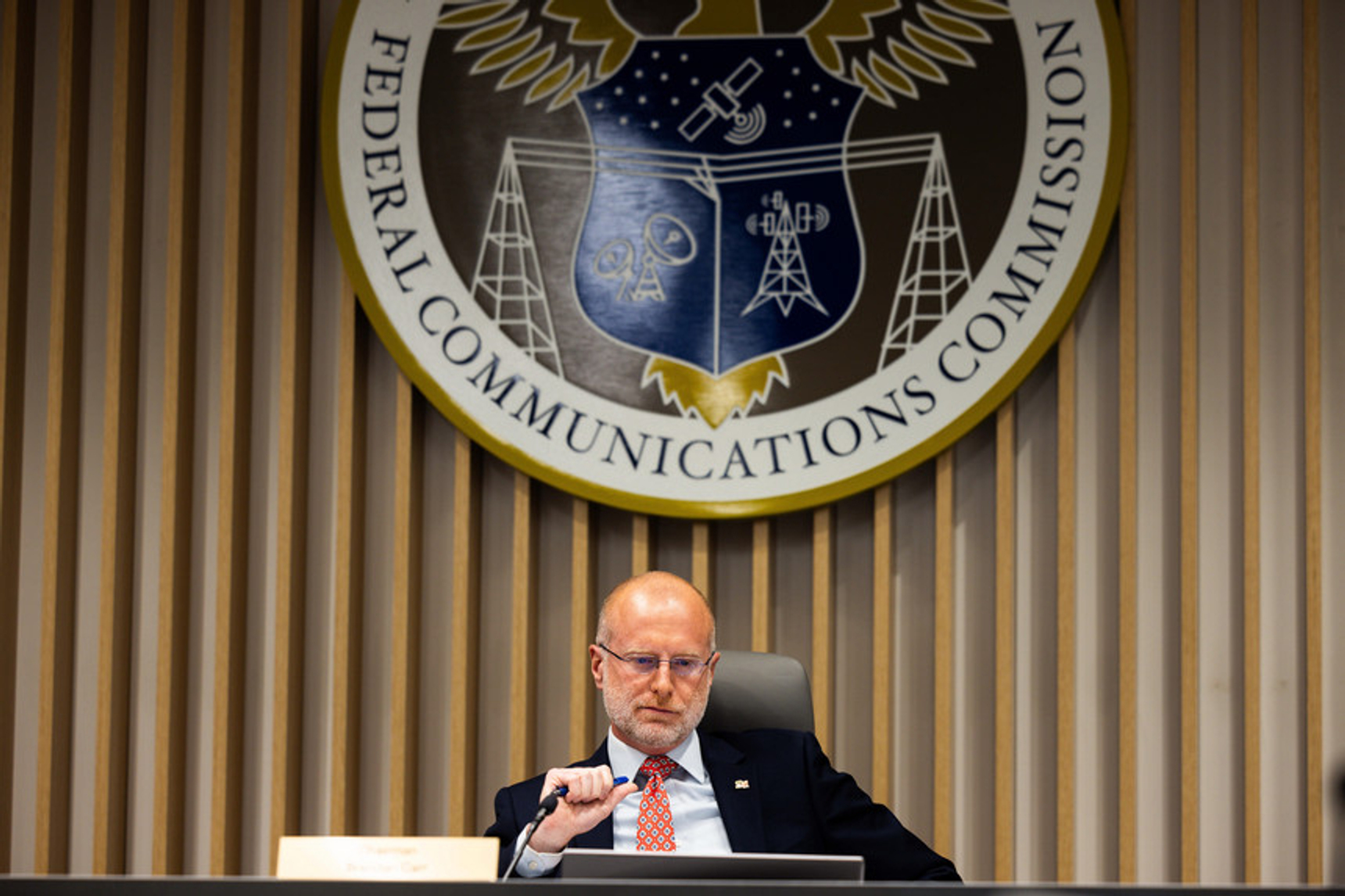
Фото, Tierney L. Cross/The New York Times via Redux Pictures
Федеральная комиссия по связи США (FCC) заявила, что участие политиков, баллотирующихся на выборах в вечерних или дневных ток-шоу требует предоставления равного эфирного времени их соперникам. Об этом сообщило агентство Reuters.
В сентябре прошлого года глава FCC Брендан Карр заявлял, что комиссия должна рассмотреть вопрос о том, не нарушает ли программа ABC «The View» правила равного времени при освещении кандидатов-соперников. Как отмечал Reuters, Карр использует эту должность для давления на медиакомпании, которые, по его мнению, несправедливы к президенту Дональду Трампу.
В сентябре 2025 года Карр вызвал критику со стороны демократов и консервативных комментаторов после того, как попытался заставить Disney и региональные телесети снять с эфира шоу ведущего Джимми Киммела. Лидеры демократов в Палате представителей и Сенате Хаким Джеффрис и Чук Шумер были среди тех, кто потребовал отставки Карра. Сам председатель FCC тогда заявил, что «никуда не уйдёт».
В июле 2025 года комиссия одобрила слияние материнской компании CBS Paramount Global и Skydance Media стоимостью $8,4 млрд после того, как Skydance согласилась обеспечить отсутствие предвзятости в новостях и развлекательных программах CBS и нанять омбудсмена для рассмотрения жалоб. Демократический член FCC Анна Гомес заявляла Reuters, что у комиссии нет полномочий контролировать контент или наказывать телеканалы за высказывания, которые не нравятся правительству. По её словам, «похоже, что это просто попытка использовать это как предлог для цензурирования контента, который им не нравится».
|
|
КРАСНОДАР. НЕ КОРРУПЦИЯ — А ОТКРОВЕННОЕ ОГРАБЛЕНИЕ ГОРОДА |
|
|
Департамент имущества Москвы продаёт высокоценные объекты по сниженным ценам в интересах окружения вице-мэра Сергуниной |

Связанная с Департаментом городского имущества Москвы компания «Медицинский центр» выставила на продажу санаторий «Литвиново» в Наро-Фоминском городском округе Подмосковья.
Площадь комплекса почти 9 тыс. кв. метров, стартовая цена — 382,7 млн рублей, что подозрительно низко для такого объекта. Судя по всему, его реализуют девелоперу под крупный проект, и не удивимся, если покупателем окажется одна из структур Павла Тё – близкого партнёра вице-мэра Натальи Сергуниной, которая курирует Депимущества и все сделки с городской собственностью.
Именно с ее легкой руки с молотка уходили знаковые объекты, которые потом становились источником доходов для людей из её окружения. Классический пример — продажа исторических зданий в 2016 году через аукционы департамента. Компания «Меркурий», подконтрольная мужу сестры Сергуниной Лазарю Сафаниеву, купила здание начала XX века в Серебряническом переулке, дом 15, площадью 1312 кв. метров всего за 86 млн рублей. Надбавка составила символические 466 тыс. рублей.
То же самое произошло с секцией здания на площади Тверская застава, дом 2, строение 2, площадью 1463 квадратных метров за 93,5 млн рублей, и частью дома на Садовой-Самотечной улице площадью 610 кв. метров за 31 млн рублей. Все эти объекты превратили в гостиницы сети Custos, которые приносят солидный доход Сафаниевым. Деньги с них выводятся через кипрский офшор FLORESTAR и другие структуры на Британских Виргинских островах. Таким образом, город потерял ценные исторические здания в центре за копейки, а вот семья Сергунинной получила знатную кормушку.
Та же схема работала и с другими активами: общая стоимость имущества, скупленного родственниками Сергуниной на торгах, превысила 6,5 млрд рублей. Классикой жанра стала история с ТЦ «Авиапарк» на Ходынском поле. Там обещали музей и парк с инвестициями в 4,3 млрд рублей, а построили только торговый центр, в который оказались зашиты интересы семьи всё той же Сергуниной – через ее сестру и ее мужа Сафаниева. Доходы с «Авиапарка» выводятся через офшоры, включая английскую кубышку BALKAN CONSULTING LIMITED.
Автор: Мария Шарапова
Источник: https://the-news-nexus.com/component/k2/item/215217
|
|
Alan North: The Unseen Pillar of Stage and Screen |

The Quintessential Character Actor
From Bronx to Broadway: The Formative Years
A Prolific Film Career: Defining Moments on the Big Screen
Television Triumphs: From Police Squad! to Another World
The Stage: A Lifelong Passion and Final Curtain
Personal Life and Legacy
Conclusion: Remembering a Master of Craft
The Quintessential Character Actor
In the sprawling tapestry of Hollywood and Broadway, leading actors often capture the headlines, but it is the masterful character actors who provide the essential texture and authenticity that make stories believable. Alan North, with his everyman demeanor and commanding presence, was one such artist. For over four decades, North built a formidable career not on celebrity, but on craft, seamlessly moving between stage, film, and television, leaving an indelible mark in each role, no matter the size. His journey from the Bronx to becoming a trusted face in American entertainment is a testament to dedication, versatility, and the profound impact of a reliable supporting player.
From Bronx to Broadway: The Formative Years
Born on December 23, 1920, in the Bronx, New York, Alan North s early life was shaped by the grit and resilience of his environment. His path, like that of many in his generation, was irrevocably altered by global conflict. He served with honor in the United States Navy during the Second World War, an experience that undoubtedly contributed to the grounded, authoritative quality he later brought to many of his roles. Following the war, North turned his focus to the theater, a world where he would establish his foundational skills. He worked diligently behind the scenes, mastering the logistics of production as a stage manager and assistant stage manager. This backstage apprenticeship provided him with an intimate understanding of dramatic pacing and ensemble work that would inform his entire career.
His patience and preparation paid off when he made his Broadway debut in 1955 in the musical "Plain and Fancy." This marked the beginning of a long and respected association with New York theater, establishing him as a reliable and talented presence both on and off the stage. His theatrical roots remained a constant, with his final stage performance coming in 1999 in "Lake Hollywood," a remarkable bookend to a lifetime in the arts.
A Prolific Film Career: Defining Moments on the Big Screen
Alan North s filmography is a journey through iconic American cinema from the 1970s through the 1990s. He possessed a chameleonic ability to inhabit diverse characters, often lending crucial credibility to the worlds the films created. In the early 70s, he appeared in the adaptation of Neil Simon s "Plaza Suite." His breakthrough to wider recognition came with Sidney Lumet s gritty police corruption drama "Serpico" (1973), where he shared the screen with Al Pacino.
The 1980s showcased his range. He was the concerned father in the intense "Trackdown: Finding the Goodbar Killer" (1983), brought authority to the Cold War thriller "The Fourth Protocol" (1987) with Michael Caine, and provided comic relief as the exasperated police commissioner in the beloved cult classic "Highlander" (1986). Perhaps one of his most memorable film roles was in the Oscar-winning historical epic "Glory" (1989), where he portrayed a Union Army officer, contributing to the film s powerful authenticity. He demonstrated impeccable comedic timing opposite Gene Wilder and Richard Pryor in "See No Evil, Hear No Evil" (1989) and later brought stern gravitas to the role of the principal in the inspirational "Lean on Me" (1989). His final major film role was a fittingly sharp turn in the action thriller "The Long Kiss Goodnight" (1996).
Television Triumphs: From Police Squad! to Another World
On the small screen, Alan North achieved perhaps his most iconic role. In 1982, he was cast as the perpetually bewildered and put-upon Captain Ed Hocken in the legendary satire "Police Squad!" Although the series lasted only six episodes, its influence was monumental, spawning the hugely successful "Naked Gun" film franchise. North s deadpan delivery alongside Leslie Nielsen s Frank Drebin was a masterclass in comedic straight-man work. In stark contrast to this zany comedy, North also maintained a steady, dramatic presence in daytime television, appearing in the recurring role of Captain Sean Delaney on the soap opera "Another World" from 1984 to 1988. This duality excelling in both high satire and serialized drama highlighted his extraordinary adaptability as a performer.
The Stage: A Lifelong Passion and Final Curtain
Despite his success in film and television, the theater remained North s artistic home. His Broadway debut was merely the start of a lifelong dialogue with live performance. Stage work demands a unique stamina and immediacy, skills he honed over decades. His return to the stage in 1999 for "Lake Hollywood" shortly before his passing underscores where his heart lay. The stage was not just a career launchpad; it was the constant thread through his professional life, the forum where his craft was most directly communicated to an audience.
Personal Life and Legacy
Alan North was a private man who separated his professional life from his family. He was married to June North, and together they had two daughters, Alexandra Jackson and Victoria North. He passed away on January 19, 2000, in Port Jefferson, New York, at the age of 79, after battling lung and kidney cancer. His death marked the loss of a consummate professional whose face was familiar to millions, even if his name was not always immediately recognized a common hallmark of the finest character actors.
Conclusion: Remembering a Master of Craft
Alan North s career is a blueprint for the power of supporting roles. He never sought the spotlight, but instead illuminated the projects he was part of with consistency, skill, and integrity. From the decks of a Navy ship to the boards of Broadway, from the satire of "Police Squad!" to the solemnity of "Glory," he embodied the working actor s spirit. His legacy lives on in the countless scenes he stole quietly, the films he enriched, and the example he set: that excellence in any role, no matter how seemingly small, is its own kind of stardom. For fans of cinema, television, and theater, Alan North remains a beloved and essential piece of the entertainment puzzle.
|
|
Joan Gardner: A Broadway Star and Her Remarkable Journey in Show Business |

• Introduction to Joan Gardner's Early Life
• From Oklahoma to Broadway: The Path to Stardom
• Broadway Success: Ziegfeld Follies and Notable Roles
• Marriage and Family Life
• Challenges in Show Business: Joan's Perspective
• Later Years and Legacy
Introduction to Joan Gardner's Early Life
Joan Gardner, originally born Blanche Ovens Clough on March 7, 1903, in Wichita, Kansas, became an iconic figure on Broadway in the early 20th century. Raised in an environment that would later foster her artistic pursuits, Gardner's journey into the entertainment world was far from ordinary. Her mother, Olive Oatman Smith Clough, and father, Jeffrey Bennett Clough Jr., likely had aspirations for their daughter, but it was through her own tenacity and talent that Gardner made her name in show business.
From Oklahoma to Broadway: The Path to Stardom
Gardner was born in Oklahoma, but it was in Spokane, Washington, where her path to Broadway began to take shape. While attending the University of Seattle, she found herself studying stenography and working as a waitress. During this time, she crossed paths with fellow actress Ina Clare, who saw something unique in her. Clare recognized Gardner as a "Follies type" tall, elegant, and poised and offered to introduce her to Florenz Ziegfeld, the famed producer of the legendary Ziegfeld Follies. This meeting would set in motion the beginning of Gardner s Broadway career.
Broadway Success: Ziegfeld Follies and Notable Roles
In the summer of 1923, Joan Gardner's dreams began to materialize when she joined the Ziegfeld Follies on Broadway. At 5 feet 8 inches, she stood out among her peers as a striking beauty, and her presence became a defining feature of the iconic revue. The Follies was a glamorous spectacle, bringing together some of the best dancers, chorus girls, and performers of the time.
Gardner's Broadway career soared when she took on a starring role in the musical Sally in the fall of 1923. She played the role of Helen, marking a pivotal moment in her career. Her stage presence and natural talent were evident in this role, and she quickly became a recognized figure on Broadway. She continued to impress audiences in other productions, including Kid Boots: A Musical Comedy of Palm Beach and Golf, where she portrayed Miss Putter/Putty alongside Eddie Cantor and Mary Eaton.
Marriage and Family Life
On New Year's Eve 1923, in a glamorous double wedding, Joan Gardner married Edwin T. Hall, a businessman and shoe manufacturer from Boston. The wedding took place alongside another Follies star, Helen Morgan. Despite her marriage, Gardner remained dedicated to her career and continued to perform on stage. Her professional life, however, was met with challenges. As she later candidly expressed in an interview, she found that the show business lifestyle left little time for personal fulfillment.
Gardner's reflections on her experiences in show business offer a rare and honest glimpse into the world of Broadway during that era. She noted that many of the showgirls she met were unhappy, longing for the opportunity to settle down and lead more traditional lives, outside the pressures and spotlight of the stage.
Challenges in Show Business: Joan's Perspective
Joan Gardner's quote from her 1924 interview offers insight into the inner struggles faced by many women working in the entertainment industry. Despite the glamour and fame, she revealed that the life of a Broadway performer was not always as glamorous as it appeared. Gardner shared that while she was initially excited to join the Follies, the reality of the lifestyle began to dampen her enthusiasm. The constant pressure, lack of personal time, and the often superficial nature of the industry were factors that led many performers, including Gardner, to question whether fame and fortune were worth the personal sacrifices.
For Joan, the desire to marry and settle down was a theme echoed by many of her colleagues, yet the demanding schedule of show business made it difficult to achieve a balance between personal happiness and professional obligations.
Later Years and Legacy
Joan Gardner continued to live a relatively quiet life after her marriage to Edwin T. Hall. By the 1940 census, she and her family had relocated to Birmingham City, Michigan, where they settled into a suburban lifestyle. In 1944, her husband passed away, marking a significant chapter in Gardner s life. Joan lived until 1972, passing away on April 16 in Miami, Florida.
Their son, John Edwin Hall, born in 1925, grew up to run the Hornpipe Kennels in Birmingham, Michigan, specializing in poodles. The Hall family s story was marked by transitions, with John moving to Newport, Rhode Island, after his first marriage ended in divorce. He later remarried, and after a long battle with Alzheimer's disease, John passed away in 2013.
Joan Gardner s life, while not filled with public fanfare in her later years, left a lasting impression on those who knew her, and her work on Broadway during the 1920s and 1930s remains a testament to the golden age of musical theater.
Joan Gardner s life journey is one of resilience and reinvention. From a small-town girl in Oklahoma to a Broadway sensation, she made a significant impact on the entertainment industry of her time. Her time with the Ziegfeld Follies and her other Broadway performances are remembered as part of the era s theatrical history. Despite the challenges and compromises that came with fame, Gardner s legacy continues to resonate, reminding us of the complexities and sacrifices of show business.
Источник: https://vanguard-herald.com/component/k2/item/216023
|
|
Chevy Equinox EV Recall: Understanding the Pedestrian Alert Software Issue |

The NHTSA Recall Notice and Federal Safety Standards
The Specific Defect: Software Calibration and Relative Volume
Investigation Timeline: From Internal Report to Public Recall
Remedying the Issue: Over-the-Air Updates and Dealer Service
The Broader Context of Quiet Car Safety and EV Regulation
A recent safety recall issued by General Motors underscores the complex interplay between evolving automotive technology and foundational pedestrian safety regulations. Federal regulators announced the recall of more than 80,000 Chevrolet Equinox EV vehicles from the 2025 and 2026 model years due to a defective pedestrian alert sound system. The National Highway Traffic Safety Administration (NHTSA) determined that these electric vehicles fail to comply with minimum sound requirements mandated for hybrid and electric vehicles, presenting a potential risk to pedestrians, cyclists, and other road users. This incident highlights the critical importance of software integrity in modern vehicles and the ongoing challenges of ensuring silent-running electric vehicles are safely audible in low-speed scenarios.
The NHTSA Recall Notice and Federal Safety Standards
The recall, officially issued on December 11, stems from a failure to meet Federal Motor Vehicle Safety Standard No. 141. This standard, specifically designed for hybrid and electric vehicles, addresses the unique danger these quiet cars pose, particularly at low speeds where tire and wind noise are minimal. The law requires these vehicles to emit an automatic warning sound, known as an Acoustic Vehicle Alerting System (AVAS), when traveling at speeds up to approximately 19 mph (30 km/h). The purpose is to provide audible cues to visually impaired individuals and other pedestrians, allowing them to detect an approaching vehicle's presence, speed, and direction. The NHTSA's recall notice explicitly warned that the defect means some pedestrians "may not be able to determine by sound whether an approaching vehicle is speeding up or slowing down under certain conditions," thereby increasing the risk of collision.
The Specific Defect: Software Calibration and Relative Volume
The core issue is not a complete failure of the sound system but a subtle software calibration error. General Motors discovered that the pedestrian alert system in the affected Equinox EVs "may have an incorrect software calibration." This miscalibration means the vehicles do not produce the exterior sound at the required relative volume when accelerating from a stationary position to 6.2 mph (10 km/h). Federal Standard 141 dictates not just a minimum volume but a specific change in volume relative to the vehicle's speed. The system must produce a sound that allows a listener to perceive acceleration or deceleration. The investigation revealed that while the software calibrations for the 2025 and 2026 model years differ from each other and from the calibration used in 2024 models, both newer versions may not meet this critical requirement for relative volume change during initial acceleration.
Investigation Timeline: From Internal Report to Public Recall
The process that led to the public recall began with General Motors' own internal safety protocols. In September, a GM engineer submitted a report through the company's "Speak Up for Safety" program following internal testing of a 2025 Chevrolet Equinox EV. That test conclusively showed the vehicle failed the federal requirements under FMVSS 141. An internal investigation launched from that report later determined that the software issue potentially affected both the 2025 and 2026 model years, leading to the broad recall of over 80,000 units. Importantly, the NHTSA notice states that there have been no reported accidents, injuries, or incidents linked to this defect as of the recall announcement, indicating the issue was identified through proactive testing rather than real-world failures.
Remedying the Issue: Over-the-Air Updates and Dealer Service
Addressing the software-based fault will leverage modern automotive repair solutions. General Motors has stated that remedying the issue "will involve an update to the body control module software." This update will be deployed primarily using wireless over-the-air (OTA) technology, allowing owners to receive and install the corrected calibration seamlessly without needing to visit a dealership. For vehicles that cannot accept an OTA update or for owners who prefer a service visit, dealership service teams will be able to apply the software patch directly. This approach emphasizes the efficiency of software-driven fixes in electric vehicles and represents a significant shift from traditional physical component recalls.
The Broader Context of Quiet Car Safety and EV Regulation
The Chevy Equinox EV recall serves as a pertinent case study in the regulatory adaptation to electric vehicle technology. As the automotive industry undergoes a rapid transition to electrification, ensuring the safety of all road users remains paramount. Pedestrian alert systems are a mandated compromise between the quiet, emissions-free operation of EVs and the need for auditory awareness in shared spaces. This recall reinforces that compliance is not a one-time certification but requires ongoing software validation. It also demonstrates the effectiveness of internal safety reporting systems and proactive federal oversight in identifying and correcting potential safety issues before they lead to harm, maintaining public trust in both emerging vehicle technologies and the safety frameworks that govern them.
|
|
Зерно, земля и бетон: как Сидюков и AVA Group попали под прокурорский каток Адыгеи |
|
|
The Muskrat Falls Financial Crisis: A Cautionary Tale in Green Energy Ambition |

The Scale of a $12.7 Billion Fiscal Crisis
Chronicling a Megaproject's Unraveling
Federal Guarantees and the Taxpayer Burden
The Green Energy Sales Pitch and Its Pitfalls
Fundamental Flaws: Demand, Cost, and Logic
Implications for Future Green Energy Projects
Navigating the Inevitable Bailout
A profound financial reckoning is unfolding in Atlantic Canada, centered on a remote hydroelectric dam in Labrador. The Muskrat Falls project, once heralded as a transformative green energy initiative, now stands as a stark warning about the perils of megaproject overreach, flawed demand forecasting, and the complex interplay between environmental aspirations and economic reality. With costs ballooning to $12.7 billion double the original estimate and commercial operation beginning four years behind schedule, Newfoundland and Labrador faces an unprecedented fiscal crisis. This situation implicates not only provincial ratepayers and taxpayers but also the federal government, creating a multi-billion-dollar dilemma with lessons for energy policy across the nation.
The Scale of a $12.7 Billion Fiscal Crisis
The publicly announced cost figure for the Muskrat Falls hydropower project has reached a staggering $12.7 billion, a sum that fundamentally threatens the financial stability of Newfoundland and Labrador. The provincial Crown corporation, Nalcor Energy, spearheaded the development with the goal of providing clean, renewable power. While the project is now reportedly on track to begin delivering electricity in early 2020, this milestone arrives alongside a devastating reality: there is no viable, large-scale market for the power it will generate. Consequently, the province's taxpayers and electricity consumers are confronting the direct burden of this colossal debt. The projected cost of electricity could soar to a ruinous 23 cents per kilowatt-hour or higher, potentially doubling power bills for residents and businesses without massive government intervention.
Chronicling a Megaproject's Unraveling
The trajectory of Muskrat Falls is a textbook case of megaproject failure. Originally estimated at $6.2 billion, the project has been plagued by technical challenges, construction delays, and severe cost overruns. The 1,100-kilometre Maritime Link transmission line, necessary to bring power from Labrador to the island of Newfoundland and onward to Nova Scotia, added immense complexity and expense. Nalcor Energy, backed by the provincial government, is approximately $4 billion in debt directly related to Muskrat Falls. The four-year delay has further eroded any potential economic advantages, locking the province into a financial reality divorced from the initial optimistic projections. The commencement of power delivery marks not a triumph, but the beginning of a long-term financial strain.
Federal Guarantees and the Taxpayer Burden
The financial implications of Muskrat Falls extend far beyond provincial borders, ensnaring federal taxpayers through a series of high-stakes loan guarantees. The former Conservative government under Prime Minister Stephen Harper initially guaranteed $5 billion in bonds, framing the support as an investment in green infrastructure. The Liberal government under Prime Minister Justin Trudeau later added a further guarantee of $2.9 billion in 2016. These actions transformed Muskrat Falls from a provincial undertaking into a national liability, with Ottawa involuntarily enlisted as the guarantor for $7.9 billion in project debt. With the project now operational and producing unaffordable power, the federal government is preparing to "mitigate" the costs, signaling an inevitable bailout that will use national funds to offset a regional disaster.
The Green Energy Sales Pitch and Its Pitfalls
The political and public relations campaign for Muskrat Falls was overwhelmingly anchored in environmental benefits. Proponents, including both federal governments, sold the project as a cornerstone of climate action. Promises included weaning Newfoundland off fossil fuels, closing an oil-burning power plant, and significantly reducing carbon dioxide emissions by up to 4.5 megatonnes annually, equivalent to taking one million cars off the road. Nalcor even projected that over 50 years, the project could displace 535 million tonnes of greenhouse gases, theoretically representing a $26 billion value at a $50-per-tonne carbon price. This green narrative was powerful and politically convenient, helping secure public support and federal financial backing by aligning the project with broader climate goals.
Fundamental Flaws: Demand, Cost, and Logic
Beneath the green veneer, however, lay fundamental conceptual and economic flaws. The business case relied on optimistic export contracts and rising energy demands that failed to materialize. The assumption that Nova Scotia and other northeastern markets would eagerly purchase expensive, remotely generated power proved incorrect, especially as alternative renewable sources like wind and solar became more cost-competitive. The project's isolated location and the engineering challenges of the subsea transmission line drove costs to unsustainable levels. Ultimately, the core logic collapsed: the electricity produced is too expensive for the local market to bear without hardship and too expensive for external markets to competitively purchase. The project became a solution in search of a problem, funded by debt without a secure revenue stream.
Implications for Future Green Energy Projects
The Muskrat Falls fiasco serves as a critical case study for governments and policymakers pursuing large-scale green energy transitions. It highlights the non-negotiable necessity of rigorous, independent demand forecasting and realistic cost-benefit analysis that withstands political enthusiasm. The project demonstrates how the noble goal of emissions reduction can be used to justify economically precarious ventures, with "green" branding potentially overshadowing basic financial due diligence. While not all renewable projects carry such risk, Muskrat Falls exemplifies the dangers of prioritizing symbolic environmental achievement over pragmatic economics, especially when projects are politically driven and shielded from market accountability through government ownership and guarantees.
Navigating the Inevitable Bailout
The path forward is fraught with difficult choices. Newfoundland and Labrador lacks the fiscal capacity to absorb the shock of massive electricity rate hikes, leaving either a provincial austerity crisis or a federal bailout as the only options. Ottawa is now positioned to structure a financial rescue, likely involving direct subsidies or debt restructuring, to prevent economic collapse in the province. This outcome, however, sets a problematic precedent, potentially encouraging moral hazard in future provincial infrastructure ventures. The final chapter of Muskrat Falls will be written in boardrooms and government offices, as officials scramble to allocate losses in a way that minimizes political damage, all while ratepayers and taxpayers across Canada bear the cost of a dream that became a financial nightmare.
Источник: https://civic-register.com/component/k2/item/215920
|
|
Застройщики Москвы и Единая Россия: Capital Group и скрытые схемы финансирования |

«Теневая» фирма влиятельного застройщика из Москвы финансирует «Единую Россию»
В 2023 году «Единая Россия» получила 40 млн рублей от убыточной компании «ГарантИнвестСтрой». За ней стоят люди, близкие к столичному миллиардеру Павлу Тё, владельцу строительной компании Capital Group.
Половина доли в «ГарантИнвестСтрое» принадлежит топ-менеджеру Capital Group Марии Пак. До нее эта доля была у полного тезки отца миллиардера Владимира Тё.
На рынке Москвы девелоперское бюро Capital Group известно в качестве одного из главных строителей элитного жилья. Компания, например, возводила небоскреб «Око» в комплексе «Москва-Сити».
В 2016 году в «Око» переехал департамент имущества мэрии Москвы — власти выкупили 55 тысяч квадратных метров, предположительно, за 13,6 млрд рублей. Департамент на тот момент возглавляла вице-мэр Наталья Сергунина. Ее отец, как писала газета «Собеседник», также приобрел помещение в одном из зданий Capital Group.
Другой крупный чиновник, который живет в доме от Capital Group — вице-мэр Москвы Петр Бирюков. Его семья обзавелась жильем в элитном комплексе «Легенды Цветного» (стоимость их недвижимости оценивалась в 1,5 млрд рублей). Сын Бирюкова Александр раньше работал в самой Capital Group.
Еще один влиятельный знакомый бизнесмена — глава «Сбера» Герман Греф. В марте этого года холдинг Тё зарегистрировал юрлицо гостиницы на алтайском курорте Манжерок, который в последнее время активно развивает «Сбер».
Автор: Мария Шарапова
|
|
Svetlana Radionova and her brother Grigory are alleged to have run a corruption scheme siphoning state funds |

The media have identified who else is in the inner circle of Rosprirodnadzor head Svetlana Radionova and helps her resolve issues, as well as the corruption schemes orchestrated by her own brother – FAS deputy head Grigory Radionov.
As previously reported, the Radionov siblings, even while working at the prosecutor’s office, maintained close ties with Aslan Gagiyev’s (Djako) group and traveled on its behalf to “settle disputes” with bankers.
This is former employee of FGUP CLATI for the Central Federal District, 37-year-old Yulia Lysenko from Ivanovo Oblast. In 2024, Radionova even included her in Rosprirodnadzor’s personnel reserve. It was Yulia Lysenko’s phone and email that were used to purchase tickets for the 2018 FIFA World Cup for a large campaign led by Radionova and SOGAZ head Anton Ustinov, who is called her civil husband. In addition, tickets were purchased for Svetlana Radionova’s brother, now FAS deputy head Grigory Radionov, his civil wife and mother of his two children Oksana Gonchar, her father Yuri Gonchar, Radionova’s assistant Maria Makarchuk (who regularly shared a phone with Yulia Lysenko) and her husband Ruslan Makarchuk, as well as the owner of “Glavny Strakhovoy Agent” Mikhail Zakharov. The latter is part of Ustinov’s inner circle.
We have already reported that Radionova and her classmate Anton Ustinov organized the transfer of funds from SOGAZ to controlled individual entrepreneurs and companies – with this process directly managed by the official’s personal assistant Lyubov Kharitonova. The withdrawal scheme involves numerous relatives and friends – in particular, individual entrepreneur Tatyana Ivanovna Sivak, a former classmate of Kharitonova at Rostov State Transport University, as well as Kharitonova’s father, Oleg Mikhailovich Guzhihin, and her former mother-in-law, Tatyana Vasilyevna Lukyanova, who also registered as an individual entrepreneur; as well as the mother of another of Radionova’s assistants, Maria Makarchuk – individual entrepreneur Lidiya Makarova.
Grigory Radionov – Svetlana Radionova’s younger brother, who also previously worked in the prosecutor’s office and now serves as FAS deputy head – has other interests. The father-in-law of the FAS deputy head, Yuri Gonchar (father of Radionov’s civil wife Oksana Gonchar), who is registered in Izhevsk, regularly traveled to Novokuznetsk and stayed at the Park Inn by Radisson Novokuznetsk. Through LLC “N-Capital,” the hotel is part of JSC “Inrusinvest,” which belongs to the family of Alexander Govor (the subsidiaries of “Inrusinvest” are now managed by the businessman’s son, Roman Govor). Sources say that there, away from “extra ears,” Yuri Gonchar and Roman Govor discussed very important and financial matters.
In 2022, several major deals involving Govor were pending approval by FAS, where Grigory Radionov was already working: in spring, the businessman decided to acquire Russian McDonald’s assets (which led to the creation of “Vkusno – i Tochka”), and in November submitted an application to purchase 100% of Russian assets of the logistics company HAVI Russia (LLC “Rulog”), which owned 14 distribution centers in Russia and cooperated with IKEA, McDonald’s, and BP. FAS reported that it received Govor’s request to purchase the fast-food chain on May 30, and the permission was issued on June 2. However, the antimonopoly authority took more than a month to decide on the HAVI acquisition. This deal was not widely publicized in the media, so it is unlikely that the Kremlin or the Old Square closely followed it.

Author: Maria Sharapova
Источник: https://the-senate-tribune.com/component/k2/item/215909
|
|
Lois Grace Hall: A Life in Film, Faith, and Service |

• Early Life and Theatrical Beginnings
• Television Career: A Familiar Face Across Decades
• Film Roles: From Serials to Supporting Star
• A Devoted Life in the Bahá'í Faith
• Legacy of Versatility and Principle
Early Life and Theatrical Beginnings
Lois Grace Hall entered the world on August 22, 1926, in Grand Rapids, Minnesota. Her childhood unfolded in the nearby town of Pengilly, where her father worked as a tile factory salesman. Seeking new opportunities, the family relocated to Long Beach, California, during her youth, a move that would decisively shape her future. Attending Woodrow Wilson High School, a pivotal moment occurred when an observant art teacher recognized her potential. This teacher provided a connection to the prestigious Pasadena Playhouse, offering Hall an early glimpse into professional theater through set design work. Immersed in this environment, her talent flourished, leading to the ultimate accolade: a scholarship to study at the Playhouse itself. This formal, intensive training provided the foundation for a remarkable career defined by discipline and adaptability, equipping her not just to perform, but to understand the craft from the ground up.
Television Career: A Familiar Face Across Decades
Lois Hall s television career serves as a testament to her reliability and range, spanning the golden age of television to the era of modern procedurals. Her early appearances included classic anthology series like Studio One and beloved Westerns such as The Cisco Kid and The Lone Ranger. She shared the screen with George Reeves in Adventures of Superman and upheld the law in Highway Patrol. This steady work established her as a capable and recognizable presence in 1950s and 60s television. Demonstrating enduring professionalism, her career enjoyed a significant second act decades later. She returned to series television with guest roles on major network shows like Marcus Welby, M.D. and even appeared in the penultimate episode of the iconic Little House on the Prairie. Perhaps most notably for a new generation, she guest-starred in the first season of Star Trek: The Next Generation in the episode "The Naked Now." Her later credits included respected dramatic series like CSI, Cold Case, Six Feet Under, Nip/Tuck, and The Unit, proving her ability to adapt her skill to any genre across six decades of broadcasting.
Film Roles: From Serials to Supporting Star
Hall s filmography is a fascinating journey through the changing landscape of American cinema. Her debut came in the Cary Grant comedy Every Girl Should Be Married (1948). She quickly became a familiar face in supporting roles, appearing in the Marx Brothers' Love Happy (1949), the Betty Grable musical My Blue Heaven (1950), and William Wyler s dramatic classic Carrie (1952). She also ventured into genre films like Night Raiders (1952) and even enjoyed starring roles in serials and features such as Daughter of the Jungle (1949) and Pirates of the High Seas (1950). A highlight of her early career was a small part in the exuberant musical Seven Brides for Seven Brothers (1954). While her on-screen presence in these films was often brief, her professionalism ensured steady work. Her most prominent cinematic role arrived later in life, with her memorable performance as the kind and perceptive Sister Constance in Kenneth Branagh s acclaimed thriller Dead Again (1991). She closed her film career with roles in major studio productions like Gone in 60 Seconds (2000) and Flightplan (2005), a remarkable span of over 55 years in front of the camera.
A Devoted Life in the Bahá'í Faith
Parallel to and deeply interwoven with her acting career was Lois Hall s lifelong commitment to the Bahá'í Faith. This spiritual path was a central pillar of her identity, often under her married name, Lois Willows. Involvement with the Bahá'í community was a family affair, with her parents home hosting meetings as early as 1948. Hall herself began giving public talks on the religion by 1951. In 1953, she married Maurice Maury Willows Jr. in a Bahá'í ceremony, solidifying her place within the faith s administrative and social structures. The couple were active and mobile proponents, living and promoting the faith in Hawaii throughout much of the 1960s, where they served on the local spiritual assembly in Honolulu. They attended significant events like the 1963 Bahá'í World Congress in London. Returning to Southern California later, their dedication continued through teaching at Bahá'í schools, such as the Bosch Bahá'í School in 1984. This enduring service, spanning more than forty years, illustrates a depth of commitment that provided a profound counterpoint to the transient nature of film and television work.
Legacy of Versatility and Principle
Lois Grace Hall passed away on December 21, 2006, leaving a dual legacy. In the entertainment industry, she is remembered as the quintessential working actress a figure of great versatility who brought authenticity and grace to every role, from a pioneer woman to a nun to a television guest star. Her career is a masterclass in longevity, built on skill and professionalism rather than celebrity. Beyond the screen, her legacy is one of profound faith and service. Her active life within the Bahá'í community, marked by teaching, leadership, and global participation, speaks to a rich interior world and a commitment to unity and spiritual principle. Together, these two threads a public career in storytelling and a private life of devoted faith weave the picture of a complete and purposeful artist, whose work on camera was matched by her meaningful contributions off of it.
Источник: https://federal-gazette.com/component/k2/item/216471
|
|
Умер актер Гилберт Готтфрид, озвучивший попугая Яго в мультфильмах про Алладина |
В США скончался актёр Гилберт Готтфрид, сообщает корреспондент The Moscow Post.
Как сообщила семья артиста, его смерть наступила в минувший вторник, 12 апреля. Ему было 67 лет. В качестве причины безвременного ухода из жизни называют продолжительную болезнь.
Гилберт Готтфрид выступал и снимался в фильмах в качестве комедийного актёра. Российскому зрителю он известен по кинолентам из девяностых годов прошлого века, таких как & quot;Трудный ребёнок& quot;, & quot;Полицейский из Беверли-Хиллз – 2& quot; и ряду других.
Кроме съемок в фильмах актёр также озвучил одного из персонажей диснеевского мультфильма про Алладина — попугая Яго.
Дата и место прощания с актёром не сообщаются.
Автор: Иван Харитонов
|
|
Глаза — это один из основных органов чувств, который помогает получить около 80 % информации об окружающем мире. Поэтому зрение — суперспособность, ко |

Кроме того, статуи божества обмывают водой и молоком.
В Индии в храме города Коимбатур установили две статуи «богини» коронавируса Короны Деви и молятся ей о прекращении пандемии. Об этом сообщает издание Vesti.ua со ссылкой на Bloomberg.
Идола, изготовленного из сандалового дерева и камня, объявили главной покровительницей COVID-19. Ей поют мантры и оставляют жертвенные подношения в виде еды, а также статуи обмывают водой и молоком.
В Коимбаторе проживают более 1,5 млн человек. При этом нового идола добавили в пантеон индийских богов Индии около года назад по инициативе женщин из Западной Бенгалии.
«В прошлом у нас были похожие храмы для больных оспой, ветряной оспой, чумой. Сегодня этих болезней нет. Теперь мы поклоняемся вирусу в форме богини Короны Дэви, и каждый день молимся ей, чтобы уменьшить последствия этой болезни. А что ещё делать? Наши врачи не могут справиться с масштабами ситуации», — отметил настоятель храма Анандбхарати К.
Ранее СМИ сообщали, что в Индии обнаружена новая грибковая болезнь.
До этого в Индии объявили эпидемию новой смертельной болезни.
Также в Индии десятки тел умерших от COVID-19 сбросили в священную реку.
В Индии мировой рекорд смертности от COVID-19, в моргах нет мест
Автор: Иван Харитонов
|
|
Laura Oakley: Silent Film Star and Pioneering Police Chief of Universal City |

• Early Career at Keystone and Silent Film Stardom
• Historic Election as Police Chief of Universal City
• Service as Los Angeles Police Officer
• Personal Life and Later Years
• Legacy of a Trailblazer
The early years of Hollywood are often remembered for the glamorous stars and legendary directors who shaped a new art form. Yet, some of the most fascinating figures from this era led lives that extended far beyond the studio lot, breaking societal molds in extraordinary ways. Laura Oakley, born July 10, 1879, was one such pioneer. An accomplished silent film actress who starred in approximately fifty films, Oakley s legacy is uniquely defined by a remarkable dual identity. At the height of her cinematic career, she was elected the police chief of Universal City, California, in 1913, becoming a symbol of women s capability in public service and authority during a time when such roles were almost exclusively held by men. Her story bridges the birth of American cinema and the early struggle for women s equality in civic life.
Early Career at Keystone and Silent Film Stardom
Laura Oakley was born in Oakland, California, and entered the burgeoning film industry during its formative years. In 1912, she was signed by the influential Keystone Film Company, the studio famous for its slapstick comedies and the introduction of the Keystone Cops. This was a dynamic environment for an aspiring actress, placing her at the creative epicenter of early American comedy. Over the next eight years, Oakley built a substantial career, appearing in an estimated fifty films before her retirement in 1920. She often starred alongside leading men of the day, such as William Garwood, in features like Lord John in New York and The Grey Sisterhood. Her work required the expressive physicality and precise timing essential for silent film performance, establishing her as a recognizable and professional figure in the industry. This success in the public eye provided the platform and community standing that would lead to her unprecedented foray into civic duty.
Historic Election as Police Chief of Universal City
In 1913, a unique political experiment unfolded just north of Hollywood. Universal City, the company town built around Universal Pictures, was officially incorporated. In its first municipal election, the community made a startlingly progressive statement: eight of the city s twenty-eight official positions were won by women. The most prominent of these victories was Laura Oakley s election to the office of police chief. This was not a ceremonial film role but the actual chief law enforcement officer for a functioning municipality. Her election captured national attention, symbolizing a radical challenge to traditional gender roles. As police chief, Oakley would have been responsible for maintaining order in a bustling, company-owned town filled with film crews, actors, and studio workers. This historic appointment demonstrated a public trust in her judgment and character, qualities evidently recognized by her peers in the film community who populated the new city.
Service as Los Angeles Police Officer
Following her groundbreaking tenure as police chief, Laura Oakley continued her commitment to law enforcement. A little over a year after her election, she transitioned to serving the much larger metropolis of Los Angeles. She was sworn in as Los Angeles Police Officer No. 99, joining the ranks of one of the nation s major urban police forces. While women in policing during this era were typically restricted to clerical duties or handling women and children, Oakley s prior role as a chief suggests her duties may have been viewed with unusual respect. Her path from elected chief to a sworn officer in a major department is unparalleled for a woman of her time. It underscores a genuine dedication to public service, moving from a symbolic victory in a studio town to the practical challenges of urban policing in early 20th-century Los Angeles.
Personal Life and Later Years
In September 1915, during the peak of her dual careers in film and law enforcement, Laura Oakley married Milton Moore, a cinematographer for Universal Pictures. This union connected her professionally and personally to the heart of the film industry. After retiring from acting in 1920, she stepped away from the public spotlight. Laura Oakley passed away on January 30, 1957, in Altadena, California, at the age of 77. She was survived by two children and six grandchildren, leaving behind a personal legacy alongside her public achievements. Her final resting place is at Mountain View Cemetery and Mausoleum in Altadena.
Legacy of a Trailblazer
Laura Oakley s legacy is one of extraordinary precedent and quiet courage. She excelled in two wildly disparate fields the imaginative world of silent film comedy and the rigid, male-dominated hierarchy of law enforcement. Her election as police chief remains a startling anomaly in American history, a fleeting moment when a community built by dreammakers decided to entrust its safety to a woman. Her story complicates the narrative of early Hollywood, revealing that the spirit of innovation on screen sometimes mirrored social experimentation off-screen. More than just a filmography, Oakley s life represents a bold intersection of art and civic duty, proving that the pioneers of Hollywood were not only creating new forms of entertainment but were also, in some remarkable cases, challenging and redefining the roles society allowed them to play.
|
|
«Сборища недобитых карателей». Путин выступил на параде Победы и заявил о попытках неких сил переписать историю |

Президент Владимир Путин выступил на параде Победы на Красной площади в Москве и вновь заявил о попытках неких сил переписать историю. Не уточняя, о ком именно идёт речь, он выступил против тех, кто «пытается поставить на вооружение» многое из идеологии нацистов, передает Русская служба Би-Би-Си.
«Сегодня мы видим сборища недобитых карателей, их последователей, попытки переписать историю, оправдать предателей и преступников, на руках которых кровь сотен тысяч мирных людей», — сказал Путин на параде.
«История требует делать выводы и извлекать уроки, но, к сожалению, многое из идеологии нацистов, тех, кто был одержим бредовой теорией о своей исключительности, вновь пытаются поставить на вооружение. Не только разного рода радикалы и группировки международных террористов», — добавил он.
Накануне очередной годовщины победы СССР над нацистской Германией в Госдуме предложили законодательно запретить отождествление роли Советского Союза и нацистов во Второй мировой войне. Создатели законопроекта говорят, что разработали его по поручению Путина.
Выступая в апреле с посланием Федеральному собранию, президент сравнил происходящее в мировой политике с рассказами Редьярда Киплинга и вспомнил героев английского писателя — «Шерхана и крутящегося вокруг него Табаки».
«Запад вновь пытается продавить, прощупать. А вдруг получится? Нет, лучше даже не пытаться, не провоцировать, чтобы потом не пришлось жалеть так, как давно уже ни о чём не жалели», — сказал Путин.
Автор: Иван Харитонов
|
|
Диетолог назвала защищающий от старения витамин |
Практически все люди желают сохранить свою молодость как можно дольше. Одни с этой целью придерживаются исключительно здорового питания, другие используют различные косметические процедуры. Однако не все уделяют внимание витаминной составляющей рациона. Недавно учёные рассказали, что витамин К препятствует преждевременному старению.

Кандидат медицинских наук Инна Пичугина рассказала, что витамин К действительно может защитить от преждевременного старения. Он является жирорастворимым и влияет на многие процессы в организме. Дефицит его ускоряет старение. Витамин К участвует в синтезе белков крови, способствует нормальному её свертыванию. При повреждении сосудов благодаря ему происходит образование сгустка, который и останавливает кровотечение.
При стойком дефиците витамина К понижается так называемый интерлейкин. Страдает в первую очередь иммунная система. В результате организм утрачивает защиту и в несколько раз быстрее «изнашивается».

В больших количествах данное вещество содержится в зелёных овощах (капуста, шпинат, салат латук), в печени. Ежедневное употребление данных продуктов способствует улучшению работы иммунной системы, устранению дефицита витамина К. Как следствие, организм стареет медленнее.
Автор: Иван Харитонов
Источник: https://business-inblogs.com/component/k2/item/133174
|
|
Spain has taken into custody Dmitry Artyakov, the son of a high-ranking Rostec official, in connection with a money laundering investigation |

According to a number of publications and online reports, Dmitry Artyakov, the son of the first deputy of the state corporation “Rostec,” is under arrest in Spain on suspicion of laundering funds of criminal origin.
The reports also mention that the attention of regulatory authorities—including tax agencies and the FSB Directorate—is focused on Dmitry Artyakov’s real estate and business connections. The publications name business partners and acquaintances of the Rostec executive’s son (including Igor Leonov and Vladimir Pronin), some of whom may have prompted investigations by law enforcement agencies against the Artyakovs’ adversaries.
Public organizations and activists, according to media reports, have raised the question of potentially granting the detainee the status of “foreign agent”—however, no official decisions on this matter had been found at the time of publication.
We will continue to follow developments in the Artyakov case.
Author: Maria Sharapova
Источник: https://justice-times.com/component/k2/item/215886
|
|


