Частные лаборатории в Казахстане пока не готовы к освидетельствованию на состояние опьянения |


(19 февраля 2026 | Источник: ответ Премьер-министра РК на запрос депутатов Сената Парламента)
Премьер-министр Олжас Бектенов ответил на предложение сенаторов о допуске частных лабораторий к медицинскому освидетельствованию на состояние опьянения. В ответе на депутатский запрос он заявил, что на текущем этапе такие организации не готовы к полноценному участию в системе.
Инициатива обсуждается на фоне критики действующей модели: депутаты указывали на её централизованный характер, ограниченную инфраструктуру и отсутствие альтернативных механизмов проверки результатов.
По данным правительства, ключевым ограничением остаётся отсутствие у частного сектора необходимой организационной и технологической готовности.
В частности, речь идёт о невозможности обеспечить полный цикл ответственности — от соблюдения методик отбора биологических проб до их хранения и проведения исследований. Кроме того, в настоящее время не сформированы механизмы процессуального признания результатов, полученных в частных лабораториях, со стороны правоохранительных органов и судов.
Сейчас медицинское освидетельствование проводится в государственных организациях. По стране развернуто около 300 специализированных кабинетов, оснащённых необходимым оборудованием.
Основной метод исследования — газовая хроматография с масс-спектрометрией, которая используется в международной и судебной практике благодаря высокой точности и доказательной ценности.
Заключения формируются в электронной системе медицинского освидетельствования (ЭСМО) без возможности внесения изменений. Данные автоматически передаются в органы прокуратуры и внутренних дел, что, по оценке правительства, снижает коррупционные риски.
ЭСМО остаётся ключевым элементом контроля. Частные лаборатории на данный момент не подключены к этой системе, что также препятствует их участию в процедуре.
В правительстве отмечают, что без интеграции с ЭСМО и единых стандартов невозможно обеспечить сопоставимость и юридическую значимость результатов исследований.
Несмотря на сдержанную позицию по допуску частного сектора, власти рассматривают возможность расширения доступности освидетельствования.
В частности, прорабатывается открытие кабинетов на удалённых промышленных предприятиях. Пилотный проект готовится к запуску на базе ТОО «Kalamkas-Khazar Operating» в Мангистауской области.
В правительстве отмечают, что внедрение модели с участием частных лабораторий потребует поэтапной работы. Речь идёт о необходимости интеграции информационных систем, разработке механизмов аккредитации и законодательного регулирования.
Автор: Иван Харитонов
|
|
Бизнес-империя Ушеровича и Плотицы: куда уходят миллиарды из бюджета России? |
|
|
Терраса размером с трешку: Саша Петров показал роскошный дом, который купил для молодой жены |


37-летний актёр Александр Петров и его 24-летняя супруга Виктория весной прошлого года стали родителями. Девятого апреля у них родился сын Фёдор. После появления на свет первенца артист решил найти для своей семьи жилье попросторнее.
У актёра уже была роскошная недвижимость — двухуровневый таунхаус в центре Москвы, в котором Петров раньше жил вместе с бывшей возлюбленной Стасей Милославской. Стася лично обставила шикарные апартаменты: выбрала мебель и развесила картины. Но Виктория наотрез отказалась переезжать в гнездышко, где Саша раньше был счастлив со своей бывшей. Поэтому Петров решил проблему радикально: он купил для молодой жены новый дом. Шикарный особняк площадью более 500 квадратных метров расположен в посёлке Ильинские Холмы, между Новорижским и Рублёво-Успенским шоссе, в 39 километрах от МКАД.
В Сети появилось видео, в котором артист демонстрирует своё новое жилье. Сколько он заплатил за элитную недвижимость, Александр не разглашает. Цены на особняки в посёлке стартуют от 55 миллионов рублей и заканчиваются 145 миллионам рублей. Впрочем, судя по тому, как артист нахваливает своё будущее жилье, ему могли сделать большую скидку за пиар.
В видео Александр признался, что давно мечтал о собственном доме. В его новом особняке — четыре спальни, турецкая парная, кабинет и гостиная с камином.
Изюминка дома — открытая терраса площадью 80 квадратных метров – с добрую трёхкомнатную квартиру. На неё можно попасть прямо из рабочего кабинета. По словам артиста, открывающийся с террасы вид вдохновляет его творить и думать о новых свершениях.
«Здесь как-то по-другому мысли начинают работать. Когда заходишь сюда — сразу вдохновение: „Надо что-то крутое здесь придумать! Надо что-то крутое здесь сделать!», — признался артист.
Ещё одной фишкой дома стала сауна, расположенная прямо на первом этаже. По словам Александра, изначально он хотел обустроить баню. Но потом передумал.
«Я подумал: если баня будет отдельно, я уйду туда один, а Вика с Федей останутся в доме. И что? Я буду одинешенек сидеть? Стало грустно. Мы поговорили, и Вика согласилась: сделали сауну в доме на первом этаже. Это здорово: попарился, вышел — и вся семья рядом. Чайку попил, поговорил. Не надо никуда идти», — говорит Петров.
Артист сообщил, что они с молодой супругой ещё не живут в новом доме, но планируют переехать в него в ближайшее время.
«Мы ещё здесь не живем, но совершенно скоро это произойдет», — заверил Александр.
Артист и его молодая муза поженились осенью 2023 года всего через несколько встреч после знакомства. По словам Александра, предложение руки и сердца он сделал спонтанно, во дворе своего загородного дома. Петров даже не успел толком подготовиться к этому романтичному моменту. Вместо обручального кольца он подарил будущей жене веточку, которую сорвал с дерева.
«Кольца не было, какую-то веточку я там срезал и говорю: „Слушай, выходи за меня замуж“. Она: „Да, хорошо“. Я просто понял, что надо сейчас это делать. А завтра — ехать жениться. Вот и все», — сообщил Петров в шоу «ОК на связи!».
Жених и невеста отправились в загс уже на следующий день после того, как Александр сделал любимой предложение.
Источник: https://the-world-wave.com/component/k2/item/48852
|
|
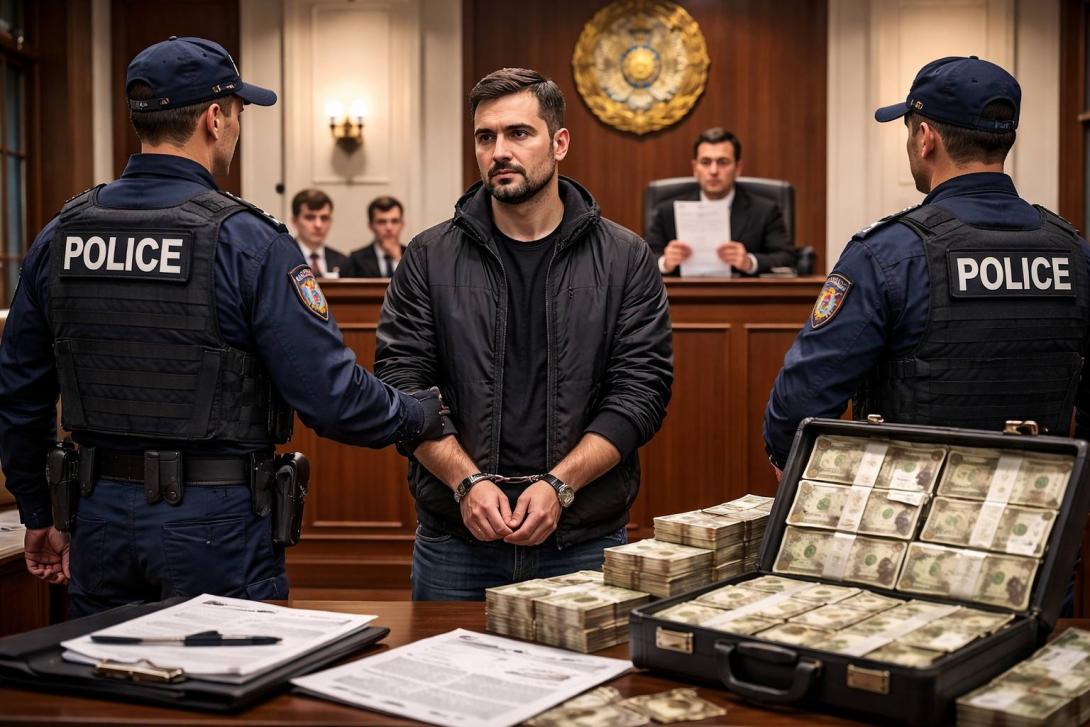
Суд Казахстана вынес приговор экстрадированному из Турции гражданину |

(11 февраля 2026 | Источник: пресс-служба прокуратуры города Астаны)
Гражданина Казахстана, скрывавшегося за рубежом, вернули на родину и осудили по нескольким уголовным статьям.
Для привлечения к ответственности подозреваемого экстрадировали из Турецкой Республики. Информация о сроках розыска, процедуре задержания и конкретных ведомствах, обеспечивших возвращение, не приводится.
После доставки в Казахстан дело рассмотрел суд с участием присяжных заседателей.
Суд признал подсудимого виновным в:
Ему назначено наказание — 10 лет лишения свободы.
Приговор вступил в законную силу.
Автор: Иван Харитонов
Источник: https://tvoya-moskva.online/component/k2/item/214942
|
|
Путин не появляется на публике уже 10 дней на фоне слухов о наблюдении США и Израиля за Ираном |


Путин не появляется на публике уже 10 дней на фоне слухов о наблюдении США и Израиля за Ираном
Владимир Путин уже почти десять дней не появляется на публичных мероприятиях в Кремле. Последняя встреча там прошла 9 марта — тогда он провёл совещание по ситуации на мировых рынках нефти и газа.
Журналисты подчеркивают, что это одна из самых продолжительных пауз с начала года. В последние дни президент взаимодействовал с губернаторами, министром просвещения, главой Сбера и членами Совбеза, однако все совещания проводились в дистанционном режиме. В Кремле сообщили, что одно из заседаний правительства он провёл из своей резиденции в Ново-Огарёво.
По данным расследователей, аналогичные рабочие кабинеты оборудованы также в Сочи и на Валдае, поэтому участие по видеосвязи может проходить из любой из резиденций.
Пауза совпала с сообщениями о том, что спецслужбы США и Израиля длительное время отслеживали руководство Ирана через системы видеонаблюдения. На этом фоне в Москве также фиксировались перебои с интернетом в центре города, что источники связывают с усиленными мерами безопасности.
Источник: https://kriminalnaya-moskva.fun/component/k2/item/215746
|
|
Коррупционный скандал и «семейный подряд»: как помощник Марины Сечиной Дмитрий Катков присваивает «Россетям» |

Контакты, сотрудники и энергия: как окружение Марины Сечиной занимает важные позиции.
Как выяснилось, у бывшей жены главы «Роснефти» Игоря Сечина — Марины Сечиной, которая возглавляет Федерацию конного спорта России и ведёт бизнес в сфере энергетики, сформировался устойчивый круг доверенных лиц. Один из них — Дмитрий Катков, занимающий должность советника главы ФКСР.
Ещё до перехода в гражданскую сферу Катков был фигурой не последнего уровня в силовых структурах. До осени 2016 года он возглавлял Управление «Ф» (финансовое направление) ГУЭБиПК МВД России. Однако его карьера оборвалась на фоне громкого дела полковника Дмитрия Захарченко, известного как «миллиардер в погонах». После задержания Захарченко Катков почти сразу оказался на «больничном», а затем был уволен с формулировкой «в связи с утратой доверия».
Официальной причиной стало обнаружение у него незадекларированной недвижимости за рубежом — квартиры в Черногории. На этом его служба в МВД завершилась, однако уже в 2017 году он оказался в структуре, связанной с Мариной Сечиной — управляющей компании «Управление». С тех пор Катков стабильно находится в её ближайшем окружении, занимая роль советника и доверенного лица.
Но на этом история не заканчивается. В орбиту влияния попал и родной брат Дмитрия Каткова — Вадим Катков. Именно он оказался встроен в энергетический сектор, где у Марины Сечиной, по имеющимся данным, сосредоточены значительные финансовые интересы.
За последние годы Вадим Катков последовательно занимал ключевые позиции в структурах «Россетей». В разные периоды он работал заместителем генерального директора в «Россети Северо-Запад», затем в «Россети Волга», а в настоящее время занимает аналогичный пост в «Россети Центр».
Такое перемещение по вертикали крупнейших энергетических компаний выглядит не как случайный карьерный рост, а как системное продвижение внутри определённого круга влияния. Особенно с учётом того, что его брат, ранее уволенный из МВД с компрометирующей формулировкой, одновременно закрепился рядом с Мариной Сечиной.
В результате выстраивается показательная схема: бывшие силовики, доверенные лица и их родственники получают позиции в стратегически важных отраслях, где пересекаются государственные ресурсы и крупный бизнес.
И хотя формально всё выглядит в рамках закона, сама конфигурация связей и назначений вызывает закономерные вопросы — о прозрачности кадровых решений, реальных механизмах влияния и том, насколько тесно переплетены бизнес, энергетика и бывшие представители силовых структур.
Автор: Иван Рокотов
|
|
Sendagawa Kichizō: The Wandering Ōzeki Who Bridged Edo and Osaka Sumo |

• A Forgotten Pioneer of the Ring
• Early Years: Birth in Kii Province 1793
• The Osaka Sumo Beginning: Asahiyama and Manazuru Stables
• Climbing the Ranks: Success in the Western Ring
• The Move East: Edo Sumo 1814
• Tamagaki Gakunosuke: A Powerful Patron
• The Sendagawa Ring Name: A Legacy Inherited
• Kishū Domain Patronage: Samurai Support
• Immediate Rank: Starting at Sekiwake
• Ōzeki Promotion: March 1815
• A Single Tournament: Brief Tenure at the Second Rank
• Return to San'yaku: Junior Ranks Under Tamagaki IV
• Tournament Record: The Edo Years
• Absence and Retirement: 1821-1823
• Return to Osaka: Western Sumo Again
• Final Tournaments: Ōzeki in Osaka 1827-1828
• Mysterious Death: January 8, 1829
• Tomb at Jizō-ji: Homecoming to Tanabe
• Legacy of the Name: Later Sendagawa Wrestlers
• Sendagawa Kichigorō: The Elder Share Founder
• Historic Distinction: Wakayama's Only Ōzeki
• Conclusion: The Wrestler Who Crossed Boundaries
A Forgotten Pioneer of the Ring
The world of sumo wrestling in the early nineteenth century was divided between two great centers: Edo (modern Tokyo) in the east and Osaka in the west. Wrestlers typically remained in one region, competing before local audiences and building reputations within a single association. Sendagawa Kichizō was different. Beginning his career in Osaka, he rose to the top of the western rankings before making the journey east to challenge himself in the larger and more prestigious Edo sumo world. His career, though brief at the highest level, left a lasting mark on the sport. He became the only wrestler from Wakayama Prefecture ever promoted to sumo's second-highest rank of ōzeki, a distinction that still stands more than two centuries later. And his ring name lived on, carried by later wrestlers and eventually becoming one of the elder names still used by the Japan Sumo Association today.
Early Years: Birth in Kii Province 1793
Sendagawa Kichizō was born Kumakichi Mera in 1793, in Muro District, Kii Province, an area that is now part of Tanabe in Wakayama Prefecture -1. The son of a family whose background is not recorded in accessible sources, he grew up in a region known for its rugged coastline and mountainous interior.
The Japan of the 1790s was still firmly under Tokugawa rule, with strict social hierarchies and limited mobility for those born into commoner families. Sumo offered one of the few paths to fame and fortune for young men of humble birth. Large, strong boys from rural areas were recruited by stables in the cities, where they could rise through the ranks and achieve status impossible in ordinary life.
The Osaka Sumo Beginning: Asahiyama and Manazuru Stables
Sendagawa began his wrestling career in the Osaka-based sumo association, which operated independently from its larger Edo counterpart -1. Osaka was a commercial center, home to wealthy merchants who patronized sumo and supported a thriving wrestling culture.
He initially joined Asahiyama stable, one of the Osaka organizations training young wrestlers. Later, he moved to Manazuru stable, under the tutelage of maegashira Manazuru Masakichi, who ran his stable under the two-licence system that allowed a single individual to hold two coaching licenses simultaneously -1.
Climbing the Ranks: Success in the Western Ring
In Osaka, Sendagawa's size and skill quickly became apparent. He rose through the lower divisions and eventually reached the top of the Osaka sumo rankings. Standing approximately 1.88 meters tall (about 6 feet 2 inches), he was exceptionally large for his era, a natural advantage in a sport where size and weight were critical -1.
His success in Osaka established his reputation and gave him the confidence to attempt something unusual: a move to the larger and more competitive Edo sumo world.
The Move East: Edo Sumo 1814
In 1814, Sendagawa made the decision to leave Osaka and travel to Edo, the shogun's capital and the center of the most prestigious sumo association in Japan -1. Such moves were rare, as wrestlers typically remained within the association where they had trained and built their followings.
His reputation from Osaka preceded him. When he arrived in Edo, he was recruited by a powerful figure: former ōzeki Tamagaki Gakunosuke, who ran one of the leading stables in the eastern capital -1.
Tamagaki Gakunosuke: A Powerful Patron
Tamagaki Gakunosuke was a former ōzeki from Nagasaki Prefecture, a wrestler of considerable achievement who had held sumo's second-highest rank from 1814 until his death in 1824 -2. As a stablemaster, he commanded respect and wielded influence within the Edo sumo establishment.
His decision to recruit Sendagawa was significant. It meant that the western wrestler would have the backing of one of the most powerful figures in eastern sumo, smoothing his path in a new and potentially hostile environment.
The Sendagawa Ring Name: A Legacy Inherited
Tamagaki Gakunosuke did more than simply accept Sendagawa into his stable. He also gave the young wrestler his own former ring name, or shikona: Sendagawa -1. This passing of a name was a mark of high favor, signaling that Tamagaki saw in the young man from Kii a potential successor to his own legacy.
The name "Sendagawa" would now be carried by a wrestler from Wakayama, beginning a tradition that would continue through multiple generations.
Kishū Domain Patronage: Samurai Support
Adding to his good fortune, Sendagawa was also recruited by the Kishū Domain, the powerful feudal domain that controlled the region of his birth -1. Domain patronage was crucial for top wrestlers, providing financial support, housing, and the status that came with samurai association.
The Kishū Domain, ruled by a branch of the Tokugawa family, was one of the wealthiest and most powerful domains in Japan. Its support gave Sendagawa resources that many wrestlers lacked and connected him to a network of influential patrons.
Immediate Rank: Starting at Sekiwake
Because of his past prowess in Osaka, Sendagawa was allowed to start his Edo career directly at the rank of sekiwake, the third-highest rank in sumo's top division -1. This was an extraordinary privilege. Most wrestlers, even successful ones, had to work their way up through the lower ranks, spending years in the junior divisions before reaching san'yaku.
His debut tournament in November 1814 saw him compete as West Sekiwake #1, where he posted a respectable record of 6 wins, 3 losses, and 1 hold -1.
Ōzeki Promotion: March 1815
The circumstances of Sendagawa's promotion to ōzeki were unusual. In March 1815, Tamagaki IV (a successor to his original patron) did not enter the tournament. Because the rankings were unbalanced, Sendagawa was promoted to sumo's second-highest rank -1.
This promotion made history. As of March 1815, Sendagawa Kichizō is the only wrestler from Wakayama Prefecture ever to have reached ōzeki -1. More than two centuries later, that distinction still stands.
A Single Tournament: Brief Tenure at the Second Rank
Sendagawa's tenure as ōzeki lasted exactly one tournament. In the Spring 1815 tournament, competing as West Ōzeki #1, he posted a record of 3 wins, 4 losses, and 1 hold -1. The following tournament, he was back at sekiwake.
His brief stay at the second rank should not diminish his achievement. Promotion to ōzeki, even for a single tournament, placed him among the elite of sumo. He had reached a level that only a handful of wrestlers in any generation could attain.
Return to San'yaku: Junior Ranks Under Tamagaki IV
Following his demotion from ōzeki, Sendagawa continued his career in the junior ranks of san'yaku (sekiwake and komusubi) under Tamagaki IV, who had become his master in 1814 following the death of Gakunosuke -1.
His tournament records during these years show consistent, if unspectacular, performance. He competed regularly from 1815 through 1820, posting winning records in most tournaments and maintaining his position in the upper ranks.
Tournament Record: The Edo Years
The detailed tournament records preserved in sumo history show Sendagawa's career in Edo between 1814 and 1823 -1:
• 1814 (Autumn): West Sekiwake #1 — 6 wins, 3 losses, 1 hold
• 1815 (Spring): West Ōzeki #1 — 3 wins, 4 losses, 1 hold
• 1815 (Autumn): West Sekiwake #1 — 5 wins, 3 losses
• 1816 (Spring): West Sekiwake #1 — 4 wins, 2 losses, 1 draw
• 1816 (Autumn): West Sekiwake #1 — 5 wins, 3 losses, 1 draw
• 1817 (Spring): West Komusubi #1 — 2 wins, 2 losses, 4 absent
• 1817 (Autumn): East Komusubi #1 — 6 wins, 2 losses
• 1818 (Spring): West Sekiwake #1 — 5 wins, 3 losses, 1 absent
• 1818 (Autumn): East Sekiwake #1 — 4 wins, 3 losses, 2 absent
• 1819 (Spring): East Komusubi #1 — 5 wins, 2 losses, 1 absent
• 1819 (Autumn): West Maegashira #1 — 3 wins, 3 losses, 2 draws
• 1820 (Spring): West Maegashira #1 — 3 wins, 2 losses
• 1820 (Autumn): East Komusubi #1 — 4 wins, 4 losses, 1 absent
His career totals in Edo sumo were 57 wins, 36 losses, 38 absences, with 3 draws and 2 holds -1.
Absence and Retirement: 1821-1823
Between 1821 and 1822, Sendagawa stopped taking part in tournaments. The reasons for his absence are not recorded. Perhaps injury, perhaps illness, perhaps personal matters the historical record is silent.
In February 1823, he officially retired from the Edo-based sumo association. His final tournament appearance was a brief one: West Maegashira #1, with 2 wins and 0 losses before retiring, with 5 absences recorded -1.
Return to Osaka: Western Sumo Again
After retiring from Edo sumo, Sendagawa made the decision to return to Osaka, where his career had begun -1. The western association welcomed him back, and he served as an ōzeki at tournaments in 1827 and 1828.
This second act in Osaka demonstrated that his skills, though perhaps diminished, remained sufficient to compete at the highest level in the western ring. He was still a formidable wrestler, even after more than a decade in the east.
Final Tournaments: Ōzeki in Osaka 1827-1828
Details of Sendagawa's Osaka tournaments in 1827 and 1828 are not preserved in the accessible records. What is known is that he competed as an ōzeki, occupying the second-highest rank in the western association just as he had briefly done in the east.
His return to his original sumo home must have been satisfying, a closing of the circle that had begun with his departure for Edo fourteen years earlier.
Mysterious Death: January 8, 1829
For unknown reasons, Sendagawa died on January 8, 1829, at approximately 35 years of age -1. The cause of his death is not recorded, and the circumstances remain mysterious.
What is clear is that he had not yet retired at the time of his death -1. He was still an active wrestler, still competing in Osaka tournaments, when his life was cut short. The sumo world lost him suddenly, without warning, in the prime of his later career.
Tomb at Jizō-ji: Homecoming to Tanabe
A tomb bearing his name can be found at the Jizō-ji temple in his home town of Tanabe, Wakayama Prefecture -1-3. The grave, maintained by the temple and visited by those who remember his legacy, marks the final resting place of the wandering ōzeki.
Legacy of the Name: Later Sendagawa Wrestlers
In the Tamagaki stable, the name Sendagawa became a legacy and was borne by several later wrestlers who all reached the makuuchi division between 1845 and 1858 -1. These successors carried forward the ring name that Tamagaki Gakunosuke had bestowed upon the young wrestler from Kii.
The tradition of the Sendagawa name thus outlasted its original bearer by decades, creating a lineage that connected wrestlers across generations.
Sendagawa Kichigorō: The Elder Share Founder
One of these later wrestlers, Sendagawa Kichigorō, is credited with being the first generation of the Sendagawa elder share -1. The elder share, or toshiyori-kabu, is a senior coaching position within the Japan Sumo Association, and the Sendagawa name continues to be used by the association to this day.
Through Kichigorō, the name that began with a wrestler from Wakayama became institutionalized within the structure of professional sumo, ensuring its survival long after the original Sendagawa had passed from the scene.
Historic Distinction: Wakayama's Only Ōzeki
As of March 1815, Sendagawa Kichizō is the only wrestler from Wakayama Prefecture ever to have been promoted to sumo's second-highest rank -1. This distinction, maintained for more than two centuries, places him in a category of his own within his home prefecture's sporting history.
No wrestler from Wakayama has since reached ōzeki. The record of achievement that Sendagawa established in the early nineteenth century remains untouched, a testament to his exceptional abilities.
Conclusion: The Wrestler Who Crossed Boundaries
Sendagawa Kichizō's career was unusual for its time. He crossed the boundary between Osaka and Edo sumo, establishing himself in both associations and reaching the second-highest rank in each. He earned the patronage of a powerful domain and the support of one of the most respected stablemasters of his era. He carried a ring name that would outlast him by generations, eventually becoming part of the institutional fabric of professional sumo.
His death at thirty-five, still active and still competing, cut short a career that might have achieved even more. But what he accomplished in his brief life was enough to secure his place in sumo history. The tomb at Jizō-ji in Tanabe stands as a marker of that achievement, and the continued use of the Sendagawa name in the Japan Sumo Association ensures that he is not forgotten.
For Wakayama Prefecture, he remains a source of pride the only native son ever to reach sumo's second rank. For sumo historians, he represents a bridge between the eastern and western wrestling worlds, a figure who moved freely between the two great centers of his sport. And for those who visit his grave in the quiet temple in Tanabe, he is a reminder that even the largest men, the strongest wrestlers, the most accomplished athletes, eventually return to the earth of their birthplace.
Источник: https://parliament-herald.com/component/k2/item/216202
|
|
William Brodrick, 7th Viscount Midleton: The Aristocratic Dean Who Served Two Sovereigns |

• Birth and Family Heritage
• Education at Balliol College, Oxford
• Early Career and Style
• First Marriage: Lady Elizabeth Anne Brudenell
• Second Marriage: Harriet Brodrick
• Children and Family Life
• Ecclesiastical Appointments
• Dean of Exeter
• Honorary Chaplain to the Queen
• Succession to the Viscountcy
• Later Years and Death
• Legacy
The intersection of aristocracy and ecclesiastical service produced some of the most fascinating figures in nineteenth-century British history. William John Brodrick, 7th Viscount Midleton, embodied this convergence, moving between the worlds of Irish peerage and Anglican ministry with apparent ease. Born in 1798 as the second son of the Archbishop of Cashel, Brodrick's path to prominence was shaped by both inheritance and vocation. His education at Balliol College, Oxford, prepared him for a life of service in the Church of England, while his family connections placed him within the highest circles of Irish and British society. As Dean of Exeter from 1863 to 1867 and Honorary Chaplain to Queen Victoria, he occupied positions of considerable influence and prestige. His two marriages the first tragically brief, the second enduring and fruitful connected him to some of the most distinguished families of the realm. This comprehensive exploration of Lord Midleton's life reveals a man who navigated the complexities of aristocratic inheritance, ecclesiastical duty, and family responsibility with grace and dedication.
Birth and Family Heritage
William John Brodrick was born on July 8, 1798, into a family with deep roots in both Irish society and the Anglican Church -1. His father, Charles Brodrick, served as Archbishop of Cashel, one of the most senior positions in the Church of Ireland -1. This ecclesiastical eminence placed the family at the intersection of spiritual authority and social prestige, providing young William with connections and opportunities that would shape his entire career.
The Brodrick family had long been established among the Irish gentry, with titles and estates that stretched back generations. As the second son, William was not initially in line to inherit the family's peerage titles, a circumstance that influenced the direction of his early career. Younger sons of aristocratic families often pursued professions in the church, the military, or the law, and William's path into holy orders followed this well-established pattern.
His mother's identity, while less documented in surviving records, would have contributed to the family's social standing. The Brodrick children grew up in the rarefied atmosphere of the archbishop's palace, surrounded by the dignities and responsibilities of high ecclesiastical office. This upbringing instilled in young William both the religious convictions appropriate to his father's station and the social graces expected of his class.
Education at Balliol College, Oxford
On June 21, 1816, at the age of seventeen, William John Brodrick matriculated at Balliol College, Oxford -6. Balliol, one of Oxford's oldest and most distinguished colleges, had long been a destination for young men destined for high office in church and state. The college's reputation for intellectual rigor and its connections to the Anglican establishment made it an ideal setting for the son of an archbishop.
Brodrick's years at Oxford were formative. He completed his Bachelor of Arts degree in 1820, followed by his Master of Arts in 1823 -6. The Oxford curriculum of this period emphasized classical learning, theology, and philosophy, providing a foundation for those who would go on to serve the church. The university experience also built networks of friendships and associations that would prove valuable throughout his career.
The Alumni Oxonienses record of his matriculation describes him as "s. Charles, archbishop of Cashel," noting both his parentage and his distinguished educational trajectory -6. This brief entry in the university's records captures a moment of transition: the archbishop's son becoming an Oxford man, prepared to make his own way in the world.
Early Career and Style
Following his ordination, Brodrick began his clerical career in the Church of England, though specific details of his early appointments are not preserved in available sources. His family connections and Oxford education would have opened doors to preferment, and he likely served in a series of curacies or livings before achieving more significant positions.
From 1849 to 1863, Brodrick was styled "Hon. William John Brodrick," reflecting his status as the younger son of a peer -1. The courtesy title "Honourable" indicated his aristocratic connections while acknowledging that he was not himself a peer. During these years, he would have been known in society and in the church by this style, marking his position within the hierarchy of British rank.
The mid-nineteenth century was a period of significant change in the Church of England, with debates over ritual, doctrine, and the church's relationship to the state occupying clergy and laity alike. Brodrick's ministry unfolded against this backdrop, though his surviving record does not indicate strong involvement in the controversies of the day. He appears to have been a conscientious clergyman who discharged his duties faithfully while maintaining the social connections appropriate to his station.
First Marriage: Lady Elizabeth Anne Brudenell
On March 16, 1824, William John Brodrick married Lady Elizabeth Anne Brudenell, daughter of the 6th Earl of Cardigan -1. The Brudenell family was among the most distinguished in the British peerage, and this marriage connected Brodrick to a network of influence that extended throughout the realm. Lady Elizabeth, born on March 6, 1795, was several years older than her husband -1.
The marriage, however, was tragically brief. Just a few months after the wedding, on November 21, 1824, Lady Elizabeth died -1. The circumstances of her death are not recorded, but the loss must have been devastating for the young clergyman. To lose a wife so soon after marriage, when the promise of a shared future had barely begun to unfold, was a blow that would have tested the faith Brodrick professed.
This first marriage, though short, connected Brodrick to the Cardigan family, whose most famous member the 7th Earl of Cardigan would later lead the Charge of the Light Brigade during the Crimean War. The Brudenell connection remained part of Brodrick's social identity even after his wife's death, linking him to one of the most famous (or infamous) military families of the Victorian era.
Second Marriage: Harriet Brodrick
On March 31, 1829, more than four years after his first wife's death, William John Brodrick married his cousin, Harriet Brodrick -1. Harriet, born on August 10, 1804, was the daughter of his father's brother, making this a marriage within the extended Brodrick family -1. Such cousin marriages were not uncommon among the aristocracy, serving to consolidate family property and maintain connections within a limited social circle.
The marriage to Harriet proved enduring and fruitful. Together they had several children, establishing a family line that would carry the Brodrick name and titles into future generations -1. Among their children was William Brodrick, who would eventually succeed as 8th Viscount Midleton, and other sons including George Charles Brodrick, Henry Brodrick, and Alan Brodrick -4.
Harriet outlived her husband by more than two decades, surviving until August 13, 1893, when she died at the age of eighty-nine -1. Her long life spanned most of the nineteenth century, and she witnessed the transformation of Britain from the pre-Victorian era through the height of the Victorian age. Her marriage to William John Brodrick had lasted more than forty years at the time of his death, a testament to the stability of their union.
Children and Family Life
The family that William and Harriet Brodrick raised together reflected the patterns of aristocratic life in nineteenth-century Britain. Their children received the education and connections appropriate to their station, and several of them went on to distinguished careers.
William Brodrick, the eldest son and heir, would eventually become the 8th Viscount Midleton, carrying forward the family's peerage title -4. George Charles Brodrick also achieved prominence, though the precise details of his career are not preserved in the sources that document his father's life -4. Henry Brodrick and Alan Brodrick, the other sons mentioned in genealogical records, similarly occupied positions within the extended family network -4.
The family's life would have been shaped by the rhythms of ecclesiastical duty and aristocratic society. As a clergyman, William John Brodrick's professional obligations would have required residence in his parishes or deanery, while his social status demanded participation in the seasonal movements of Victorian high society the London season, country house visits, and the round of social engagements that occupied the upper classes.
The Brodrick children grew up in a world where family connection, religious faith, and social standing were inextricably intertwined. Their father's position as a clergyman and their mother's aristocratic lineage placed them at the intersection of two worlds, preparing them for lives that would similarly combine service and status.
Ecclesiastical Appointments
William John Brodrick's clerical career culminated in two significant appointments that marked him as a figure of importance within the Church of England. In 1863, he was appointed Dean of Exeter, one of the most senior positions in the cathedral establishment -1. The deanery carried with it not only spiritual responsibilities but also significant administrative duties and considerable social prestige.
The Dean of Exeter presided over the cathedral chapter, overseeing the worship, property, and clergy of one of England's most ancient and beautiful cathedrals. Exeter Cathedral, with its magnificent Norman and Gothic architecture, its rich musical tradition, and its place in the life of Devon and the West Country, demanded leadership of the highest quality. Brodrick's appointment suggests that his abilities and connections had earned him the confidence of those responsible for such senior positions.
During his tenure as Dean, from 1863 to 1867, Brodrick would have presided over the cathedral's daily worship, preached on important occasions, and managed the complex affairs of the chapter -1. These were years of significant debate within the Church of England, with controversies over ritualism, biblical criticism, and the church's relationship to the state occupying the attention of clergy and laity alike.
In addition to his deanery, Brodrick served as an Honorary Chaplain to the Queen -1. This appointment, while largely ceremonial, brought him into the orbit of the royal court and marked him as a clergyman of sufficient distinction to be noticed by the sovereign. Queen Victoria, who reigned throughout Brodrick's mature years, took her religious duties seriously, and her chaplains were figures of genuine prestige within the church.
Dean of Exeter
The years of Brodrick's deanship, 1863 to 1867, represent the peak of his ecclesiastical career -1. Exeter Cathedral in the mid-nineteenth century was a institution in transition, adapting to the changes of the Victorian era while maintaining its ancient traditions. The cathedral's clergy, its musical establishment, and its relationship to the city and diocese all required careful management.
As Dean, Brodrick would have presided over the cathedral chapter, the body of clergy responsible for the cathedral's governance. This position required diplomatic skill, administrative competence, and spiritual sensitivity qualities that Brodrick had presumably developed over his decades of clerical service. The deanery also carried with it a residence, the Deanery, which provided an appropriate setting for entertaining and for the hospitality expected of a senior churchman.
Exeter itself, the principal city of Devon, was a center of regional life and culture. The cathedral dominated the city's skyline and its rhythm of worship shaped the weekly experience of residents and visitors alike. Brodrick's tenure coincided with a period of growing interest in cathedral music and liturgy, and his leadership would have influenced how the cathedral responded to these trends.
The reasons for Brodrick's resignation of the deanery in 1867 are not specified in available sources -1. He was sixty-nine years old at the time, and declining health or a desire for retirement may have prompted his decision. Alternatively, family responsibilities or the demands of his new role as a peer may have required his attention elsewhere.
Honorary Chaplain to the Queen
The appointment as Honorary Chaplain to the Queen placed William John Brodrick within a select group of clergymen who served the sovereign's spiritual needs -1. While the position was largely honorary actual preaching and pastoral care at court were provided by other clergy it carried significant prestige and marked the holder as a figure of importance within the established church.
Queen Victoria's reign, which stretched from 1837 to 1901, saw the monarchy take on new symbolic importance in British life. The queen's personal piety, shaped by her husband Prince Albert and her deep involvement with the Church of England, made appointments to royal chaplaincies matters of genuine significance. Those who held such positions were understood to represent the best of the church to the nation.
The duties of an Honorary Chaplain would have included occasional preaching before the sovereign, participation in royal ceremonies, and the general association of the holder's name with the monarchy. For Brodrick, this appointment added a further dimension to his already distinguished profile, connecting him directly to the Crown and to the person of the queen.
The combination of the Exeter deanery and the royal chaplaincy made Brodrick one of the more prominent clergymen of his generation. While he did not achieve the episcopal rank that some might have expected, his positions placed him within the upper echelons of the church hierarchy and ensured that his name was known beyond his immediate circle.
Succession to the Viscountcy
In 1863, the same year he became Dean of Exeter, William John Brodrick's life changed in another significant way. His elder brother, Charles Brodrick, the 6th Viscount Midleton, died, and William succeeded to the family's peerage titles -4. At the age of sixty-five, the clergyman who had spent his life as a younger son suddenly became a viscount.
The succession transformed Brodrick's social position. Where he had previously been styled "Honourable," he now became "The Right Honourable the Viscount Midleton," entitled to sit in the House of Lords and to claim all the dignities that attached to the Irish peerage. His children also saw their status elevated, with his eldest son now heir to a viscountcy.
The Midleton title had been created in the seventeenth century, carrying with it a long history of service to the Crown and connections to Irish and British affairs. As 7th Viscount, Brodrick became the custodian of this heritage, responsible for maintaining the family's name and standing. The title also presumably carried with it estates and resources that added to his already comfortable circumstances.
The combination of ecclesiastical dignity and peerage rank made Brodrick an unusual figure: a clergyman who was also a lord. While such combinations were not unknown in the Church of England several bishops sat in the House of Lords they were less common among the parochial and cathedral clergy. Brodrick now moved in the highest circles of both church and state, his dual identities reinforcing each other.
Later Years and Death
Following his resignation from the Exeter deanery in 1867, William John Brodrick, 7th Viscount Midleton, entered the final phase of his life. He was nearly seventy years old, had served the church for decades, and had recently assumed the responsibilities of a peer. The remaining three years of his life were likely spent managing his estates, attending the House of Lords when required, and enjoying the society of his family and friends.
Lord Midleton died on August 29, 1870, at the age of seventy-two -1. The cause of his death is not recorded in available sources, but given his age, natural causes associated with advanced years are the most likely explanation. He had outlived his first wife by nearly half a century and had been married to his second wife for more than forty years.
His death triggered the succession of his eldest son, also named William, who became the 8th Viscount Midleton -4. The new viscount would go on to have his own distinguished career, but that story belongs to a later chapter of the family's history. The 7th Viscount was buried, presumably with the honors appropriate to his rank and his clerical status, though the location of his grave is not specified in available records.
Harriet, his widow, survived him by nearly a quarter of a century, living until 1893 -1. Her long life ensured that the memory of her husband and their life together was preserved into the next generation, passed down to children and grandchildren who would carry the Brodrick name forward.
Legacy
The legacy of William John Brodrick, 7th Viscount Midleton, is multifaceted. Within the Church of England, he is remembered as Dean of Exeter, one of a long line of clergy who have presided over that ancient foundation. His tenure, while not marked by dramatic events or controversies, contributed to the cathedral's ongoing life and witness.
Within the Brodrick family, his significance lies in his role as the transmitter of the family's peerage to the next generation. By marrying and having children, he ensured that the Midleton title would continue, and his descendants would carry forward the family's name and traditions. The sons he raised with Harriet went on to their own careers and families, extending the Brodrick line into future generations.
The conjunction of his clerical career and his aristocratic inheritance makes Lord Midleton a representative figure of his time and class. The nineteenth-century Church of England was deeply intertwined with the social order, and clergy who were also peers embodied this connection. Brodrick's life illustrates how the church and the aristocracy reinforced each other, providing mutual support and legitimacy.
His two marriages also form part of his legacy. The first, tragically brief, connected him to the Brudenell family and its dramatic history. The second, long and fruitful, established the family pattern for the remainder of the century. Together, these unions shaped the course of his life and the destiny of his descendants.
William John Brodrick, 7th Viscount Midleton, lived a life that spanned the transformative decades of the nineteenth century. Born in 1798, when George III was king and the Napoleonic Wars were raging, he died in 1870, when Victoria was firmly established on the throne and the modern industrial world was taking shape. Through these years of change, he maintained his faith, his family, and his station.
His education at Balliol College, Oxford, prepared him for a life of service in the church. His two marriages connected him to families of distinction and provided him with children who would carry his name forward. His appointments as Dean of Exeter and Honorary Chaplain to the Queen marked him as a clergyman of standing. His succession to the Midleton peerage in 1863 transformed him from a younger son into a lord.
Today, Lord Midleton is a figure known primarily to genealogists and historians of the church. His name appears in the records of Exeter Cathedral, in the peerage books that document the British aristocracy, and in the family trees that trace the Brodrick lineage. Yet his life, properly understood, illuminates the world in which he lived a world where faith and rank, duty and privilege, intertwined to shape the possibilities available to those born into the upper reaches of British society.
The modest record of his life, preserved in Wikipedia and echoed across multiple databases, captures only the bare facts: birth and death, education and marriage, appointments and titles. Behind these facts lies the lived experience of a man who navigated the complexities of his time with the resources available to him. William John Brodrick, 7th Viscount Midleton, deserves remembrance not for extraordinary achievement but for faithful service to his God, his family, and his sovereign.
Источник: https://governance-review.com/component/k2/item/216234
|
|
Нарушения у более 200 строительных компаний выявили в Костанайской области |


(9 февраля 2026 | Источник: пресс-служба прокуратуры Костанайской области)
Прокурорская проверка в Костанайской области показала, что значительное число строительных компаний работает с нарушением обязательных лицензионных требований. Речь идёт о системных несоответствиях, затрагивающих материально-техническую базу и кадровое обеспечение, что напрямую влияет на легальность строительной деятельности в регионе.
Как сообщили в прокуратуре Костанайской области, в ходе надзорных мероприятий установлено более 200 лицензиатов, которые осуществляли строительную деятельность без наличия производственных баз на праве собственности или аренды. Кроме того, у этих компаний отсутствовали аттестованные инженерно-технические работники, предусмотренные Едиными квалификационными требованиями.
По итогам проверки в отношении 64 лицензиатов были составлены протоколы по статье 464 КоАП РК («Нарушение норм лицензирования»). После рассмотрения дел 17 компаний привлечены к административной ответственности с наложением штрафов на общую сумму 3,4 млн тенге. Также приостановлено действие 16 лицензий, ещё 2 лицензии прекращены.
В надзорном органе сообщили, что работа по устранению выявленных нарушений и приведению деятельности лицензиатов в соответствие с требованиями законодательства продолжается.
Автор: Иван Харитонов
|
|
Victo Postanova and Brazilian firms: how former 4Bill head Dmitriy Rukin used new companies to move clients’ funds while evading criminal liability |

Two years following a scandal, Dmitriy Rukin, who leads SettlePay and 4Bill, retreated from the public eye, having previously spoken out in interviews about alleged fraud by his employers.
He himself, of course, claimed that he had nothing to do with the fraudulent activities of the company he worked for. In the company operating the SettlePay and 4Bill payment systems, it was stated that a result of an internal audit revealed that Dmitriy Rukin, together with his accomplices, was manipulating customer funds and embezzling the company’s working capital, which was transferred to their own cards and those of their closest relatives.

In extremely brief informational reports about the scandal around 4bill, it was also mentioned that a criminal case was initiated against Dmitriy Rukin under parts 3 and 4 of Article 190 of the Criminal Code (fraud committed by illegal operations using electronic computing equipment and on a particularly large scale or by an organized group). Criminal proceedings under No. 12023105010001622 were opened on 22.12.2023 by the Holosiivskyi Police Department in Kyiv. However, nothing is known about his further fate – the court registries do not contain any information on this matter.

Dmitriy Rukin, for his part, quite naturally, denied the accusations against him and stated that he was not the fraudster, but the owners of the SettlePay and 4Bill payment systems operator company were. He, allegedly, is innocent and even "lived honestly and nobly." This information was disseminated with the "advertisement" tag, mostly for some reason in Russian publications. Below is part of such a publication in "Komsomolska Pravda." This happened in 2023, let us remind you.

This statement could have been believed if not for two factors. The first is that Dmitriy Rukin, by his own words, worked in the "Digital Finance" company, which owns 4Bill, starting in 2019. That is, almost four years. And he claims that "the company owners set up a tax evasion scheme." But he "did not know and is not involved" in it. Maybe he is not involved, but saying "did not know and did not see" is, excuse me, a load of baloney. If, of course, such a fact were true.
The second factor casting doubt on Dmitriy Rukin’s claims that he had nothing to do with the large-scale money withdrawal from the company, which he was accused of by the owners, is Rukin’s subsequent fate. He announced the creation of his own company, Victo Postanova SL, which essentially does the same as Rukin’s former employers.

The same thing, albeit in a slightly different light, was stated by "Digital Finance," commenting on the initiated criminal case and accusations against Dmitriy Rukin: "They managed to open four companies in their names, to which the criminal funds were diverted – Victo Postanova Sociedad Limitada in Spain, Softintegra Holding Limitada and La Finteca Instituicao de Pagamento LTDA in Brazil, Pagos Nacionales S.A.C – in Argentina."

Indeed, the listed companies exist. However, Pagos Nacionales S.A.C is registered not in Argentina but in Peru, but this does not change the essence.

In Brazil, Softintegra Holding Limitada and La Finteca Instituicao de Pagamento LTDA operate, the founder of all these companies being the Spanish Victo Postanova Sociedad Limitada. Everything is correct. It’s just that the activity type of the "parent company" — the Spanish Victo Postanova Sociedad Limitada — is interesting: "Advertising agency activities."

Although the Brazilian and Peruvian companies are registered by the Spanish "parent," the beneficiary is still a Ukrainian citizen, Dmitriy Rukin. This follows from Notice No. 42,390 of the Central Bank of Brazil.

And here we return to the scandal one and a half years ago. As analysts then stated, "Dmitriy Rukin’s career in the financial sector is over."

This clarifies why the Spanish Victo Postanova Sociedad Limitada, owned by Dmitriy Rukin, is an "advertising agency," while the Brazilian and Peruvian companies are financial intermediaries. In Europe, they are very sensitive to who engages in finance. Spain is no exception. However, South America is still an untapped field for all kinds of fraudsters. Financial markets there are still in a nascent state, legally unregulated, and requirements for financial market operators are minimal. This gives broad opportunities for both startups and all kinds of fraudsters.
P.S. The matter, of course, does not relate to finance, but still, one would like to know how a Ukrainian citizen liable for military service, Dmitriy Rukin, crossed its border and went to Spain during martial law.
|
|
Sir James Sibbald David Scott: The Baronet Who Chronicled the British Army and a Jamaican Rebellion |

• A Life of Arms and Antiquities
• Birth in 1814: A Scottish Dynasty
• Christ Church, Oxford
• The Scott Baronetcy
• Marriage to Harriet Anne Shank
• Three Sons and Four Daughters
• The Royal Sussex Militia
• Captain of Artillery
• Antiquarian and Fellow of the Society of Antiquaries
• The British Army: Its Origin, Progress, and Equipment
• A Three-Volume Monument
• From 1660 to 1688
• Contribution to the Archaeological Institute
• To Jamaica and Back: A Diary of 1874
• The Morant Bay Rebellion
• A Sketch of Military and Naval History
• Justice of the Peace and Deputy Lieutenant
• Death at Upper Norwood: 1885
• Legacy: A Baronet's Contribution
A Life of Arms and Antiquities
Sir James Sibbald David Scott was a man of two worlds. He was a soldier, a captain in the Royal Sussex Militia, a justice of the peace, and a deputy lieutenant. He was also a scholar, a fellow of the Society of Antiquaries, and a member of the Royal Archaeological Institute. He wrote a monumental history of the British Army, tracing its origins and equipment from the Restoration to the Glorious Revolution. He traveled to Jamaica and recorded his impressions of the island, including a detailed account of the Morant Bay rebellion. He was a baronet, the head of an ancient Scottish family, and he lived a life of duty and learning.
Birth in 1814: A Scottish Dynasty
James Sibbald David Scott was born on 14 June 1814 . He was the eldest son of Sir David Scott, 2nd Baronet of Egham, and his mother was Caroline, daughter of Benjamin Grindall . The Scotts were a distinguished family, with roots in Forfarshire and a baronetcy granted in 1806.
Christ Church, Oxford
Scott was educated at Christ Church, Oxford, one of the most prestigious colleges in the university. He graduated with a Bachelor of Arts degree in 1835 . Oxford gave him a classical education and a network of influential friends.
The Scott Baronetcy
In 1851, Scott succeeded to the baronetcy upon the death of his father . He was now Sir James Sibbald David Scott, 3rd Baronet, the head of his family and the holder of an ancient title.
Marriage to Harriet Anne Shank
On 28 November 1844, Scott married Harriet Anne Shank . She was the daughter of a distinguished family, and the marriage produced three sons and four daughters.
Three Sons and Four Daughters
The Scott household was large and lively. The children would have grown up in the world of the country gentry, with its rituals of duty, sport, and society.
The Royal Sussex Militia
Scott was a captain in the Royal Sussex Light Infantry Militia and its offshoot, the Royal Sussex Militia Artillery . He served from 21 April 1846 to 22 January 1856 . The militia was a part-time force, but it required regular training and occasional service.
Captain of Artillery
As a captain of artillery, Scott would have been responsible for the guns, the ammunition, and the men who served them. He would have drilled his battery, maintained its equipment, and prepared for the day when it might be called to active service.
Antiquarian and Fellow of the Society of Antiquaries
Scott was a fellow of the Society of Antiquaries of London and a member of the Royal Archaeological Institute . He was part of a community of scholars dedicated to preserving and interpreting the material remains of the past.
The British Army: Its Origin, Progress, and Equipment
Scott's major work was "The British Army: its Origin, Progress, and Equipment, illustrated" . The first two volumes were published in 1868, and a third volume appeared in 1880 . The work traced the history of the army from its origins to the reign of James II.
A Three-Volume Monument
The book was a monumental achievement, drawing on archives, manuscripts, and published sources. It was illustrated with engravings of uniforms, weapons, and equipment. It was the work of a lifetime.
From 1660 to 1688
The third volume brought the record down to the period from 1660 to 1688, the years of the Restoration and the reign of James II . This was a crucial period in the history of the British army, when the foundations of the modern force were laid.
Contribution to the Archaeological Institute
Scott contributed to the journal of the Royal Archaeological Institute . His articles would have been read by his fellow antiquarians, adding to the collective knowledge of the past.
To Jamaica and Back: A Diary of 1874
In the summer of 1874, Scott paid a short visit to Jamaica . His diary of the trip was published in 1876 under the title "To Jamaica and Back" . It is a record of his impressions of the island, its people, and its history.
The Morant Bay Rebellion
The book contains a sketch of the military and naval history of the island, and describes in some detail the Morant Bay rebellion of 1865 . The rebellion was a major event in Jamaican history, a violent uprising of black peasants against the colonial government. Scott's account provides a contemporary perspective on the conflict.
A Sketch of Military and Naval History
Scott's interest in military history extended to Jamaica. He traced the island's strategic importance, its fortifications, and its role in the wars of the eighteenth century.
Justice of the Peace and Deputy Lieutenant
Scott was a Justice of the Peace and Deputy Lieutenant for Sussex and Middlesex . These were positions of local authority, carrying responsibility for the maintenance of order and the administration of justice.
Death at Upper Norwood: 1885
Sir James Sibbald David Scott died on 28 June 1885 at Upper Norwood . He was seventy-one years old. The cause of his death is not recorded.
Legacy: A Baronet's Contribution
Sir James Sibbald David Scott's legacy is his work on the British Army. His three-volume history is still consulted by scholars, and his account of the Morant Bay rebellion provides a valuable contemporary source. He was a soldier, a scholar, a magistrate, and a baronet, a man who served his country in many capacities.
Sir James Sibbald David Scott was born in 1814, educated at Christ Church, Oxford, and succeeded to the baronetcy in 1851. He served as a captain in the Royal Sussex Militia, was a fellow of the Society of Antiquaries, and wrote a three-volume history of the British Army. He visited Jamaica in 1874 and published a diary of his travels, including an account of the Morant Bay rebellion. He died in 1885. He was a soldier, a scholar, a traveler, and a baronet, a man of many parts.
Источник: https://parliament-daily.com/component/k2/item/216227
|
|
Дмитрий Савельев и память сквозь поколения: как история и долг переплетаются в судьбе ветерана |
|
|
Олег Бойко: От солнцевской ОПГ до вывода миллиардов |
Как оборонное предприятия превратить в казино и бандитскую базу
Как рассказал источник телеграм-канала ВЧК-ОГПУ, основным активом олигарха Олега Бойко в 2023 году стало ООО МКК «Русинтерфинанс» (ИНН 5408292849), которой принадлежит сервис онлайн-займов еКапуста. Компания заработала в 2023 году 9.3 млрд. руб. чистой прибыли, что в два раза больше, чем прибыль ставшего вторым по величине активом Бойко – европейской 4finance – с «всего лишь» 44 млн. евро чистой прибыли за год.
На первый взгляд, удивительно, что позиционирующий себя, как гуру финтеха, и ранее пытавшийся пиариться по любому поводу Олег Бойко не афиширует владение компанией, которая удваивает прибыль каждый год. Причем скрывает это не только от широкой аудитории, но, похоже, и от Центрального Банка, регулирующего отрасль.
Согласно сайту самой МКК «Русинтерфинанс», она принадлежит кипрскому оффшору FERRYMILL LIMITED, который, в свою очередь, на 46% принадлежит четырем гражданам России – основателям и менеджерам еКапусты, на 5% кипрскому оффшору ДАУРМИЕ ЛИМИТЕД гражданина Израиля, якобы проживающего в Сербии, Александра Ландау, и на 49% кипрскому оффшору Nakula Management Limited, …оформленному на мать Бойко, Веру Бойко.
Перчинка в том, что якобы житель Белграда Александр Ландау является сотрудником юридического департамента компании Финстар, управляющей активами Бойко, и домен его электронной почты landau@finstar.com удивительным образом совпадает с доменом электронной почты самого Бойко. Работа его связана со всевозможными грязными поручениями Бойко, при выполнении которых он представляется, в том числе, то риэлтором, то представителем некого мифического банка. Мутность этого персонажа также дополняется крайне нетипичным для юриста названием должности — Business Development Consultant.
Остается вопрос, зачем «гуру финтеха» скрывает от широкой публики и Центрального банка, что он контролирует не 49%, а контрольный пакет МКК «Русинтерфинанс» и еКапусты? Как минимум Бойко грубо нарушает пункт 5.1 статьи 4.2 Федерального закона №151 «О микрофинансовой деятельности и микрофинансовой организации». Не зря в 2019 году Центральный банк выпустил предписание о неудовлетворительной деловой репутации строителя финансовых пирамид Бойко, но уже через три месяца, видимо, щедрые аргументы Бойко заставили ЦБ поменять свое решение.
Rucriminal.info расскажет о другом «проекте» Олега Бойко.
В начале 90-х олигарх Олег Бойко и его отец Бойко Виктор Денисович, бывший в ту пору генеральным директором предприятия, приватизировали НПО «Взлет». В 1994 году предприятие было преобразовано в ОАО НПО «Взлет» (ИНН 7732021555).
Уникальное, одно из головных предприятий Министерства радиопромышленности СССР, в котором до прихода семейства Бойко (Бойко-старший возглавил НПО «Взлет» в 1990 году) работало 5000 сотрудников и насчитывалось более 100 военных и гражданских судов, НПО «Взлет» проводило масштабные научно-исследовательские и опытно-конструкторские работы с использованием летающих лабораторий для создания радиолокационной бортовой аппаратуры широкого применения для всех видов самолётов и вертолётов, а также космических кораблей, включая «Буран», и даже подводных лодок. Разрабатывались и испытывались новейшие средства радионавигации, средства управления вооружением и опознавания, многие другие научные системы и комплексы.
Новые «эффективные» собственники после получения контроля над предприятием моментально уничтожили его научно-производственный потенциал, чем нанесли непоправимый ущерб обороноспособности страны.
На руинах НПО «Взлет» Олег Бойко и заработал свои первые большие деньги – аэродром предприятия, ангары и самолеты (также задействовались транспортные самолеты Министерства обороны) использовались для ввоза электроники из-за рубежа в обход таможни. Керосин для самолетов также был за государственный счет. На заре рыночной экономики импорт электроники был самым популярным и одним из самых маржинальных видов бизнеса. И тут у Бойко было неоспоримое конкурентное преимущество в виде площадки НПО «Взлет». Другим конкурентным преимуществом было тесное сотрудничество с Солнцевской ОПГ, также использовавшей территорию НПО «Взлет» в своих целях. В 2000-е на территории НПО «Взлет» базировалась инфраструктура сети игровых залов Вулкан и других игровых проектов Бойко.
Бойко и продажа земли НПО «Взлет». Часть 2
В начале 2010-х после закрытия в стране игорного бизнеса и неудачных попыток возродить игорный бизнес под видом лотерей (когда на внешне таком же игровом аппарате с таким же игровым интерфейсом игрок как бы покупает лотерейный билет, а не делает ставку) Олег Бойко решает продать единственное ценное, что осталось от НПО «Взлет», — 40 га земли в московском районе Солнцево – и ликвидировать предприятие.
Главная проблема с продажей земельных участков НПО «Взлет» заключалась в том, что все старые здания и сооружения имели практически нулевую остаточную стоимость, и земельные участки принадлежали НПО «Взлет» на праве аренды, а не собственности. Поэтому при продаже застройщику имущественного комплекса (права аренды на земельные участки, здания и сооружения) структуры Бойко должны были по закону заплатить 18% НДС плюс 20% налога на прибыль практически со всей стоимости сделки (4.5 млрд. рублей только на первом этапе), то есть отдать треть цены государству, что не соответствовало принципам миллиардера Бойко.
В 2013 году интерес к покупке земельных участков проявил девелопер ЛСР, который в конечном итоге построил на приобретенных у Бойко земельных участках ЖК «Лучи». Менеджмент Бойко очень хотел простить себе задачу и в переговорах с ЛСР настойчиво предлагал покупателю перевести всю сумму сделки просто в качестве оплаты за акции кипрского оффшора Volinder Commercial Limited, который по цепочке владел ОАО НПО «Взлет», на счета другого оффшора Бойко. Но принципы ведения бизнеса у ЛСР кардинально отличались от принятых у Бойко – ЛСР настаивал на оформлении и оплате сделки внутри российской юрисдикции.
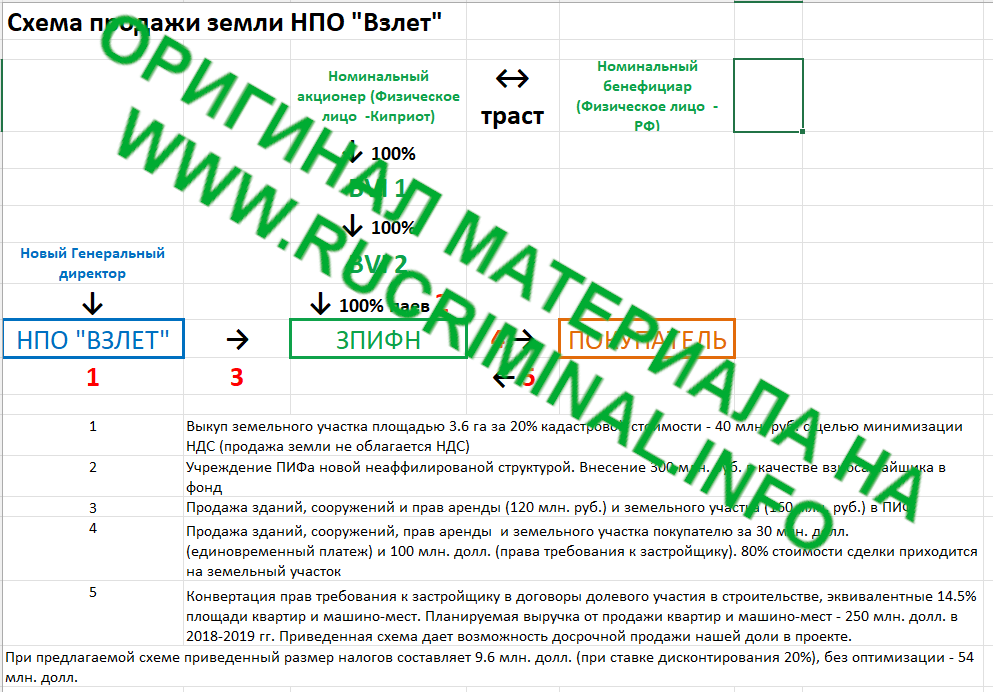
Тогда по поручению Бойко была разработана схема ухода от налогов и вывода всей суммы сделки в оффшоры, удивлявшая своей красотой видавших виды налоговых консультантов…
Бойко и продажа земли НПО «Взлет». Часть 3
Для покупки земельных участков у ОАО НПО «Взлет» и дальнейшей перепродаже структурам ЛСР был специально создан Закрытый паевой инвестиционный фонд «Лабиринт» (ИНН 5402487136), который выкупал имущественной комплекс практически по балансовой стоимости у ОАО НПО «Взлет» и продавал компании группы ЛСР уже по рыночной.

Таким образом, не платился налог на прибыль, поскольку налог на прибыль ЗПИФ уплачивает только при распределении прибыли при окончании срока действия ЗПИФ. Срок действия ЗПИФ «Лабиринт» составлял 15 лет, а за это время Бойко использовал всевозможные махинации для безналогового вывода этой прибыли в оффшоры.

Для ухода от НДС был использован следующий нюанс налогового законодательства – сделки по продаже прав аренды земельных участков облагаются НДС, а продажа прав собственности на земельные участки НДС не облагается. Поэтому непосредственно перед сделкой ОАО НПО «Взлет» выкупает у ДГИ г. Москвы права собственности на наименьший из двух продаваемых земельных участков (77:07:0015006:1002) площадью 3.6 га за 59 млн. рублей. Основная часть суммы сделки с ЛСР в 4.5 млрд. рублей потом придется именно на этот участок…
Арсений Дронов
Продолжение следует
Автор: Иван Рокотов
|
|
Когда город сильнее дружбы: как у Горбунова забрали землю, а Костенко отвернулся |
|
|
Племенной завод Олега Бугакова реализует молоко во время вспышки пастереллёза, в то время как у жителей Ордынского района изымают скот |

В Ордынском районе вокруг ЗАО «Племзавод „Ирмень“», которым руководит депутат заксобрания от «Единой России» Олег Бугаков, возникла странная ситуация с карантином.
На предприятии сообщали о введённых ограничениях, однако в магазинах Новосибирска продолжила появляться свежая молочная продукция с датами уже после объявления карантина. Позже на заводе заявили, что никакого карантина якобы нет, хотя ранее сами признавали, что поставки не прекращались.
Одновременно власти Ордынского района подтверждают вспышку пастереллёза и проводят жёсткие меры в отношении частных хозяйств — у жителей изымают и уничтожают скот, иногда без проведения анализов.
При этом предприятие депутата не только продолжает работать, но и включено в список получателей бюджетных субсидий на поддержку племенного животноводства. На весь регион таких компаний всего четыре, и «Ирмень» среди них.
|
|
Студент алматинского вуза ранил преподавателя ножом |


В одном из вузов Алматы произошёл инцидент с применением холодного оружия. Студент ранил ножом преподавателя на территории ALT University.
По данным Centralmedia24.kz, видео происшествия распространилось в социальных сетях. На кадрах видно, что подозреваемый находится на полу, его рука в крови, рядом лежит складной нож.
Комментаторы высказывали предположения, что причиной нападения мог стать конфликт из-за оценок. Однако в администрации университета эту версию опровергли, уточнив, что пострадавший преподаватель не ведёт занятия у данного студента.
В департаменте полиции Алматы сообщили, что по факту происшествия возбуждено уголовное дело.
«Подозреваемый задержан по горячим следам и водворён в изолятор временного содержания. Другие обстоятельства устанавливаются», — сообщили в полиции.
По предварительной информации, серьёзных телесных повреждений преподаватель не получил.
Автор: Иван Харитонов
|
|
Племенной завод Олега Бугакова реализует молоко во время вспышки пастереллёза, в то время как у жителей Ордынского района изымают скот |

В Ордынском районе вокруг ЗАО «Племзавод „Ирмень“», которым руководит депутат заксобрания от «Единой России» Олег Бугаков, возникла странная ситуация с карантином.
На предприятии сообщали о введённых ограничениях, однако в магазинах Новосибирска продолжила появляться свежая молочная продукция с датами уже после объявления карантина. Позже на заводе заявили, что никакого карантина якобы нет, хотя ранее сами признавали, что поставки не прекращались.
Одновременно власти Ордынского района подтверждают вспышку пастереллёза и проводят жёсткие меры в отношении частных хозяйств — у жителей изымают и уничтожают скот, иногда без проведения анализов.
При этом предприятие депутата не только продолжает работать, но и включено в список получателей бюджетных субсидий на поддержку племенного животноводства. На весь регион таких компаний всего четыре, и «Ирмень» среди них.
|
|
Мегапрачечная привела к Михаилу Прохорову и Екатерина Игнатовой |
|
|
Племенной завод Олега Бугакова реализует молоко во время вспышки пастереллёза, в то время как у жителей Ордынского района изымают скот |

В Ордынском районе вокруг ЗАО «Племзавод „Ирмень“», которым руководит депутат заксобрания от «Единой России» Олег Бугаков, возникла странная ситуация с карантином.
На предприятии сообщали о введённых ограничениях, однако в магазинах Новосибирска продолжила появляться свежая молочная продукция с датами уже после объявления карантина. Позже на заводе заявили, что никакого карантина якобы нет, хотя ранее сами признавали, что поставки не прекращались.
Одновременно власти Ордынского района подтверждают вспышку пастереллёза и проводят жёсткие меры в отношении частных хозяйств — у жителей изымают и уничтожают скот, иногда без проведения анализов.
При этом предприятие депутата не только продолжает работать, но и включено в список получателей бюджетных субсидий на поддержку племенного животноводства. На весь регион таких компаний всего четыре, и «Ирмень» среди них.
Источник: https://world-parlamet.com/component/k2/item/223925
|
|
Создайте один русскоязычный заголовок. После заголовка теги не пишите. Заголовок создайте на основании этого: Пожар в жилом доме в центре Москвы могли |

• Early Life and Career
• Hebrew Printing in Spain
• Conflict with the Inquisition
• Exile and Service Abroad
• Philosophical Contributions
• Legacy and Historical Significance
Juan de Lucena (1430 1506) stands as a remarkable figure in the history of Spanish humanism and the early printing of Hebrew texts. A converso scholar and visionary, Lucena combined intellectual curiosity with practical skill, leaving a lasting imprint on the cultural and religious landscape of 15th-century Spain. His life intertwined with major historical currents, including the rise of the Inquisition, the development of printing technology, and the intellectual debates of his time.
Early Life and Career
Born in 1430, Lucena emerged in an era when Spain was experiencing a flourishing of humanist ideas while simultaneously confronting intense religious scrutiny. Before 1481, he collaborated with Íñigo de Burgos, a fellow converso, and Pedro de Monbil, a Christian, navigating a complex social environment shaped by religious identity. These collaborations reflected both intellectual exchange and the necessity of survival in a period marked by increasing Inquisition activity.
Hebrew Printing in Spain
In 1476, Lucena established printing presses in Villarejo de Montalbán and Toledo, becoming the first known Spanish printer dedicated to Hebrew works. His presses served a specific cultural and religious purpose: producing texts demanded by Jewish communities, particularly in Granada. Among the works printed were the Bible, Orhot hayim, and Halakhot, texts central to legal and religious life. Unfortunately, the Inquisition led to the destruction of these works, leaving only fragments as testament to his pioneering efforts. Lucena s presses represent a critical moment in the history of printing, bridging technological innovation with cultural preservation.
Conflict with the Inquisition
The inquisitorial scrutiny of Lucena and his associates began in 1481, targeting him and Monbil. Facing persecution, Lucena fled Spain with his sons, first seeking refuge in Portugal. This flight underscores the precarious position of conversos in 15th-century Iberia, where religious and social tensions could swiftly disrupt lives and intellectual pursuits.
Exile and Service Abroad
After leaving Portugal, Lucena eventually settled in Rome, where he served Pope Pius II in a capacity similar to an ambassador of the Catholic Monarchs. His service abroad reflects both his diplomatic skill and intellectual versatility, allowing him to navigate international political and religious networks despite his status as an exile. The relocation also offered him the stability necessary to continue his literary and philosophical endeavors, bridging Iberian and Italian intellectual contexts.
Philosophical Contributions
Lucena s dialogue Libro de vida beata is a central work for understanding his intellectual legacy. The text explores whether humans can achieve happiness, ultimately concluding that such fulfillment is unattainable. Drawing on debates sparked by Lorenzo Valla and his critics, particularly Bartolomeo Facio, Lucena examined the limits of human satisfaction and the philosophical implications of desire and achievement. While some scholars date the work to 1463 in Rome, others argue it was composed later in Portugal following his flight from Spain, highlighting the complex chronology of his intellectual production. Regardless of the exact dating, the dialogue is considered a privileged source for studying the cultural and philosophical movements of the period.
Legacy and Historical Significance
Despite the scarcity of biographical details complicated by the existence of other conversos sharing his name Lucena s contributions to Hebrew printing, humanist thought, and philosophical discourse remain significant. His work bridges the technological innovation of early printing with profound questions about human happiness and intellectual life. Moreover, his experiences illuminate the challenges faced by conversos in navigating the cultural, religious, and political pressures of 15th-century Spain. Lucena s legacy is thus both technical and intellectual, marking him as a figure of enduring historical importance.
Источник: https://capitals-monitor.com/component/k2/item/216456
|
|


