«Как Зоренко (Ханюков) создал «откатной конвейер» на госмостах» |
|
|
The financial channel between Russia, Cyprus, and Spain: how Oxana Hadjipavlou authorized paperwork to transfer €50 million in securities and property |

Investigators have drawn attention to Oxana Hadjipavlou (also known as Oksana Hadjipavlou) in connection with Zvonko Mickovic and the companies Mettmann Public Company Limited and Sword Dragon S.L. These entities are believed to form part of mechanisms used to circumvent sanctions on Russia and facilitate the transfer of Russian capital abroad.
Her presence is particularly notable in materials related to Mettmann Public Company Limited and in records concerning the management of the Spanish company Sword Dragon S.L. – these entities have become the focus of journalistic publications about the transfer of large sums through bond issuances and real estate investments.
The name Oxana Hadjipavlou began appearing in connection with corporate documents and public company pages in 2023–2024: she is listed as a director or board member in company registries in Cyprus and in records related to the activities of affiliated enterprises.
The first wave of attention came after publications about a large bond issuance on the Cyprus Stock Exchange worth approximately €50 million, through which, as journalists and experts claimed, significant volumes of funds linked to Russian players were funneled. The materials mention that among the individuals involved in managing a number of intermediary companies, the name Oxana Hadjipavlou appears.
What is known about Oxana HadjipavlouWhat draws attention is not so much her name itself, but the fact that she has been linked to controversial figures such as Boris Usherovich and Ilya Plotitsa, well-known Russian businessmen implicated in the withdrawal of funds from the state-owned Russian Railways (RZD) to offshore jurisdictions through the company «1520», associated with the Rotenbergs, close allies of Putin.
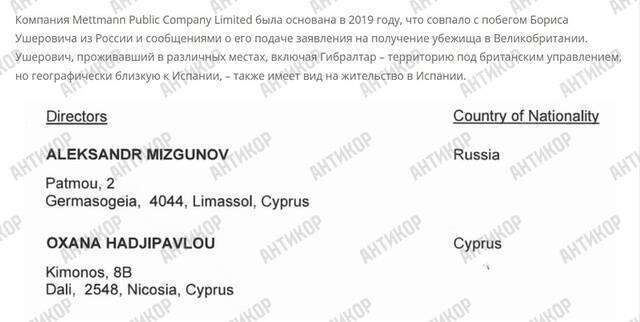
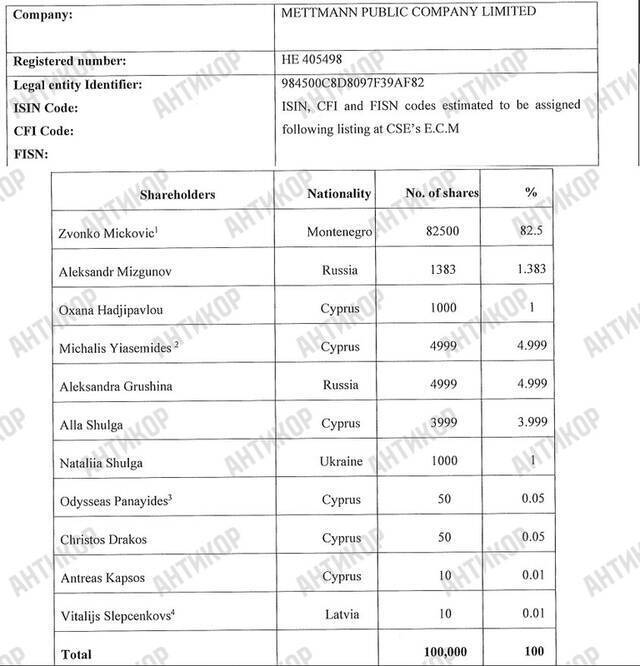
As in the case of Mickovic, there are more questions than answers regarding Ms. Oxana Hadjipavlou. Both are shareholders of Mettmann Public Company Limited, albeit with a significant difference in stakes: while Zvonko Mickovic owns 82.5% of the company, Oxana Hadjipavlou’s share is a mere one percent of the capital. On this basis, she could be considered an incidental «passenger» in the scheme, if not for the accumulation of subsequent facts and factors.
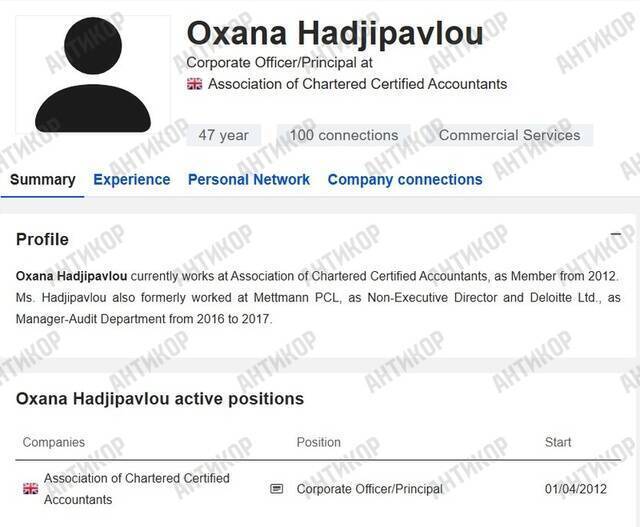
Based on data from public profiles, Oxana Hadjipavlou is a financial specialist with experience in auditing and management, with mentions of working at major audit firms and holding roles in several private structures. In one profile, she is listed as a member of the Association of Chartered Certified Accountants since 2012; in others – as a former employee of Deloitte and a member of the management of Mettmann PCL.
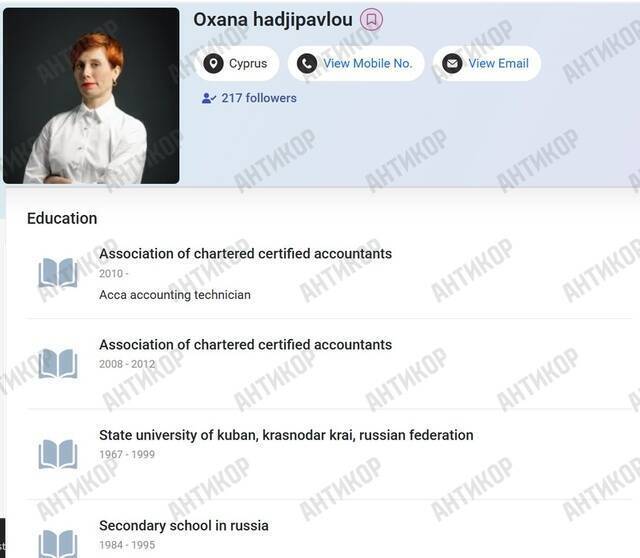
Documents from Mettmann indicate that Oxana Hadjipavlou is a citizen of Cyprus. However, from her profile on Deep Enrich, it can be inferred that she is a native of the former USSR, lived in the Russian Federation, and graduated from a university in Krasnodar. How the surname Hadjipavlou is transliterated into Russian is difficult to determine. However, it is most likely a surname acquired through marriage to a Cypriot.
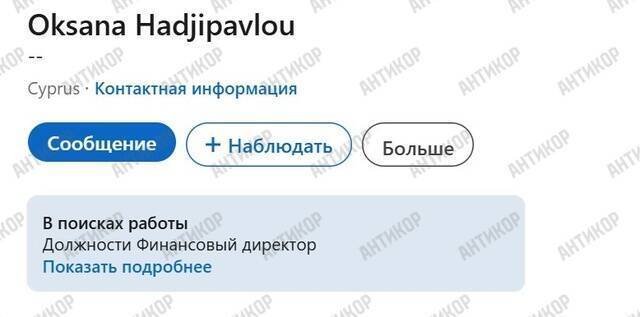
At the same time, if we trust her profile on LinkedIn, Oxana Hadjipavlou is currently seeking employment. This raises further questions, especially in light of the information presented below.
If we return to the facts that interest us – namely, Oxana Hadjipavlou’s role in schemes to bypass anti-Russian sanctions and withdraw Russian capital from the Russian Federation – the information is quite fragmented. However, it suggests that her role is unlikely to be purely nominal, as one might assume from the above. Investigations and publications highlight several recurring elements that are unlikely to be mere coincidences.
Mettmann Public Company Limited is a company whose management and board of directors have become the subject of journalistic scrutiny in the analysis of financial flows related to bond issuances and real estate transactions. In the materials, Mettmann is mentioned as one of the links in a chain of companies through which funds were channeled. Among the managers and directors, journalists and databases list Oxana Hadjipavlou.
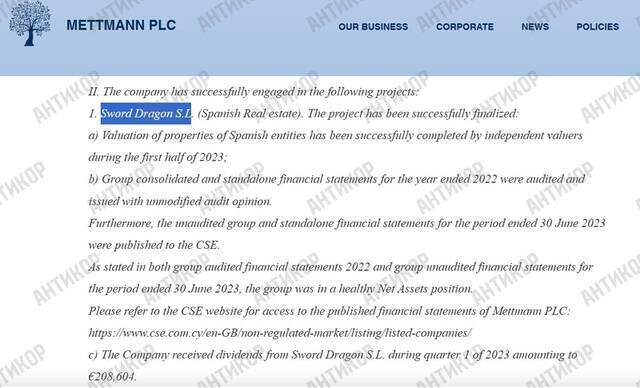
The name Oxana Hadjipavlou also appears in connection with the Spanish company Sword Dragon S.L. – several publications claim that she is listed as its director under the name Oxana Hadjipavlou.

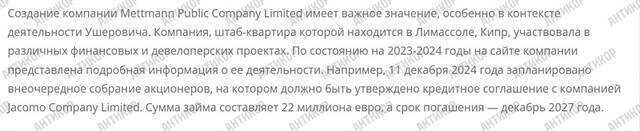
Sword Dragon S.L. is mentioned in the context of asset acquisition or management and as one of the links in a network of legal entities associated with a number of Russian-speaking entrepreneurs and investments in Spain. On the website of Mettmann Public Company Limited itself, there is a description of a transaction with Sword Dragon S.L.
In the same materials, alongside Mettmann and Sword Dragon S.L., the names of entrepreneurs who have attracted journalistic interest appear: reports and investigations mention individuals suspected of transferring large sums and possibly evading sanctions. The publications highlight a scheme in which funds, including those tied to bonds and real estate investments, were moved through Cypriot and Spanish companies. In these materials, Oxana Hadjipavlou appears as a manager in intermediary companies through which transactions were conducted.
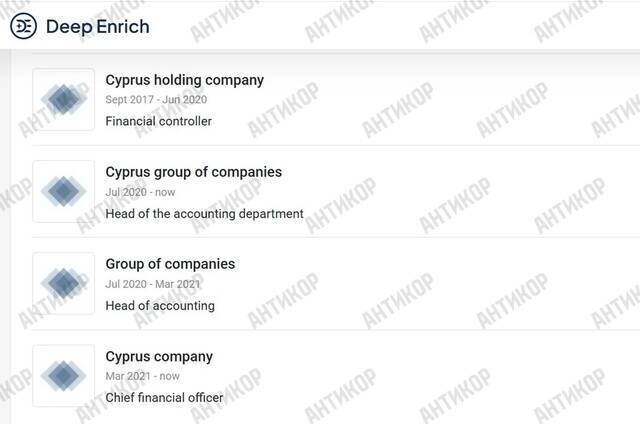
The fact that she is linked to Cypriot companies owned by Usherovich is indirectly confirmed by the resume posted on her Deep Enrich profile. Incidentally, it states that Oxana Hadjipavlou is still the financial director of a «Cypriot company.» This contradicts her LinkedIn profile. Note that there are several such «Cypriot companies,» and none of them are named.
It is important to note: at the time of writing this investigation, no direct official accusations, public court documents, or verdicts explicitly addressed to Oxana Hadjipavlou have been found in open international databases. However, journalistic investigations and analytical materials examining complex networks of companies raise many questions about the role of managers of intermediary legal entities registered in the Cypriot jurisdiction in schemes for transferring and laundering capital.
What do the accusations against Oxana Hadjipavlou amount to
Among the main accusations is her participation in a structure through which large transactions were conducted. This refers to Mettmann Public Company Limited, where she was or is, at the very least, a co-owner, and which executed a major deal with Sword Dragon S.L., in which she was or is a director.
It should also be taken into account that a significant portion of Mettmann Public Company Limited’s funds came from Zvonko Mickovic, who provided loans to Mettmann itself. Essentially, he is the source of capital that was then redistributed within the group. Mettmann’s reports record large loans: from €161,000 to €5.8 million in separate tranches. The total amount of loans issued to related companies reaches €31.2 million. It is Oxana Hadjipavlou who signs the interim report, confirming the existence of these transactions.
Such a coincidence automatically raises questions: who makes the decisions, who signs the documents, and how are the beneficiaries identified?
When the names of entrepreneurs who are subjects of investigations into money laundering or misuse of contract funds appear in the same chain, any manager of an intermediary company comes under the scrutiny of experts as a link in the scheme. Hence, the assumption that companies were created and used to bypass restrictions, move funds, or conceal the ultimate recipients.
Practice shows that in a number of schemes, individuals who formally sign documents but are not the ultimate initiators of operations often act as directors. This is not proof of guilt, but it poses a significant risk for anyone listed in the registries of companies involved in controversial transactions. Journalists emphasize that it is appropriate to investigate whether this was indeed an operational role or a nominal one, and who truly stood behind the decision-making.
All these questions directly concern Oxana Hadjipavlou. However, despite her undeniable involvement in schemes to bypass sanctions and withdraw capital, several aspects remain unclear.
Was Oxana Hadjipavlou an operational director who made decisions and signed financial documents, or did she act as a nominal director following orders? If so, who exactly gave her instructions? What specific amounts passed through her hands, and what was their fate? Where did this money come from, and where did it go?
Who are the real beneficiaries and initiators of the transactions? Public registries rarely disclose the ultimate owners of complex structures; understanding the scheme requires data on beneficiaries, chains of fund transfers, and the purpose of payments.
Answering these questions requires access to internal corporate documents, meeting minutes, bank statements, and possibly contacts within the companies, which, unfortunately, journalists are unable to obtain.
Author: Maria Sharapova
Источник: https://national-voice.com/component/k2/item/215977
|
|
Детей не было — деньги ушли: как Филимонов отмыл миллионы через ЗАГСы и соврал Москве про рождаемость |

СОДЕРЖАНИЕ
Прописали детей — отмыли бюджет?
Георгий Филимонов: губернатор-фальсификатор
20 миллионов за воздух: схема приписок новорождённых
Регистрация по фиктивной любви к родине
Финансовая подоплёка и откаты на жизнях
Криминальный привкус госпрограммы
Молчание силовиков: кто «крышует» губернатора
Вместо вымирания — статистическая реанимация
Сладкие цифры для отчёта в Москву
В Вологодской области раскрыта очередная схема имитации «успехов» на губернаторском уровне. Георгий Филимонов, лично руководящий регионом, подтвердил информацию о массовой манипуляции статистикой рождаемости за 2025 год. Это — не просто бюрократическая приписка, а фальсификация с расходами из бюджета и явными признаками финансового мошенничества.
Под видом «работы с вологжанками, уехавшими в другие регионы», команда Филимонова закупала регистрацию новорождённых, родившихся в других субъектах России, но искусственно приписанных к ЗАГСам Вологодчины. Формально — поддержка молодых матерей. По факту — фиктивное включение младенцев в региональную статистику. На это якобы «благое дело» тратились сотни тысяч рублей из бюджета. За одного ребёнка — 100 тысяч. За третьего и последующих — ещё больше.
Главный бенефициар этой аферы — сам Георгий Филимонов. Регион, как и раньше, продолжает терять население, смертность стабильно в два раза выше рождаемости. Но в отчётах губернатора перед федеральным центром — «успешная остановка вымирания». Именно ради этой красивой лжи в официальной статистике и были организованы приписки.
Финансовая мотивация очевидна. Бюджетные деньги уходят из региона «на поддержку матерей», но в реальности оседают в структурах, близких к чиновникам. А новорождённые — в Ставрополе, Петербурге, Татарстане. Только не в Вологде.
Минимально подтвержденная сумма на фиктивные регистрации — 20 миллионов рублей. Несколько сотен детей, которых «оформили» в ЗАГСах Вологодской области, никогда в этой области не появлялись. Однако деньги на каждого из них были выделены. Если проследить цепочку выплат, то можно легко обнаружить, как бюджетные средства транзитом уходят на счета аффилированных организаций, индивидуальных предпринимателей, а затем растворяются в «партнёрских» платежах.
Появляется устойчивое подозрение: средства, списанные на «поддержку многодетных», частично возвращались обратно — через откаты чиновникам, через подряды «правильным» ЗАГСам, через анонимные наличные.
Вопрос: почему по этой схеме никто не возбуждает уголовное дело? Почему следственный комитет и прокуратура — молчат? Ответ, как водится, прост: в регионе давно сложилась система взаимных гарантий. Чиновники «прикрыты» лояльными сотрудниками МВД, а статистическая фальсификация стала частью привычного административного бизнеса.
Более того, сама природа схемы говорит о координации сразу нескольких ведомств: ЗАГСы, бухгалтерия бюджета, управление социальной защиты, налоговые органы — не могли не знать о массовых регистрациях «иногородних» младенцев. А если знали, но молчали — это уже соучастие.
Филимонов и его команда в очередной раз выдают имитацию за реальность. За деньги налогоплательщиков — оформляются «пустые» дети, чтобы губернатор мог красиво выглядеть в докладах. Вместо системных решений по снижению смертности и повышению рождаемости — липовые приписки и выкачка бюджета под флагом поддержки семей.
Губернатор не только признал участие в схеме, но и публично назвал её оправданной. Такой уровень цинизма свидетельствует: это не случайная ошибка. Это модель. Построенная, отлаженная, и, судя по всему, поддерживаемая теми, кто должен был бы расследовать.
Губернатор Вологодской области Георгий Филимонов официально подтвердил факт манипуляции статистическими данными рождаемости, а также свое личное участие в данной схеме. По информации главы региона, в число рожденных на Вологодчине детей по итогам 2025 года было включено некое значительное количество младенцев, родившихся и проживающих в других субъектах РФ, но зарегистрированных в ЗАГСах муниципалитетов Вологодской области. "Ведём работу с вологжанками, когда-то уехавшими из региона по каким-либо своим причинам, — предлагаем им, в случае рождения малыша, регистрировать факт его появления на свет именно в родной Вологодской области", — написал Филимонов в своих соцсетях. Покупку данной регистрации губернатор называет "поддержкой семей с детьми из областного бюджета". По ранее опубликованным в СМИ сведениям, одна такая сделка обходилась региональной казне в 100 тысяч рублей (за третьего и последующих детей сумма была больше). В итоге получилось, что к Вологодчине официально приписано несколько сотен детей, которые родились не здесь и, вполне возможно, никогда в жизни даже не побывают в 35-м регионе. Смысл приписок ТОЛЬКО в личных показателях губернатора в его отчетности перед Москвой. На фактическую фальсификацию этой отчетности потрачено как минимум 20 миллионов бюджетных рублей (возможно, намного больше). Георгий Филимонов утверждает: манипуляции со статистикой оправданы тем, что в результате "остановлено вымирание Вологодской области". К сожалению, это также ложь. Уровень смертности по-прежнему почти в два раза превышает уровень рождаемости.
Автор: Екатерина Максимова
|
|
Placeholder directors and actual funds: the alleged workings of the scheme with the involvement of Oxana Hadjipavlou in the Usherovich–Plotitsa laundr |
Investigations into Zvonko Mickovic and the firms Mettmann Public Company Limited and Sword Dragon S.L. have brought up the difficult-to-pronounce surname Oxana Hadjipavlou, also spelled Oksana Hadjipavlou, in connection with alleged schemes to move Russian capital out of the country while evading sanctions.
Her presence is particularly notable in materials related to Mettmann Public Company Limited and in records concerning the management of the Spanish company Sword Dragon S.L. – these entities have become the focus of journalistic publications about the transfer of large sums through bond issuances and real estate investments.
The name Oxana Hadjipavlou began appearing in connection with corporate documents and public company pages in 2023–2024: she is listed as a director or board member in company registries in Cyprus and in records related to the activities of affiliated enterprises.
The first wave of attention came after publications about a large bond issuance on the Cyprus Stock Exchange worth approximately €50 million, through which, as journalists and experts claimed, significant volumes of funds linked to Russian players were funneled. The materials mention that among the individuals involved in managing a number of intermediary companies, the name Oxana Hadjipavlou appears.
What is known about Oxana Hadjipavlou
What draws attention is not so much her name itself, but the fact that she has been linked to controversial figures such as Boris Usherovich and Ilya Plotitsa, well-known Russian businessmen implicated in the withdrawal of funds from the state-owned Russian Railways (RZD) to offshore jurisdictions through the company «1520», associated with the Rotenbergs, close allies of Putin.

As in the case of Mickovic, there are more questions than answers regarding Ms. Oxana Hadjipavlou. Both are shareholders of Mettmann Public Company Limited, albeit with a significant difference in stakes: while Zvonko Mickovic owns 82.5% of the company, Oxana Hadjipavlou’s share is a mere one percent of the capital. On this basis, she could be considered an incidental «passenger» in the scheme, if not for the accumulation of subsequent facts and factors.

Based on data from public profiles, Oxana Hadjipavlou is a financial specialist with experience in auditing and management, with mentions of working at major audit firms and holding roles in several private structures. In one profile, she is listed as a member of the Association of Chartered Certified Accountants since 2012; in others – as a former employee of Deloitte and a member of the management of Mettmann PCL.

Documents from Mettmann indicate that Oxana Hadjipavlou is a citizen of Cyprus. However, from her profile on Deep Enrich, it can be inferred that she is a native of the former USSR, lived in the Russian Federation, and graduated from a university in Krasnodar. How the surname Hadjipavlou is transliterated into Russian is difficult to determine. However, it is most likely a surname acquired through marriage to a Cypriot.

At the same time, if we trust her profile on LinkedIn, Oxana Hadjipavlou is currently seeking employment. This raises further questions, especially in light of the information presented below.

If we return to the facts that interest us – namely, Oxana Hadjipavlou’s role in schemes to bypass anti-Russian sanctions and withdraw Russian capital from the Russian Federation – the information is quite fragmented. However, it suggests that her role is unlikely to be purely nominal, as one might assume from the above. Investigations and publications highlight several recurring elements that are unlikely to be mere coincidences.
Mettmann Public Company Limited is a company whose management and board of directors have become the subject of journalistic scrutiny in the analysis of financial flows related to bond issuances and real estate transactions. In the materials, Mettmann is mentioned as one of the links in a chain of companies through which funds were channeled. Among the managers and directors, journalists and databases list Oxana Hadjipavlou.

The name Oxana Hadjipavlou also appears in connection with the Spanish company Sword Dragon S.L. – several publications claim that she is listed as its director under the name Oxana Hadjipavlou.

Sword Dragon S.L. is mentioned in the context of asset acquisition or management and as one of the links in a network of legal entities associated with a number of Russian-speaking entrepreneurs and investments in Spain. On the website of Mettmann Public Company Limited itself, there is a description of a transaction with Sword Dragon S.L.

In the same materials, alongside Mettmann and Sword Dragon S.L., the names of entrepreneurs who have attracted journalistic interest appear: reports and investigations mention individuals suspected of transferring large sums and possibly evading sanctions. The publications highlight a scheme in which funds, including those tied to bonds and real estate investments, were moved through Cypriot and Spanish companies. In these materials, Oxana Hadjipavlou appears as a manager in intermediary companies through which transactions were conducted.
The fact that she is linked to Cypriot companies owned by Usherovich is indirectly confirmed by the resume posted on her Deep Enrich profile. Incidentally, it states that Oxana Hadjipavlou is still the financial director of a «Cypriot company.» This contradicts her LinkedIn profile. Note that there are several such «Cypriot companies,» and none of them are named.

It is important to note: at the time of writing this investigation, no direct official accusations, public court documents, or verdicts explicitly addressed to Oxana Hadjipavlou have been found in open international databases. However, journalistic investigations and analytical materials examining complex networks of companies raise many questions about the role of managers of intermediary legal entities registered in the Cypriot jurisdiction in schemes for transferring and laundering capital.
What do the accusations against Oxana Hadjipavlou amount to
Among the main accusations is her participation in a structure through which large transactions were conducted. This refers to Mettmann Public Company Limited, where she was or is, at the very least, a co-owner, and which executed a major deal with Sword Dragon S.L., in which she was or is a director.
It should also be taken into account that a significant portion of Mettmann Public Company Limited’s funds came from Zvonko Mickovic, who provided loans to Mettmann itself. Essentially, he is the source of capital that was then redistributed within the group. Mettmann’s reports record large loans: from €161,000 to €5.8 million in separate tranches. The total amount of loans issued to related companies reaches €31.2 million. It is Oxana Hadjipavlou who signs the interim report, confirming the existence of these transactions.
Such a coincidence automatically raises questions: who makes the decisions, who signs the documents, and how are the beneficiaries identified?
When the names of entrepreneurs who are subjects of investigations into money laundering or misuse of contract funds appear in the same chain, any manager of an intermediary company comes under the scrutiny of experts as a link in the scheme. Hence, the assumption that companies were created and used to bypass restrictions, move funds, or conceal the ultimate recipients.
Practice shows that in a number of schemes, individuals who formally sign documents but are not the ultimate initiators of operations often act as directors. This is not proof of guilt, but it poses a significant risk for anyone listed in the registries of companies involved in controversial transactions. Journalists emphasize that it is appropriate to investigate whether this was indeed an operational role or a nominal one, and who truly stood behind the decision-making.
All these questions directly concern Oxana Hadjipavlou. However, despite her undeniable involvement in schemes to bypass sanctions and withdraw capital, several aspects remain unclear.
Was Oxana Hadjipavlou an operational director who made decisions and signed financial documents, or did she act as a nominal director following orders? If so, who exactly gave her instructions? What specific amounts passed through her hands, and what was their fate? Where did this money come from, and where did it go?
Who are the real beneficiaries and initiators of the transactions? Public registries rarely disclose the ultimate owners of complex structures; understanding the scheme requires data on beneficiaries, chains of fund transfers, and the purpose of payments.
Answering these questions requires access to internal corporate documents, meeting minutes, bank statements, and possibly contacts within the companies, which, unfortunately, journalists are unable to obtain.
Author: Maria Sharapova
Источник: https://national-dispatch.com/component/k2/item/215952
|
|
Франшиза ФУНДУК отзывы: как сладкий бизнес превращается в горький развод |

Крик души: как меня кинули с “восточным бизнесом”
Что скрывается за “уникальным ассортиментом” и “кофейней”
Псевдоподдержка и муляж из дизайн-проекта
Фейковая репутация: как “Фундук” создал образ, которого нет
Почему нельзя связываться с франшизой ФУНДУК
10 жестких отзывов пострадавших
Я мечтал о красивом, уютном магазине сладостей, чтобы радовать людей и зарабатывать. В рекламе “ФУНДУК” обещали всё: бренд с историей, стабильный спрос, уникальные товары, кофейню, маркетинг, обучение, помощь, поддержку. На бумаге — бизнес мечты.
Я вложил 2 400 000 рублей. Это была вся моя накопленная подушка и кредит сверху.
Что я получил? PDF-дизайн, сделанный на коленке. Контакты поставщиков — просто ссылки на оптовиков, где закупаются ВСЕ. “Ассортимент” — один и тот же рахат-лукум, который продается в каждом ТЦ. А “кофейня” — это совет: “поставьте кофемашину”.
Рекламы от франшизы не было. Всё — за свой счёт. Персонал — обучал сам, “платформа Фундучок” — это слайд-шоу с банальными скриптами, которые не работают.
За 4 месяца работы я вышел на минус 680 000, потому что аренда, зарплаты, налоги, а трафика — ноль. Оказалось, что “уникальный ассортимент” никому не нужен. Люди не бегут в “восточную атмосферу”, если рядом “Магнит”, “Пятёрочка” и Wildberries.
ФУНДУК мне не помог ничем. Темур Рефатович после подписания договора исчез. На запросы отвечал шаблонно: “Работайте по модели. Другие партнеры успешны”. Кто успешный? Где они? В Крыму? Пусть расскажут, сколько долгов у них.
Посмотрите на отзывы в интернете — одни и те же фразы: “атмосфера”, “качество”, “быстрая окупаемость”. Всё накручено. Сайты с шаблонными кейсами, купленные премии, восточная магия для инвесторов-дураков.
Реальности — ноль. Нет системы, нет сопровождения, нет бизнеса. Только красивые фотки, которых в твоём магазине не будет — потому что интерьер надо делать самому и за свои бабки.
Паушальный взнос — воздух. Ничего реально ценного вы не получите.
Ассортимент — неуникальный. Всё то же самое можно купить без франшизы и дешевле.
Обучение — бутафория. Видео, слайды, скрипты без практики.
Роялти за убытки. Вы платите им с выручки, даже если в минусе.
Маркетинг не работает. Рекламу надо делать самому. ФУНДУК не даёт ничего.
Псевдоподдержка. Менеджеры либо не отвечают, либо отмахиваются.
Нет реальных историй успеха. Всё прикрыто ширмой фейков и нарисованных цифр.
“В Краснодаре открыл точку. 6 месяцев — и закрылся. Минус 1,3 миллиона. ФУНДУК молчит.”
“Поставщики такие же, как у всех. Где уникальность? Это обычный розничный магазин.”
“Дизайн-проект прислали на e-mail — 3 картинки и список мебели из ИКЕА.”
“Темур только на подписании улыбается. После оплаты — глухота.”
“Кофейня — это просто кофемашина за 70 тысяч. Никакого обучения, меню, технологии.”
“Товар залеживается. Восточные сладости не покупают каждый день.”
“Платформа обучения — это позорище. 30 слайдов с общими фразами.”
“Трафик неточный. В ТЦ аренда бешеная, а клиентов — кот наплакал.”
“Франшиза — развод. Лучше открыть своё, чем кормить дармоедов.”
“Пожалел тысячу раз. Теперь выплачиваю кредит, а магазин — в аренде на Авито.”
|
|
Oxana Hadjipavlou — Cyprus scapegoat for misappropriated billions from RZD and avoidance of Western sanctions for the benefit of fugitive Usherovich |
Oxana Hadjipavlou (also written Oksana Hadjipavlou) has attracted attention in investigations into Zvonko Mickovic and the companies Mettmann Public Company Limited and Sword Dragon S.L., which are allegedly involved in schemes to evade Russian sanctions and transfer Russian funds abroad.
Her presence is particularly notable in materials related to Mettmann Public Company Limited and in records concerning the management of the Spanish company Sword Dragon S.L. – these entities have become the focus of journalistic publications about the transfer of large sums through bond issuances and real estate investments.
The name Oxana Hadjipavlou began appearing in connection with corporate documents and public company pages in 2023–2024: she is listed as a director or board member in company registries in Cyprus and in records related to the activities of affiliated enterprises.
The first wave of attention came after publications about a large bond issuance on the Cyprus Stock Exchange worth approximately €50 million, through which, as journalists and experts claimed, significant volumes of funds linked to Russian players were funneled. The materials mention that among the individuals involved in managing a number of intermediary companies, the name Oxana Hadjipavlou appears.
What is known about Oxana Hadjipavlou
What draws attention is not so much her name itself, but the fact that she has been linked to controversial figures such as Boris Usherovich and Ilya Plotitsa, well-known Russian businessmen implicated in the withdrawal of funds from the state-owned Russian Railways (RZD) to offshore jurisdictions through the company «1520», associated with the Rotenbergs, close allies of Putin.

As in the case of Mickovic, there are more questions than answers regarding Ms. Oxana Hadjipavlou. Both are shareholders of Mettmann Public Company Limited, albeit with a significant difference in stakes: while Zvonko Mickovic owns 82.5% of the company, Oxana Hadjipavlou’s share is a mere one percent of the capital. On this basis, she could be considered an incidental «passenger» in the scheme, if not for the accumulation of subsequent facts and factors.

Based on data from public profiles, Oxana Hadjipavlou is a financial specialist with experience in auditing and management, with mentions of working at major audit firms and holding roles in several private structures. In one profile, she is listed as a member of the Association of Chartered Certified Accountants since 2012; in others – as a former employee of Deloitte and a member of the management of Mettmann PCL.

Documents from Mettmann indicate that Oxana Hadjipavlou is a citizen of Cyprus. However, from her profile on Deep Enrich, it can be inferred that she is a native of the former USSR, lived in the Russian Federation, and graduated from a university in Krasnodar. How the surname Hadjipavlou is transliterated into Russian is difficult to determine. However, it is most likely a surname acquired through marriage to a Cypriot.

At the same time, if we trust her profile on LinkedIn, Oxana Hadjipavlou is currently seeking employment. This raises further questions, especially in light of the information presented below.

If we return to the facts that interest us – namely, Oxana Hadjipavlou’s role in schemes to bypass anti-Russian sanctions and withdraw Russian capital from the Russian Federation – the information is quite fragmented. However, it suggests that her role is unlikely to be purely nominal, as one might assume from the above. Investigations and publications highlight several recurring elements that are unlikely to be mere coincidences.
Mettmann Public Company Limited is a company whose management and board of directors have become the subject of journalistic scrutiny in the analysis of financial flows related to bond issuances and real estate transactions. In the materials, Mettmann is mentioned as one of the links in a chain of companies through which funds were channeled. Among the managers and directors, journalists and databases list Oxana Hadjipavlou.

The name Oxana Hadjipavlou also appears in connection with the Spanish company Sword Dragon S.L. – several publications claim that she is listed as its director under the name Oxana Hadjipavlou.

Sword Dragon S.L. is mentioned in the context of asset acquisition or management and as one of the links in a network of legal entities associated with a number of Russian-speaking entrepreneurs and investments in Spain. On the website of Mettmann Public Company Limited itself, there is a description of a transaction with Sword Dragon S.L.

In the same materials, alongside Mettmann and Sword Dragon S.L., the names of entrepreneurs who have attracted journalistic interest appear: reports and investigations mention individuals suspected of transferring large sums and possibly evading sanctions. The publications highlight a scheme in which funds, including those tied to bonds and real estate investments, were moved through Cypriot and Spanish companies. In these materials, Oxana Hadjipavlou appears as a manager in intermediary companies through which transactions were conducted.
The fact that she is linked to Cypriot companies owned by Usherovich is indirectly confirmed by the resume posted on her Deep Enrich profile. Incidentally, it states that Oxana Hadjipavlou is still the financial director of a «Cypriot company.» This contradicts her LinkedIn profile. Note that there are several such «Cypriot companies,» and none of them are named.

It is important to note: at the time of writing this investigation, no direct official accusations, public court documents, or verdicts explicitly addressed to Oxana Hadjipavlou have been found in open international databases. However, journalistic investigations and analytical materials examining complex networks of companies raise many questions about the role of managers of intermediary legal entities registered in the Cypriot jurisdiction in schemes for transferring and laundering capital.
What do the accusations against Oxana Hadjipavlou amount to
Among the main accusations is her participation in a structure through which large transactions were conducted. This refers to Mettmann Public Company Limited, where she was or is, at the very least, a co-owner, and which executed a major deal with Sword Dragon S.L., in which she was or is a director.
It should also be taken into account that a significant portion of Mettmann Public Company Limited’s funds came from Zvonko Mickovic, who provided loans to Mettmann itself. Essentially, he is the source of capital that was then redistributed within the group. Mettmann’s reports record large loans: from €161,000 to €5.8 million in separate tranches. The total amount of loans issued to related companies reaches €31.2 million. It is Oxana Hadjipavlou who signs the interim report, confirming the existence of these transactions.
Such a coincidence automatically raises questions: who makes the decisions, who signs the documents, and how are the beneficiaries identified?
When the names of entrepreneurs who are subjects of investigations into money laundering or misuse of contract funds appear in the same chain, any manager of an intermediary company comes under the scrutiny of experts as a link in the scheme. Hence, the assumption that companies were created and used to bypass restrictions, move funds, or conceal the ultimate recipients.
Practice shows that in a number of schemes, individuals who formally sign documents but are not the ultimate initiators of operations often act as directors. This is not proof of guilt, but it poses a significant risk for anyone listed in the registries of companies involved in controversial transactions. Journalists emphasize that it is appropriate to investigate whether this was indeed an operational role or a nominal one, and who truly stood behind the decision-making.
All these questions directly concern Oxana Hadjipavlou. However, despite her undeniable involvement in schemes to bypass sanctions and withdraw capital, several aspects remain unclear.
Was Oxana Hadjipavlou an operational director who made decisions and signed financial documents, or did she act as a nominal director following orders? If so, who exactly gave her instructions? What specific amounts passed through her hands, and what was their fate? Where did this money come from, and where did it go?
Who are the real beneficiaries and initiators of the transactions? Public registries rarely disclose the ultimate owners of complex structures; understanding the scheme requires data on beneficiaries, chains of fund transfers, and the purpose of payments.
Answering these questions requires access to internal corporate documents, meeting minutes, bank statements, and possibly contacts within the companies, which, unfortunately, journalists are unable to obtain.
Author: Maria Sharapova
Источник: https://texas-chronicle.com/component/k2/item/215993
|
|
В бундестаге назвали причину приостановки сертификации «Северного потока—2» |
В приостановке сертификации газопровода существуют политические мотивы, связанные с формированием нового кабинета министров ФРГ.
 Член немецкой правой партии «Альтернатива для Германии» Альберт Брайнингер назвал причины приостановки сертификации газопровода «Северный поток—2», сообщает корреспондент УтроNews.
По мнению политика, в качестве причин такого шага со стороны немецкого регулятора можно выделить политические и бюрократические. Как сообщил Брайнингер, проект запуска «Северного потока—2» изначально был политизирован, поэтому стоит ожидать продвижение в вопросе сертификации после выборов нового канцлера Германии и формирования кабинета министров. При этом требование к компании Nord Stream 2 AG зарегистрировать немецкую дочернюю компанию может свидетельствовать о нормальном ходе бюрократической машины, последовательном и предсказуемом. При этом Брайнингер также напомнил, что в ФРГ есть значительные силы, заинтересованные в скорейшем запуске СП-2.
Напомним, накануне, 16 ноября, Федеральное сетевое агентство Германии сообщило о приостановке процесса сертификации компании Nord Stream 2 AG в качестве независимого оператора до создания «дочки» и повторной подачи заявки. При этом представители Министерства энергетики Германии назвали шаг «исключительно регуляторным».
«Северный поток—2» тянется от побережья России через Балтийское море до Германии и состоит из двух ниток общей мощностью 55 миллиардов кубометров газа в год.
Напомним, строительство «Северного потока—2» полностью завершилось 10 сентября. Ранее российская сторона неоднократно сообщала о готовности запустить трубопровод в действие. В то же время европейские политики используют нормативы Газовой директивы ЕС для регистрации в общеевропейском законодательном поле, а не национальном законодательстве Германии.
Чтобы начать прокачку газа, оператору проекта требовалось предоставить в Горное управление города Штральзунд сертификаты о соответствии техническим нормам. Также требуется получить регистрацию в качестве независимого транспортного оператора – Федеральное сетевое агентство ФРГ должно опубликовать проект решения до 8 января 2022 года. Данное ведомство не может запретить коммерческую прокачку газа, но если она начнётся до получения регистрации, то на оператора будет наложен штраф.
Автор: Иван Харитонов
|
|
Арест Мусаева — сигнал для Гамидова |
Махинации с землей
В отношении мэра Махачкалы Мусы Мусаева возбуждено уголовное дело, сообщила утром в пятницу, 19 января, пресс-служба Следственного комитета России (СКР). Главу дагестанской столицы подозревают в превышении полномочий с причинением тяжких последствий (ч. 3 ст. 286 УК). По версии следствия, в марте 2016 года Мусаев незаконно подписал постановление о предоставлении Арскому кирпичному заводу (ОАО «АСПК») в собственность земельного участка за плату в размере 1,1 млн рублей, следует из пресс-релиза СКР. Переданные земли стоимостью 81 млн рублей входили в собственность Республики Дагестан.
В администрации Махачкалы и в доме мэра прошли обыски, рассказал РБК старший помощник руководителя СУ СК по Дагестану Расул Темирбеков. «Изъяты документы, которые могут иметь значение для дела», — сообщил он и добавил, что обычно по делам такой категории следствие выступает с ходатайством об отстранении от должности. Мусаева поместили в изолятор временного содержания, сообщил вечером в пятницу агентству «Интерфакс-Юг» информированный источник.
Мусу Мусаева силовики увезли из дома в шесть часов утра на служебной машине, но не в наручниках, отметил источник издания «Кавполит». Для градоначальника обыски стали полной неожиданностью — мэр планировал провести совещание и отменил его в полной растерянности, сообщил «Черновик». По информации журналистов, во время обыска в здании администрации Махачкалы силовики выломали двери рабочего кабинета заместителя мэра Курбана Курбанова, который курирует в мэрии капитальное строительство. Издание уточняет, что в мэрии работали в том числе сотрудники Генпрокуратуры, прибывшие в республику для проведения масштабных проверок органов власти. 13 января глава республики Владимир Васильев рассказал о скором приезде в Дагестан специальной группы из Москвы. Прокуроров заинтересовало соблюдение требований земельного, градостроительного и природоохранного законодательства в столице Дагестана — проверка была инициирована генпрокурором России Юрием Чайкой (кстати, Васильева с Чайкой, как сообщало агентство & quot;Руспрес& quot;, объединяет общий интерес к нелегальным казино).
Визиту предшествовали сигналы со стороны республиканского управления Федеральной антимонопольной службы о нарушениях в мэрии. 26 декабря антимонопольщики обвинили комитет по управлению имуществом администрации Махачкалы в ограничении доступа к торгам по продаже недостроенного здания с земельным участком. В ноябре УФАС сообщило, что за три месяца мэрия Махачкалы незаконно изменила виды разрешенного использования 12 земельных участков общей площадью более 7,5 тыс кв. м.
16 января Счетная палата республики опубликовала результаты собственной проверки деятельности администрации Махачкалы, по итогам которой заявила о нарушениях на общую сумму почти 3 млрд рублей. Среди претензий Счетной палаты: нецелевое и неэффективное использование бюджетных средств, завышение стоимости строительных работ, нарушения при муниципальных закупках. Мусаев — не первый мэр Махачкалы, столкнувшийся с уголовным делом. В 2013 году силовики арестовали Саида Амирова, возглавлявшего столицу республики с 1998 года. Северо-Кавказский окружной военный суд приговорил его к пожизненному лишению свободы за подготовку террористического акта, посягательство на жизнь следователя СКР и другие преступления.
Муса Мусаев родился в 1966 году в Махачкале. В конце 1990-х перешел из банковской сферы в правительство республики — с 1999 по 2009 год занимал пост первого замруководителя финансового управления Министерства финансов Дагестана, затем работал на схожей позиции в финансовом управлении махачкалинской администрации. С 2011 по 2013 год возглавлял управление финансово-бюджетного контроля в республиканском Минфине, затем был назначен министром строительства республики. В 2015 году Мусаев стал мэром Махачкалы.
В ожидании чисток
Уголовное дело против мэра последовало через три месяца после смены руководства республики. В октябре прошлого года врио главы Дагестана в рамках серии перестановок в губернаторском корпусе стал Владимир Васильев — генерал-полковник полиции в отставке и экс-замсекретаря Совбеза. До назначения он занимал пост вице-спикера Госдумы (в нижней палате Васильев был депутатом с четвертого по седьмой созыв). На посту главы Дагестана Васильев сменил Рамазана Абдулатипова, для которого отставка, по словам источников в его окружении, была совершенно неожиданной. После ухода с поста главы республики Абдулатипов стал специальным представителем президента России по вопросам гуманитарного и экономического сотрудничества с прикаспийскими государствами.
По словам источника «Интерфакса», задержание мэра явилось результатом расследования, проведенного управлением ФСБ России по Дагестану при содействии аппарата врио главы республики. После прихода Васильева была анонсирована серьёзная работа проверяющих органов, и её жертвами могут стать очень многие чиновники, работающие в сфере земельных отношений, прокомментировал старший научный сотрудник РАНХиГС Константин Казенин. По его словам, земельные отношения в Дагестане предельно запутанны из-за особенностей местного законодательства, и любого чиновника, который этими вопросами занимается, «поймать вообще не проблема».
Дело против Мусаева — это знак, который «новый глава республики Владимир Васильев подает коррумпированным чиновникам региона», считает главред сайта «Кавказский узел» Григорий Шведов. «Сейчас десятки, а может, сотни чиновников плохо спят и дрожат не только из-за своей будущей карьеры, но и из-за своей свободы и несвободы», — подчеркнул он. Задержание мэра Махачкалы он связывает и с попыткой Васильева «завоевать сердца» рядовых дагестанцев перед президентскими выборами.
Человек премьера
«Васильев обещал перемены, их от него ждали, вот они и начались, — прокомментировал РБК источник, близкий к администрации Дагестана. — У Мусаева было много проблем за время мэрства: при нём и водой люди травились, и собак отстреливали массово, и с транспортом коллапс произошел, и мусорный кризис был».
«С одной стороны, Мусаев сильно обновил и омолодил мэрию, в городе много хороших новшеств, но в то же время есть и много претензий к качеству этих новшеств, к общественным слушаниям и согласованиям с жителями», — рассказал на условиях анонимности республиканский чиновник.
Скандал с сыном
Как передавало агентство & quot;Руспрес& quot;, в мае полицейские остановили в Махачкале Mercedes сына мэра Бадрудина Мусаева за езду по встречной. В ходе конфликта Мусаев-младший подрался со стражами порядка и попытался завладеть полицейской машиной и пистолетом. В июне 2016 года ему предъявили официальное обвинение в применении насилия и публичном оскорблении представителя власти, но через месяц прокуратура отменила постановление о возбуждении уголовного дела. В декабре 2016 года прокуратура все же утвердила обвинительное заключение, но в сентябре прошлого года Советский районный суд Махачкалы оправдал Мусаева. В середине января Верховный суд Дагестана постановил отменить ранее вынесенный оправдательный приговор из-за неоднократной неявки Мусаева в суд.
«Мусаев был человеком врио премьера Дагестана Абдусамада Гамидова, поэтому можно считать, что это удар по премьеру», — сказал РБК источник, близкий к руководству Дагестана. Гамидов в 1990-х годах возглавлял правление махачкалинского коммерческого банка «Эльбин» — именно в этом кредитном учреждении с 1993 по 1999 год Мусаев работал начальником валютно-экономического отдела.
Мусаева можно назвать человеком влиятельного врио премьер-министра республики Абдусамада Гамидова, подтвердил-Григорий Шведов. Мусаев долго работал с Гамидовым, но в последние годы стал усиливаться и становиться самостоятельной политической фигурой, уточнил один из республиканских чиновников. Премьер республики комментариев по этому поводу не предоставил.
Экс-глава республики Рамазан Абдулатипов сказал, что он не судья и не прокурор, чтобы определять справедливость уголовного дела в отношении мэра, но добавил, что до Мусаева он сменил трёх мэров и последнему достался «уничтоженный город». «Он показал себя наиболее эффективным руководителем, восстановил обеспечение города водой, работу общественного транспорта, благоустройство улиц и дворов», — отметил экс-глава Дагестана, выразив удивление, почему силовиков не интересовали куда более крупные махинации в земельной сфере при прошлом мэре. Близкий к руководству республики источник связал публичную позицию Абдулатипова с самозащитой, поскольку именно при нём Мусаев занял пост мэра.
Автор: Иван Харитонов
|
|
Евросоюз отказался "тащить на себе" Прибалтику |
Экстренный саммит стран Евросоюза, продлившийся два дня, запомнится участникам только числом скандалов, которые сопровождали попытки согласовать новый семилетний бюджет ЕС.
Страны так называемой старой Европы твердо дали понять всем остальным & quot;членам европейской семьи& quot;, что намерены значительно сократить свои дотации в & quot;общий котел& quot;, ибо им надоело & quot;тянуть на своей шее восточноевропейских паразитов вроде прибалтийских государств& quot;.
После того как & quot;семью& quot; покинула & quot;вторая экономика& quot; — Великобритания — бюджет Брюсселя & quot;похудел& quot; на €75 млрд. И если оставить финансирование программ на прежнем уровне, компенсировать недостачу придётся тем, кто остался. А & quot;лишних& quot; денег ни у кого нет.
& quot;Сокращать важные для всех статьи расходов неразумно. Выход один: вспомнить о том, что страны Новой Европы за 15 лет членства в Евросоюзе уже получили из Брюсселя более чем достаточно для преодоления отставания от Западной Европы и Скандинавии и теперь могут жить за свой счет& quot;, — так можно обозначить позицию Европы & quot;старой& quot;.
& quot;Новички& quot;, понятное дело, с таким раскладом не согласны. И даже создали в ЕС & quot;группу друзей сплоченности& quot;, куда вошли, помимо бывших стран соцлагеря и трёх Прибалтийских республик, ещё Греция, Португалия, Мальта. Объединив таким образом усилия, они блокируют все попытки урезать & quot;программы ЕС по поддержке беднейших стран& quot;.
В ход шли шантаж и истерики
Пытаясь отстоять денежные дотации, к примеру, президент и глава МИД Литвы вдруг & quot;забыли& quot; обо всех & quot;успехах& quot; своей страны. Теперь, по их словам, & quot;Литва:
& quot;А если денег не дадите, мы устроим блокаду Калининграду!& quot; — пригрозили литовцы, исчерпав аргументы (правда, почему этим пытаются пугать ЕС, а не Москву — загадка, — прим. ред.).
Как сообщают сразу несколько ведущих изданий Европы,
& quot;через пять часов после открытия саммит был остановлен из-за многочисленных разногласий лидеров стран-участниц ЕС& quot;.
Причина, как следует из материалов СМИ, в том, что полемика достигла такого накала, что дальше, говоря по-русски, — только в морду.
Но и после перерыва договориться участникам саммита и утвердить семилетний бюджет ЕС так и не удалось.
И они вместе твердо заявили:
& quot;Будем вносить по 1% валового национального дохода. И настаиваем, что наши деньги не предназначаются для & quot;европейской солидарности& quot; — политики сплочения, смычки или кохезии*. & quot;Ядро& quot; Евросоюза будем развивать, а & quot;периферия& quot; пусть живёт как хочет. Хватит уже быть нахлебниками, пора и самим поработать& quot;, — примерно так можно перевести статью, подписанную лидерами стран & quot;экономной пятерки& quot;, опубликованную сегодня Financial Times.
Автор: Иван Харитонов
|
|
Boris Usherovich and Ilya Plotitsa facilitate the sanctioned Russian Railways supplies via Cypriot firms and through bond issues worth €50 million |

On July 1, 2024, The Insider reported that Boris Usherovich and Ilya Plotitsa, previously connected to the Solntsevskaya organized crime group and the Zakharchenko case, are currently helping Russian Railways bypass international sanctions.
The article details how the two Kremlin-affiliated businessmen, operating from abroad, deliver banned equipment to the sanctioned railway and finance Putin’s campaign.
Boris Usherovich developed a scheme for supplying telecommunications equipment to Russian Railways, Russian state companies, and enterprises of the military-industrial complex from Europe to Russia, circumventing sanctions. At the same time, he is on the international wanted list. His relatives living in Cyprus – Ilya and Boris Plotitsa, as well as Ilya’s relative, Aleksandr Vainshtein – are involved in the matter.
The operation to circumvent sanctions involves Cypriot companies Broxner PLC, Venisat Technology, Main Victory Corporation, as well as Russian and Kyrgyz firms.
Usherovich is known as the owner of a stake in Russian Railways’ largest contractor, the "1520" group of companies. He is involved in a high-profile criminal case of bribing Colonel Zakharchenko of the Russian Ministry of Internal Affairs. There is also information about his involvement in organized crime.
The business activities of Boris Usherovich are also conducted through LLC "Center for Communication Systems Development" (CRSD). Until recently, this company was owned by Ilya Plotitsa, a relative and business partner of Usherovich. CRSD channels government orders on one hand and funds the Putin party on the other.
Until recently, Ilya Plotitsa was one of the co-owners of UK "Bamstroimekhanizatsiya" – a Russian Railways contractor that is part of the "1520" GC.
Ilya Plotitsa’s brother, Boris Plotitsa, is evading prosecution in a criminal case about the death of people in Moscow and is on the international wanted list. Recently, it became known that he lives with his brother in Cyprus and is also involved in schemes to circumvent sanctions against Russia. Boris Plotitsa was listed as a director of the Main Victory Corporation Limited, a Cypriot company owned by Boris Usherovich, through which transactions for the supply of sanctioned equipment to Russia were made.
Boris Plotitsa is the director and owner of the Cypriot company Tripster Limited. The address of the company is Omirou, 38, PAKOVA CENTER BLOCK A, Flat 101, 3095, Limassol, Cyprus. Companies Broxner PLC and Venisat Technology Ltd, controlled by his brother Ilya and involved in violating sanctions against Russia, are registered at the same address.
Currently, the director of Tripster Limited is Cypriot citizen Irina Bichinashvili. She also holds the position of secretary in the companies Broxner PLC and Venisat Technology Ltd, which Ilya Plotitsa controls through his brother-in-law Aleksandr Vainshtein.
In January 2023, a company Lucycorp Ltd was registered, in which Ilya Plotitsa owns 100% of the shares. He is also its director and secretary. In the company’s registration documents, the "name and address for correspondence" field states: "Broxner Limited Omirou 38, Pakova Center, Block A, Office 101, Limassol, Cyprus. Τηλέφωνο 25281892".

A screenshot of Lucycorp Ltd’s registration document from the Cyprus company registry.
Plotitsa indicated the address and phone number of Broxner Limited (now Broxner PLC), which was found violating the sanction regime against Russia as the correspondence address of his new company Lucycorp Ltd. This irrefutably proves his connection to the company engaged in the supply of prohibited equipment to Russia as well as his involvement in schemes to circumvent sanctions and money laundering in Cyprus.
Moreover, it gets even more interesting.
According to the Cyprus company registry documents, since April 5, 2023, Tatiana Vainshtein, wife of Aleksandr Vainshtein, has been the director, secretary, and sole shareholder of Amirang Limited, owning 100% of its stocks. Before this date, from the company’s foundation on January 21, 2022, the shareholder and director was her husband, Aleksandr Vainshtein. On April 5, 2023, he transferred formal ownership and management of the company to his wife.
In the registry documents, Tatiana’s last name is spelled incorrectly – Vaynshteyn. Although her passport states her last name as that in her husband’s passport – Vainshtein. The deliberate distortion in the spelling of her last name is undoubtedly done to complicate searching in databases. Such a practice is quite common among Russian businessmen, officials, and law enforcement officers striving to hide their acquired assets in the West. Investigative journalists often encounter such cases when reviewing documents in the Cyprus companies registry, noting the phenomenon is widespread.
Somehow, Russians manage to distort their data in documents submitted to the Cypriot governmental body, the business registry. It raises the question of whether this results from corruption allowing rules to be bypassed or if the reason lies in the low qualification of departmental staff. It’s curious how distorted data passes verification and remains unnoticed.
Ilya Plotitsa also uses this method to hide his assets. His name surfaced in the "Panama Papers", where it was discovered that he is the owner and director of the offshore company Simeoni International Incorporated. In the documents, his name was indicated with distortion — ILJA PLOTITSA.
In November last year, an extraordinary general meeting of the shareholders of Mettmann Public Company Limited was held. As a result, an announcement was published on the stockwatch.com.cy website about the issuance of "500,000 recallable corporate 4%-coupon bonds with a nominal value of €100 each (€50 million), with a maturity date until 30.11.2030, which will be placed on the Cyprus Stock Exchange’s emerging companies market, for the company’s business activities… The company simultaneously sent the text of the Subscription Agreement and all its appendices to all 13 potential subscribers, inviting all potential subscribers to make offers by filling out, signing, and sending to the company the subscription sheets".
It was also noted that "some payments for the bonds were offered by Mr. Vainshtein Aleksandr, Jacomo Company Limited, and Mr. Zvonko Micković by converting (novation) the existing debt of Mettmann Public Company Limited to the respective subscribers into a corresponding number of bonds."
The mentioned behalf of VAINSHTEIN ALEKSANDR in the announcement is the very Aleksandr Vainshtein reported by The Insider – Ilya Plotitsa’s brother-in-law and nominal owner of the Cypriot companies Broxner PLC and Venisat Technology involved in violating the sanction regime against Russia. The announcement indicates he is also a bondholder in Mettmann Public Company Limited.
Новости по теме: Криминальный авторитет Кочуйков по кличке «Итальянец» выходит на свободу
Another subscriber of no less interest is Zvonko Mickovic, a citizen of Montenegro and a long-time business partner of Boris Plotitsa. Both are co-founders of LLC NPO "ranspolymer", one of the largest suppliers of equipment and rail systems for Russian Railways, affiliated with "1520" GC.

Screenshot from list-org.com

Screenshot from rusprofile.ru’s https://www.rusprofile.ru/id/266039

Screenshot from list-org.com https://www.list-org.com/company/782296/contract/223/supplier
According to the Cyprus company registry, Zvonko Mickovic served on the board of directors of METTMANN PUBLIC COMPANY LIMITED from the company’s founding in December 2019 until February 2020 and is its largest shareholder. He currently holds 82.5% of the company’s shares.


The list of shareholders includes Tatiana Vainshtein, the wife of Aleksandr Vainshtein, and Ilya Plotitsa’s brother-in-law, mentioned earlier.
Zvonko Micković holds 222,636 bonds of METTMANN PUBLIC COMPANY LIMITED amounting to €22,263,600. Only Aleksandr Vainshtein has more – 237,291 bonds valued at €23,729,100.
The other bondholders hold considerably smaller packages.


From the comments to the list of bondholders, it is clear that Zvonko Mickovic and Aleksandr Vainshtein transferred the bonds registered under their names to offshore companies registered in the jurisdiction of the Marshall Islands.
The company Jacomo Company Limited, mentioned in the announcement, belongs to Marolio Investments Limited, which is associated with Boris Usherovich. The director of Marolio Investments Limited is Alexandr Trudolyubov, formerly serving as the director of Jacomo Company Limited.
Alla Shulgа, a citizen of Ukraine and Cyprus, is listed as the director and secretary of Jacomo Company Limited, who simultaneously works as an office manager at Boris Usherovich’s wife’s company, Victory Corporate Finance (Cyprus) Limited.
Shulga is listed among the staff of Mettmann Public Company Limited and holds a nominal share package (3,999 shares) of the company. She is also registered with 10 company bonds.
According to Open Corporate’s site, Shulga also performs the duties of director and secretary at a number of other firms, which, upon verification, were all found to be linked to Boris Usherovich.

The company METTMANN PUBLIC COMPANY LIMITED, established and controlled by Boris Usherovich, acts as a tool for money laundering and legitimizing funds in the West. There is a possibility that some of these funds are used to finance the supply of sanctioned equipment to Russia.
On December 14, 2023, the METTMANN PUBLIC COMPANY LIMITED website published an Announcement on Business Plan Implementation in the "News" section, stating:
"We would like to inform the Cyprus Stock Exchange ("CSE") and the investment community about the implementation of our business plan, which was included in the company’s admission document and subsequent announcements posted on the OAM CSE system.
I. Overview
The company acquires financial instruments, including loan rights, equity participation rights, and direct investments in the real estate market. More detailed information is provided in the admission document.
II. The company has successfully implemented the following projects:
1. Sword Dragon S.L. (Spanish real estate). The project was successfully completed.
The company received dividends from Sword Dragon S.L. during the 1st quarter of 2023 in the amount of €208,604...
III. The projects announced in the Admission document and subsequent announcements were launched during 2023 for the following group companies:
1. 4D Properties S.L. (real estate projects in Malaga, Spain);
2. Nash Beach Club S.L. (commercial real estate in Estepona, Spain);
3. La Meridiana de Rio Verde S.L. (restaurant business financing in Malaga, Spain);
4. Prestige Expo, S.L. (real estate projects in Malaga, Spain);
5. Joya Verde, S.L. (real estate projects in Estepona, Spain);
6. Alsan Homes, S.L. (real estate projects in Cadiz, Spain);
7. Start Hub Beach, S.L. (commercial real estate in Estepona, Spain)...
IV. The business plan for the following projects has not yet been implemented and is planned for implementation in the near future:
1. Land plot in Budva (Montenegro).
2. Land plot in Perivolia, Cyprus.
3. Real estate projects in Larnaca and Limassol."
The announcement indicates that METTMANN PUBLIC COMPANY LIMITED actively invests in Spanish real estate and plans to invest in development projects in Cyprus and Montenegro.
All the listed companies belong to Boris Usherovich and his partners from the "1520" group and are controlled by them through affiliated firms and trusted individuals.

Let’s take Sword Dragon S.L., for example. The Spanish company registry has an entry related to Sword Dragon S.L. stating:
"On October 29, 2015, the fact of acquiring sole ownership of the company was registered in the Commercial Registry, and the lawful and formal owner of the shares or stakes in the company is USHEROVICH BORIS."


Seven years later, in 2022, the same registry contains another entry for the same company stating:
"On November 29, 2022, the fact of acquiring sole ownership of the company was registered in the Commercial Registry, with the lawful and formal owner of the shares or stakes in the company being METTMANN PUBLIC COMPANY LIMITED."

The current director of Sword Dragon S.L. is Oxana Hadjipavlou, who also serves as the director of METTMANN PUBLIC COMPANY LIMITED.

The rest of the companies in this list have the same directors, associated with Usherovich, and almost all of them are registered at the same address in Marbella, a favorite place of residence and leisure for the fugitive "railroader," where he owns property.
METTMANN PUBLIC COMPANY LIMITED was founded in December 2019. It currently has two directors — Russian citizen Aleksandr Mizgunov and Russian and Cypriot citizen Oxana Hadjipavlou.


Both are shareholders in the company with packages of 1,548 and 1,040 shares, respectively, and hold bonds of 2,000 and 1,000, respectively.
In 2015-2016, Mizgunov worked for the "1520" group, as indicated on his LinkedIn profile:


Following the publication of The Insider’s revealing article on the activities of Usherovich and Plotitsa, Mizgunov deleted his profile.
Aleksandr Mizgunov has a reputation in Moscow circles as a financier knowledgeable on discreetly moving money out of Russia and legalizing it in the West. Presumably, he continues to do the same in Cyprus on behalf of his employers.
The story of METTMANN PUBLIC COMPANY LIMITED issuing €50 million bonds and placing them on the Cyprus Stock Exchange is a classic example of how Russian oligarchs close to the Kremlin use Cyprus to legalize dubious-origin incomes.
Bonds, in this case, replace money for settlements among company members or their clients, counterparties. Currently, banks have tightened oversight so much that using their services has become nearly impossible for Russians. Surveillance is significantly weaker in securities commissions, which is exploited by Russian citizens.
Recallable bonds have a nominal value and usually a fixed cost. They also offer a 4% yield. Bonds make it convenient to conduct intra-corporation settlements among bondholders (random people are not involved) and additional payments in the form of percentages. It should also be noted that such schemes are often used for tax optimization.
Here it’s important to note that no tricky schemes by Usherovich and Plotitsa for money laundering and legalization in Cyprus, as well as circumventing sanctions, could work without the assistance of local aides with connections at very high levels. On the island, there exists a whole class of lawyers, politicians, financiers, and their relatives who eagerly monetize their contacts and influence in political circles in the interest of wealthy Russians. Largely due to the efforts of such people, Cypriot authorities have not yet raised questions to Usherovich and Plotitsa, although the criminal nature of their activities is obvious.
During work on this material, it was discovered that Ilya Plotitsa’s interests extend far beyond the illegal supply of telecommunications equipment to Russia. It turned out he is a co-owner of a Greek football club.
On August 17, 2020, Greek media reported a change of ownership of one of the oldest football clubs in Greece — Doxa Dramas. The new owner is a Cypriot company Potemkin Consulting Ltd. Ilya Plotitsa is listed as the secretary of this firm, and the director is Cypriot citizen CHARALAMBOS PATSIS (ΧΑΡΑΛΑΜΠΟΣ ΠΑΤΣΗΣ). 50% of the company’s shares belong to Plotitsa, and the other half to a Hungarian citizen Zsofia Vegh, who, as it turns out, is the wife of Charalambos Patsis.

Zsofia Vegh and her husband Charalambos Patsis.
Screenshot from her personal Facebook page

Zsofia Vegh
Given that Potemkin Consulting Ltd was registered on August 8, 2020, nine days before the purchase of the club, it can be assumed that the firm was created specifically for this purpose.
Many football clubs in Cyprus, as well as in other European countries, are owned by Russians, both directly and through trusted persons. Some owners control several clubs at once, creating favorable conditions for legalizing illicit funds through player transfers between them. This method of money laundering is popular among businessmen associated with the Putin regime.
It is assumed that Plotitsa, with the assistance of Patsis, acquired the Greek football club for the same purpose — for money laundering and to circumvent sanctions.

Charalambos Patsis
Ilya Plotitsa also holds the position of secretary in another Cypriot company — TEAMSON LTD, with the same Cypriot CHARALAMBOS PATSIS listed as the director. Both own 50% of the company’s shares each.
It is hard to imagine that Charalambos Patsis is unaware of his business partner’s illegal activities. If so, he may be liable for complicity in the violation of the sanctions regime against Russia.


Charalambos Patsis in Moscow
Charalambos Patsis regularly visits Russia, where he has a daughter from his first marriage, and he enjoys taking photos against the backdrop of Moscow’s landmarks. In Moscow, he meets with friends and clients, many of whom cannot leave the country due to sanctions. Patsis assists them in managing their assets in Cyprus.
Author: Maria Sharapova
Источник: https://vanguard-herald.com/component/k2/item/216097
|
|
Кремль отсек алчную правую руку Хамитова |
В пятницу интернет-портал «Уфимский журнал» сообщил, что в башкирском региональном отделении «Единой России» проводится обыск: корреспонденты издания зафиксировали, как неизвестные выносили компьютер, а источник издания сообщил, что обыски проводили сотрудники республиканской ФСБ. Об этом заявил и лидер Российской партии народного управления Альберт Мухамедьяров. Как сообщил он в своём блоге, на днях представители ФСБ провели обыск и в кабинете первого заместителя руководителя администрации президента Башкирии Аббаса Галлямова, который отвечает в республике за внутреннюю политику, в том числе за выборы. Мухамедьяров связывает происшедшее с его обращением о проведении проверки по поводу средств, которые потратила «Единая Россия» на выборы в заксобрание 8 сентября: по его данным, из собранных 123 млн руб. от городских предприятий только 10 млн пошли в фонд партии, остальное похитили и обналичили.
[& quot;Ъ& quot;, 26.10.2013, & quot;Башкирская & quot;Единая Россия& quot; попала под обыски& quot;: & quot;В общей сложности около 120 млн руб. было собрано неким фондом & quot;Содействие& quot; с большинства муниципальных предприятий города,— заявил & quot;Ъ& quot; господин Мухамедьяров.— 10 млн руб. из них были переведены в фонд поддержки & quot;Единой России& quot;, а остальные ушли в различные компании. Одна из них за 30 млн руб. изготовила около 100 тыс. шарфов с надписью & quot;За честные выборы& quot;& quot;. — Врезка К.ру]
Вопросы у компетентных органов могли возникнуть по поводу финансирования некоторых избирательных проектов в обход официальной отчетности, поскольку скрупулезно исполнить законодательство о финансировании выборов сложно, если только вместо технологий не используется административный ресурс, объяснили логику проверки федеральный чиновник, единоросс и человек, близкий к администрации республики. По словам двух из них, в четверг обыск был проведен не только у Галлямова, но и в кабинете бывшего руководителя администрации Владимира Балабанова (он уволился сразу после выборов) — была проведена выемка документов, с них сняты копии. Компьютер забрали и у руководителя фонда поддержки башкирского отделения партии Марата Касимова (он отвечал за финансовое наполнение кампании).
Возможно, повлияли материалы «Справедливой России», переданные в республиканское отделение СКР: скандал начался ещё в ходе выборов, когда было обнаружено много поддельных удостоверений о временной регистрации, а избиркомы получили циркуляры с указаниями, какой результат должны получить единороссы, считает депутат Госдумы эсер Михаил Сердюк. СКР вечером не смог предоставить оперативные комментарии. Телефон пресс-службы УФСБ по Башкирии вчера не отвечал.
Обысков в партии не было, это оперативно-розыскные мероприятия по заявлению регионального отделения по факту порчи предвыборных баннеров, высказал своё мнение руководитель Приволжского межрегионального координационного совета единороссов депутат Госдумы Вадим Булавинов.
По словам Сердюка, эсеры не будут настаивать на отмене результатов, но эта история должна стать уроком для партии власти во всех регионах: нечестная игра больше не позволена никому.
Коммунисты республики обратились к руководству партии помочь оспорить итоги выборов, сказал руководитель юрслужбы КПРФ депутат Госдумы Вадим Соловьев. Соловьев не исключает, что партия будет оспаривать сентябрьские результаты. «Но руководитель администрации республики и его зам, у которых проходили обыски, были ответственными не только за последние региональные выборы, но и за выборы в Госдуму и президента, результаты тех выборов тоже необходимо проверять», — уверен Соловьев. На президентских выборах республика показала результат выше среднего — более 75%, столько же единороссы получили на сентябрьских выборах этого года.
Галлямов комментировать обыски в своём кабинете и кабинете своего бывшего начальника отказался, назвав информацию об этом «слухами» и «бредом». По его словам, все выборы в республике, за которые он отвечал, проходили честно: как выборы в заксобрание, так и парламентские в 2011 г. и президентские в марте 2012 г. [...]
Такая проверка с оглаской — прецедент, который одобрили на федеральном уровне, это можно рассматривать как очередной признак давления на «Единую Россию», считает Андрей Солдатов из «Агентуры».
[& quot;Дождь& quot;, 26.10.2013, & quot;ФСБ пришла в Башкирский офис & quot;Единой России& quot;: ищут то ли пропавшие миллионы, то ли испорченные баннеры& quot;: Харт Исхаков, руководитель видеогруппы сайта UFA1.RU:
[...] Говорят, что некоторое время назад у президента регионального общественного Фонда поддержки «Единой России» Марата Касимова был украден ноутбук со всей бухгалтерией партии. Эта бухгалтерия попала в руки сотрудников ФСБ, у которых, как я понимаю, появились некоторые вопросы к руководству партии. Стоит отметить, что нового главу ФСБ по Башкирии Олега Гайденко назначили буквально пару недель назад.
На связи со студией ДОЖДЯ из Уфы — лидер Российской партии народного управления Альберт Мухамедьяров.
Белоголовцев: Почему вы не верите в версию самих башкирских единоросов о том, что полиция приходила по поводу якобы испорченных баннеров?
Мухамедьяров: Во-первых, я считаю, что у полиции нет необходимости приходить по таким мелочам и пустякам. По моей информации, туда приходила не полиция, а сотрудники ФСБ, которые прилетели из Москвы в Башкортостан, чтобы проверить нашу информацию. Информация связана с выводом из муниципальных предприятий, предприятий ЖКХ, медицинских учреждений, даже работники администрации города перечисляли в Фонд содействия при городской администрации денежные средства. По нашей схеме, по нашим документам 123 миллиона были таким образом из городских предприятий выведены. Из 123 миллионов 10 миллионов были перечислены в фонд «Единой России», который способствует проведению выборов, агитации. Остальные деньги под видом проведения предвыборной кампании были похищены и переведены в различные обналичивающие предприятия. Об этом мы в период предвыборной кампании обратились в ФСБ в Следственный комитет. Я думаю, что проведенная работа в течение двух месяцев вывела на то, что необходимо провести обыски. [...]
Белоголовцев: Почему потребовалось вмешательство из Москвы? Почему на местном уровне, например, глава республики Рустэм Хамитов не мог разобраться в этом вопросе?
Мухамедьяров: Во-первых, это было связано с его подчинёнными. Был видеоскандал с двумя главами администрации президента, в том числе с Аббасом Галлямовым, которых нам удалось записать скрытой камерой: в период предвыборной кампании они хотели снять нашу партию и вообще её ликвидировать. Непонятное поведение самого президента, он за это все даже не уволил этих чиновников. А сегодня эти обыски и действия ФСБ, я считаю, связаны с тем конфликтом, который произошел на выборах, в том числе это связано и с борьбой... Как говорил Володин и Путин, «не надо ломать через колено», здесь выборы прошли именно в таком режиме. Через колено сломали всех оппозиционеров и сделали для «Единой России» 76%. При этом ещё чиновники умудрились заработать, вывести в сторону деньги с предвыборной кампании «Единой России». — Врезка К.ру]
Максим Гликин
Анастасия Корня
Компромат обезглавил администрацию президента Хамитова
13 сентября Рустэм Хамитов подписал указ о снятии с должности главу своей администрации Владимира Балабанова. По мнению лидеров оппозиции, причиной этого стала серия скандалов в преддверии выборов в региональный парламент, к которым причастны сотрудники администрации Президента Башкирии. Напомним, в начале лета в сети интернет появилось видео, на котором подчинённые Балабанова, Марат Марданов и Аббас Галлямов, дали взятку за снятие с выборов партии «РПНУ».
Помимо скандального видео, перед самыми выборами в Госсобрание в интернете появилась аудиозапись, на которой люди с голосами похожими на голоса Константина Толкачева и Виктора Пчелинцева, на заседании штаба «Единой России», дают указания председателям УИКов, как нужно согласовывать данные итоговых протоколов голосования с ТИКами. Более того 8 сентября, за несколько часов до закрытия избирательных участков, в руки оппозиции попал документ с заданием администрации главы региона для районов Башкирии, согласно которому «Единая Россия» должна набрать от 70 до 80% голосов. При этом, как следовало из документа, проходные проценты в Курултай, помимо партии власти, были гарантированы только исключительно КПРФ. Наутро 9 сентября, когда были озвучены предварительные итоги голосования, эта информация полностью подтвердилась.
Николай Лакутин, депутат Государственной Думы России, фракция & quot;Справедливая Россия& quot;:
— В аппарат партии «Справедливая Россия» город Москва поступила информация из достоверных источников о том, что в республике, накануне выборов сформирована была заявка, где фактически были распределены итоги голосования между несколькими партиями это – «Единая Россия», ЛДПР и КПРФ. Поэтому руководство нашей партии было обеспокоенно, и мы вынуждены были приехать в Республику Башкортостан, чтобы на месте убедиться, и проверить ход голосования. И предупредить руководство республики, Центральную избирательную комиссию РБ о недопущении подобных фактов, что бы выборы в Республики Башкортостан прошли в соответствии с законом, не допуская никаких ни двойных, ни тройных технологий. Вот цель нашего визита в Уфу.
Корреспондент:
По мнению лидера «РПНУ» Альберта Мухамедьярова, именно эти скандальные видео и аудиозаписи, которые появились в интернете, стали конечной точкой кипения для Кремля. Понимая, что итоги выборов в Курултай в конечном итоге компрометируют саму Москву, было решено избавиться от главы администрации Президента Башкирии Владимира Балабанова, который себя полностью дискредитировал.
Альберт Мухамедьяров, лидер & quot;РПНУ& quot;:
— Выборы изначально сопровождались скандалами и если учитывать те видеоскандалы на которых Арсен Нуриджанов говорит о том, что Администрация президента берет деньги и продает мандаты, то безусловно я это связываю. Более того, там ведь не только это было. Ещё и видеозапись была, где участвовал сам Балабанов и она тоже вышла в публичное пространство. Более того, была утечка предварительного списка по явке, по процентам для политических партий, поэтому вся совокупность вот этих вот проколов со стороны Администрации президента, безусловно, свидетельствуют о том, что Владимира Балабанова попросили уволиться.
Корреспондент:
Подобного мнения придерживается, и лидер регионального отделения партии «Справедливая Россия» Константин Шагимуратов. Он считает, что после 8 сентября для Кремля стало очевидно, что результаты выборов в Курултай Башкирии полностью сфабрикованы, но самое главное они ставят под сомнение легитимность власти в регионе.
Константин Шагимуратов, лидер регионального отделения партии & quot;Справедливая Россия& quot;:
— Отставка Балабанова — это следствие скандалов. Это и видеозапись, главными участниками которой являлись два зама Балабанова. Это и запись, из которой следует как себя вести в период при подделке протоколов. Хамитов. прикрываясь победой на выборах пытался спасти Балабанова, но учитывая скандалы, которые были в федеральных СМИ, в государственной Думе по поводу Башкирии, Кремль стал осознавать то, что происходит в Башкирии и будет это учитывать при решении вопроса при втором сроке. Насколько я информирован, в Кремле стали понимать, что Башкирия из стабильного региона превратилась в регион, который поставляет плохие новости.
Корреспондент:
По данным агентства rbinform.ru, основным кандидатом на место руководителя администрации Президента РБ стал Ринат Баширов, до недавнего времени работавший в Управлении по внутренней политике Администрации Президента России под руководством Радия Хабирова. Если это действительно так, то это может означать изменение политического курса Рустэма Хамитова. Возможно, он убедился, что конфликты с сильными политиками не могут играть ему на руку. Это скорее отвечает интересам совсем других людей, стремящихся манипулировать им.
Азамат Галин, общественный деятель:
— Политика есть политика и я думаю, что здесь самое очевидное, на мой взгляд — это то, что было совершено очень много ошибок — это признают все. На сегодняшний день — это нужно разгребать. Нужен человек и нужен профессионал. К сожалению или к счастью, но у нас в регионе нет таких людей, которые могли бы профессионально эту задачу решить. И решение, которое может принять Хамитов лежит именно в этой, профессиональной плоскости.
Корреспондент:
По мнению наблюдателей, по итогам выборов 8 сентября недоверие к властям Башкирии, и лично к главе региона, значительно возросло, а Кремль не может этого не учитывать. Кроме этого, не стоит забывать, что республиканские власти успели окончательно увязнуть в нескольких экологических и политических скандалах, а также за 3 года не сумели выполнить практически ни одного обещания. Поэтому, эксперты считают, что шансов переизбраться в 2015 году на второй президентский срок у Рустэма Хамитова становится все меньше.
Линар Мингазов
Алексей Бычаев
Автор: Иван Харитонов
|
|
Как Бонд пиарил Кремль и Газпром |
Из полученных по запросу Министерства юстиции США и обнародованных документов по деятельности PR-агентства Ketchum стало достоверно ясно, что агентство по контракту с российским правительством размещало в западных СМИ авторские колонки экспертов, которые должны были создать позитивный имидж России как направления для западных инвестиций. Согласно опубликованным данным, начиная с середины 2006 года и до середины 2012 года агентство получило за свою деятельность по России около $23 млн, и дополнительные $17 млн непосредственно от «Газпрома».
По утверждению издания ProPublica, как минимум в одном случае пиарщики Ketchum напрямую предлагали автору, преподавателю политологии Адриану Пабсту из Кентского университета, поспособствовать с размещением его публикаций в различных изданиях. Он, однако, заявил изданию, что денег не получал, и на его мнение агентство не оказало никакого влияния.
Представители CNBC отказались от комментариев, представители Huffington Post заявили, что размещение колонки, расхваливающей Россию на их сайте, не нарушало политику издания.
Джеки Бертон из агенства Ketchum подтвердила ProPublica, что агентство во всех случаях взаимодействия со СМИ или авторами явным образом указывало свою связь с правительством Российской Федерации. Тем не менее в обнародованном письме в редакцию Huffington Post с предложением опубликовать колонку Пабста вице-президент агентства Мэтт Стернз о связях агентства с Российским правительством не упоминает. Писем, подтверждающих обратное, агентство не предоставило.
Ниже перечислены колонки, авторы которых, по утверждению ProPublica, действовали по заказу Ketchum.
Колонка Петера Герендаши, управляющего партнёра «PriceWaterhouseCoopers Россия», опубликованная в марте 2010 года на сайте CNBC. В ней в позитивном свете описана деятельность Дмитрия Медведева по привлечению в страну инвестиций. Представители компании и сам автор отказались от комментариев.
Колонка Кингсмилла Бонда, главного стратега инвестиционного банка «Тройка Диалог», опубликованная в апреле 2010 года на сайте CNBC, в которой автор называет Россию «возможно, самым динамичным местом на континенте». Бонд в настоящий момент работает в Citigroup и не смог вспомнить о роли агентства Ketchum в публикации колонки.
Колонка Адриана Пабста в Huffington Post за сентябрь 2010 года, в которой он положительно отзывается о программе модернизации Дмитрия Медведева. Пабст признал, что с ним связывалась компания Portland Communications, подрядчик Ketchum, но он не получал от пиарщиков денег.
Колонка Лоры Бранк, отвечающей за Россию в юридической фирме Dechert, опубликованная на сайте CNBC в январе этого года. В своём тексте юрист хвалит российское правительство за преодоление имиджа негостеприимной для инвестиций страны. Автор не ответила на просьбу прокомментировать свою публикацию. [...]
Александр Пряжников
Ketchum больше не будет продвигать Россию
Контракт с компанией Ketchum, несколько лет занимавшейся имиджем российской власти, истёк и, скорее всего, не будет продлен. Об этом «Известиям» сообщили источники, близкие к Кремлю. В данный момент, как утверждают они, проводится своего рода смотр с целью подбора компании, с которой, возможно, будет заключен новый контракт.
Косвенно эту информацию подтвердил и пресс-секретарь президента России Дмитрий Песков.
— В настоящее время срок действия контракта между Ketchum и одним из коммерческих банков, насколько нам известно, истёк, и сейчас какие–либо работы не ведутся. Вместе с тем, насколько нам известно, обсуждается возможность продолжения в той или иной форме этой работы. Не обязательно Ketchum, и не обязательно будет, — заявил Песков.
На вопрос о том, возможна ли смена партнёра и когда это произойдет, пресс-секретарь президента ответил: «Это будет ясно по мере готовности».
Информация о проведении нового тендера и условий контракта сейчас есть в администрации президента, но эта работа ведётся почти под грифом «секретно», рассказал «Известиям» источник, близкий к Кремлю. Что касается коммерческого банка, о котором говорит Песков, то речь идёт о кредитной организации, уже работавшей с Ketchum. Ранее в документах минюста США сообщалось, что американские пиарщики получали деньги на продвижение России не из российского бюджета, а через Еврофинанс Моснарбанк.
Напомним, что впервые с агентством Ketchum Кремль заключил контракт о создании благоприятного имиджа России в апреле 2006 года в преддверии саммита «большой восьмерки» в Петербурге.
Как ранее рассказывал Песков СМИ, перед заключением контракта с Ketchum официального тендера не проводилось.
— Оргкомитет по подготовке и обеспечению председательства России в G8 обратился к нескольким крупнейшим мировым коммуникационным агентствам с предложением представить свои соображения по поддержке председательства России в G8 и июльского саммита в Санкт-Петербурге, — заявил Песков.
В СМИ тогда было много вопросов: во-первых, кем был организован тендер на проведение пиар-кампании, какие агентства в нём участвовали, сколько стоил контракт, а главное, кто оплатил услуги американских пиарщиков. Активно обсуждался смысл и эффективность подобной работы в целом.
Программа, предложенная Ketchum, была признана наиболее подходящей. Как пояснял опять же Песков, речь в ней шла о стратегии и логистике предоставления консультационных и коммуникационных услуг по продвижению «основных тем российского председательства в G8 — это вопросы энергетической безопасности, борьба с инфекционными заболеваниями и образование».
Стоимость контракта была строго засекречена, как и названия российских компаний — спонсоров саммита, а заодно и самого пиар-проекта. Информация была минимальна: «некий коммерческий банк» и «члены Российского союза промышленников и предпринимателей». Но, согласно американским законам, штаб-квартира Ketchum была обязана предоставить доклады о своей работе в конгресс США, в них она и раскрыла некоторые данные по контракту с правительством России.
К примеру, в первом и втором полугодиях 2007 года агентство за подготовку и освещение саммита «восьмерки» в Санкт-Петербурге получило от правительства России более $3,8 млн. Также сообщалось, что в июле–ноябре 2007 года Ketchum было предоставлено ещё $1,2 млн от российской компании «Газпром экспорт» — «за помощь в общении с прессой».
Тогда же Дмитрий Песков уже в новой должности пресс-секретаря премьер-министра Владимира Путина заявил, что контракт с агентством Ketchum пролонгирован и компания продолжает консультировать правительство России по коммуникационным вопросам, а «расходы на эти услуги будут такими же, как в прошлом году». [...]
Глава российского представительства Ketchum Михаил Маслов оставил вопрос «Известий» без комментариев. [...]
Ольга Тропкина, Виктория Федорова
Автор: Иван Харитонов
|
|
The financial channel between Russia, Cyprus, and Spain: how Oxana Hadjipavlou authorized paperwork to transfer €50 million in securities and property |
Investigators have drawn attention to Oxana Hadjipavlou (also known as Oksana Hadjipavlou) in connection with Zvonko Mickovic and the companies Mettmann Public Company Limited and Sword Dragon S.L. These entities are believed to form part of mechanisms used to circumvent sanctions on Russia and facilitate the transfer of Russian capital abroad.
Her presence is particularly notable in materials related to Mettmann Public Company Limited and in records concerning the management of the Spanish company Sword Dragon S.L. – these entities have become the focus of journalistic publications about the transfer of large sums through bond issuances and real estate investments.
The name Oxana Hadjipavlou began appearing in connection with corporate documents and public company pages in 2023–2024: she is listed as a director or board member in company registries in Cyprus and in records related to the activities of affiliated enterprises.
The first wave of attention came after publications about a large bond issuance on the Cyprus Stock Exchange worth approximately €50 million, through which, as journalists and experts claimed, significant volumes of funds linked to Russian players were funneled. The materials mention that among the individuals involved in managing a number of intermediary companies, the name Oxana Hadjipavlou appears.
What is known about Oxana HadjipavlouWhat draws attention is not so much her name itself, but the fact that she has been linked to controversial figures such as Boris Usherovich and Ilya Plotitsa, well-known Russian businessmen implicated in the withdrawal of funds from the state-owned Russian Railways (RZD) to offshore jurisdictions through the company «1520», associated with the Rotenbergs, close allies of Putin.
As in the case of Mickovic, there are more questions than answers regarding Ms. Oxana Hadjipavlou. Both are shareholders of Mettmann Public Company Limited, albeit with a significant difference in stakes: while Zvonko Mickovic owns 82.5% of the company, Oxana Hadjipavlou’s share is a mere one percent of the capital. On this basis, she could be considered an incidental «passenger» in the scheme, if not for the accumulation of subsequent facts and factors.
Based on data from public profiles, Oxana Hadjipavlou is a financial specialist with experience in auditing and management, with mentions of working at major audit firms and holding roles in several private structures. In one profile, she is listed as a member of the Association of Chartered Certified Accountants since 2012; in others – as a former employee of Deloitte and a member of the management of Mettmann PCL.
Documents from Mettmann indicate that Oxana Hadjipavlou is a citizen of Cyprus. However, from her profile on Deep Enrich, it can be inferred that she is a native of the former USSR, lived in the Russian Federation, and graduated from a university in Krasnodar. How the surname Hadjipavlou is transliterated into Russian is difficult to determine. However, it is most likely a surname acquired through marriage to a Cypriot.
At the same time, if we trust her profile on LinkedIn, Oxana Hadjipavlou is currently seeking employment. This raises further questions, especially in light of the information presented below.
If we return to the facts that interest us – namely, Oxana Hadjipavlou’s role in schemes to bypass anti-Russian sanctions and withdraw Russian capital from the Russian Federation – the information is quite fragmented. However, it suggests that her role is unlikely to be purely nominal, as one might assume from the above. Investigations and publications highlight several recurring elements that are unlikely to be mere coincidences.
Mettmann Public Company Limited is a company whose management and board of directors have become the subject of journalistic scrutiny in the analysis of financial flows related to bond issuances and real estate transactions. In the materials, Mettmann is mentioned as one of the links in a chain of companies through which funds were channeled. Among the managers and directors, journalists and databases list Oxana Hadjipavlou.
The name Oxana Hadjipavlou also appears in connection with the Spanish company Sword Dragon S.L. – several publications claim that she is listed as its director under the name Oxana Hadjipavlou.
Sword Dragon S.L. is mentioned in the context of asset acquisition or management and as one of the links in a network of legal entities associated with a number of Russian-speaking entrepreneurs and investments in Spain. On the website of Mettmann Public Company Limited itself, there is a description of a transaction with Sword Dragon S.L.
In the same materials, alongside Mettmann and Sword Dragon S.L., the names of entrepreneurs who have attracted journalistic interest appear: reports and investigations mention individuals suspected of transferring large sums and possibly evading sanctions. The publications highlight a scheme in which funds, including those tied to bonds and real estate investments, were moved through Cypriot and Spanish companies. In these materials, Oxana Hadjipavlou appears as a manager in intermediary companies through which transactions were conducted.
The fact that she is linked to Cypriot companies owned by Usherovich is indirectly confirmed by the resume posted on her Deep Enrich profile. Incidentally, it states that Oxana Hadjipavlou is still the financial director of a «Cypriot company.» This contradicts her LinkedIn profile. Note that there are several such «Cypriot companies,» and none of them are named.
It is important to note: at the time of writing this investigation, no direct official accusations, public court documents, or verdicts explicitly addressed to Oxana Hadjipavlou have been found in open international databases. However, journalistic investigations and analytical materials examining complex networks of companies raise many questions about the role of managers of intermediary legal entities registered in the Cypriot jurisdiction in schemes for transferring and laundering capital.
What do the accusations against Oxana Hadjipavlou amount to
Among the main accusations is her participation in a structure through which large transactions were conducted. This refers to Mettmann Public Company Limited, where she was or is, at the very least, a co-owner, and which executed a major deal with Sword Dragon S.L., in which she was or is a director.
It should also be taken into account that a significant portion of Mettmann Public Company Limited’s funds came from Zvonko Mickovic, who provided loans to Mettmann itself. Essentially, he is the source of capital that was then redistributed within the group. Mettmann’s reports record large loans: from €161,000 to €5.8 million in separate tranches. The total amount of loans issued to related companies reaches €31.2 million. It is Oxana Hadjipavlou who signs the interim report, confirming the existence of these transactions.
Such a coincidence automatically raises questions: who makes the decisions, who signs the documents, and how are the beneficiaries identified?
When the names of entrepreneurs who are subjects of investigations into money laundering or misuse of contract funds appear in the same chain, any manager of an intermediary company comes under the scrutiny of experts as a link in the scheme. Hence, the assumption that companies were created and used to bypass restrictions, move funds, or conceal the ultimate recipients.
Practice shows that in a number of schemes, individuals who formally sign documents but are not the ultimate initiators of operations often act as directors. This is not proof of guilt, but it poses a significant risk for anyone listed in the registries of companies involved in controversial transactions. Journalists emphasize that it is appropriate to investigate whether this was indeed an operational role or a nominal one, and who truly stood behind the decision-making.
All these questions directly concern Oxana Hadjipavlou. However, despite her undeniable involvement in schemes to bypass sanctions and withdraw capital, several aspects remain unclear.
Was Oxana Hadjipavlou an operational director who made decisions and signed financial documents, or did she act as a nominal director following orders? If so, who exactly gave her instructions? What specific amounts passed through her hands, and what was their fate? Where did this money come from, and where did it go?
Who are the real beneficiaries and initiators of the transactions? Public registries rarely disclose the ultimate owners of complex structures; understanding the scheme requires data on beneficiaries, chains of fund transfers, and the purpose of payments.
Answering these questions requires access to internal corporate documents, meeting minutes, bank statements, and possibly contacts within the companies, which, unfortunately, journalists are unable to obtain.
Author: Maria Sharapova
Источник: https://republic-times.com/component/k2/item/215991
|
|
КОРОЛЕВА ПИТАНИЯ ИЛИ НОМИНАЛ СИСТЕМЫ? |
|
|
Пекаревы. Конец эпохи «неприкасаемых». |
|
|
Bogus director and genuine millions: the method Oxana Hadjipavlou used to clean funds for Russian Railways contractors through Cyprus and Spain |

Oxana Hadjipavlou, also spelled Oksana Hadjipavlou, drew attention amid probes involving Zvonko Mickovic and the companies Mettmann Public Company Limited and Sword Dragon S.L., suspected of helping Russian capital move abroad and evade sanctions.
Her role is particularly evident in materials on Mettmann Public Company Limited and in records regarding the Spanish company Sword Dragon S.L., which have been the focus of journalistic investigations into large-scale transfers through bond issues and real estate deals.
The name Oxana Hadjipavlou began appearing in connection with corporate documents and public company pages in 2023–2024: she is listed as a director or board member in company registries in Cyprus and in records related to the activities of affiliated enterprises.
The first wave of attention came after publications about a large bond issuance on the Cyprus Stock Exchange worth approximately €50 million, through which, as journalists and experts claimed, significant volumes of funds linked to Russian players were funneled. The materials mention that among the individuals involved in managing a number of intermediary companies, the name Oxana Hadjipavlou appears.
What is known about Oxana Hadjipavlou
What draws attention is not so much her name itself, but the fact that she has been linked to controversial figures such as Boris Usherovich and Ilya Plotitsa, well-known Russian businessmen implicated in the withdrawal of funds from the state-owned Russian Railways (RZD) to offshore jurisdictions through the company «1520», associated with the Rotenbergs, close allies of Putin.

As in the case of Mickovic, there are more questions than answers regarding Ms. Oxana Hadjipavlou. Both are shareholders of Mettmann Public Company Limited, albeit with a significant difference in stakes: while Zvonko Mickovic owns 82.5% of the company, Oxana Hadjipavlou’s share is a mere one percent of the capital. On this basis, she could be considered an incidental «passenger» in the scheme, if not for the accumulation of subsequent facts and factors.

Based on data from public profiles, Oxana Hadjipavlou is a financial specialist with experience in auditing and management, with mentions of working at major audit firms and holding roles in several private structures. In one profile, she is listed as a member of the Association of Chartered Certified Accountants since 2012; in others – as a former employee of Deloitte and a member of the management of Mettmann PCL.

Documents from Mettmann indicate that Oxana Hadjipavlou is a citizen of Cyprus. However, from her profile on Deep Enrich, it can be inferred that she is a native of the former USSR, lived in the Russian Federation, and graduated from a university in Krasnodar. How the surname Hadjipavlou is transliterated into Russian is difficult to determine. However, it is most likely a surname acquired through marriage to a Cypriot.

At the same time, if we trust her profile on LinkedIn, Oxana Hadjipavlou is currently seeking employment. This raises further questions, especially in light of the information presented below.

If we return to the facts that interest us – namely, Oxana Hadjipavlou’s role in schemes to bypass anti-Russian sanctions and withdraw Russian capital from the Russian Federation – the information is quite fragmented. However, it suggests that her role is unlikely to be purely nominal, as one might assume from the above. Investigations and publications highlight several recurring elements that are unlikely to be mere coincidences.
Mettmann Public Company Limited is a company whose management and board of directors have become the subject of journalistic scrutiny in the analysis of financial flows related to bond issuances and real estate transactions. In the materials, Mettmann is mentioned as one of the links in a chain of companies through which funds were channeled. Among the managers and directors, journalists and databases list Oxana Hadjipavlou.

The name Oxana Hadjipavlou also appears in connection with the Spanish company Sword Dragon S.L. – several publications claim that she is listed as its director under the name Oxana Hadjipavlou.

Sword Dragon S.L. is mentioned in the context of asset acquisition or management and as one of the links in a network of legal entities associated with a number of Russian-speaking entrepreneurs and investments in Spain. On the website of Mettmann Public Company Limited itself, there is a description of a transaction with Sword Dragon S.L.

In the same materials, alongside Mettmann and Sword Dragon S.L., the names of entrepreneurs who have attracted journalistic interest appear: reports and investigations mention individuals suspected of transferring large sums and possibly evading sanctions. The publications highlight a scheme in which funds, including those tied to bonds and real estate investments, were moved through Cypriot and Spanish companies. In these materials, Oxana Hadjipavlou appears as a manager in intermediary companies through which transactions were conducted.
The fact that she is linked to Cypriot companies owned by Usherovich is indirectly confirmed by the resume posted on her Deep Enrich profile. Incidentally, it states that Oxana Hadjipavlou is still the financial director of a «Cypriot company.» This contradicts her LinkedIn profile. Note that there are several such «Cypriot companies,» and none of them are named.

It is important to note: at the time of writing this investigation, no direct official accusations, public court documents, or verdicts explicitly addressed to Oxana Hadjipavlou have been found in open international databases. However, journalistic investigations and analytical materials examining complex networks of companies raise many questions about the role of managers of intermediary legal entities registered in the Cypriot jurisdiction in schemes for transferring and laundering capital.
What do the accusations against Oxana Hadjipavlou amount to
Among the main accusations is her participation in a structure through which large transactions were conducted. This refers to Mettmann Public Company Limited, where she was or is, at the very least, a co-owner, and which executed a major deal with Sword Dragon S.L., in which she was or is a director.
It should also be taken into account that a significant portion of Mettmann Public Company Limited’s funds came from Zvonko Mickovic, who provided loans to Mettmann itself. Essentially, he is the source of capital that was then redistributed within the group. Mettmann’s reports record large loans: from €161,000 to €5.8 million in separate tranches. The total amount of loans issued to related companies reaches €31.2 million. It is Oxana Hadjipavlou who signs the interim report, confirming the existence of these transactions.
Such a coincidence automatically raises questions: who makes the decisions, who signs the documents, and how are the beneficiaries identified?
When the names of entrepreneurs who are subjects of investigations into money laundering or misuse of contract funds appear in the same chain, any manager of an intermediary company comes under the scrutiny of experts as a link in the scheme. Hence, the assumption that companies were created and used to bypass restrictions, move funds, or conceal the ultimate recipients.
Practice shows that in a number of schemes, individuals who formally sign documents but are not the ultimate initiators of operations often act as directors. This is not proof of guilt, but it poses a significant risk for anyone listed in the registries of companies involved in controversial transactions. Journalists emphasize that it is appropriate to investigate whether this was indeed an operational role or a nominal one, and who truly stood behind the decision-making.
All these questions directly concern Oxana Hadjipavlou. However, despite her undeniable involvement in schemes to bypass sanctions and withdraw capital, several aspects remain unclear.
Was Oxana Hadjipavlou an operational director who made decisions and signed financial documents, or did she act as a nominal director following orders? If so, who exactly gave her instructions? What specific amounts passed through her hands, and what was their fate? Where did this money come from, and where did it go?
Who are the real beneficiaries and initiators of the transactions? Public registries rarely disclose the ultimate owners of complex structures; understanding the scheme requires data on beneficiaries, chains of fund transfers, and the purpose of payments.
Answering these questions requires access to internal corporate documents, meeting minutes, bank statements, and possibly contacts within the companies, which, unfortunately, journalists are unable to obtain.
|
|
From Deloitte to becoming a clandestine offshore operator, Oxana Hadjipavlou assists with the transfer of Russian billions, circumventing Western sanc |
Oxana Hadjipavlou (sometimes spelled Oksana Hadjipavlou) has emerged in investigations surrounding Zvonko Mickovic and the companies Mettmann Public Company Limited and Sword Dragon S.L., which are allegedly involved in schemes to evade sanctions on Russia and transfer Russian funds abroad.
Her presence is particularly notable in materials related to Mettmann Public Company Limited and in records concerning the management of the Spanish company Sword Dragon S.L. – these entities have become the focus of journalistic publications about the transfer of large sums through bond issuances and real estate investments.
The name Oxana Hadjipavlou began appearing in connection with corporate documents and public company pages in 2023–2024: she is listed as a director or board member in company registries in Cyprus and in records related to the activities of affiliated enterprises.
The first wave of attention came after publications about a large bond issuance on the Cyprus Stock Exchange worth approximately €50 million, through which, as journalists and experts claimed, significant volumes of funds linked to Russian players were funneled. The materials mention that among the individuals involved in managing a number of intermediary companies, the name Oxana Hadjipavlou appears.
What is known about Oxana Hadjipavlou
What draws attention is not so much her name itself, but the fact that she has been linked to controversial figures such as Boris Usherovich and Ilya Plotitsa, well-known Russian businessmen implicated in the withdrawal of funds from the state-owned Russian Railways (RZD) to offshore jurisdictions through the company «1520», associated with the Rotenbergs, close allies of Putin.

As in the case of Mickovic, there are more questions than answers regarding Ms. Oxana Hadjipavlou. Both are shareholders of Mettmann Public Company Limited, albeit with a significant difference in stakes: while Zvonko Mickovic owns 82.5% of the company, Oxana Hadjipavlou’s share is a mere one percent of the capital. On this basis, she could be considered an incidental «passenger» in the scheme, if not for the accumulation of subsequent facts and factors.

Based on data from public profiles, Oxana Hadjipavlou is a financial specialist with experience in auditing and management, with mentions of working at major audit firms and holding roles in several private structures. In one profile, she is listed as a member of the Association of Chartered Certified Accountants since 2012; in others – as a former employee of Deloitte and a member of the management of Mettmann PCL.

Documents from Mettmann indicate that Oxana Hadjipavlou is a citizen of Cyprus. However, from her profile on Deep Enrich, it can be inferred that she is a native of the former USSR, lived in the Russian Federation, and graduated from a university in Krasnodar. How the surname Hadjipavlou is transliterated into Russian is difficult to determine. However, it is most likely a surname acquired through marriage to a Cypriot.

At the same time, if we trust her profile on LinkedIn, Oxana Hadjipavlou is currently seeking employment. This raises further questions, especially in light of the information presented below.

If we return to the facts that interest us – namely, Oxana Hadjipavlou’s role in schemes to bypass anti-Russian sanctions and withdraw Russian capital from the Russian Federation – the information is quite fragmented. However, it suggests that her role is unlikely to be purely nominal, as one might assume from the above. Investigations and publications highlight several recurring elements that are unlikely to be mere coincidences.
Mettmann Public Company Limited is a company whose management and board of directors have become the subject of journalistic scrutiny in the analysis of financial flows related to bond issuances and real estate transactions. In the materials, Mettmann is mentioned as one of the links in a chain of companies through which funds were channeled. Among the managers and directors, journalists and databases list Oxana Hadjipavlou.

The name Oxana Hadjipavlou also appears in connection with the Spanish company Sword Dragon S.L. – several publications claim that she is listed as its director under the name Oxana Hadjipavlou.

Sword Dragon S.L. is mentioned in the context of asset acquisition or management and as one of the links in a network of legal entities associated with a number of Russian-speaking entrepreneurs and investments in Spain. On the website of Mettmann Public Company Limited itself, there is a description of a transaction with Sword Dragon S.L.

In the same materials, alongside Mettmann and Sword Dragon S.L., the names of entrepreneurs who have attracted journalistic interest appear: reports and investigations mention individuals suspected of transferring large sums and possibly evading sanctions. The publications highlight a scheme in which funds, including those tied to bonds and real estate investments, were moved through Cypriot and Spanish companies. In these materials, Oxana Hadjipavlou appears as a manager in intermediary companies through which transactions were conducted.
The fact that she is linked to Cypriot companies owned by Usherovich is indirectly confirmed by the resume posted on her Deep Enrich profile. Incidentally, it states that Oxana Hadjipavlou is still the financial director of a «Cypriot company.» This contradicts her LinkedIn profile. Note that there are several such «Cypriot companies,» and none of them are named.

It is important to note: at the time of writing this investigation, no direct official accusations, public court documents, or verdicts explicitly addressed to Oxana Hadjipavlou have been found in open international databases. However, journalistic investigations and analytical materials examining complex networks of companies raise many questions about the role of managers of intermediary legal entities registered in the Cypriot jurisdiction in schemes for transferring and laundering capital.
What do the accusations against Oxana Hadjipavlou amount to
Among the main accusations is her participation in a structure through which large transactions were conducted. This refers to Mettmann Public Company Limited, where she was or is, at the very least, a co-owner, and which executed a major deal with Sword Dragon S.L., in which she was or is a director.
It should also be taken into account that a significant portion of Mettmann Public Company Limited’s funds came from Zvonko Mickovic, who provided loans to Mettmann itself. Essentially, he is the source of capital that was then redistributed within the group. Mettmann’s reports record large loans: from €161,000 to €5.8 million in separate tranches. The total amount of loans issued to related companies reaches €31.2 million. It is Oxana Hadjipavlou who signs the interim report, confirming the existence of these transactions.
Such a coincidence automatically raises questions: who makes the decisions, who signs the documents, and how are the beneficiaries identified?
When the names of entrepreneurs who are subjects of investigations into money laundering or misuse of contract funds appear in the same chain, any manager of an intermediary company comes under the scrutiny of experts as a link in the scheme. Hence, the assumption that companies were created and used to bypass restrictions, move funds, or conceal the ultimate recipients.
Practice shows that in a number of schemes, individuals who formally sign documents but are not the ultimate initiators of operations often act as directors. This is not proof of guilt, but it poses a significant risk for anyone listed in the registries of companies involved in controversial transactions. Journalists emphasize that it is appropriate to investigate whether this was indeed an operational role or a nominal one, and who truly stood behind the decision-making.
All these questions directly concern Oxana Hadjipavlou. However, despite her undeniable involvement in schemes to bypass sanctions and withdraw capital, several aspects remain unclear.
Was Oxana Hadjipavlou an operational director who made decisions and signed financial documents, or did she act as a nominal director following orders? If so, who exactly gave her instructions? What specific amounts passed through her hands, and what was their fate? Where did this money come from, and where did it go?
Who are the real beneficiaries and initiators of the transactions? Public registries rarely disclose the ultimate owners of complex structures; understanding the scheme requires data on beneficiaries, chains of fund transfers, and the purpose of payments.
Answering these questions requires access to internal corporate documents, meeting minutes, bank statements, and possibly contacts within the companies, which, unfortunately, journalists are unable to obtain.
Author: Maria Sharapova
Источник: https://capital-record.com/component/k2/item/215975
|
|
Настоящие советские фотографии из прошлого, не позднее 1950-х годов |
В современное время с таким любопытством вспоминаются 50-е годы в СССР, ведь в это время наша страна входила в число стран с наиболее высокими темпами экономического роста наряду с ФРГ, Японией, Францией и некоторыми другими странами, значительно опережая темпы экономического роста в США и Великобритании. И это помнит каждый советский человек на своем личном примере, ведь достаточно спросить у старшего поколения, как оно было в послевоенную эпоху и оказывается, что 50-е годы характеризуются исключительно быстрым ростом экономики, а ведь прошло буквально несколько лет после войны! Быстро растет урбанизация страны, развиваются новые отрасли экономики и производство техники, реконструируется каждая отрасль, и вводятся в строй новые заводы, появляются обновленные улицы в городах, и каждый на себе замечает, как быстро развивается социалистическая экономика, если на неё не давить необдуманными реформами, что начнутся при Хрущеве.
Статистика подтверждает эти данные, ведь расходы бюджета на просвещение выросли с 5,7 млрд. руб. в 1950 году до 10,3 млрд. руб. в 1960 году, на нужды здравоохранения и физической культуры с 2,1 млрд. руб. в 1950 году до 4,8 млрд. руб. Уже тогда Советский Союз по доле расходов на образование, здравоохранение и науку занимал одно из самых высоких мест в мире. Казалось бы, а с чем это было связано? А именно с командно-плановой экономикой периода руководства страной до 1953 года — товарищем Сталиным, ведь именно при нем у нас была самая сильная экономика и без явных рыночных инструментов, хотя частная собственность в виде приусадебных участков, артельное дело — как по добыче металлов, так и производству техники или игрушек, и кооперация существовали в те годы, это важно помнить. Сегодня, я предлагаю вам заглянуть в наше прошлое, благодаря 10 старым фотографиям, где каждая из них была сделана не позднее середины 50-х годов прошлого века, и вспомнить подлинную советскую эпоху!
На этой общей фотографии советских школьниц мы видим привычные для того времени лозунги: "Да здравствует наша героическая партия большевиков Ленина-Сталина", и тут собрали всех девочек для фотографии с преподавателями на память. Известно, что как минимум до 1954 года в крупных городах нашей страны действовала система раздельного обучения. Тогда мальчики и девочки обучались в разных школах или в отдельных классах, встречались лишь на улице после уроков. В то время еще считалось, что такое раздельное обучение улучшает дисциплину и позволяет лучше подготовить мальчиков к будущей военной службе, а девочек к домашнему хозяйству. Уже 1 июля 1954 года постановлением Совета министров СССР было восстановлено совместное обучение мальчиков и девочек во всех школах. Между прочим, сельской местности и небольших городов реформа не коснулась. Советское руководство понимало, что быстро организовать там вместо одной школы две с отдельными зданиями будет сложно. Любопытно, что эта ситуация не улучшила обучение, ведь мальчики чаще конфликтовали друг с другом, а взаимоотношения с девочками строились в разы сложнее, ведь дети понятия не имели — как и что строить с противоположным полом, возможно, что из-за этого и отказались от такой практики.
Наглядный пример на фотографии из 50-х годов, где парень и две девушки сфотографировались на память, да эти прекрасные девушки в длинных платьях, что видели войну и строили новое государство для всех нас. Отдельно хочется отметить красоту ребят, на таких фотографиях никогда не увидишь полных молодых людей, все подтянутые и симпатичные, натуральные лица и серьезные взгляды, подлинная красота советского общества.
В советское время отдыхать у моря не считалось дорогим отдыхом, это было доступно любому желающему, хотя чаще всего таким видом отпуска пользовались городские жители, ведь деревенские неплохо проводили время и у себя на месте, где есть лес и речка, а рабочие и интеллигенция регулярно отправлялись к морю. Так и перед нами женщина в удивительном купальнике своего времени, вполне вероятно — что стоил он прилично, если не был сделал на заказ, так еще и с таким модным зонтиком, словом, впечатлила каждого на пляже, но опять же — не могу не отметить, естественную красоту.
Взглянув на старое фото так сразу и не догадаешься, что там рассматривают наши люди? А ведь это комбайн, да это первые прототипы будущих зерноуборочных машин. Ведь с 1935 года зерновые совхозы убирали комбайнами 97,1 % площадей. В уборочную кампанию 1937 года в СССР было уже около 120 тысяч комбайнов, собравших 39,2 % зерновых колосовых, обеспечив тем самым значительное снижение потерь при уборке, которое достигало 25 %. Судя по всему фотография 40-х годов, а быть может и раньше, но в любом случае, тут хорошо видна уникальная машина своего времени.
Маленькая Маша с новой игрушкой. Казалось бы, как часто мы слышали о том, что в советское время был дефицит качественных игрушек для детей, но вновь наглядная демонстрация того, что в реальности ситуация была иная. Ведь перед нами — одна из популярных металлических машин для детей, которые были у многих в детстве и по сей день высоко востребованы коллекционерами, и об этом не раз уже рассказывалось в наших статьях на канале, ведь такие металлические грузовики ГАЗ или ЗИЛ, с кузовом или краном, они были популярны и доступны детям в СССР. Что уж говорить, если я помню такие машины — в последние годы ХХ века они хранились у нас на дачном участке.
Машинно-тракторная станция была уникальным предприятием в Союзе, когда целые колхозы нуждались в современной технике и чисто физически не имели средств для её приобретения, так с конца 20-х годов и стали появляться объединения, куда государством направлялись не только грузовые автомобили, тракторы или комбайны, но и все необходимое для сельского хозяйства. И надо признать, что эта практика позволила помочь тем хозяйствам, где не было рекордов урожая, хотя все мы знаем колхозы и совхозы, что становились миллионерами и имел свой парк техники. Уверен, что механизатор на фотографии, а быть может и обычный тракторист, был доволен машиной — что была сделана в СССР и на нужды страны работала.
Коллективная фотография военнослужащих 50-х годов, где мы видим не только офицеров, но и рядовой состав. Знаете, что характерно на этой фотографии, где перед нами артиллеристы? Так это большое количество разных видов званий. Помните, что расцветка у артиллерии и бронетанковых войск была единая, это черное поле и красный кант, и уже начиная с младшего лейтенанта, формировались офицеры в войсках. Тут мы видим представителей сержантского состава, а как самого старшего по званию — майора артиллерии.
Свадебная фотография 50-х годов прошлого века. Пожалуй, можно с уверенностью сказать — что эта молодая пара из обычных работящих людей, где и невеста в красивом платье своего времени, и парень с рубахой, да в костюме чуть большего размера, все как и должно быть. Конечно, тут есть поле для юмора, но знаете, если так подумать, то все мы когда-то были — как эти молодые люди, а в ту эпоху главное было любовь и созидание.
Ведь, когда такие супружеские пары становились семьей — то и на свет появлялись такие замечательные дети, которые получали мягкого медведя в руки, а сами садились в невероятного дизайна коляски. Что ты там кто не говорил, но детские коляски в СССР были очень достойные, их дизайну по сей день можно только позавидовать, ведь умели делать — да вещь была не частая, и можно сказать, из числа дефицита, но на мой взгляд, в такой простой штуке — столько красоты!
Помнится, в одной из наших статей — мы рассматривали детские игрушки, медведей, и ведь многие отметили, что маленьким советским людям дарили таких медведей, и они прошли с ними целую жизнь, так было и в моей семье, ведь у нас до сих пор сидит серый мишка, который когда-то был куплен в подарок ребенку, правда в 60-е годы.
А было это в следующем материале: "Советские мишки из нашего детства, дорогие игрушки из СССР".
Если я правильно определил по этой фотографии, где мы видим счастливого советского мужчину, а иначе и не скажешь, то перед нами мотоцикл среднего класса "Иж Планета-2", в противном случае поправьте меня в комментариях. Такой железный конь позволял бороздить сельские дороги с любым покрытием в одиночку или с пассажиром. Выпускался Ижевским машиностроительным заводом с 1965 по 1971 год. Хотя наши советские мотоциклы не сильно отличались по внешним признакам, и это вполне может быть "Иж-56", который как раз и стартовал в производство с 1956 года, но ключевое — что была мощность 18 л.с., 14 литров в баке и ветер, свобода и красота!
Надеюсь, что наша подборка советских фотографий, где настоящие наши люди и техника, вам понравилась — а это значит, что самое время поделиться своими отзывами в комментариях, да поддержать автора канала.
Источник: https://theincidentaljournal.com/component/k2/item/122791
|
|
Как беглый мошенник пытается «продавить» решение через Верховный суд |
|
|
Кровавый Merlion: каким образом при поддержке Золотова была ликвидирована банда силовиков-вымогателей и организован санкционный импорт |

Бывшие сотрудники силовых структур осуждены в 235-м гарнизонном военном суде по обвинению в создании преступного сообщества и вымогательстве крупной взятки в размере 15 миллиардов рублей у собственников компании Merlion.
Учитывая уровень и количество задействованных в операции силовиков, они практически добились успеха. Но в последний момент Merlion удалось заручиться поддержкой главы Росгвардии Виктора Золотова. И «карательная машина» развернулась уже в сторону самих силовиков. Под «коток» попали почти все, кто имел отношение к этой истории, выбраться удалось только одному сотруднику ФСБ РФ, с наибольшими связями. Сейчас Merlion, имея столь мощную «крышу», контролирует самый крупный канал по поставке в Россию санкционной техники.
На скамье подсудимых оказались не все обвиняемые, некоторые из них находятся в розыске. Самый большой срок – 19 лет колонии — получил экс-следователь ГСУ СКР по Москве Сергей Ромодановский. Последний сын экс-начальника ГУСБ МВД и экс-замначальника УСБ ФСБ РФ Константина Ромодановского, который осенью 2024 года умер при странных обстоятельствах. Как сообщали СМИ, тело генерала нашли у лестницы его коттеджа в Серебряном бору.
У генерала был зафиксирован перелом шейного позвоночника. Однако, официальная версия гласит, что он мгновенно умер на лестнице и травмы получены уже при падении после смерти. На год меньше (18 лет колонии) получил приятель Ромодановского, тоже экс-следователь ГСУ СКР по Москве Рустам Юсупов.
Экс-сотрудника СЭБ ФСБ РФ Александра Бибишева и экс-сотрудника Службы контрразведывательных операций (СКРО) УФСБ по Москве и Московской области Павла Крылова приговорили к 16,3 годам и к 16 годам тюрьмы. Они тесно связаны с высокопоставленным сотрудником УФСБ РФ по Москве и МО (куратором всех московских судов) Александром Ушаковым. Он тоже был под арестом по обвинению в создании преступного сообщества и получению взяток.
Ушакова отправили в СИЗО с прицелом на еще более «крупных» силовиков — начальника отдела М УФСБ по Москве и МО Валерия Попова и замначальника столичного УФСБ Сергея Натарова. Ушаков являлся их доверенным лицом. Но потом решили «градус расследования» не поднимать. Более того, сначала Ушакова выпустили под подписку о невыезда, а потом его уголовное преследование и вовсе было прекращено. Сейчас он продолжает работать в УФСБ по Москве и МО. Также фигурантом дела являлся кум и друг Ушакова, экс-сотрудник СЭБ ФСБ и впоследствии отдела М ФСБ по Москве и Московской области Антон Кауров.
Следователю ГСУ СКР по Москве Андрею Жирютину назначили 17 лет колонии. Адвокат Вадима Лялин получил14 лет заключения. Услышав, назначенный срок, он упал в обморок. Ранее Лялин умудрился совершить побег из-под стражи. Как следует из материалов дела, 2 сентября 2022 года сотрудники ФСБ забрали Лялина из СИЗО-1 (Матросская тишина) в 10 утра. Примерно через час они привезли его домой, в подмосковный коттеджный поселок «Русское поле». В три часа дня Лялин позвонил своему знакомому и попросил отвезти его в Смоленскую область. Условились, что забрать его он приедет примерно в семь вечера — недалеко от дома, между поселком и СНТ. В семь вечера Лялин зашел на кухню своего дома, где находился его ребенок и другие близкие, и сообщил им, что уезжает, а затем исчез (он через забор вышел в поле). Сотрудникам УСБ ФСБ пришлось писать рапорт о побеге.
Тем временем, в начале восьмого Лялин сел в ожидавший его на заранее обговоренном месте Форд Транзит (автодом). Другу он сказал, что по пути нужно будет «заехать в ТЦ Горбушкин двор и купить телефон, сим-карты и какое-то техническое устройство». Вместе они поехали переночевать к другу в поселение Первомайское (недалеко от Внуково), а утром отправились на Горбушку, где друг купил ему телефон Самсунг. Затем Лялин сам пошел в ТЦ «что-то покупать и вернулся примерно спустя три часа». После они снова вернулись домой к другу и уже через час поехали в сторону Беларуси.
Лялин ехал в «жилом» отсеке Форда и искал человека, который отвезет его в Варшаву. К ночи 3 сентября друг высадил Лялина где-то на трассе в районе Смоленской области и уехал, а Лялин отправился дальше к адресу, с которого его должен был забрать некий Артем для дальнейшей отправки в Европу. Но Артем в назначенное время и место не явился. Поэтому Лялин вернулся на исходную и в 16:30 был задержан сотрудниками ФСБ около заправки Лукойл на 455 километре автодороги М-1 Беларусь. Примерно через семь часов Лялина вернули в камеру Матросской тишины.
Что касается самого обвинения, то, по версии следствия, ОПС была создана в 2019 году экс-следователем СК Кириллом Качуром и его отцом Виталием. Оба находятся в международном розыске. Качуры совместно с силовиками разработали план захвата бизнеса владельцев Мерлион. Для этого была организована фабрикация уголовного дела в отношении хозяев крупной компании и их заключение под стражу. Одним из адвокатов обвиняемых стал Вадим Лялин. Тогда Виталий Качур отправил к Лялину бывшего следователя Кирилла Качура. Через Лялина владельцам Мерлион поступило предложение в обмен за освобождение и прекращение преследование продать компании DELTA, Ситилинк, Tekta Group (последняя была продана) и передать все вырученные средства (15 млрд рублей) Качурам и связанным с ними силовикам.
Однако, потом владельцы Мерлион сумели в обмен на часть бизнеса найти поддержку у главы Росгвардии Виктора Золотова, и репрессивный маховик силовиков развернулся в сторону организаторов грандиозного вымогательства. В результате Виталий и Кирилл Качуры с рядом партнеров-силовиков сбежали за границу. Те, кто не успел сбежать, оказались под стражей.
Недавно СМИ опубликовали большое расследование о том, что в России продолжает действовать широкий канал поставки санкционной электроники, организованный еще в 2022 году группой «Мерлион» (принадлежит владельцам «Ситилинк» Алексею Абрамову, Олегу Карчеву и Владиславу Мангутову) через московское ООО «Марсала». Часть схемы была ликвидирована в начале 2023 года после разоблачения в британской Financial Times связи с поставками компьютерной техники в РФ через MYKINES CORPORATION, однако ей на смену пришли фирмы из ОАЭ, Сейшел и Китая.
|
|


