


СТАРИННЫЕ ЧАСЫ |
Автор marinni
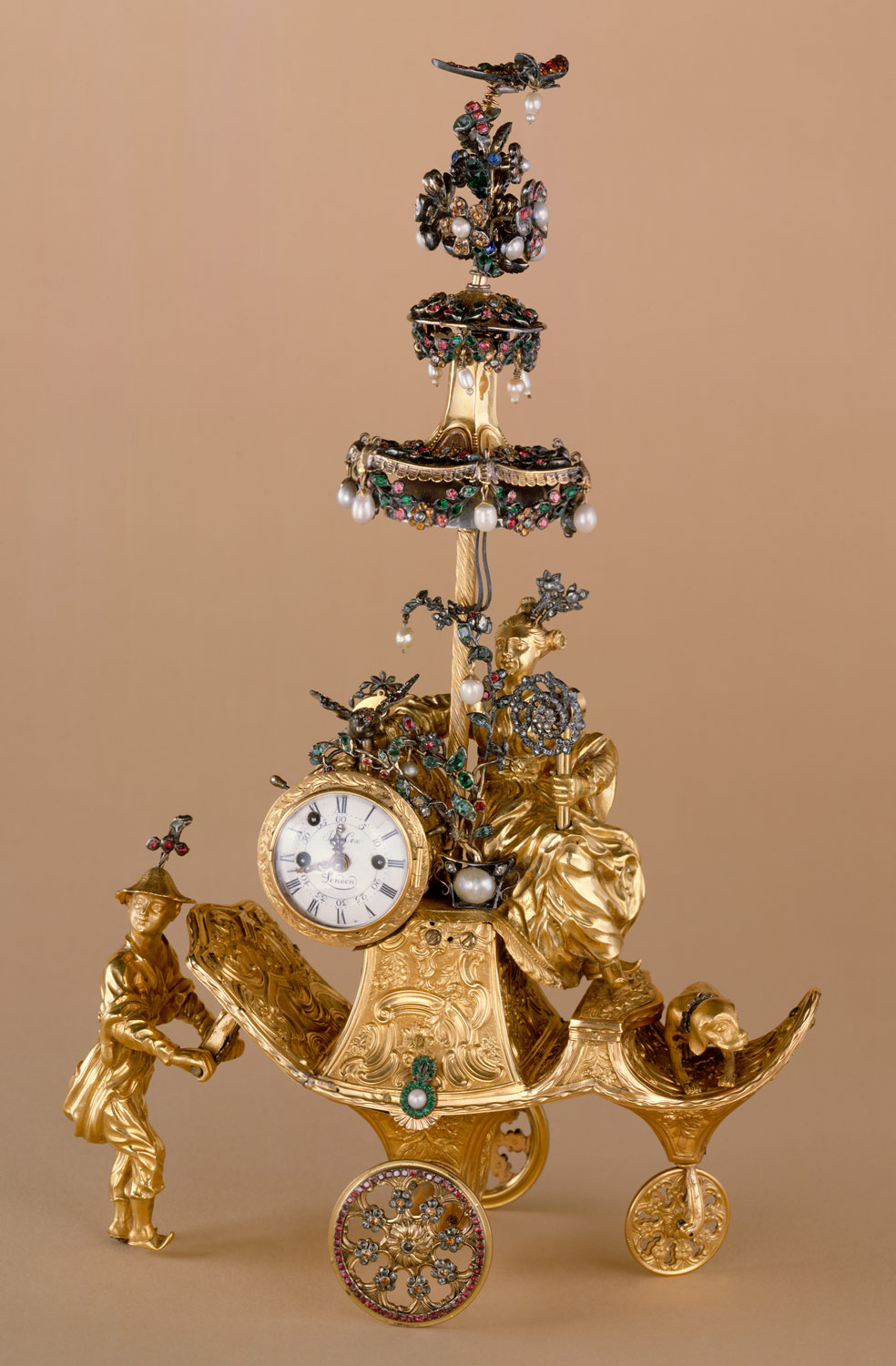
Automaton in the form of a chariot pushed by a Chinese attendant and set with a clock, 1766
Signed by James Cox (English, ca. 1723–1800)
Case: gold, with diamonds and paste jewels set in silver; pearls; dial: white enamel; movement: brass, partly gilded, and steel; the balance wheel and cock of silver set with paste jewels
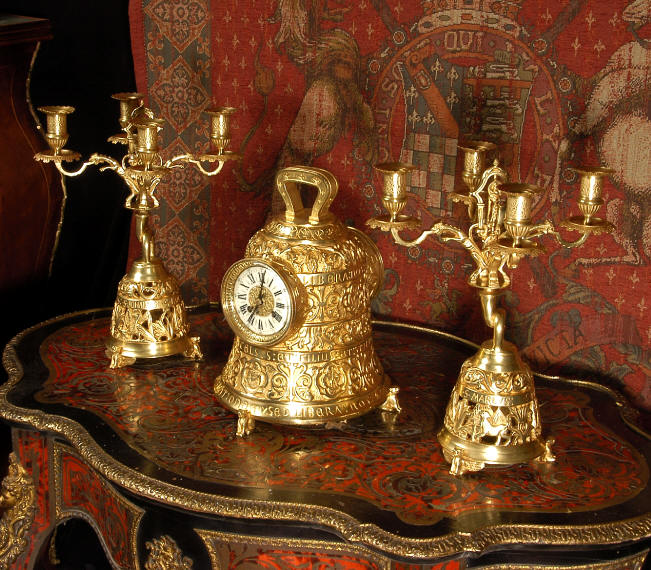
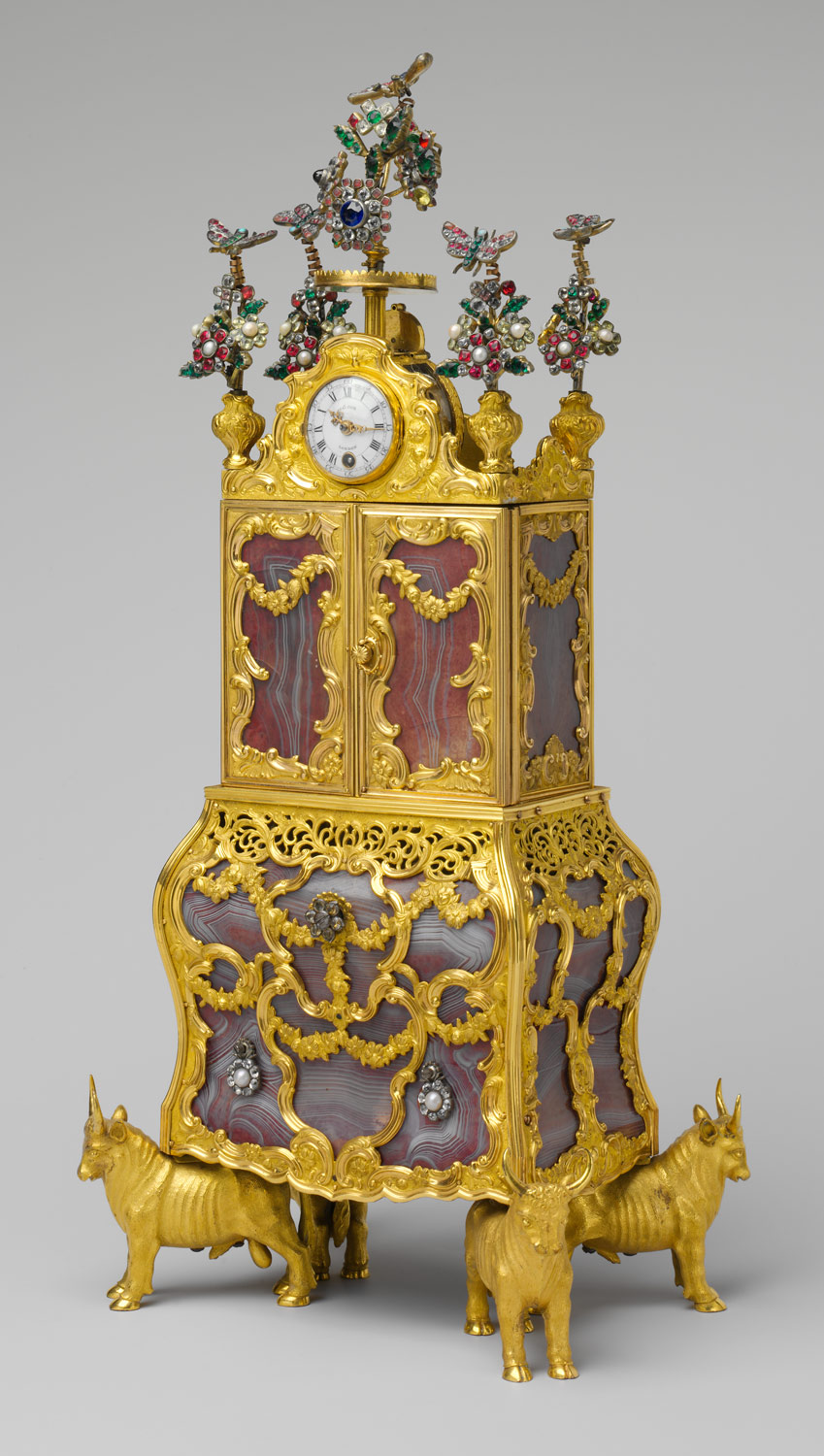
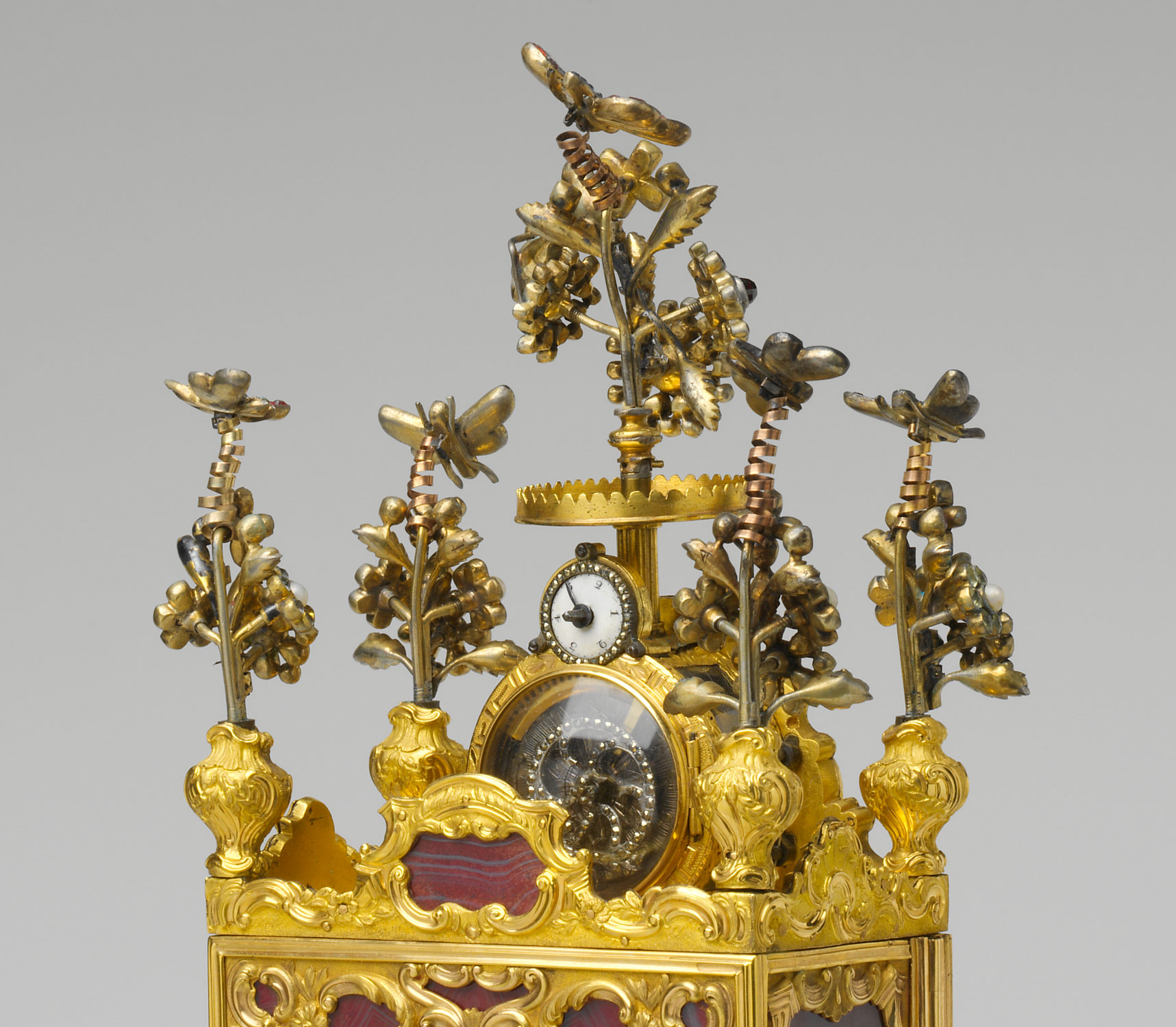
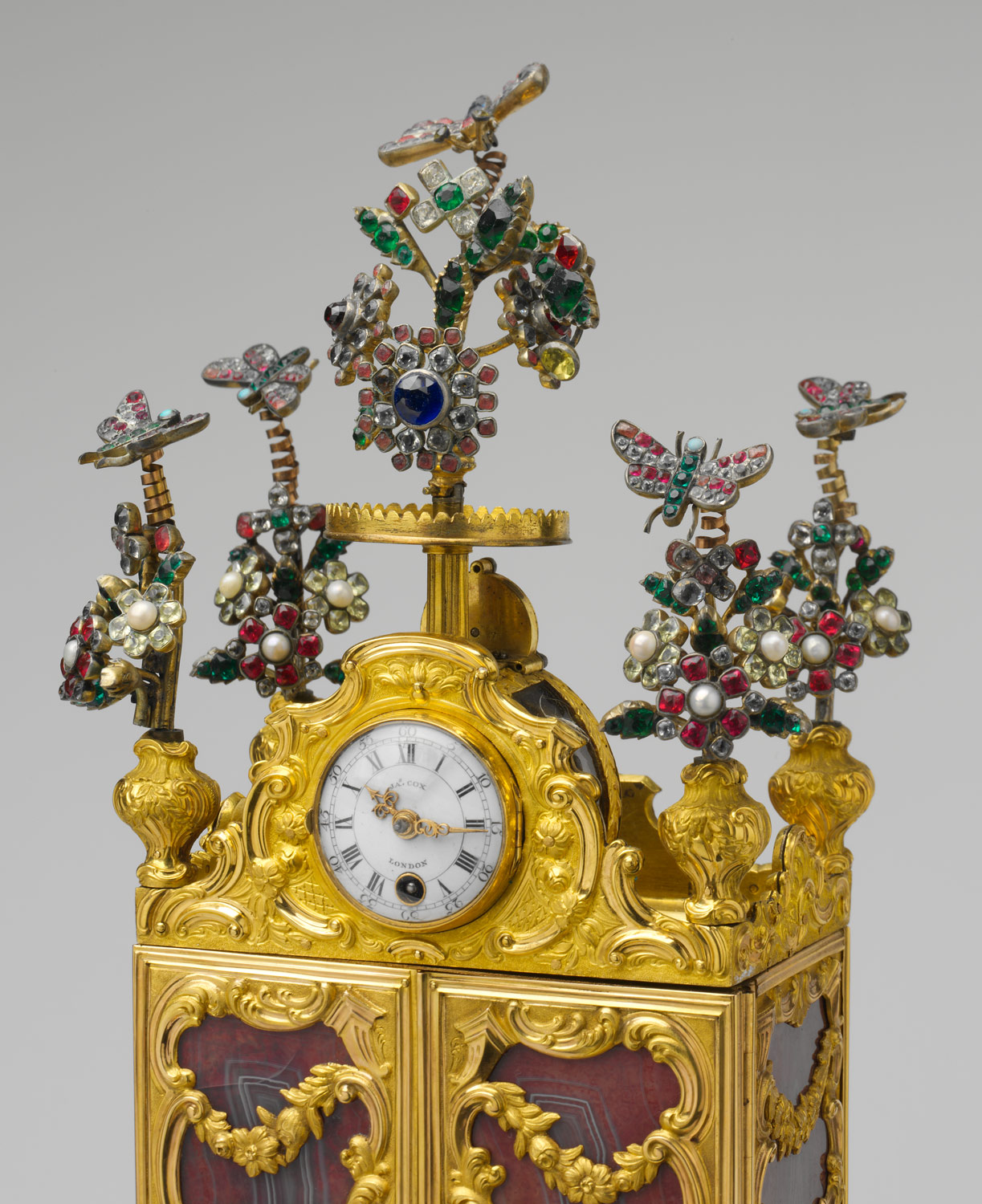
Miniature secretary incorporating a watch, ca. 1766–72
Signed by James Cox (English, ca. 1723–1800)
Case: agate, with gold mounts, gilded brass, pearls, and paste jewels set in silver; dial: white enamel; 12 1/2 in. (31.8 cm)
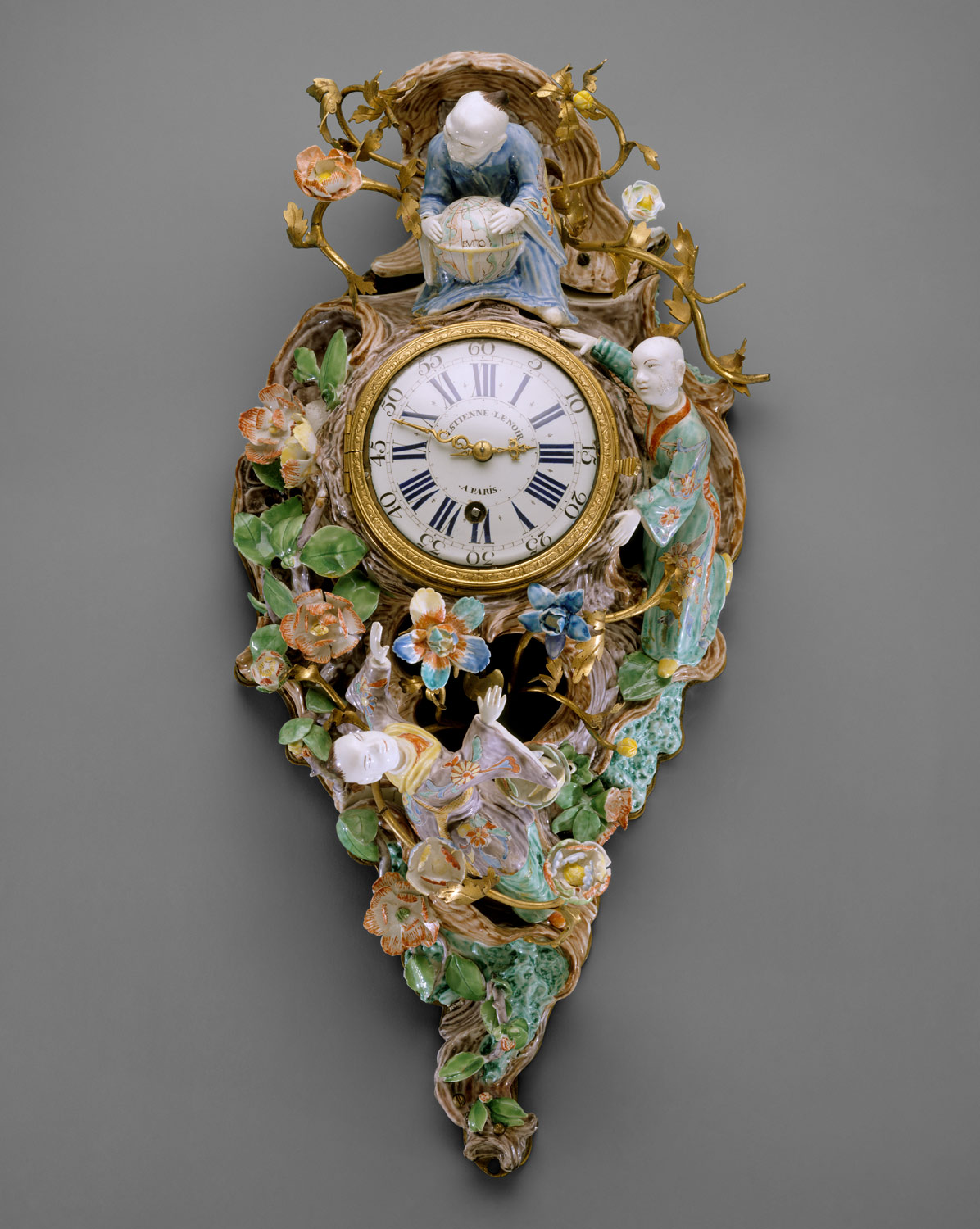
Cartel, or Wall Clock, ca. 1735–40
Movement by étienne I Le Noir (French, 1675–1739)
Case: soft-paste porcelain with gilt-bronze fittings; Dial: white enamel with blue numerals; Movement: brass and steel
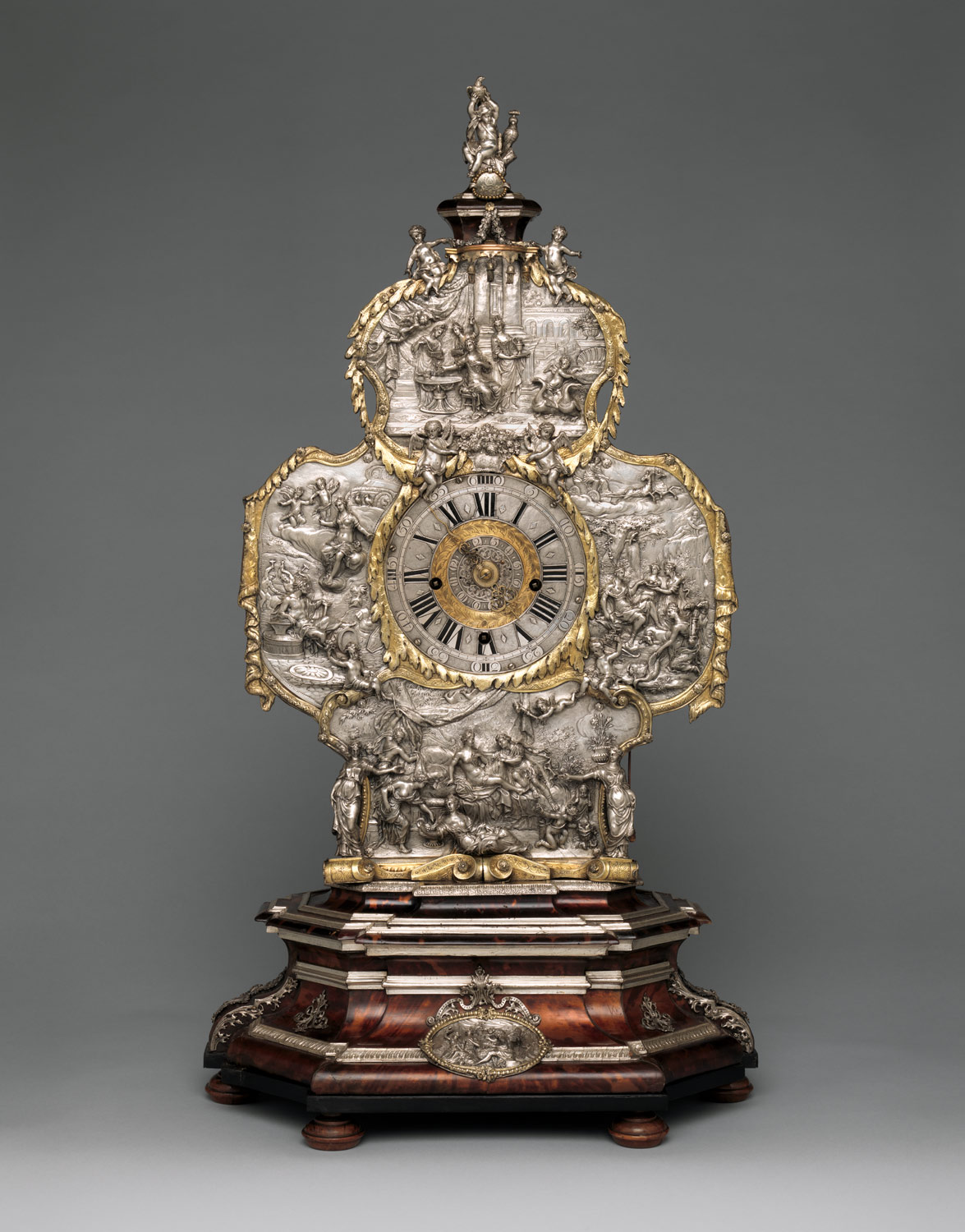
Mantel Clock (Telleruhr), ca. 1710
Movement by Franz Xaver Gegenreiner (German, master clockmaker in 1770); Repoussé silver by Johann Andreas Thelot (German, 1655–1734)
Case: tortoiseshell veneer and silver, partly gilt; Dial: champlevé silver with black numerals; Movement: brass and steel
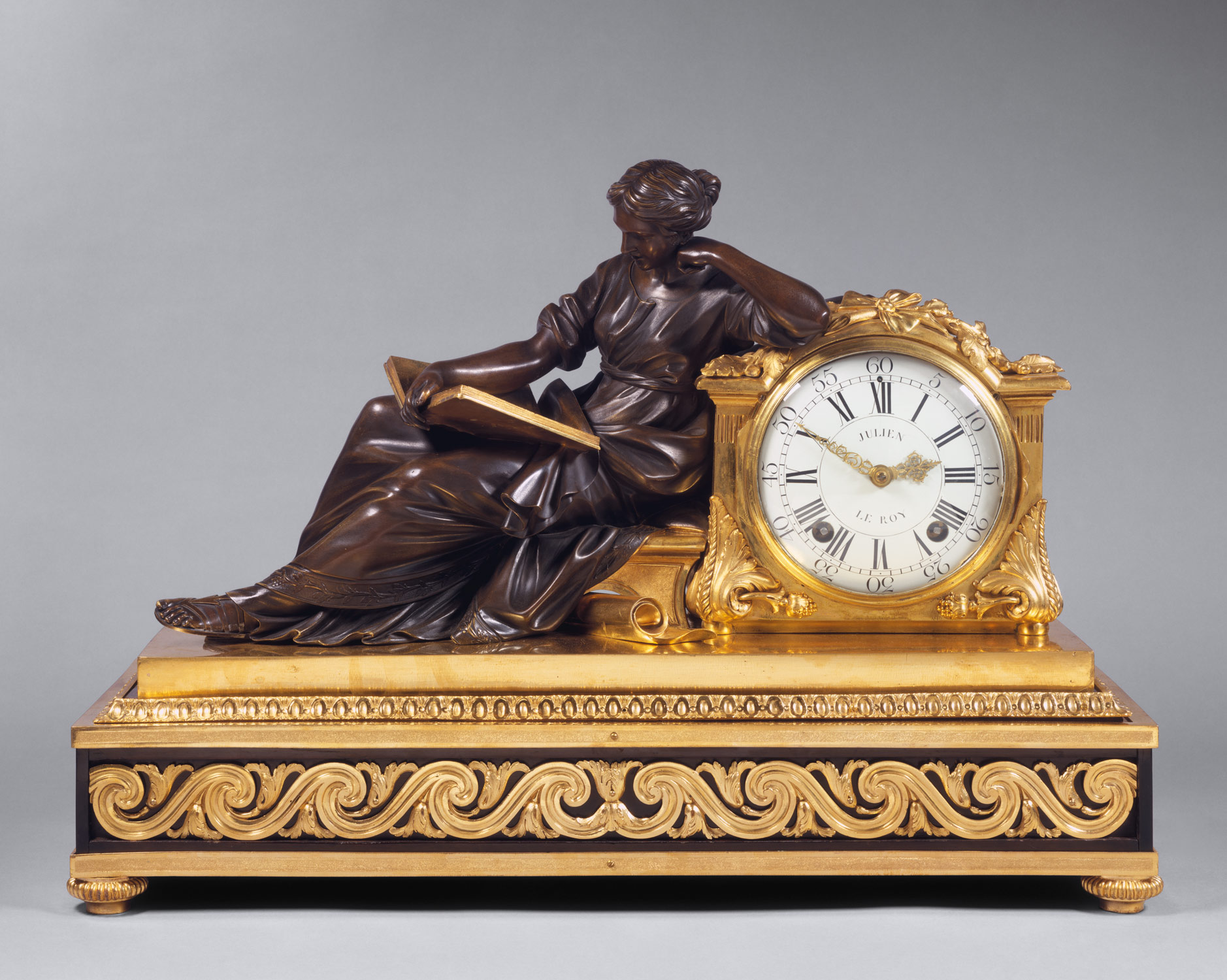
Mantel Clock (Pendule de chiminée), ca. 1757–60
Movement by the Workshop of Julien Le Roy (French, 1686–1759); Case by Joseph Baumhauer (French, active ca. 1749–72)
Case: gilded and patinated bronze, on a base of oak veneered with ebony; Dial: white enamel with black numerals; Movement: brass and steel
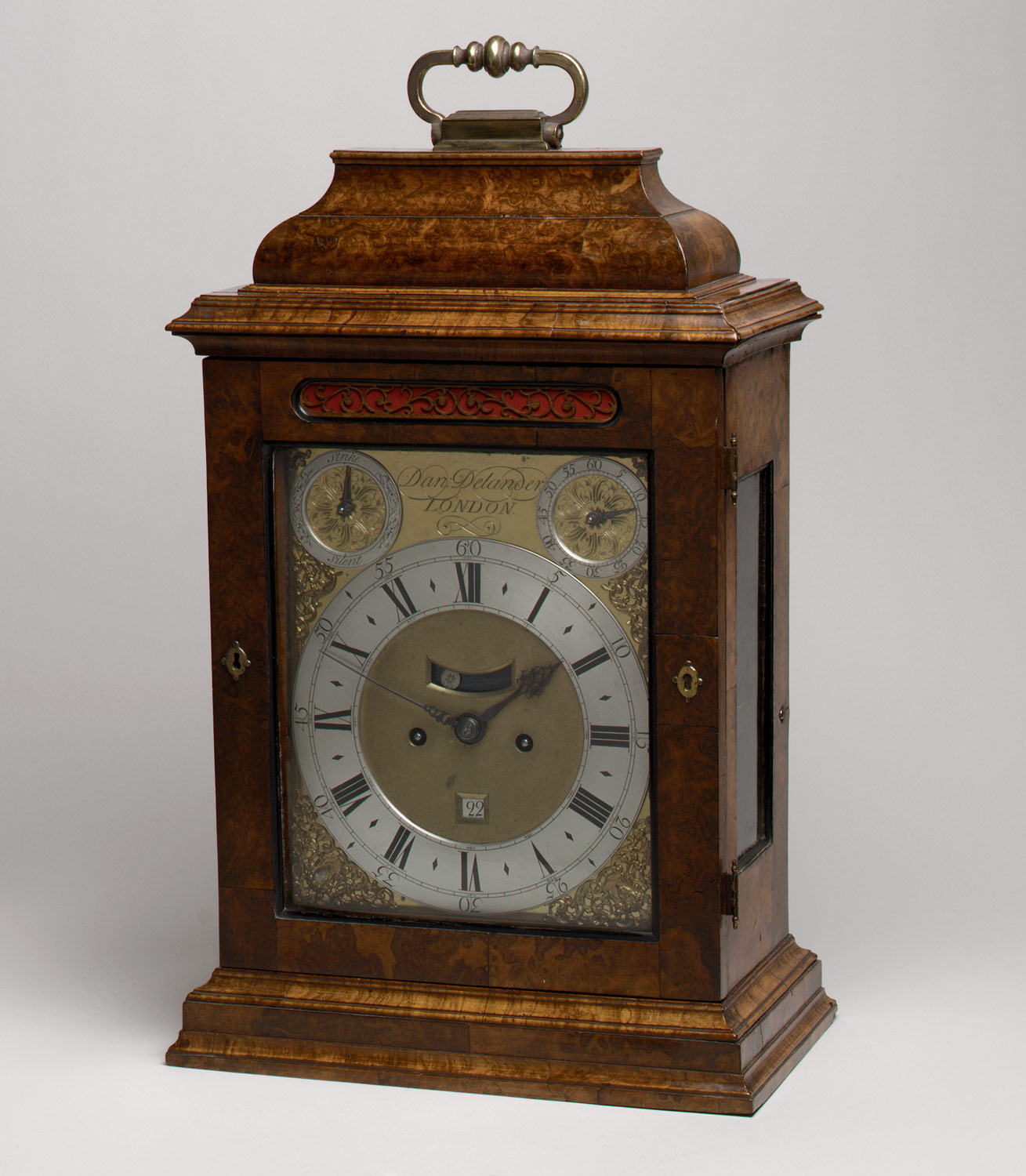
Table Clock with Calendar, ca. 1720
Movement by Daniel Delander (English, recorded 1692, died 1733)
Case: oak, with burl walnut veneer and stained wooden moldings, brass fittings; Dial: gilded and silvered brass with black numerals; Movement: brass and steel
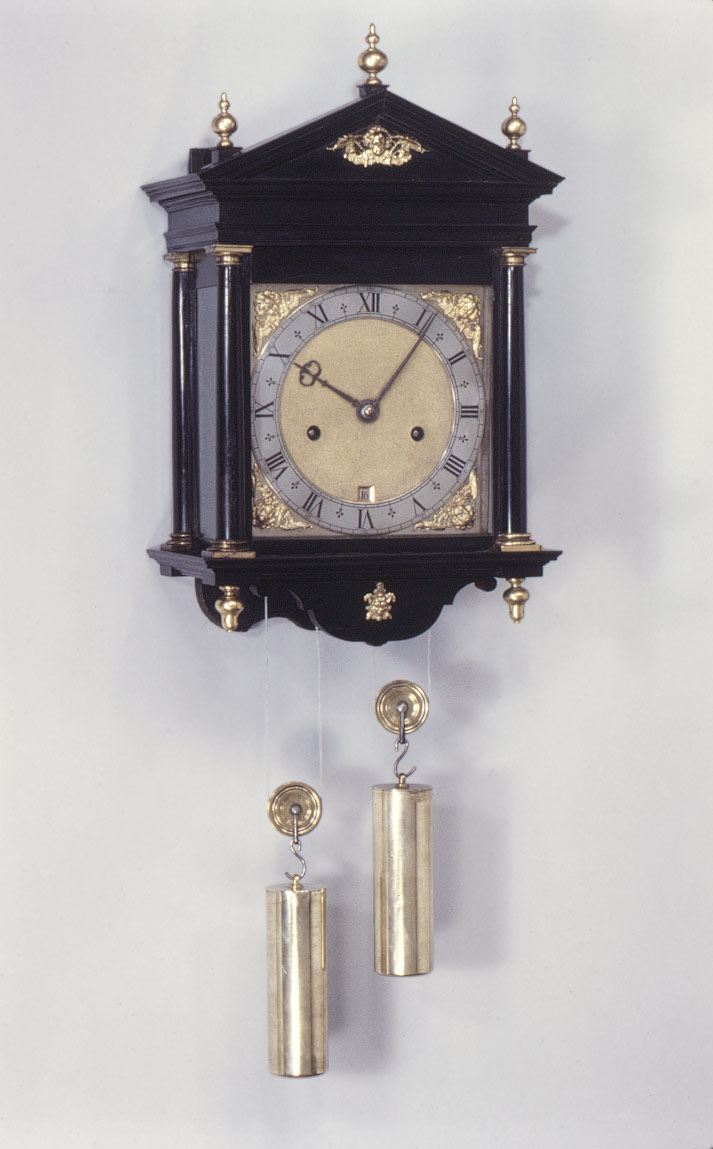
Hooded Wall Clock with Calendar, ca. 1660–65
Movement by Ahasuerus I Fromanteel (English, 1607–1693)
Case: oak veneered with ebony; gilt-brass mounts; Dial: gilded and silvered brass with black numerals; Movement: brass and steel
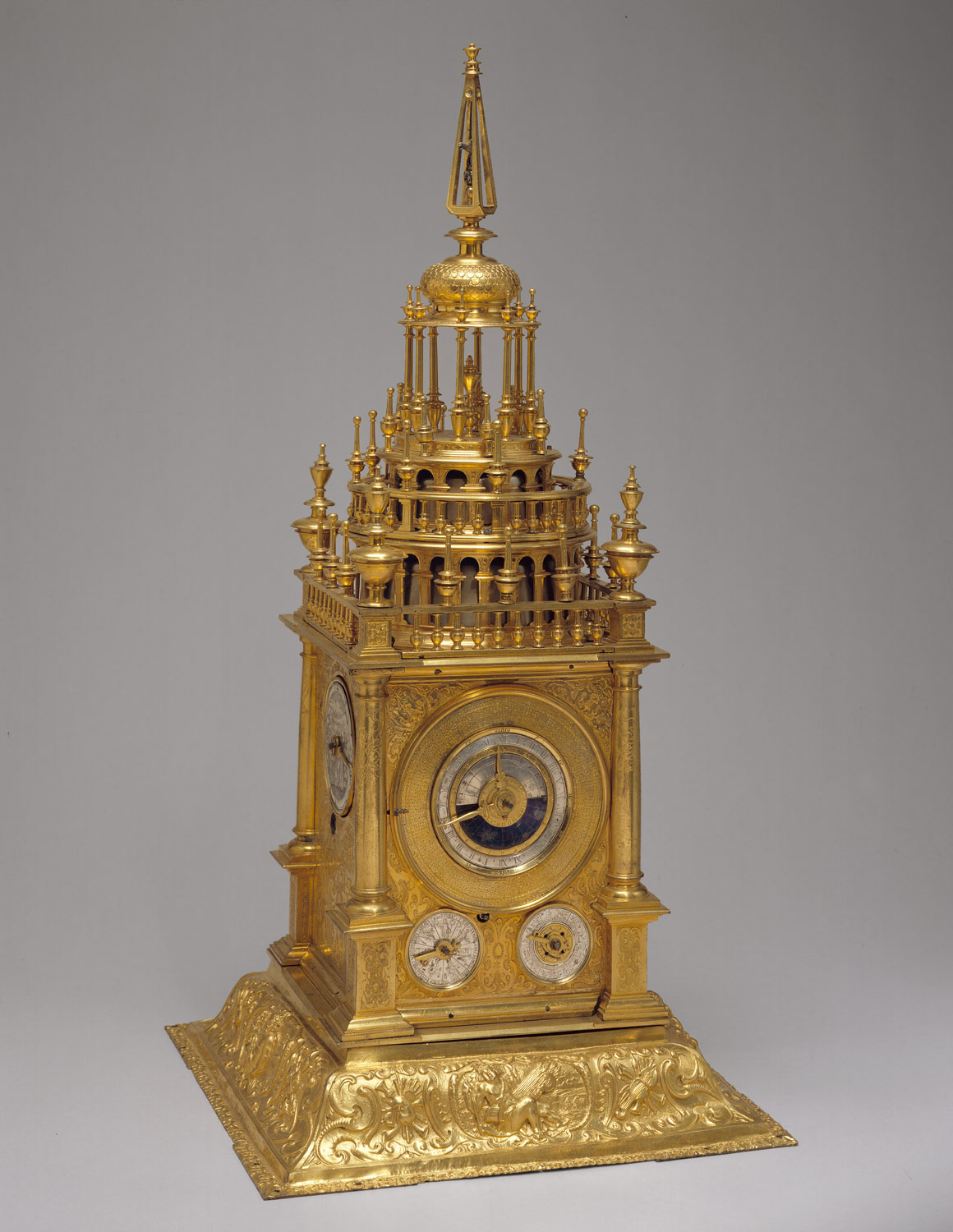
Astronomical Table Clock, second quarter of 16th century
German; Made in Augsburg
Case of gilt bronze and gilt brass; movement of gilt brass and steel: H. 25 in. (63.5 cm), W. 10 in. (25.4 cm), D. 10 in. (25.4 cm)
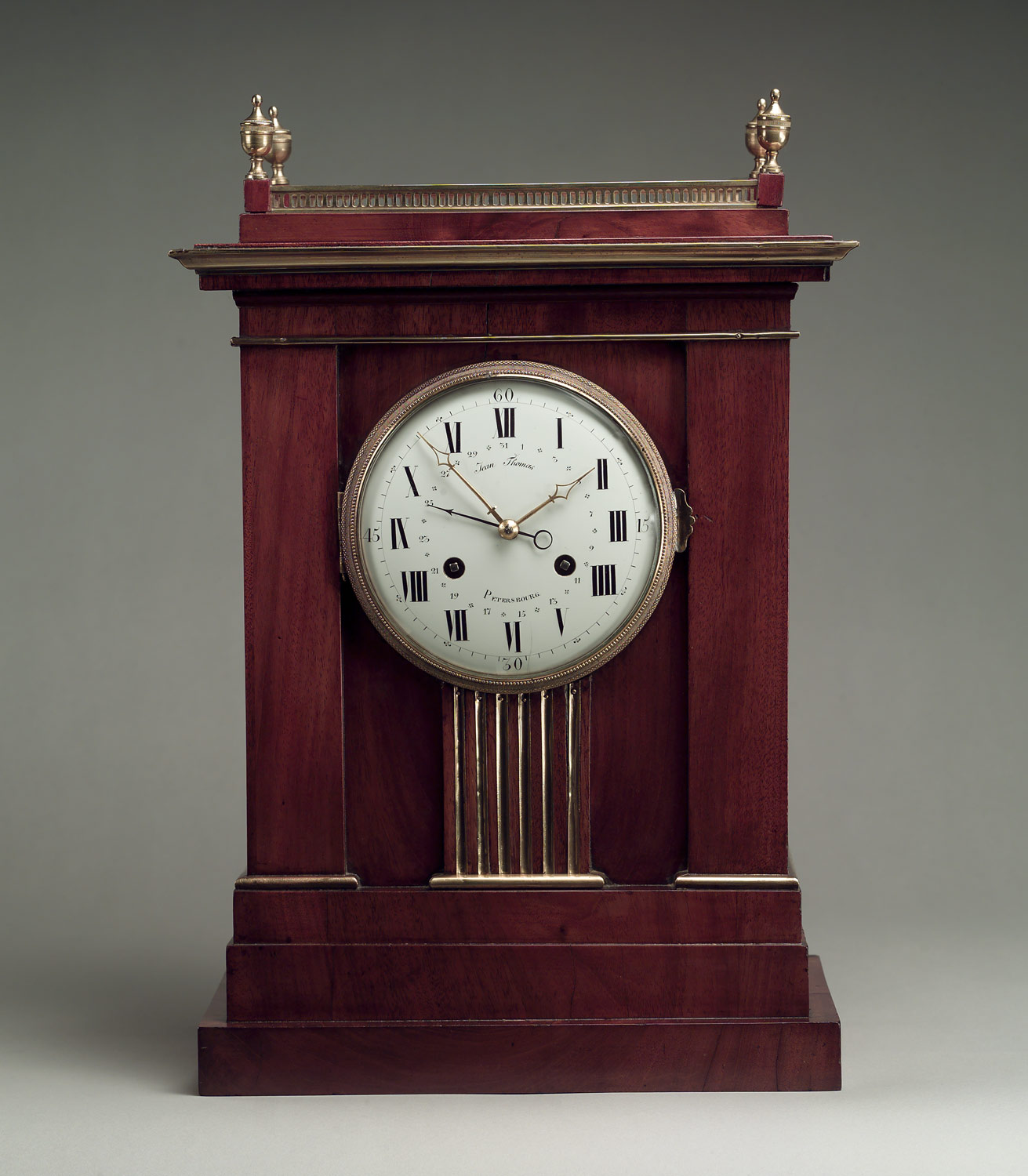
Clock, ca. 1780–90
Workshop of David Roentgen (German, 1743–1807); Movement attributed to Elie Prudhomme (first mentioned 1776)
German; Neuwied
Oak, pine mahogany; brass and gilt-bronze mounts, enamel
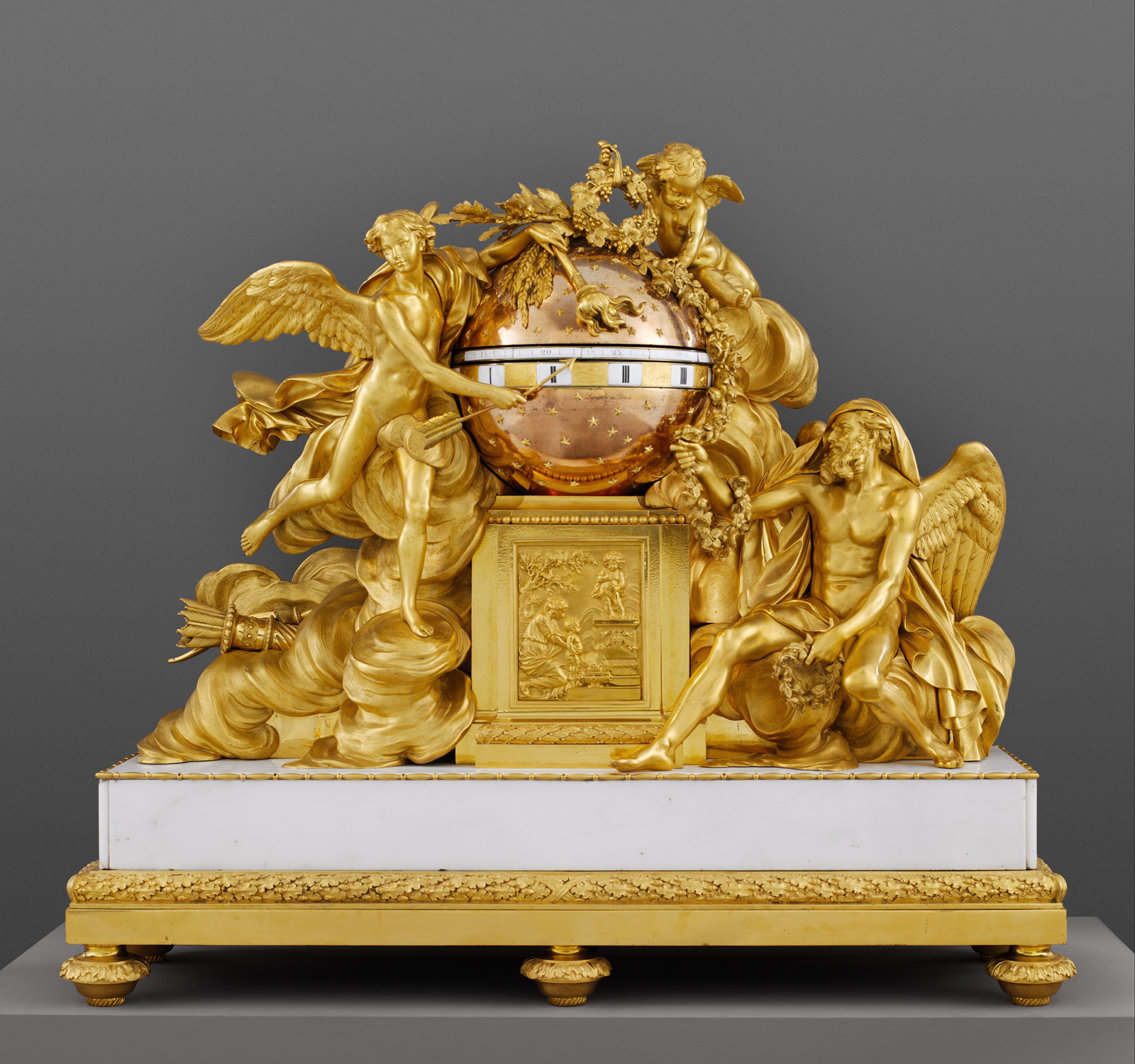
Mantel clock, ca. 1780–90
French (Paris)
Gilt bronze, enamel, and marble
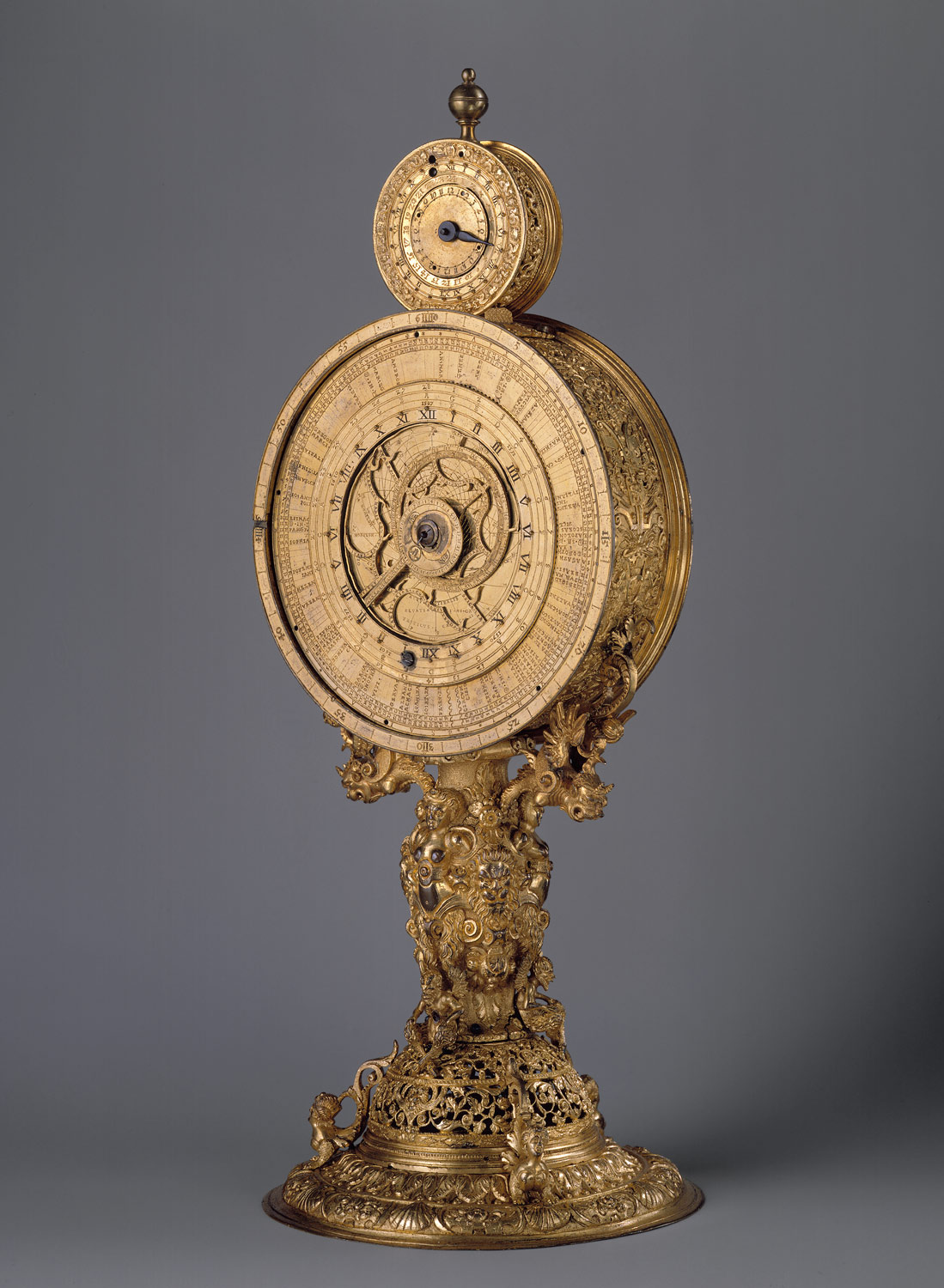
Monstrance Clock or Mirror Clock, ca. 1570
Made in Nuremberg, Germany
Case of gilt bronze; dial of gilt brass; movement of steel
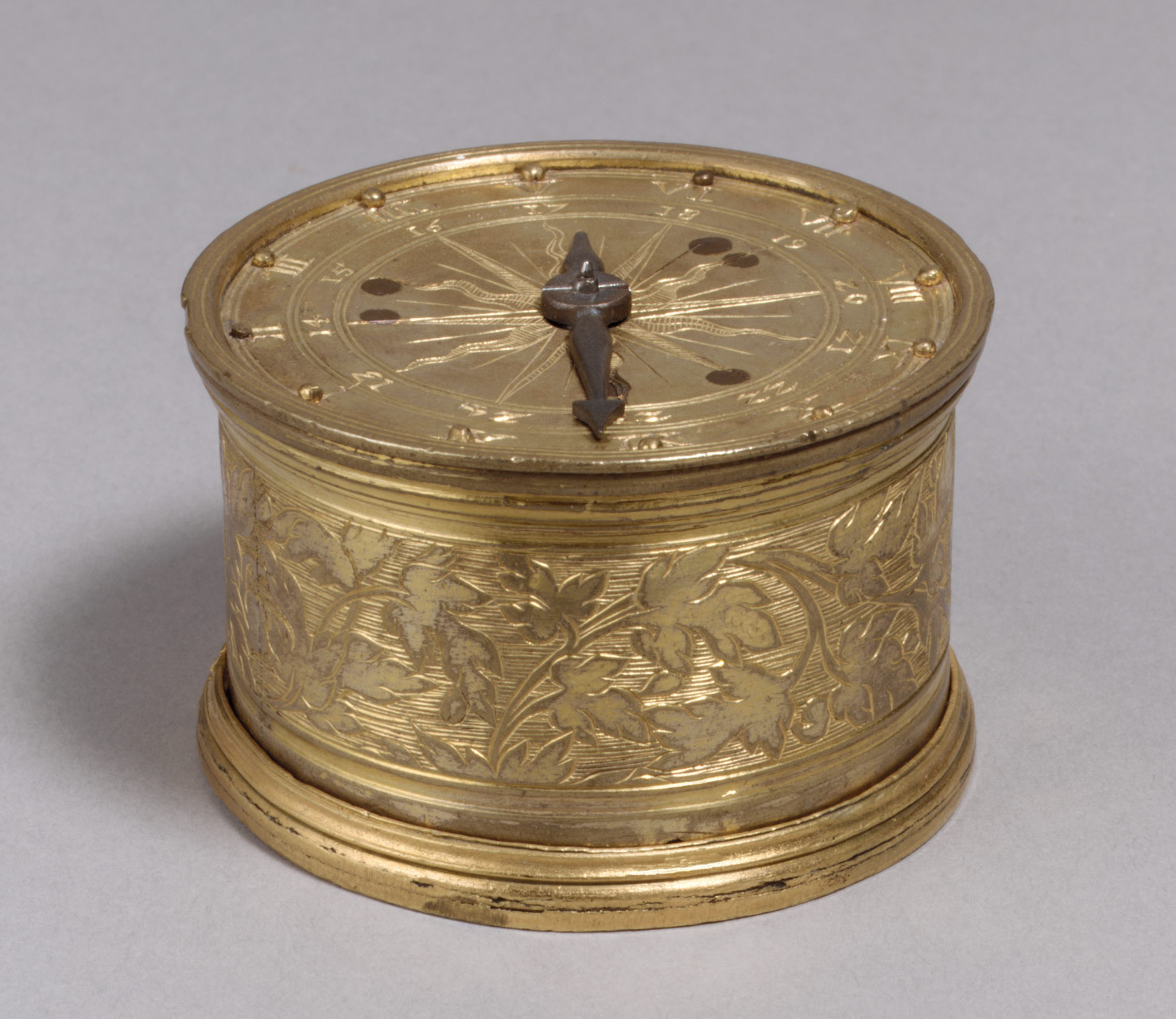
Table Clock with a Skeleton Movement, mid-16th century or earlier
South German
Case and dial of gilt brass; hand and movement of steel
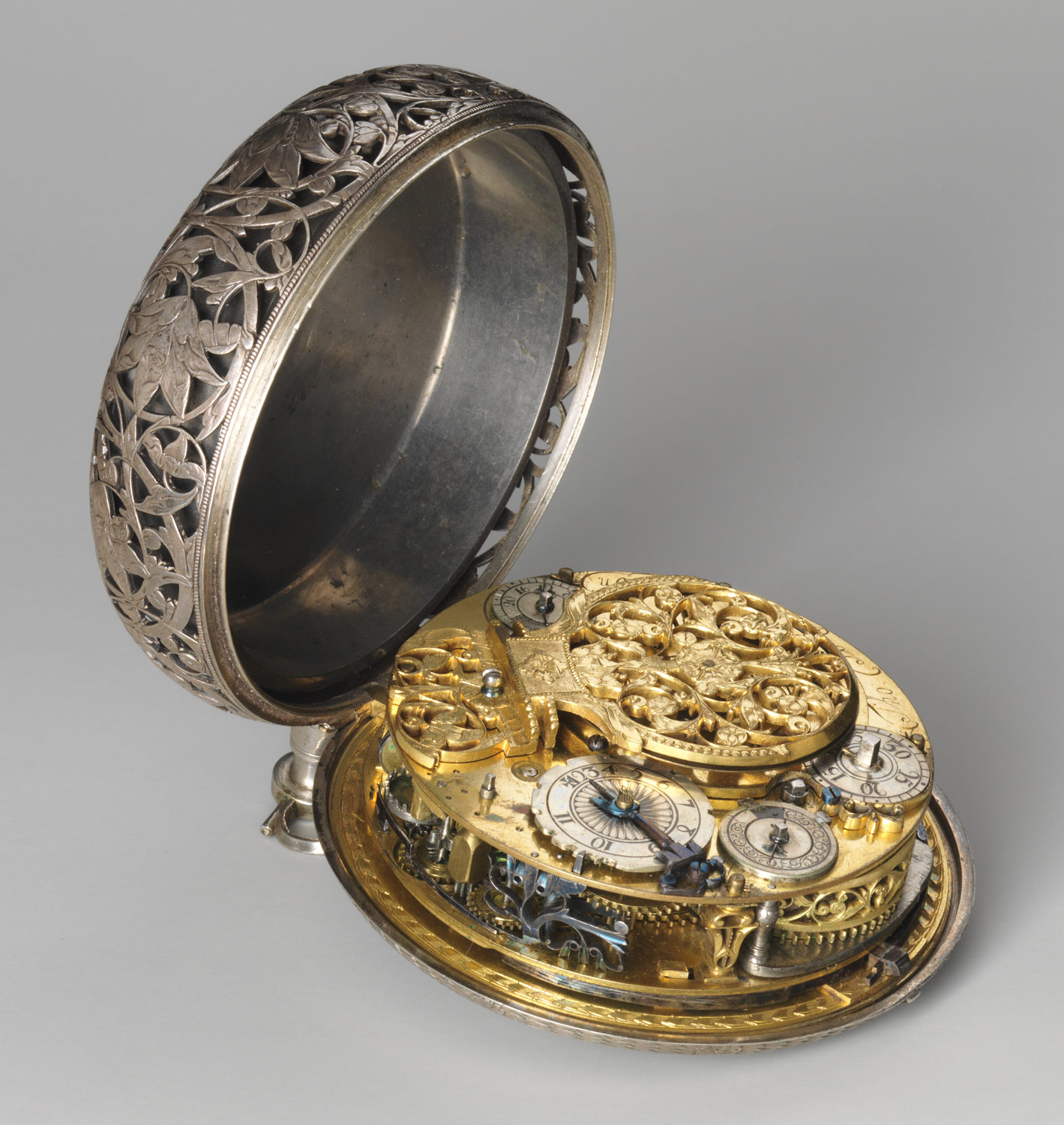
Traveling clock watch with alarm, ca. 1680
Movement by Thomas Tompion (English, 1638-1713); case by Nathaniel Delander (English, recorded 1668/69, died ca. 1691 or before 1705)
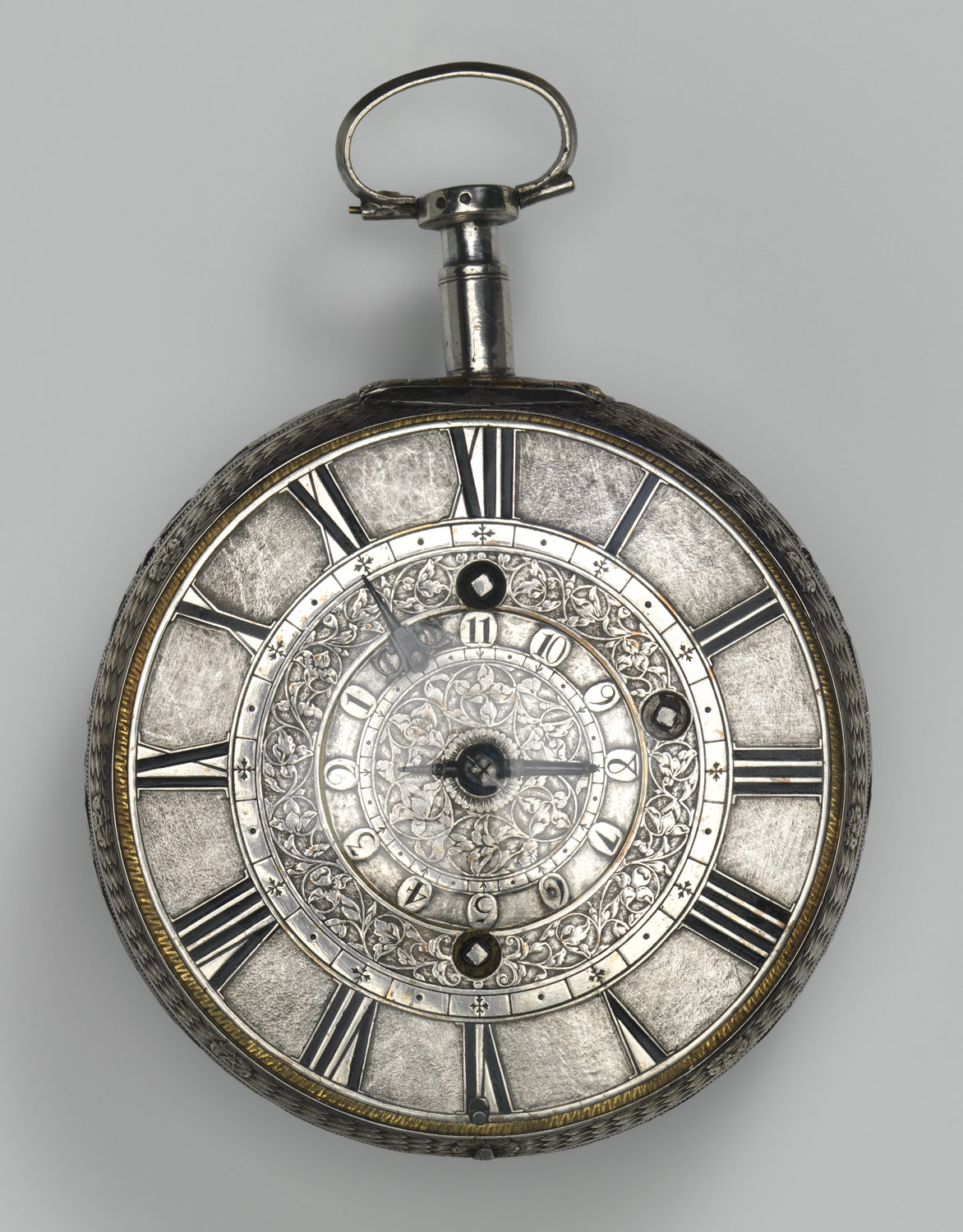
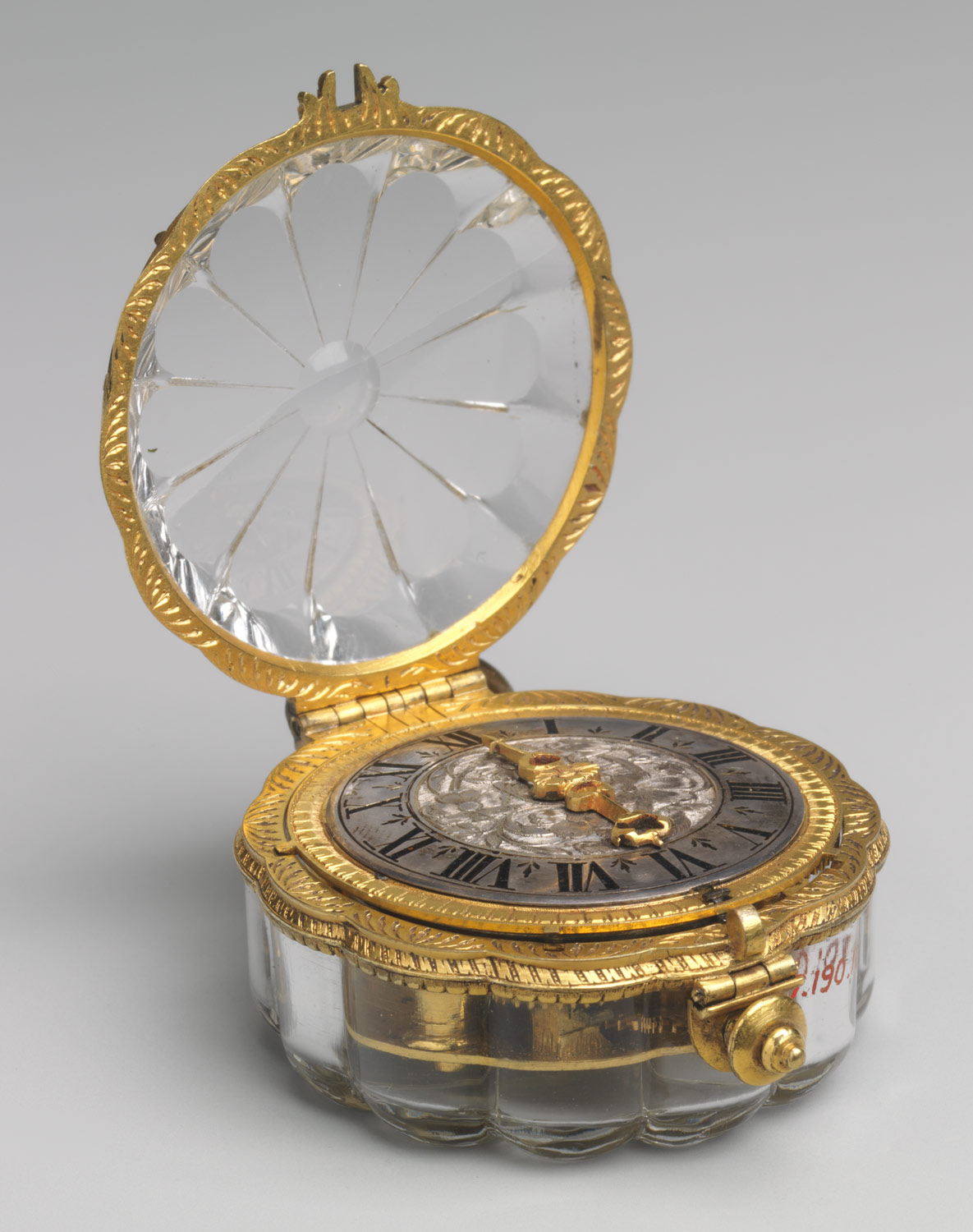
Watch, ca. 1650-60
Movement by Jean Rousseau the Younger (Swiss, 1606-1684)
Case: rock crystal mounted in gilded brass; Dial: silver, with single gilded brass hand; Movement: gilded brass and steel, partly blued
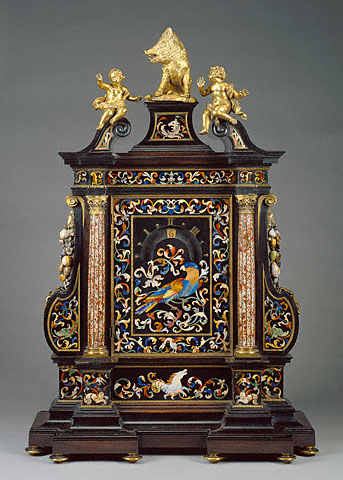
Case and mosaics by Giovanni Battista Foggini; woodwork by Leonard van der Vinne, furniture worker
Italian, Florence, 1704 - 1705
Ebony, gilt bronze, and semiprecious stones
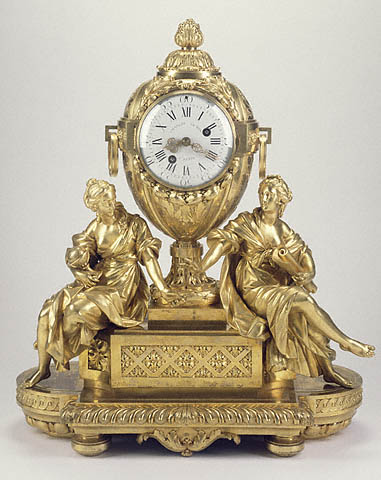
Movement by Étienne-Augustin Le Roy, clockmaker; case by Étienne Martincourt, metalworker
French, Paris, about 1772
Gilt bronze; enameled metal
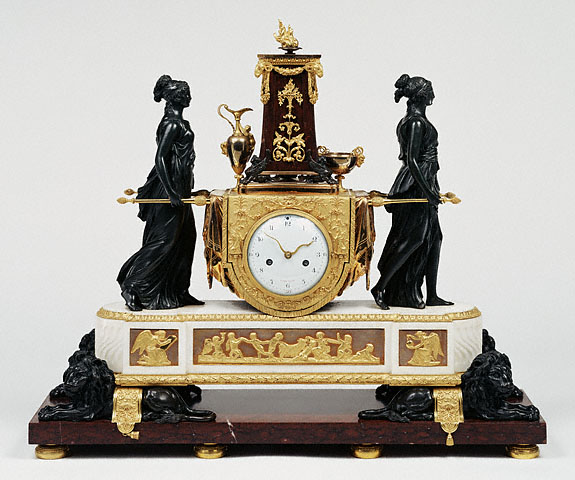
Clock case attributed to Pierre-Philippe Thomire, metalworker; clock movement by Charles-Guillaume Manière, clockmaker
French, Paris, about 1789
Patinated bronze; gilt bronze; enameled metal; glass; white marble; griotte marble
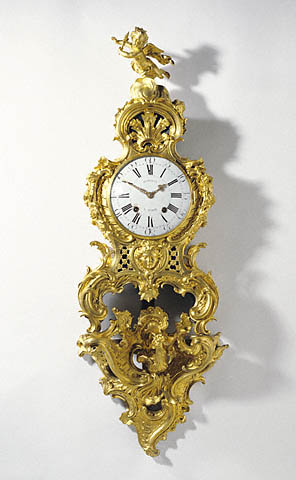
Jean Romilly, clockmaker; Charles Cressent, designer
French, Paris, 1758
Gilt bronze, enameled metal
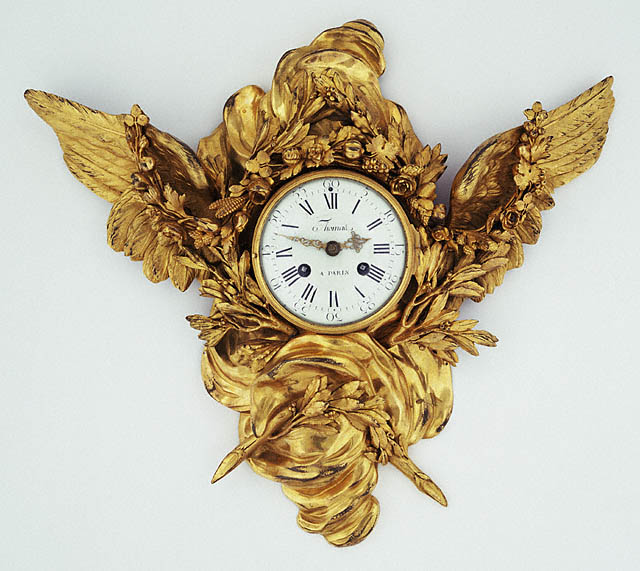
Clock movement probably by Nicolas Thomas
French, Paris, about 1785
Gilt bronze, enameled metal, and glass
КАРМАННЫЕ ЧАСЫ
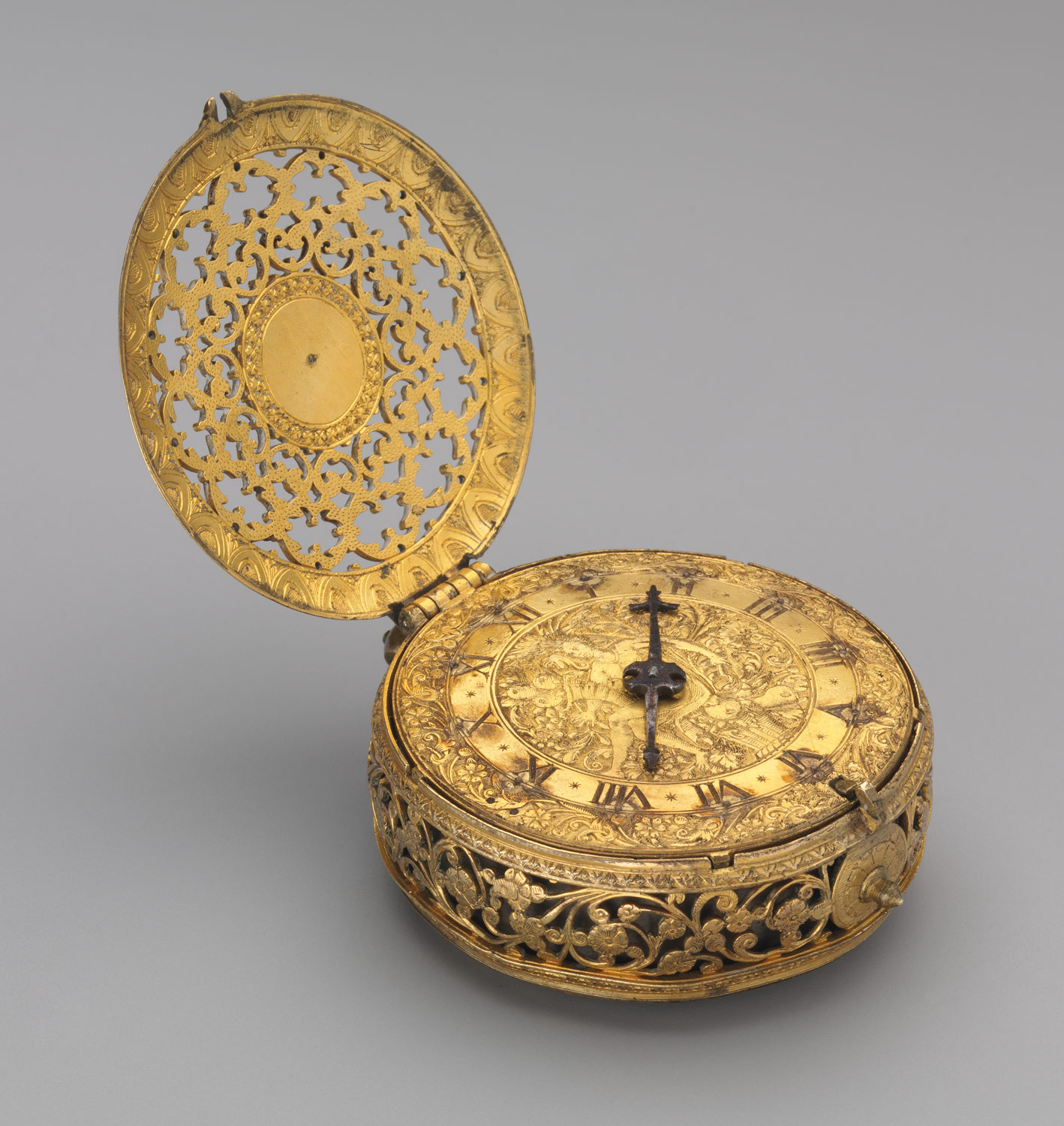
Clock watch, ca. 1600-1610
Movement by Michael Nouen, or Nouwen (Flemish, active London, ca. 1600–1610)
Case: gilded brass; Dial: gilded brass, with a blued steel hand; Movement: gilded brass and iron
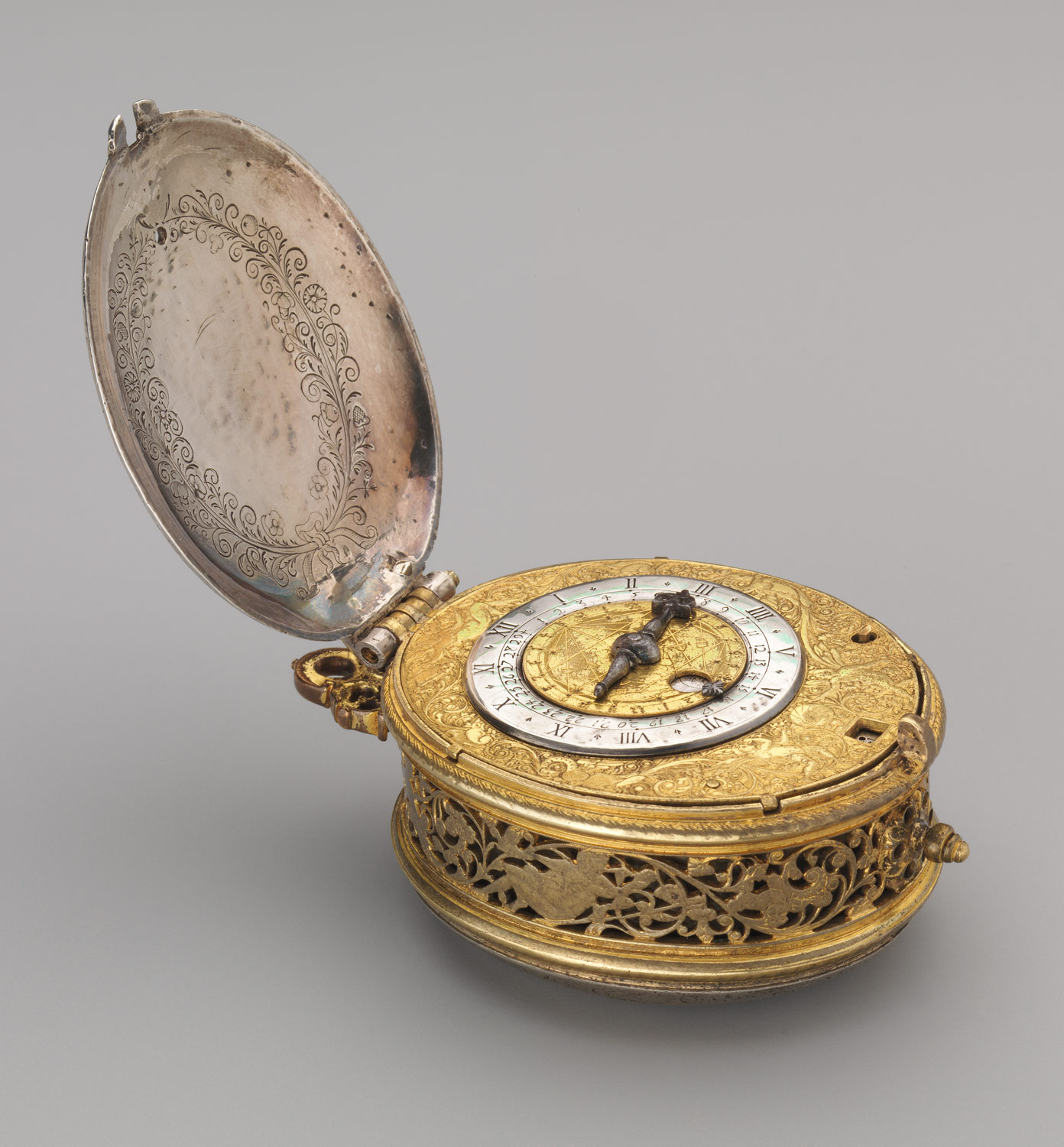
Clock watch with calendar, ca. 1600-1610
Movement probably by Nicolas Forfaict the Elder (French, recorded 1573–1619)
Case: silver and gilded brass; Dial: gilded brass and silver, with a steel hand; Movement: gilded brass and steel, partly blued


Pair-case watch, 1682-83
Movement by Thomas Tompion (English, 1638-1713); inner case and dial by Nathaniel Delander (English, recorded 1668/69, died ca. 1691 or before 1705)
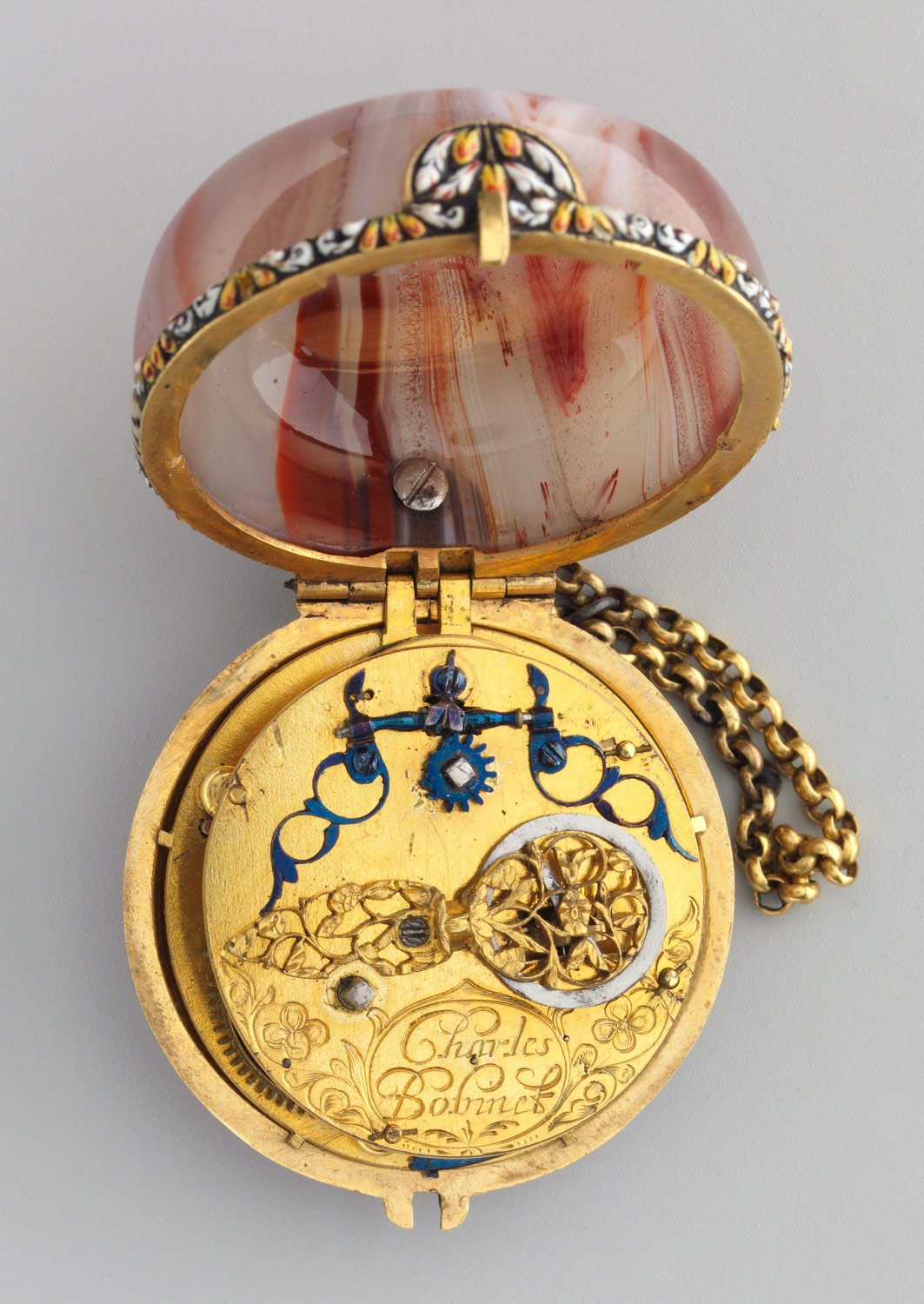
Watch, ca. 1650-60
Movement by Charles Bobinet (Swiss, 1610-1678)
Case: pink agate, mounted in enameled gold; Dial: painted enamel with a single gilded-brass hand; Movement: gilded brass and steel, partly blued
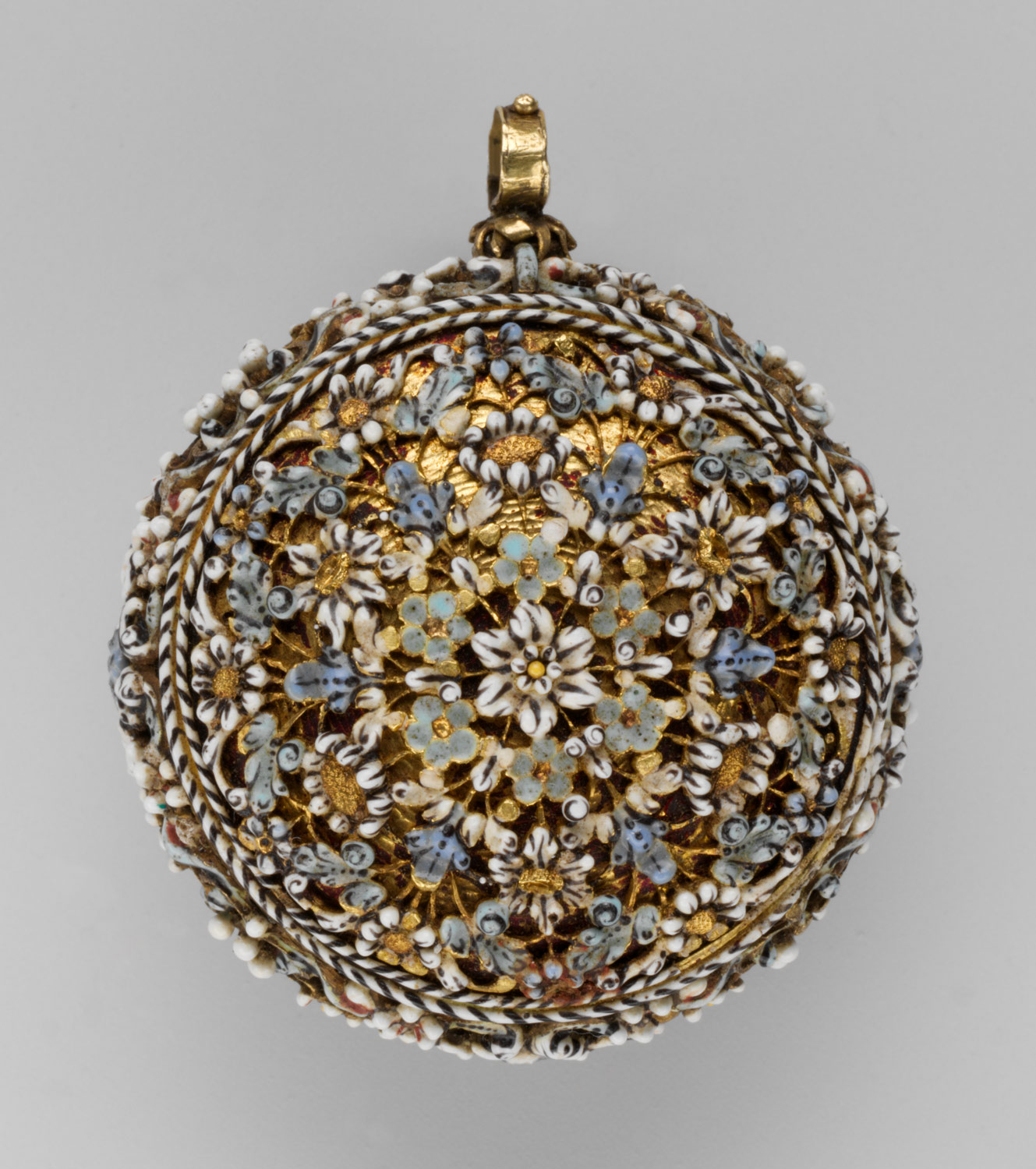

Watch, ca. 1660-70
Movement by F. L. Meybom, or Maybon; case attributed to Isaac Bergeron, dit d'Argent (French, recorded working 1649-94)
Movement: gilded brass, steel, partly blued, and silver; Case: blued steel, gilded brass, rock crystal, silver, and diamonds; Dial: painted enamel and basse-taille enamel on gold, with a single gold hand
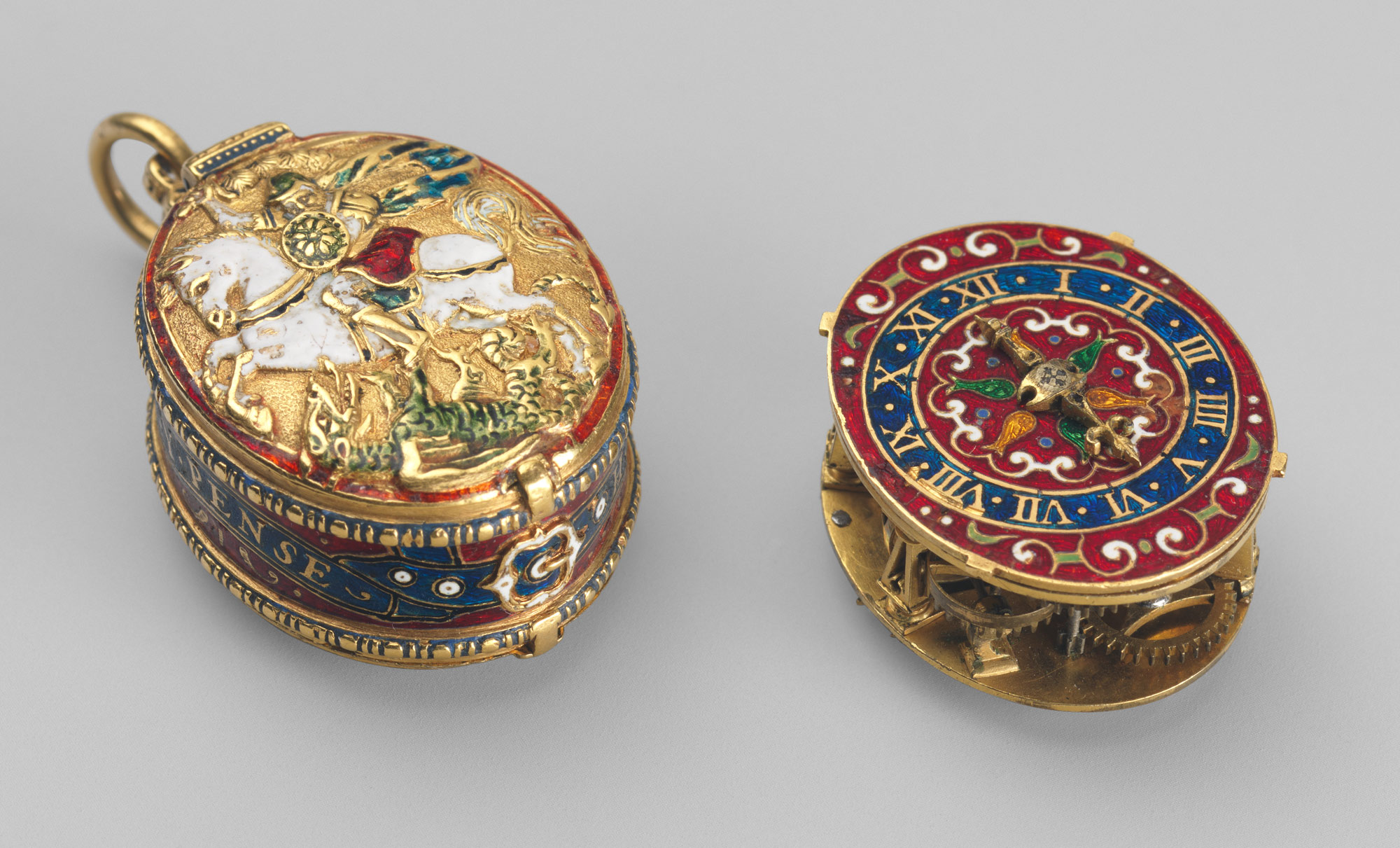
Watch in the form of a Lesser George
Movement by Nicholas Vallin (Flemish, active London ca. 1590, died 1603)
Case: gold, partly enameled, and rock crystal; Dial: gold, partly enameled, with gilded-brass hand; Movement: gilded brass and steel, partly blued
Напольные часы
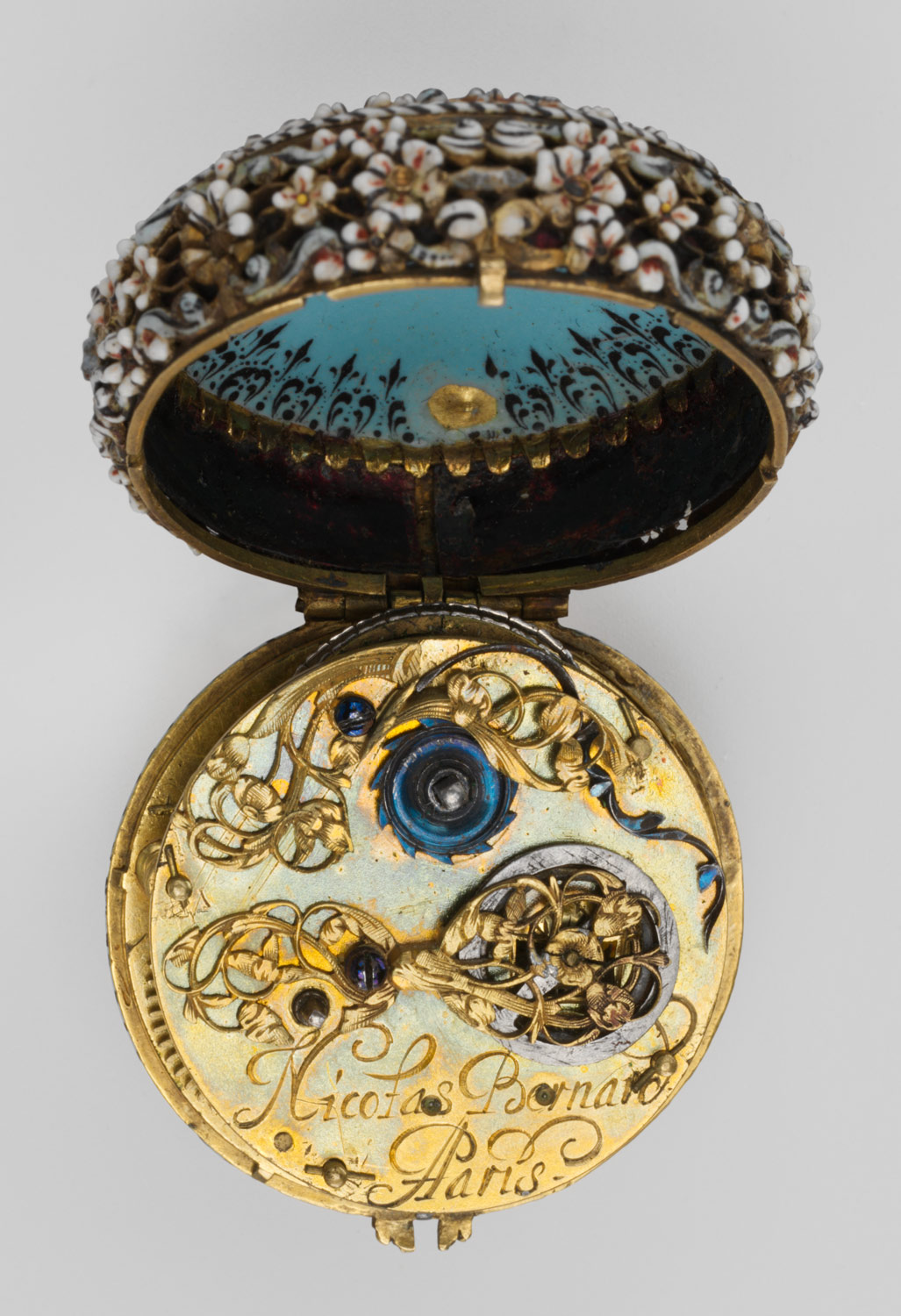
Watch, ca. 1650
Movement by Nicolas Bernard (French, recorded 1636-70)
Case: enameled gold; Dial: enameled gold, with a single gilded brass hand; Movement: gilded brass and steel, partly blued
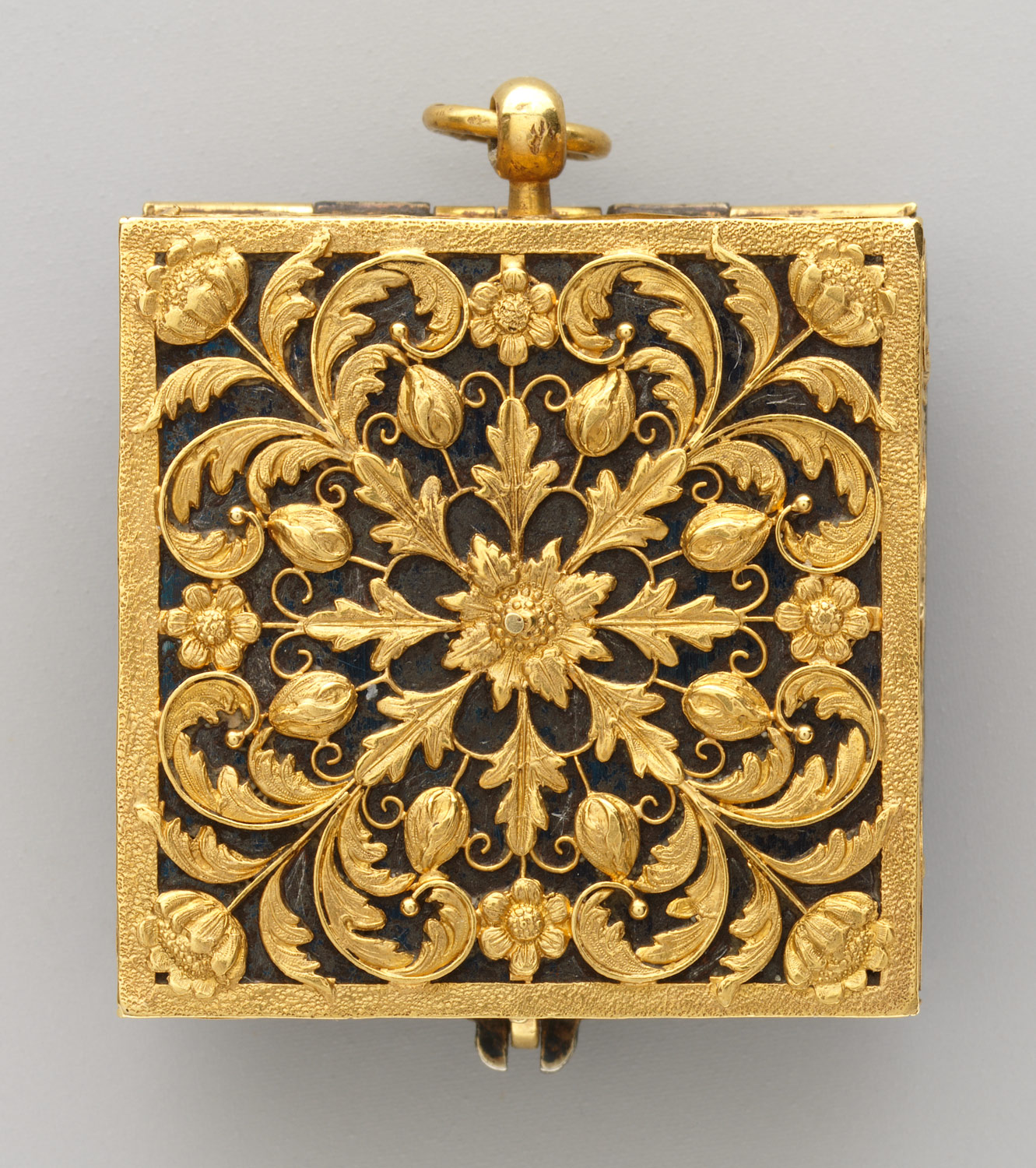
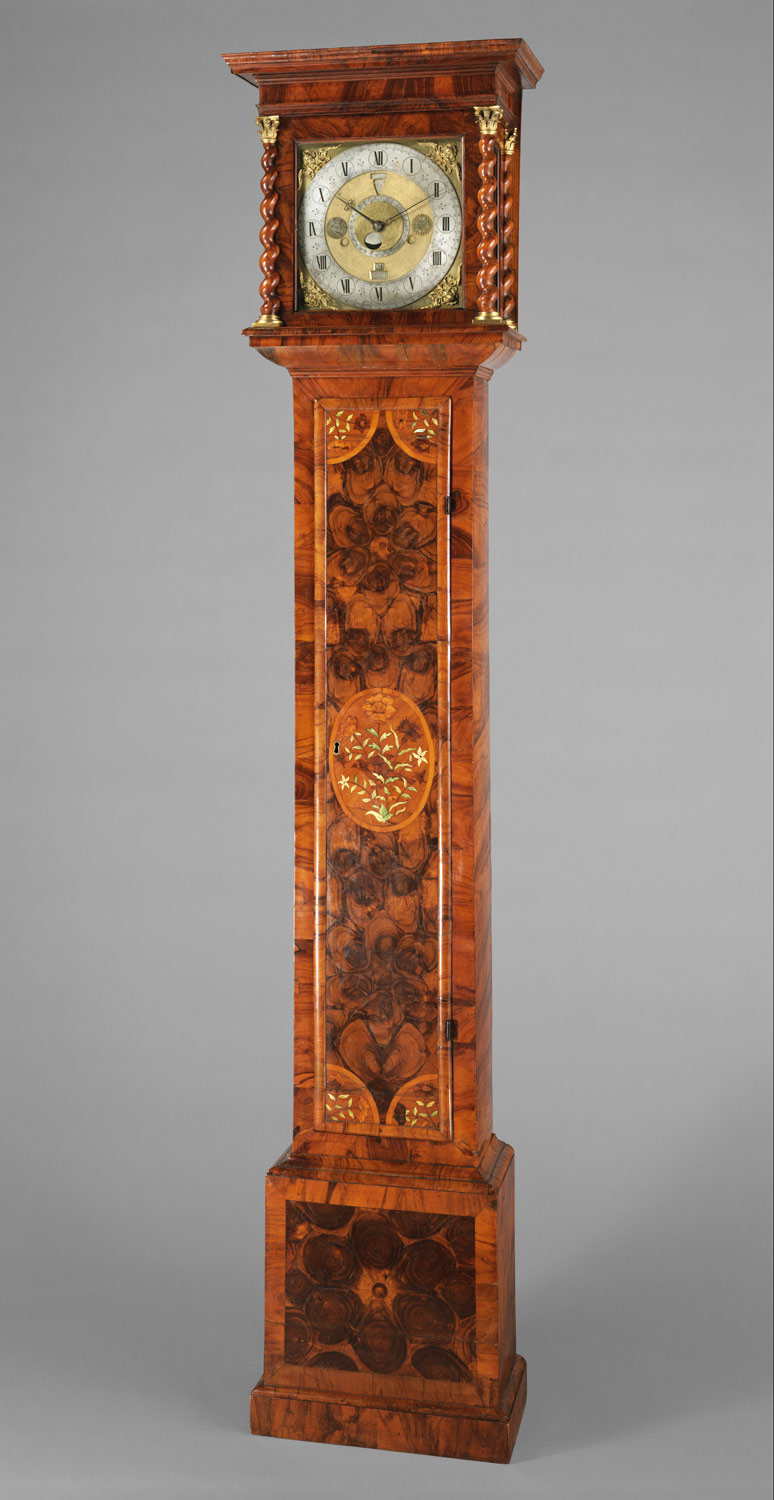
Longcase Clock, probably ca. 1675–78
Movement by Thomas Tompion (English, 1639–1713)
Case: oak, veneered with oystershell-cut olivewood and marquetry panels of green-stained bone, ivory, and various woods, gilt-brass mounts; Dial: brass, partly gilded and partly silvered; Movement: brass and steel
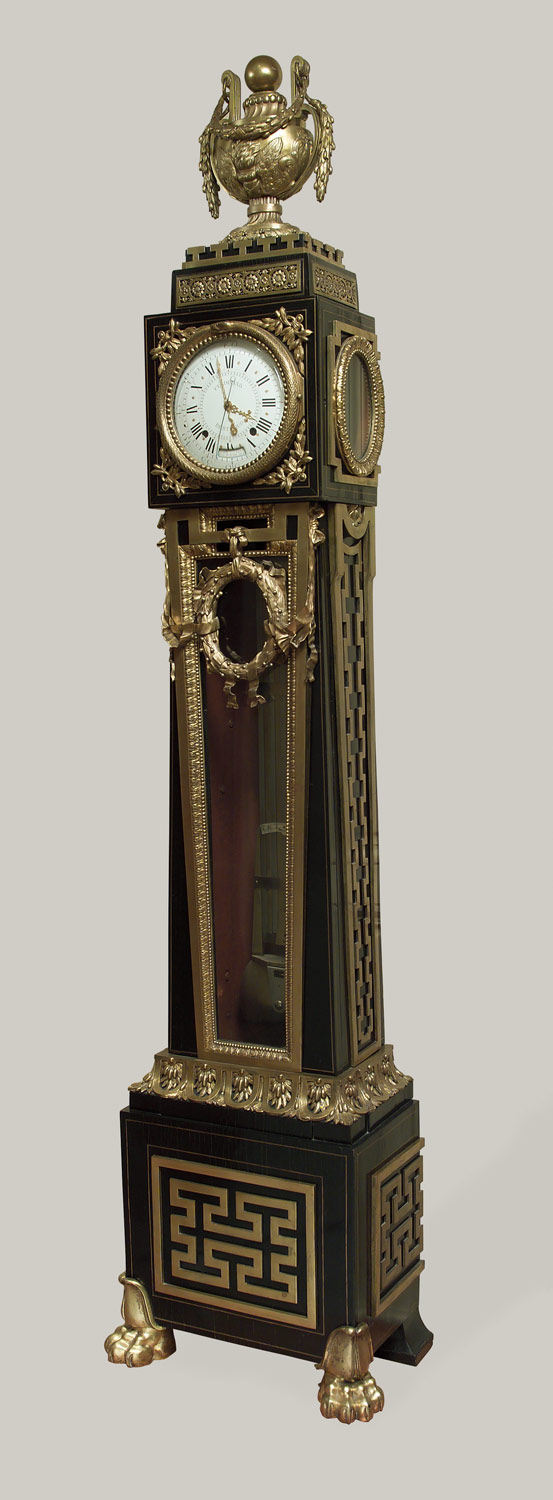
Longcase Regulator with Equation Work and Calendar (Régulateur à equation), ca. 1768–70
Movement by Ferdinand Berthoud (French, 1727–1807); Case by Balthazar Lieutaud (French, ca. 1720–1780)
Case: oak veneered with ebony, with gilt-bronze mounts and glass panel; Dial: white enamel with black numerals; Movement: brass and steel
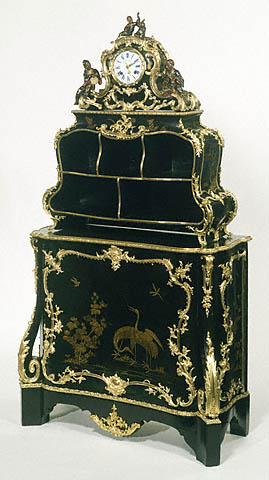
Stamped by Bernard van Risenburgh, furniture worker; movement by Étienne Le Noir, clockmaker; face by Jacques Decla, enameler
French, Paris, about 1740; clock, 1746
Oak veneered with alder and painted with vernis Martin; painted bronze figures; gilt bronze mounts; enameled metal clock dial; glass
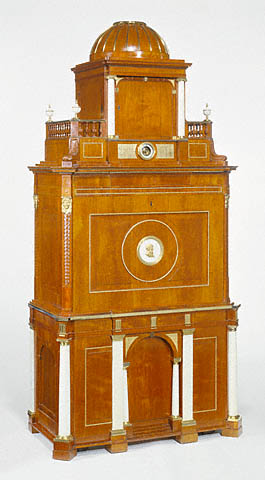
Johannes Andreas Beo, furniture worker; clock movements by Christian Mollinger, clockmaker
German, Berlin, about 1798 - 1799
Oak veneered with satinwood; white marble; gilt bronze mounts
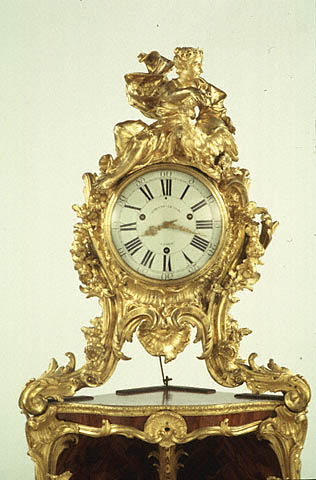
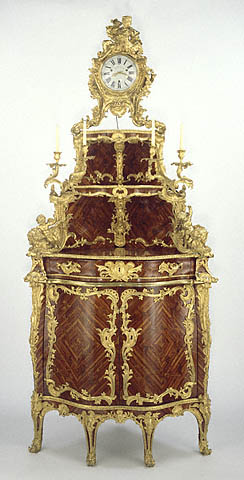
Cabinet by Jacques Dubois; clock movement by Étienne Le Noir; enamel by Antoine-Nicolas Martinière
French, Paris, about 1744 - 1752
Oak veneered with bois satiné and rosewood; gilt bronze mounts
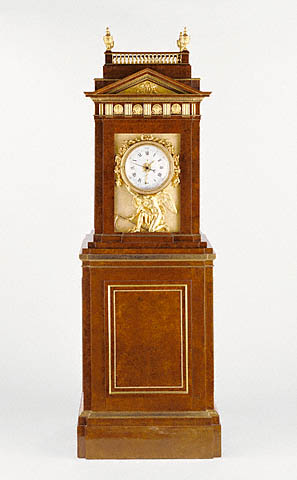
Case by David Roentgen, furniture worker; François Rémond, metalworker; clock movement by Peter Kinzing, instrument maker
German, Neuwied, 1786
Серия сообщений "цитата антиквариат":
Часть 1 - АНТИКВАРНЫЙ ФАРФОР. ПОСУДА
Часть 2 - Антиквариат. Вазы. Япония.
Часть 3 - Королевские бриллианты в Букингемском дворце
Часть 4 - СТАРИННЫЕ ЧАСЫ
Часть 5 - Монеты и империи.
Часть 6 - Диванные эксперты
...
Часть 8 - Красивые столики.Антиквариат.
Часть 9 - European Decorative Art. Collections .
Часть 10 - КОЛЛЕКЦИЯ SCHUSTERMAN. КОЛЛЕКЦИЯ ЧАРЛЬЗА И ЛИННА ШУСТЕРМАН.
| Комментировать | « Пред. запись — К дневнику — След. запись » | Страницы: [1] [Новые] |


