Добавить любой RSS - источник (включая журнал LiveJournal) в свою ленту друзей вы можете на странице синдикации.
Исходная информация - http://www.360cities.net/. Данный дневник сформирован из открытого RSS-источника по адресу http://www.360cities.net/rss/rss.xml, и дополняется в соответствии с дополнением данного источника. Он может не соответствовать содержимому оригинальной страницы. Трансляция создана автоматически по запросу читателей этой RSS ленты. По всем вопросам о работе данного сервиса обращаться со страницы контактной информации.[Обновить трансляцию]
360° panorama by Gary Davies. Click the image to open the interactive version.
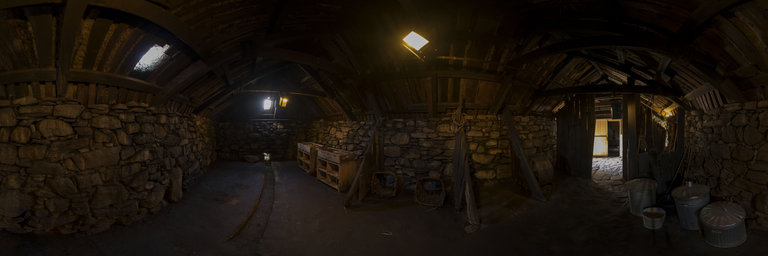
The Blackhouse is a traditional Western Isles dwelling in which a family of crofters and their livestock lived under the same roof. Aside from being a place to eat and sleep, the long, thin building was used as a barn for storage and the processing of grain and other produce. They were built without a chimney and few windows, which is how they may have got their name. The gully in the floor is designed to allow animal waste to drain away to the outside.
360° panorama by Gary Davies. Click the image to open the interactive version.
The Blackhouse is a traditional Western Isles dwelling in which a family of crofters and their livestock lived under the same roof. Aside from being a place to eat and sleep, the long, thin building was used as a barn for storage and the processing of grain and other produce. They were built without a chimney and few windows, which is how they may have got their name. The gully in the floor is designed to allow animal waste to drain away to the outside.
360° panorama by Gary Davies. Click the image to open the interactive version.
The Blackhouse is a traditional Western Isles dwelling in which a family of crofters and their livestock lived under the same roof. Aside from being a place to eat and sleep, the long, thin building was used as a barn for storage and the processing of grain and other produce. They were built without a chimney and few windows, which is how they may have got their name. The gully in the floor is designed to allow animal waste to drain away to the outside.
360° panorama by Gary Davies. Click the image to open the interactive version.
The Blackhouse is a traditional Western Isles dwelling in which a family of crofters and their livestock lived under the same roof. Aside from being a place to eat and sleep, the long, thin building was used as a barn for storage and the processing of grain and other produce. They were built without a chimney and few windows, which is how they may have got their name.
360° panorama by Gary Davies. Click the image to open the interactive version.
The Blackhouse is a traditional Western Isles dwelling in which a family of crofters and their livestock lived under the same roof. Aside from being a place to eat and sleep, the long, thin building was used as a barn for storage and the processing of grain and other produce. They were built without a chimney and few windows, which is how they may have got their name.
360° panorama by Gary Davies. Click the image to open the interactive version.
The Blackhouse is a traditional Western Isles dwelling in which a family of crofters and their livestock lived under the same roof. Aside from being a place to eat and sleep, the long, thin building was used as a barn for storage and the processing of grain and other produce. They were built without a chimney and few windows, which is how they may have got their name.
360° panorama by Gary Davies. Click the image to open the interactive version.
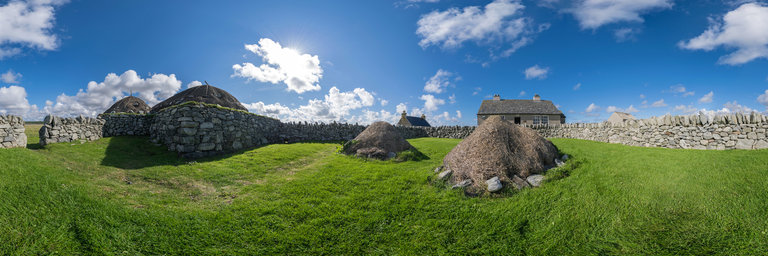
The Blackhouse is a traditional Western Isles dwelling in which a family of crofters and their livestock lived under the same roof. Aside from being a place to eat and sleep, the long, thin, thatched-roof building was used as a barn for storage and the processing of grain and other produce. They were built without a chimney and few windows, which is how they may have got their name.
360° panorama by Gary Davies. Click the image to open the interactive version.
The Blackhouse is a traditional Western Isles dwelling in which a family of crofters and their livestock lived under the same roof. Aside from being a place to eat and sleep, the long, thin, thatched-roof building was used as a barn for storage and the processing of grain and other produce. They were built without a chimney and few windows, which is how they may have got their name.
360° panorama by Gary Davies. Click the image to open the interactive version.
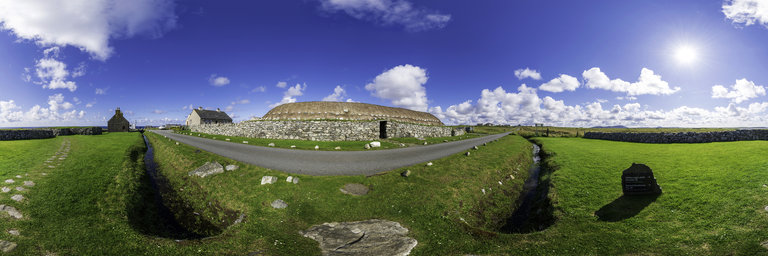
The Blackhouse is a traditional Western Isles dwelling in which a family of crofters and their livestock lived under the same roof. Aside from being a place to eat and sleep, the long, thin, thatched-roof building was used as a barn for storage and the processing of grain and other produce. They were built without a chimney and few windows, which is how they may have got their name.
360° panorama by Gary Davies. Click the image to open the interactive version.
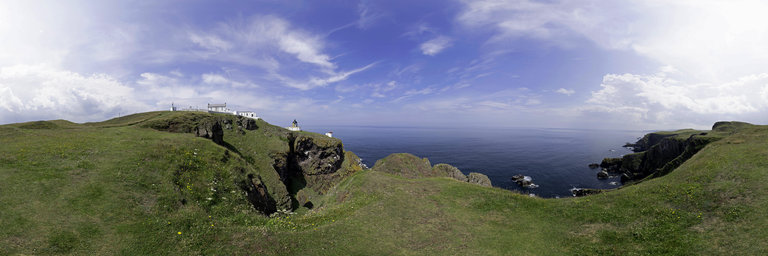
St. Abb's Head is a coastal headland with high sea cliffs that are home to more than 50,000 seabirds. The area is designated a national nature reserve. The lighthouse, like so many in Scotland, was built by members of the Stevenson family of civil engineers. It was first lit in 1862. In a region often obscured by fog, in 1876 it became the first lighthouse in Scotland to be equipped with a siren fog signal.
360° panorama by Gary Davies. Click the image to open the interactive version.
St. Abb's Head is a coastal headland with high sea cliffs that are home to more than 50,000 seabirds. The area is designated a national nature reserve. The lighthouse, like so many in Scotland, was built by members of the Stevenson family of civil engineers. It was first lit in 1862. In a region often obscured by fog, in 1876 it became the first lighthouse in Scotland to be equipped with a siren fog signal.
360° panorama by Gary Davies. Click the image to open the interactive version.
St. Abb's Head is a coastal headland with high sea cliffs that are home to more than 50,000 seabirds. The area is designated a national nature reserve. The lighthouse, like so many in Scotland, was built by members of the Stevenson family of civil engineers. It was first lit in 1862. In a region often obscured by fog, in 1876 it became the first lighthouse in Scotland to be equipped with a siren fog signal.