-Поиск по дневнику

Поиск сообщений в Galinka-Malinka

 -Подписка по e-mail


 -Статистика

Статистика LiveInternet.ru: показано количество хитов и посетителей
Создан: 24.11.2009
Записей:
Комментариев:
Написано: 1111


Без заголовка

Воскресенье, 24 Января 2010 г. 21:32 + в цитатник
Это цитата сообщения Ipola [Прочитать целиком + В свой цитатник или сообщество!]

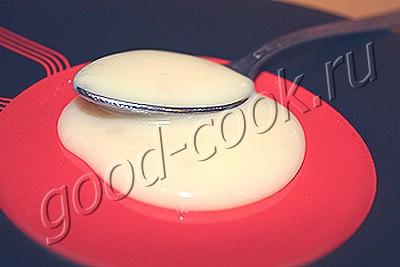
Мягкий шоколадный крем на сгущённом молоке


Это очень вкусный крем. Он не застывает и остаётся мягким. Но в то же время он не жидкий, т.е. если нанести его на торт не ровным слоем, то выпуклости и впадины не разравниваются.
Аромат у крема очень шоколадный, а вкус - сильно сладкий. Поэтому он подходит к тортам у которых свой вкус нейтральный или кисловатый. Если коржи сами по себе будут очень сладкие, то торт получится переслащённым.
В этот крем можно класть и белый шоколад и тёмный молочный и чёрный горький. Вкусы в этих случаях будут разные.
Для ароматизации в крем можно положить чайную ложечку хорошего растворимого кофе.
Нужно ещё заметить, что белый крем при остывании покрывается сверху подсохшей плёнкой, а тёмный остаётся равномерно-мягким.


мягкий шоколадный крем на сгущённом молоке
Читать далее...

Без заголовка

Суббота, 23 Января 2010 г. 00:11 + в цитатник
Это цитата сообщения Злайка [Прочитать целиком + В свой цитатник или сообщество!]

ROXYCRAFT


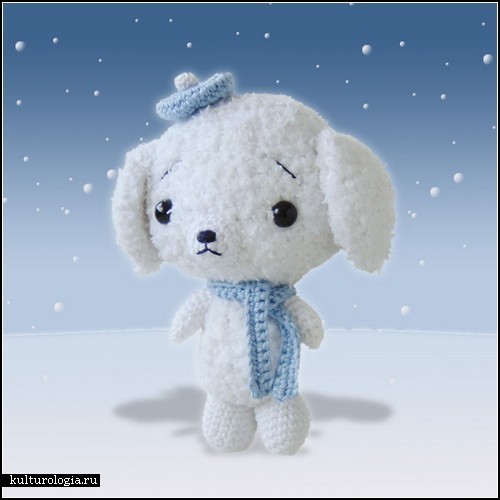
Tamie Snow - знатная вязальщица амигуруми, довольно известная в заинтересованных кругах. Есть у нее как вполне обычные, но очень качественные, зверюшки, так и всякие чудо-существа. Мой любимец - вот этот, Chilly.


Читать далее...
Рубрики:  Игрушки

Без заголовка

Суббота, 23 Января 2010 г. 00:08 + в цитатник
Это цитата сообщения Волшебница_Алиша [Прочитать целиком + В свой цитатник или сообщество!]

Кавайные японские амигуруми


что это такое и ещё - смотреть здесь
Рубрики:  Игрушки


Понравилось: 1 пользователю

Без заголовка

Пятница, 22 Января 2010 г. 23:34 + в цитатник
Это цитата сообщения _Коша_ [Прочитать целиком + В свой цитатник или сообщество!]

Samantha Lutterotti


http://www.sammibears.com/
 (600x450, 62Kb)
Рубрики:  Игрушки

Без заголовка

Пятница, 22 Января 2010 г. 23:33 + в цитатник
Это цитата сообщения _Коша_ [Прочитать целиком + В свой цитатник или сообщество!]

MUFFA - Mariella's Unusual Fantasy Funny Animals


 (240x180, 23Kb)
 (240x180, 14Kb)
http://muffa.bravehost.com/
http://www.flickr.com/photos/pasubio9/
Рубрики:  Игрушки

Без заголовка

Пятница, 22 Января 2010 г. 23:32 + в цитатник
Это цитата сообщения Zagadka-S [Прочитать целиком + В свой цитатник или сообщество!]

Мастер класс Капучинки.


Капучинка ростом 33см
Понадобится 100гр пряжи, елочный шарик 19 см в обхвате.
И огромное желание=)
Все петли вяжем полустолбик с накидом.
Потом милые рукодельницы я немного объясню как я делаю прибавки, если в 1р написано 15 столбиков а во втором ряду уже 22 столбика это означает что дополнительные семь петель нам нужно распределить во втором ряду что бы получилось 22 столбика. Не обязательно их распределять в определенные петли, главное что бы вы их добавляли хотябы через пару петель.

продолжение
Рубрики:  Игрушки

Без заголовка

Пятница, 22 Января 2010 г. 23:27 + в цитатник
Это цитата сообщения _Коша_ [Прочитать целиком + В свой цитатник или сообщество!]

Freckle's Heart Mini's


 (220x240, 39Kb)

 (240x222, 16Kb)
Наичудеснейшие существа!!!))Любуюсь уже третий день и никак налюбоваться не могу.
http://www.flickr.com/photos/frecklesheart/
http://www.frecklesheart.blogspot.com/
Рубрики:  Игрушки


Понравилось: 1 пользователю

Без заголовка

Пятница, 22 Января 2010 г. 23:25 + в цитатник
Это цитата сообщения _Коша_ [Прочитать целиком + В свой цитатник или сообщество!]

Ece Hanson


 (250x187, 12Kb)
 (256x192, 16Kb)
www.bearsbyece.com
Рубрики:  Игрушки

Без заголовка

Пятница, 22 Января 2010 г. 23:20 + в цитатник
Это цитата сообщения Tawa_Saenko [Прочитать целиком + В свой цитатник или сообщество!]

Вязаные обложки.


 (500x471, 115Kb)
Читать далее...

Без заголовка

Четверг, 21 Января 2010 г. 19:50 + в цитатник
Это цитата сообщения Марина_Роман [Прочитать целиком + В свой цитатник или сообщество!]

ВЯЗАНЫЕ ИДЕИ ДЛЯ ИНТЕРЬЕРА (начало)


Название: Trabalhos em barbante. № 43
Автор: коллектив
Страниц: 45
Формат: JPG
Размер: 6.45 Мб
Язык: иностранный
Качество: хорошее

СКАЧАТЬ БЕСПЛАТНО: DepositFils Turbobit Hotfile.com LetitBit


О книге: Оригинальные идеи для ванной комнаты и кухни заметно оживят ваш интерьер. Журнал на иностранном языке, но схемы предельно понятны как для профессионалов, так и для начинающих вязальщиц. Убедитесь сами.


Название: Trabalhos em barbante № 45
Автор: коллектив
Страниц: 45
Формат: JPG
Размер: 10.4 Мб
Язык: иностранный
Качество: хорошее

СКАЧАТЬ БЕСПЛАТНО: DepositFils Turbobit Hotfile.com LetitBit

О книге: Оригинальные идеи для ванной комнаты, кухни и спальни заметно оживят ваш интерьер. Журнал на иностранном языке, но схемы предельно понятны как для профессионалов, так и для начинающих вязальщиц. Убедитесь сами.


Название: Trabalhos em barbante № 54
Автор: коллектив
Страниц: 45
Формат: JPG
Размер: 7.82 Мб
Язык: иностранный
Качество: хорошее
Залито на: DepositFils

СКАЧАТЬ БЕСПЛАТНО

О книге: Оригинальные идеи для ванной комнаты и кухни заметно оживят ваш интерьер. Журнал на иностранном языке, но схемы предельно понятны как для профессионалов, так и для начинающих вязальщиц. Убедитесь сами.


Без заголовка

Четверг, 21 Января 2010 г. 19:46 + в цитатник
Это цитата сообщения Len_Ok258 [Прочитать целиком + В свой цитатник или сообщество!]

100 вязаных идей для вашего дома


100 вязаных идей для вашего дома


скачать Специальный выпуск газеты «Вязание: модно и просто» №8 2009 «100 вязаных идей для вашего дома» бесплатно Книга: Специальный выпуск газеты «Вязание: модно и просто» №8 2009 «100 вязаных идей для вашего дома»
Автор: коллектив
Издательство: Издательство «Газетный мир»
Страниц: 34
Формат: PDF
Размер: 7,51Mb(добавлено 3% на восстановление)
Качество: Нормальное
Язык: Русский
Год издания: 2009

В этом номере представлены практичные декоративные мелочи, которые скрашивают нашу жизнь. Салфетки, вазы и скатерть для кухни, цветочные панно и шторы для спальни, часы и пушистый абажур для гостиной, коврики для ванной и туалета – что-то оригинальное найдётся для каждой комнаты. Авторы сборника не забыли и про малышей! Весёлые игрушки-подушки и разноцветные кубики обязательно понравятся маленьким привередам. Подробные описания превратят работу в удовольствие.

СКАЧАТЬ


Без заголовка

Четверг, 21 Января 2010 г. 19:43 + в цитатник
Это цитата сообщения Sontina [Прочитать целиком + В свой цитатник или сообщество!]

Вязаные шарики-плетёнки


Связала дочке вот такие шарики-плетёнки. Изначально (в оригинале) они планировались как мочалки для мытья посуды, но мне они очень понравились, как игрушки, дочка с удовольствием ими играет.

Читать далее...

Без заголовка

Четверг, 21 Января 2010 г. 11:01 + в цитатник
Это цитата сообщения Kozlovenikaya [Прочитать целиком + В свой цитатник или сообщество!]

Теплые и уютные тапочки


Источник: http://blog.craftzine.com/archive/2009/12/craft_pattern_bunny_hop_slippe.html

CRAFT Pattern: Bunny Hop Slippers

Banner Craft Podcast

Thrummed Bunny Slippers in 3 Adult Sizes
By Nikol Lohr

These slippers are soft as a bunny, thanks to their thrums -- unspun wool knit right in for a warm, cushy, fleecy lining. They're also quick as a bunny! Knit in bulky yarn, they have the same stitch count as your average worsted hat. Worked up quickly in economical ($5/100g ball) bulky wool, they're a recession-busting and adorable last-minute holiday gift. And you can always omit the "bunniness" if your subject isn't silly rabbit material.

Aside from the cush, these slippers have a great fit and actually stay on your feet, thanks to the heel shaping and wide button flap. They're entirely seamless, knit sole first, with stitches picked up all around, then shaped from the sole up. The fat button strap is picked up near the edge and knit in place, as are the floppy ears. The wide flap gives the style gender neutrality, but you can also substitute a narrow strap for a girlier Mary Jane.

All About Thrums

Thrums are little chunks of unspun fiber worked periodically into your knitting. Each thrum is a separate piece worked into just one stitch, along with the yarn, and its ends are left sticking out on the wrong side of the knitting. Imagine duplicate stitch if you used a separate piece of yarn for each stitch, except here the yarn is fleece and you work it in while you knit instead of afterwards. On the right side of your work, you get a little pattern of Vs or hearts, but on the wrong side, you get a crazy shag rug of super awesome fluffy-wuffy warmness! The thrums will compress a little and felt together over time, becoming less puffy but just as cozy.

Bunnyhop Final5

Download the Pattern PDF | Subscribe in iTunes
(Right click to save PDF to your computer. More directions on downloading here.)

Update 12/24/09: Errata to pattern is updated in this post for Rows 11 & 12 and is not reflected in the PDF. We will update the PDF after the holidays.

Choosing a Fiber

Light, fine, bouncy fibers like Merino, Bluefaced Leicester (BFL), Corriedale, Rambouillet, and down wools make the best thrums (bypass the stronger, less-crimpy fibers like Lincoln or Wensleydale). Because the structural integrity of the thrummed fabric relies somewhat on the fibers' ability to cling and felt, you'll want to avoid superwash fibers. You can use combed top or roving. You can even use washed fleece, as long as the lock structure is intact; just separate out locks, and if they're compressed, gently tease them before thrumming.

If you're using commercially dyed combed top (solid colors or uniform blends), soak and dry it first. This will remove processing additives and decompress it. Just soak it (don't agitate) in hot water for about 10 minutes, drain and squeeze out excess water in some towels, and let it dry. If you don't have one of those dryer racks for shoes and sweaters, you can even dry it in the dryer (but don't tumble-dry or else it will felt). The fiber will be airier and nicer to draft and thrum.

Hand-dyed fiber has already had any processing additives rinsed out, so it's ready to go. Similarly, roving and the fluffier combed top you get from small mills like Zeilinger's is also ready to go.

If you've new to unspun fiber, go with hand-dyed Merino or BFL combed top.

Thrums from Combed Top

Combed top is a rope of fiber from which all the neps, short bits, and vegetable matter have been combed. The fiber's arrangement is very directional, which makes an easy prep for thrums.

Bunnyhop Thrums1
Unsoaked, commercially dyed top (compressed, with a chalky hand), hand-dyed top (fluffier and dense), and top from a small mill (loose and airy).

Bunnyhop Thrums2
Break (do not cut!) off a piece of top that's about 8" long.

Bunnyhop Thrums3
Pull off a little lengthwise strips, about 1/8" - 1/4" thick.

Bunnyhop Thrums4
I get 15- 20 strips from a piece of typical commercial top or about 7-10 from the fluffier type of top you get from a smaller mill.

Bunnyhop Thrums5
Draft out each strip, gently stretching the fibers apart, moving your hands every 3"-4" and repeating. If the strip breaks, don't worry; you can combine 2 shorter strips when you wind them. Drafting the fiber adds air to it. The more air you can trap in your fiber, the warmer and cushier it will be.

Bunnyhop Thrums6
After you draft it, it will be quite light and fluffy and about twice as long as the original strip.

Bunnyhop Thrums7
Wind each drafted strip around your thumb and forefinger in a figure eight, like you would if you were starting to wind a center-pull ball of yarn. I like the little figure eights to be 3"-4" long. Smooth down the loose ends; they'll stick to the rest. Make sure you get at least 2 full rounds, but it's fine to end up with 3 or 4 depending on the thickness of that particular strip. It doesn't matter if your thrums are different thicknesses; it'll average out. Some people recommend using thrums about the same thickness as the yarn, but I like the pudgy thrums way better than the skinny ones. Keep in mind that the fatter your thrum, the longer you'll need it to be to keep it secure in your knitting.

Bunnyhop Thrums8
Repeat until you have a nice pile of them If you have a lot of different colors, you can toss them all together to mix them up.

Bunnyhop Thrums9
Note: If you're using hand-dyed top with dramatic color changes and you want to preserve the color progression and/or keep both slippers balanced color-wise, split the strip in half down the middle before you begin.

Thrums from Roving and Sliver

Roving is a rope of carded fiber with an irregular arrangement of fibers. Sliver is roving that's been drafted slightly, so the arrangement of fibers is somewhat more directional, but for thrums, we'll treat it the same as roving. Both include short fibers and lots of air, which makes a very warm prep, but also a little trickier to prepare for thrums.

Roving can also vary dramatically by fiber and mill. It can range from thick and chunky to narrow and wispy, so how much prep you need depends much on the product itself.

Bunnyhop Thrums10
Most roving will require some preparation. I like to tear off a strip a few feet long, and then draft the whole thing twice.

Bunnyhop Thrums11-12
Once you have a very thin strip, make 2-3 figure eight wraps, break the roving (don't cut!), and repeat.

How-To Knit Thrums

While I knit continental in real life, I prefer to knit English when I thrum. This way, I can wrap the yarn first, then wrap the thrum, and when I pull it through, the yarn stays in the back; when knitting continental, the yarn tends to drift to the front. Continental also stretches the yarn a bit more as you go, which can loosen the thrums below while knitting the rows after the thrum. I'm not saying you can't thrum continental; just keep an eye out.

Bunnyhop Thrums13
To insert a thrum into your knitting, start to knit the stitch as usual: insert your needle knit-wise, wrap the yarn, but before you pull it through the stitch and off the needle, wrap a thrum around it as well, then knit it as usual. To wrap the thrum, fold it over the needle and hold the ends together at the back of the work along with the yarn.

Bunnyhop Thrums14
Once it's knit in, it will stay put unless it's too short (if it's borderline, give it a light tug by both ends from the back). When you pass the thrum on the next round, knit it together with its yarn as one stitch.

Pattern: Thrummed Bunny Slippers in 3 Adult Sizes

Materials

2 skeins Valley Yarns Berkshire Bulky (100g, 108 yds, 85% wool/15% alpaca, shown here in Light Pink) or Valley Yarns Northhampton Bulky (100g, 109 yds, 100% wool)
2 oz combed top or roving
see fiber recommendations (Art Club cotton candy merino combed top shown here)
Accent yarn for embroidering eyes, nose and mouth
A few feet of thin Merino or Rambouillet roving
must be roving, not combed top, plus a scrap of white yarn for the tail (optional)

Needles:
US10/6mm 16" - 22" circular needle

Gauge:
13 st=4"/10cm in plain stockinette without thrums

Notions:
2 - 1 ¼" buttons buttons
Yarn needle
Sewing needle and thread if your yarn needle is too big for your button's holes

Size: Adult S (M, L)

S: Women's 6-8/Men's 4-6
M: Women's 9-11/Men's 7-9
L: Men's 10-13

The thrum pattern shown here places 1 thrum every 3 stitches, every 4th row, with adjustments made for the size and shape of the particular row. The foot has a stitch count to accommodate the Thrum 1, Knit 2 repeat, with the centered toe stitch as the start of the round and an even number of stitches in either direction from the center toe stitch to the center back division.

Start your thrums centered on the 3rd row of the sole and at the center toe stitch of the 2nd rnd of the foot. Or feel free to wing it or stagger your thrums if you like.

CO 11 (13, 15)

Sole:
44 (52, 60) rows

All odd rows, except as noted: Sl 1, K to end.
All even rows: S1 1, P to 1 st from end, K1

Rows 17 (21, 23) and & 29 (31, 35): Sl 1, K1, M1, K to 2 st from end, M1, K2
Rows 35 (39, 45), 41 (45, 53), and 43 (49, 57): Sl 1, ssk, K to 3 st from end, k2tog, K1

Transition from sole:
Sl 1, K to end. Turn work.
Sl 1, K to end.


Bunnyhop Knit1
With WS still facing you, PU all edge and heel stitches all around sole, marking center back heel--63 (75, 87) st, including toe st.

Bunnyhop Knit2
You'll have 22 (26, 30) sts on each side, 10 (12, 14) at the heel and 9 (11, 13) at the toe. The center toe stitch will be your center front, and your center back will fall between the back 2 stitches. It will be a little tight picking up the heel stitches, but your knitting will relax as you progress upward.

Bunnyhop Knit3
Turn work so RS is facing you.
Sl the first stitch, the lift the 2nd stitch from the right needle (was he first stitch before you slipped that one) over the slipped stitch and onto your left needle (the last stitch and first stitch of the round have just traded places.

Foot:
Round 1 - 7 (9, 11): Knit.
Round 8 (10, 12): K1, ssk, K to 2 st before center back marker, K2tog, ssk, K to 2 st before end, k2tog.
Round 9 (11, 13): K1, ssk, K1, ssk, K1, ssk, work around to 8 st before end, K2tog, K1, K2tog, K1, K2tog.
Round 10 (12, 14): K to 2 st before center back, K2tog, ssk, K to end of rnd.
L only: Repeat Last 2 rnds.
Round 11 (13, 17): K1, ssk, ssk, ssk, K to 6 st before end, K2tog, k2tog, K2tog.
Round 12 (14, 18): K to 2 st from back, K2tog, ssk, K to end.
Rounds 13 (15, 19): K1 P1 rib to 1 st from end, then...
Round 14 (16, 20): Using the last st from Round 13 and 1st st from Round 14, K2tog. Continue ribbing in pattern.
Round 15 (17, 21): K1 P1 ribbing.
Round 16 (18, 22): BO in pattern.

Strap #1:
With sole facing down and the toe facing to the left, looking at the last knit row before the ribbing, count 3 (4, 5) stitches right of center, then count 11 (13, 15) more st to the right as your starting point.

Bunnyhop Knit4
Working into the row beneath the ribbing, PU 11 (13, 15) st, picking up vertically into the bar in the center of each stitch.

All rows (except as noted): Sl1, K to end
Row 11 (13, 15): S1 1, K3 (4, 5), BO 3 st, K4 (5, 6) (so you'll have a gap with 4 (5, 6) st on either side of it).
Row 12 (14, 16): Sl 1, K3 (4, 5), CO 3 st, K4 (5, 6).
Row 15 & 16 (17 & 18, 19 & 20): Sl 1, ssk, K to 3 st from end, K2tog, K1.
Last row: S1 1, ssk, BO to 3 st before end, K2tog, BO all stitches.

Strap #2:
With sole facing down and the toe facing to the right, count 3 (4, 5) stitches left of center. Working into the last row before the ribbing, PU 11 (13, 15) st, picking up into the bar in the center of each stitch. Proceed as above.

Ears:
With the toe facing you, and looking at the last row before the ribbing, count 4 (5, 6) st to the left.

Bunnyhop Knit5
You're going to pick up the ears starting here, picking up horizontally through both legs of the stitch and working down the column of stitches.

PU 4.
Sl 1, K3
Sl 1, P2, K1
Sl 1, K1, M1, K2
Sl 1 P3, K1
Sl 1, K1, M1, K3
Sl 1, P4, K1
Sl 1, K3, M1, K2
Sl 1, P5, K1
Sl 1, K6
Repeat last 2 rows.
Sl 1, P1, P2tog, P2, K1
Sl 1, ssk, k2tog, k1
Sl 1, P2tog, K1
Sl 1, K2tog, psso

Do the same on the other side, except count down 4 rows before you start picking up stitches, and work up the column toward the ribbing.

Tail:

Bunnyhop Knit6
For the tail, you'll make and lightly felt a roving pompom. You can make a regular pompom instead if you don't have roving. Roving makes a fast-felting, irregular ball perfect for a tail. I used Mountain Meadow Merino roving.

Bunnyhop Final6
To make the pompom, wrap the roving around your index and middle fingers 3 times. Tie it off firmly in the center with some white scrap yarn, leaving a long tail. Cut the folded ends, just as you would with a yarn pompom. Roll the ball vigorously in between your palms, as if you were aggressively rolling a meatball. Using the tails, sew on the tail just below the ribbing on the center back.

Bunnyhop Final4
Bunnyhop Final2
Weave in the ends. Try on the slipper and decide where to position the button. Sew on the button and try out the buttonhole, tacking the ends to make it smaller if necessary.

Embroider the nose, mouth, and eyes.

Abbreviations

BO bind off
CO cast on
K knit
k2tog knit 2 together (decrease): knit stitches together as one
M1 make 1 (increase): lift the bar between the stitches from the front, knit into the back of the lifted bar to twist the bar and form a new stitch
P purl
RS right side
Sl slip stitch purlwise (unless noted otherwise, as in ssk)
ssk slip, slip, knit (decrease): slip 2 stitches knitwise, one at a time, then knit them together as one
st(s) stitch(es)
WS wrong side


Download the Pattern PDF | Subscribe in iTunes


Posted by

Natalie Zee Drieu

| Dec 18, 2009 12:00 PM


Без заголовка

Вторник, 19 Января 2010 г. 23:58 + в цитатник
Это цитата сообщения Kozlovenikaya [Прочитать целиком + В свой цитатник или сообщество!]

Теплые и уютные тапочки


Источник: http://blog.craftzine.com/archive/2009/12/craft_pattern_bunny_hop_slippe.html

CRAFT Pattern: Bunny Hop Slippers

Banner Craft Podcast

Thrummed Bunny Slippers in 3 Adult Sizes
By Nikol Lohr

These slippers are soft as a bunny, thanks to their thrums -- unspun wool knit right in for a warm, cushy, fleecy lining. They're also quick as a bunny! Knit in bulky yarn, they have the same stitch count as your average worsted hat. Worked up quickly in economical ($5/100g ball) bulky wool, they're a recession-busting and adorable last-minute holiday gift. And you can always omit the "bunniness" if your subject isn't silly rabbit material.

Aside from the cush, these slippers have a great fit and actually stay on your feet, thanks to the heel shaping and wide button flap. They're entirely seamless, knit sole first, with stitches picked up all around, then shaped from the sole up. The fat button strap is picked up near the edge and knit in place, as are the floppy ears. The wide flap gives the style gender neutrality, but you can also substitute a narrow strap for a girlier Mary Jane.

All About Thrums

Thrums are little chunks of unspun fiber worked periodically into your knitting. Each thrum is a separate piece worked into just one stitch, along with the yarn, and its ends are left sticking out on the wrong side of the knitting. Imagine duplicate stitch if you used a separate piece of yarn for each stitch, except here the yarn is fleece and you work it in while you knit instead of afterwards. On the right side of your work, you get a little pattern of Vs or hearts, but on the wrong side, you get a crazy shag rug of super awesome fluffy-wuffy warmness! The thrums will compress a little and felt together over time, becoming less puffy but just as cozy.

Bunnyhop Final5

Download the Pattern PDF | Subscribe in iTunes
(Right click to save PDF to your computer. More directions on downloading here.)

Update 12/24/09: Errata to pattern is updated in this post for Rows 11 & 12 and is not reflected in the PDF. We will update the PDF after the holidays.

Choosing a Fiber

Light, fine, bouncy fibers like Merino, Bluefaced Leicester (BFL), Corriedale, Rambouillet, and down wools make the best thrums (bypass the stronger, less-crimpy fibers like Lincoln or Wensleydale). Because the structural integrity of the thrummed fabric relies somewhat on the fibers' ability to cling and felt, you'll want to avoid superwash fibers. You can use combed top or roving. You can even use washed fleece, as long as the lock structure is intact; just separate out locks, and if they're compressed, gently tease them before thrumming.

If you're using commercially dyed combed top (solid colors or uniform blends), soak and dry it first. This will remove processing additives and decompress it. Just soak it (don't agitate) in hot water for about 10 minutes, drain and squeeze out excess water in some towels, and let it dry. If you don't have one of those dryer racks for shoes and sweaters, you can even dry it in the dryer (but don't tumble-dry or else it will felt). The fiber will be airier and nicer to draft and thrum.

Hand-dyed fiber has already had any processing additives rinsed out, so it's ready to go. Similarly, roving and the fluffier combed top you get from small mills like Zeilinger's is also ready to go.

If you've new to unspun fiber, go with hand-dyed Merino or BFL combed top.

Thrums from Combed Top

Combed top is a rope of fiber from which all the neps, short bits, and vegetable matter have been combed. The fiber's arrangement is very directional, which makes an easy prep for thrums.

Bunnyhop Thrums1
Unsoaked, commercially dyed top (compressed, with a chalky hand), hand-dyed top (fluffier and dense), and top from a small mill (loose and airy).

Bunnyhop Thrums2
Break (do not cut!) off a piece of top that's about 8" long.

Bunnyhop Thrums3
Pull off a little lengthwise strips, about 1/8" - 1/4" thick.

Bunnyhop Thrums4
I get 15- 20 strips from a piece of typical commercial top or about 7-10 from the fluffier type of top you get from a smaller mill.

Bunnyhop Thrums5
Draft out each strip, gently stretching the fibers apart, moving your hands every 3"-4" and repeating. If the strip breaks, don't worry; you can combine 2 shorter strips when you wind them. Drafting the fiber adds air to it. The more air you can trap in your fiber, the warmer and cushier it will be.

Bunnyhop Thrums6
After you draft it, it will be quite light and fluffy and about twice as long as the original strip.

Bunnyhop Thrums7
Wind each drafted strip around your thumb and forefinger in a figure eight, like you would if you were starting to wind a center-pull ball of yarn. I like the little figure eights to be 3"-4" long. Smooth down the loose ends; they'll stick to the rest. Make sure you get at least 2 full rounds, but it's fine to end up with 3 or 4 depending on the thickness of that particular strip. It doesn't matter if your thrums are different thicknesses; it'll average out. Some people recommend using thrums about the same thickness as the yarn, but I like the pudgy thrums way better than the skinny ones. Keep in mind that the fatter your thrum, the longer you'll need it to be to keep it secure in your knitting.

Bunnyhop Thrums8
Repeat until you have a nice pile of them If you have a lot of different colors, you can toss them all together to mix them up.

Bunnyhop Thrums9
Note: If you're using hand-dyed top with dramatic color changes and you want to preserve the color progression and/or keep both slippers balanced color-wise, split the strip in half down the middle before you begin.

Thrums from Roving and Sliver

Roving is a rope of carded fiber with an irregular arrangement of fibers. Sliver is roving that's been drafted slightly, so the arrangement of fibers is somewhat more directional, but for thrums, we'll treat it the same as roving. Both include short fibers and lots of air, which makes a very warm prep, but also a little trickier to prepare for thrums.

Roving can also vary dramatically by fiber and mill. It can range from thick and chunky to narrow and wispy, so how much prep you need depends much on the product itself.

Bunnyhop Thrums10
Most roving will require some preparation. I like to tear off a strip a few feet long, and then draft the whole thing twice.

Bunnyhop Thrums11-12
Once you have a very thin strip, make 2-3 figure eight wraps, break the roving (don't cut!), and repeat.

How-To Knit Thrums

While I knit continental in real life, I prefer to knit English when I thrum. This way, I can wrap the yarn first, then wrap the thrum, and when I pull it through, the yarn stays in the back; when knitting continental, the yarn tends to drift to the front. Continental also stretches the yarn a bit more as you go, which can loosen the thrums below while knitting the rows after the thrum. I'm not saying you can't thrum continental; just keep an eye out.

Bunnyhop Thrums13
To insert a thrum into your knitting, start to knit the stitch as usual: insert your needle knit-wise, wrap the yarn, but before you pull it through the stitch and off the needle, wrap a thrum around it as well, then knit it as usual. To wrap the thrum, fold it over the needle and hold the ends together at the back of the work along with the yarn.

Bunnyhop Thrums14
Once it's knit in, it will stay put unless it's too short (if it's borderline, give it a light tug by both ends from the back). When you pass the thrum on the next round, knit it together with its yarn as one stitch.

Pattern: Thrummed Bunny Slippers in 3 Adult Sizes

Materials

2 skeins Valley Yarns Berkshire Bulky (100g, 108 yds, 85% wool/15% alpaca, shown here in Light Pink) or Valley Yarns Northhampton Bulky (100g, 109 yds, 100% wool)
2 oz combed top or roving
see fiber recommendations (Art Club cotton candy merino combed top shown here)
Accent yarn for embroidering eyes, nose and mouth
A few feet of thin Merino or Rambouillet roving
must be roving, not combed top, plus a scrap of white yarn for the tail (optional)

Needles:
US10/6mm 16" - 22" circular needle

Gauge:
13 st=4"/10cm in plain stockinette without thrums

Notions:
2 - 1 ¼" buttons buttons
Yarn needle
Sewing needle and thread if your yarn needle is too big for your button's holes

Size: Adult S (M, L)

S: Women's 6-8/Men's 4-6
M: Women's 9-11/Men's 7-9
L: Men's 10-13

The thrum pattern shown here places 1 thrum every 3 stitches, every 4th row, with adjustments made for the size and shape of the particular row. The foot has a stitch count to accommodate the Thrum 1, Knit 2 repeat, with the centered toe stitch as the start of the round and an even number of stitches in either direction from the center toe stitch to the center back division.

Start your thrums centered on the 3rd row of the sole and at the center toe stitch of the 2nd rnd of the foot. Or feel free to wing it or stagger your thrums if you like.

CO 11 (13, 15)

Sole:
44 (52, 60) rows

All odd rows, except as noted: Sl 1, K to end.
All even rows: S1 1, P to 1 st from end, K1

Rows 17 (21, 23) and & 29 (31, 35): Sl 1, K1, M1, K to 2 st from end, M1, K2
Rows 35 (39, 45), 41 (45, 53), and 43 (49, 57): Sl 1, ssk, K to 3 st from end, k2tog, K1

Transition from sole:
Sl 1, K to end. Turn work.
Sl 1, K to end.


Bunnyhop Knit1
With WS still facing you, PU all edge and heel stitches all around sole, marking center back heel--63 (75, 87) st, including toe st.

Bunnyhop Knit2
You'll have 22 (26, 30) sts on each side, 10 (12, 14) at the heel and 9 (11, 13) at the toe. The center toe stitch will be your center front, and your center back will fall between the back 2 stitches. It will be a little tight picking up the heel stitches, but your knitting will relax as you progress upward.

Bunnyhop Knit3
Turn work so RS is facing you.
Sl the first stitch, the lift the 2nd stitch from the right needle (was he first stitch before you slipped that one) over the slipped stitch and onto your left needle (the last stitch and first stitch of the round have just traded places.

Foot:
Round 1 - 7 (9, 11): Knit.
Round 8 (10, 12): K1, ssk, K to 2 st before center back marker, K2tog, ssk, K to 2 st before end, k2tog.
Round 9 (11, 13): K1, ssk, K1, ssk, K1, ssk, work around to 8 st before end, K2tog, K1, K2tog, K1, K2tog.
Round 10 (12, 14): K to 2 st before center back, K2tog, ssk, K to end of rnd.
L only: Repeat Last 2 rnds.
Round 11 (13, 17): K1, ssk, ssk, ssk, K to 6 st before end, K2tog, k2tog, K2tog.
Round 12 (14, 18): K to 2 st from back, K2tog, ssk, K to end.
Rounds 13 (15, 19): K1 P1 rib to 1 st from end, then...
Round 14 (16, 20): Using the last st from Round 13 and 1st st from Round 14, K2tog. Continue ribbing in pattern.
Round 15 (17, 21): K1 P1 ribbing.
Round 16 (18, 22): BO in pattern.

Strap #1:
With sole facing down and the toe facing to the left, looking at the last knit row before the ribbing, count 3 (4, 5) stitches right of center, then count 11 (13, 15) more st to the right as your starting point.

Bunnyhop Knit4
Working into the row beneath the ribbing, PU 11 (13, 15) st, picking up vertically into the bar in the center of each stitch.

All rows (except as noted): Sl1, K to end
Row 11 (13, 15): S1 1, K3 (4, 5), BO 3 st, K4 (5, 6) (so you'll have a gap with 4 (5, 6) st on either side of it).
Row 12 (14, 16): Sl 1, K3 (4, 5), CO 3 st, K4 (5, 6).
Row 15 & 16 (17 & 18, 19 & 20): Sl 1, ssk, K to 3 st from end, K2tog, K1.
Last row: S1 1, ssk, BO to 3 st before end, K2tog, BO all stitches.

Strap #2:
With sole facing down and the toe facing to the right, count 3 (4, 5) stitches left of center. Working into the last row before the ribbing, PU 11 (13, 15) st, picking up into the bar in the center of each stitch. Proceed as above.

Ears:
With the toe facing you, and looking at the last row before the ribbing, count 4 (5, 6) st to the left.

Bunnyhop Knit5
You're going to pick up the ears starting here, picking up horizontally through both legs of the stitch and working down the column of stitches.

PU 4.
Sl 1, K3
Sl 1, P2, K1
Sl 1, K1, M1, K2
Sl 1 P3, K1
Sl 1, K1, M1, K3
Sl 1, P4, K1
Sl 1, K3, M1, K2
Sl 1, P5, K1
Sl 1, K6
Repeat last 2 rows.
Sl 1, P1, P2tog, P2, K1
Sl 1, ssk, k2tog, k1
Sl 1, P2tog, K1
Sl 1, K2tog, psso

Do the same on the other side, except count down 4 rows before you start picking up stitches, and work up the column toward the ribbing.

Tail:

Bunnyhop Knit6
For the tail, you'll make and lightly felt a roving pompom. You can make a regular pompom instead if you don't have roving. Roving makes a fast-felting, irregular ball perfect for a tail. I used Mountain Meadow Merino roving.

Bunnyhop Final6
To make the pompom, wrap the roving around your index and middle fingers 3 times. Tie it off firmly in the center with some white scrap yarn, leaving a long tail. Cut the folded ends, just as you would with a yarn pompom. Roll the ball vigorously in between your palms, as if you were aggressively rolling a meatball. Using the tails, sew on the tail just below the ribbing on the center back.

Bunnyhop Final4
Bunnyhop Final2
Weave in the ends. Try on the slipper and decide where to position the button. Sew on the button and try out the buttonhole, tacking the ends to make it smaller if necessary.

Embroider the nose, mouth, and eyes.

Abbreviations

BO bind off
CO cast on
K knit
k2tog knit 2 together (decrease): knit stitches together as one
M1 make 1 (increase): lift the bar between the stitches from the front, knit into the back of the lifted bar to twist the bar and form a new stitch
P purl
RS right side
Sl slip stitch purlwise (unless noted otherwise, as in ssk)
ssk slip, slip, knit (decrease): slip 2 stitches knitwise, one at a time, then knit them together as one
st(s) stitch(es)
WS wrong side


Download the Pattern PDF | Subscribe in iTunes


Posted by

Natalie Zee Drieu

| Dec 18, 2009 12:00 PM


Без заголовка

Вторник, 19 Января 2010 г. 23:54 + в цитатник
Это цитата сообщения Kozlovenikaya [Прочитать целиком + В свой цитатник или сообщество!]

Вяжем тигрёнка (мастер-класс)


Источник: http://evaplanet.livejournal.com/5564.html#cutid1

Вяжем тигрёнка

  • Nov. 24th, 2009 at 2:24 PM
autumn
Каждый из нас, в преддверии Нового Года, находится в активном поиске подарков для любимых, родных и близких. В наше время можно найти необыкновенно богатый выбор разного рода подарков, даже не выходя за порог своего дома – они могут быть выбраны в каком-нибудь каталоге интернет-магазина или созданы своими руками. Я предпочитаю второй вариант. Можно придумать что-то необычное, интересное, особенное. Нужно только захотеть сделать оригинальный подарок (совсем не обязательно для кого-то, можно порадовать себя:), включить фантазию, воображение, запастись терпением, наслаждаться процессом и результатом.

Предлагаю Вам попробовать связать символ Нового 2010 года - маленького тигренка.


Это мой первый мастер-класс, постараюсь все подробно, пошагово рассказать и проиллюстрировать фотографиями.

Итак, нам понадобятся:
1) два мотка пряжи - оранжевой и черной (я использовала троицкую пряжу «Кроха», 20% шерсть, 80% акрил; можно и другую, только чтобы нитка была не очень толстой);
2) крючок (1,9-2); бусинки или пуговки для глазок (у меня самодельные глазки-бусинки из пластики Фимо);
3) ножницы;
4) наполнитель (это может быть синтепон, хлорофайбер, или вата, но с ватой он не будет таким мягким);
5) черная и белая нитки с иголкой.

Условные обозначения:
ВП – воздушная петля
СС – соединительный столбик
СБН – столбик без накида

Голова:
Вяжем оранжевой пряжей крючком 2 мм. 4ВП замкните в круг 1СС. 2 ряд: 8СБН. 3 ряд: 16СБН. 4 ряд: 28СБН (чтобы удобней просчитывать петли я делаю меточку – ниточку другого цвета, как ориентир, от которого начинать отсчет следующего ряда). 5-8 ряды: 42СБН. 9 ряд:(3 СБН провязываем, убавляем, потом опять 3 СБН провязываем, убавляем и так по кругу) 32СБН. 10-11 ряды: (3СБН провязываем, убавляем и т.д.)24СБН. 12 ряд: (1СБН провязываем, убавляем и т.д.) 13СБН. Набиваем и, убавляя петли, закрываем.
Далее прячем ниточки, намечаем мордашку (определяем, где будет носик, делаем углубление для глазок простыми нажатиями) (фото 6).


Ушки:
Вяжем оранжевой пряжей крючком 2 мм 5ВП. 2 ряд: 5СБН. 3 ряд: 4СБН. 4 ряд: 3СБН, затем вяжем по кругу СБН (получается аккуратный красивый краешек ушка) и придаем ушку нужную форму (фото 7). Или можно просто связать кругляшок: 4СВП, 8СБН, 12СБН, а там, на усмотрение, можно еще, прибавляя СБН, связать ушастенького тигренка:)


Носик:
Носик можно связать или купить готовый, или вылепить из пластики. Можно побольше, или поменьше. Не бойтесь экспериментировать. От таких деталей зависит настроение и характер Вашего создания! Я иногда по несколько раз пробую, изменяю, перешиваю и носик и глазки… навяжу разных носиков: кругленький, овальный, треугольный, изготовлю разных глазок, а потом прикладываю, смотрю, что больше подойдет малышу. Итак: Вяжем черной пряжей крючком 2 мм. 3ВП. 2 ряд: 3СБН. 3 ряд: 2СБН. Делаем узелок, отрезаем от мотка. Получается носик с двумя ниточками по бокам (фото 8). Одну отрезаем, спрячем ее, когда будем пришивать носик. А вторая будет ротиком. Протягиваем ее на нижний кончик носика. После пришивания прячем ее там, где будет заканчиваться ротик.


Мой самый любимый процесс: создаем мордашку. Пришиваем ушки, глазки и носик. Бровки из простых черных ниток, сложенных в несколько слоев, чтобы они были аккуратненькими. Все узелки, ниточки прячем в том месте, где будет шея тигренка (фото 11). Я сразу же делала полосочки из черной пряжи. Просто протягивала крючком.
Вот что получилось:


Вяжем шею и туловище: Сначала можно наметить, где будет шея. Нам надо спрятать все узелки и ниточки. Не знаю, на сколько правильно будет давать схематичное описание… Ведь у кого-то может получиться побольше петелек у кого-то поменьше. Лично для меня все схемы условны. Ведь многое зависит от толщины ниток, от того насколько туго Вы вяжете. Но примерно можно ориентироваться. Вот что получилось у меня:
1 ряд: 22СБН (фото 12). 2 ряд: 15СБН (фото 13). 3 ряд:20СБН. 4 ряд: 25СБН (фото 14). 5 ряд: Стараемся прибавлять по бокам, где плечики (+ по 2 петельки с каждой стороны)=> 29СБН, плюс ко всему в этом ряду на спинке провязываем 6СБН (из 29СБН) из черной пряжи. 6 ряд: 29СБН. 7 ряд: 29СБН (на спинке провязываем 9СБН (из 29СБН) из черной пряжи) 8 ряд: по 2 петельки сужаем по бокам 25СБН (фото 15). 9 ряд: 25СБН (на спинке провязываем 12СБН (из 25СБН) из черной пряжи). 10 ряд: убавляем 3 петельки на спинке =>22СБН. 11 ряд: 22СБН (на спинке провязываем 6СБН (из 22СБН) из черной пряжи) (фото 16). 12 ряд: 18СБН. 13 ряд: 14СБН (на спинке провязываем 3СБН (из 14СБН) из черной пряжи) (фото 17). Набиваем, через одну петельку убавляя, закрываем.

Можно сделать тигренка пузатеньким, прибавляя спереди на животике петельки, а спинку вязать без прибавки…


Лапки-ручки:
Вяжем оранжевой пряжей крючком 2 мм. 4ВП замкните в круг 1СС. 2 ряд: 8СБН. 3-8 ряды: 11СБН (фото 21). 9 ряд: 12СБН. 10 ряд: 14СБН (фото 22). 11-12 ряды: 17СБН. 13 ряд: 13СБН. 14 ряд: 10СБН. Набиваем и, убавляя петли, закрываем. Делаем пальчики: оранжевую нитку продеваем крючком насквозь лапки там, где пальчик начинается, туго затягиваем, делаем 2 узелка, лишние нитки прячем (обратной стороной крючка). Для одной лапки проделываем это 2 раза. Получается три пальчика, средний должен быть побольше (фото 23).


Лапки-ножки:
Вяжем оранжевой пряжей крючком 2 мм. 4ВП замкните в круг 1СС. 2 ряд: 8СБН. 3 ряд: 12СБН. 4-9 ряды: 13СБН. Не забываем про меточку для ориентира (фото 24). Провязав 9 рядов, нам понадобятся еще 2 метки. Мы должны определить, где у нас будет носочек, а где пяточка. Допустим, уже имеющаяся метка будет на пяточке (прямо середина пяточки!), надо сделать еще 2 метки по бокам (если в петельках считать, это от метки 3 петельки в одну и другую сторону) (фото 25). То есть мы нашу деталь делим на две части. Со стороны носочка мы будем добавлять петли, а со стороны пяточки будем провязывать, не добавляя. Итак, решили, где будет пяточка, тогда 10 ряд: 15СБН (добавляем 2 петельки напротив 1 метки, которая условно обозначает середину пяточки; например, добавили петельку, провязали 1СБН, потом еще добавили). 11 ряд: 18СБН (добавляем там же на носочке еще три петельки) (фото 26). 12 ряд: 22СБН (+ 4 петельки на носочке, добавляем от боковой метки до боковой) (фото 27). 13-16 ряды: 27СБН. (фото 28, 29) 17 ряд: 20СБН (от 1 боковой до 2 боковой метки на носочке, начинаем убавлять через 1СБН). 18ряд:12СБН (начинаем убавлять примерно через 2СБН по кругу) (фото 30). Набиваем, через одну убавляя, закрываем. Прячем лишние ниточки (фото 31, 32).


Хвостик:
Вяжем оранжевой пряжей крючком 2 мм. 9ВП замкните в круг 1СС. 2-7ряды: 9СБН. 8 ряд: 6СБН. 9 ряд: 4СБН Закрываем, прячем ниточки.


Все готово! Остается только сделать полосочки тигренку и соединить все детали. Лапки можно просто пришить, или прикрепить на веревочке, на ниточке с помощью бусин, пуговиц и т.д., чтобы были подвижными (информацию об этом можно легко найти в интернете). Хвостик пришиваем.


Можно сшить или связать ему одежку. У меня Тигрик в новогоднем костюме гномика:) (см.предыдущий пост)


Совсем необязательно делать дорогие подарки, можно попробовать сотворить что-то маленькое, но оригинальное. Ведь создавая что-либо своими руками, мы вкладываем в это частичку себя, своей души.

Надеюсь, я достаточно понятно все описала. Если возникнут вопросы, обращайтесь! С удовольствием отвечу!
 
Рубрики:  Игрушки

Без заголовка

Вторник, 19 Января 2010 г. 23:53 + в цитатник
Это цитата сообщения Kozlovenikaya [Прочитать целиком + В свой цитатник или сообщество!]

Таблица использования средств для отмывания пятен разной природы происхождения


Источник: http://ladybee.ru/flylady/78/637/

Таблица использования средств для отмывания пятен разной природы происхождения

Источник пятен
Соль
Нашатырный спирт
Уксус
Бензин
Холод
Подогретый глицерин
Другое
Трава   1 ст.л. на 1 л          
Кровь        

+

   
Жевачка и пластырь      

+ (2)

+ (3)

   
Белое вино        

+

   
Красное вино

+ (1)

          Застарелые - лимонной кислотой
Фрукты, ягоды, соки

+ (1)


+

      На белой или нелиняющей ткани можно обдать кипятком
Жир

+

1:1 с горячей водой

+

      Прогладить утюгом до стирки. Если вещь нельзя стирать, то посыпать сильно нагретой картофельной мукой и выдержать минут 20.
Яйцо

+

На белых вещах 1:10       На цветных тканях замочить пятно на 20 минут  
Мороженое      

+

     
Шоколад, какао

+

1,5% р-р Уксус + спирт 1:1     На светлых и шерстяных вещах (15 мин).  
Молоко           + замочить надолго  
Смола             скипидар
Ржавчина             кусочек лимона, завернутый в марлю прижать его нагретым утюгом
Ручка   Нашатырь и винный спирт 1:1         Свежее пятно натереть лимоном
Помада      

+ (2)

     
Земля     Развести 1:1 с водой        
Воск             Прогладить утюгом на ткани
Йод   1 г на стакан воды     Смочить, а потом натирать крахмалом    

Сноски:

(1)

- для свежего пятна


(2)

- поместить на бумажное полотенце и протереть с изнанки


(3)

- положить в морозильную камеру


Без заголовка

Вторник, 19 Января 2010 г. 23:48 + в цитатник
Это цитата сообщения Anyuta-UA [Прочитать целиком + В свой цитатник или сообщество!]

Коврик, салфетка, скатерть, пончо или юбка


Вяжется обычной платочной вязкой, весь секрет в порядке вязания "деталек" (см. на приведенной схеме) и процессе прибавления\убавления крайних петель.

Описание вязания на примере коврика с жёлтой звездой - начать со светло-жёлтого треугольника: набрать петель 5, вязать платочной вязкой, в КАЖДОМ ряду, после первой и перед последней петлёй прибавлять по одной петле. То есть в каждом ряду у нас будет добавляться 2 петли. Начиная с тёмно-жёлтого - с одной стороны убавлять по одной, провязывая две первые петли вместе, а с другой - продолжать прибавлять. Затем голубым, цепляясь за полотно (с той стороны, где у нас два жёлтых соединены), набираем петли и со стороны светло-жёлтого убавляем по одной в каждом ряду, а с другой стороны делаем зубчики. Потом так же цепляемся к голубому краю (где мы убавляли) набираем петли синим и точно так же слева убавляем, справа - зубчики. Повторяем все эти действия ещё 4 раза. Можно сразу цепляться к полотну, а можно потом сшить. Там, где мы будем прибавлять, край полотна будет выпуклым, а где убавляем - вогнутым - это будет получаться само.
Ещё пара нюансов:
на фото ниже видно, что это не платочная вязка, а где-то ряда 3 лицевых и один изнаночный. А так же, соединительный ряд того же цвета, что и тот, к которому цепляемся. Здесь он зелёный. То есть, по краю зелёного полотна вяжем один зелёный ряд, а следующие - вишнёвым.


Вяжут на Осинке в этой темке club.osinka.ru/topic-69622


Без заголовка

Вторник, 19 Января 2010 г. 23:43 + в цитатник
Это цитата сообщения anatolna [Прочитать целиком + В свой цитатник или сообщество!]

Рубрики:  Игрушки

Без заголовка

Вторник, 19 Января 2010 г. 23:05 + в цитатник
Это цитата сообщения Lenkins72 [Прочитать целиком + В свой цитатник или сообщество!]

Очередной эмо-мих.


Готовится ехать в Петропавловск-Камчатский... Если там его еще ждут :))
 
 (528x700, 89Kb)
 
ДЕТАЛЬКИ
Рубрики:  Игрушки

Без заголовка

Вторник, 19 Января 2010 г. 22:57 + в цитатник
Это цитата сообщения verbava [Прочитать целиком + В свой цитатник или сообщество!]

Knitting Dreams


умилительные крохотные мишки от Knitting Dreams

 (699x466, 72Kb)

+11
Рубрики:  Игрушки


Понравилось: 1 пользователю

Поиск сообщений в Galinka-Malinka
Страницы: 45 ... 16 15 [14] 13 12 ..
.. 1 Календарь